Tunatori Konkuk pulled me in on the walk home from the office. The folding glass doors were thrown open onto a side street near Konkuk University Station. Inside, a wall of handwritten sticky notes glowed under woven pendant lamps, and the bar smelled like binchotan smoke and soy tare. So one beer turned into two. Two turned into three. The bill at the end of the night — one frosted Terra, one maguro yukhoe, one tsukune skewer, one bowl of myeongtae al-tang, and the cabbage banchan — came to 33,000 KRW per person. This is the post I wish someone had sent me before I wandered in.

Why I Walked Into Tunatori Konkuk After Work on a Tuesday
My commute home runs straight through Konkuk Station Exit 6. So most weeknights I keep walking. But on a Tuesday in early May, the day had been long, the office mood was flat, and I wasn’t in the mood to ride the subway one more stop. The first izakaya sign I saw with open doors was Tunatori.
And the timing helped. It was just past 8 p.m. The early dinner crowd had cleared. The late drinkers hadn’t arrived. So the bar was at that perfect 60-percent-full state where you can hear the cook calling orders and still get a barstool without negotiating.
Plus, a coworker who lives near Konkuk had mentioned the spot once. She said the tuna tartare was “legitimately as good as Itaewon places at half the price.” Coming from someone who rarely exaggerates, that recommendation was reason enough to step inside.
For the day’s specifics, my team had wrapped a sprint review at 7 p.m. The manager bought us each a coffee and dismissed us. So I took the long route through Achasan-ro instead of cutting back to the station. Tunatori’s open doors caught my eye about halfway down the alley. The cook waved me in before I’d fully decided. So I sat at the bar nearest the grill. Ordered the first beer on the menu. And let the night unfold.
A Side Street Two Blocks from Konkuk Station

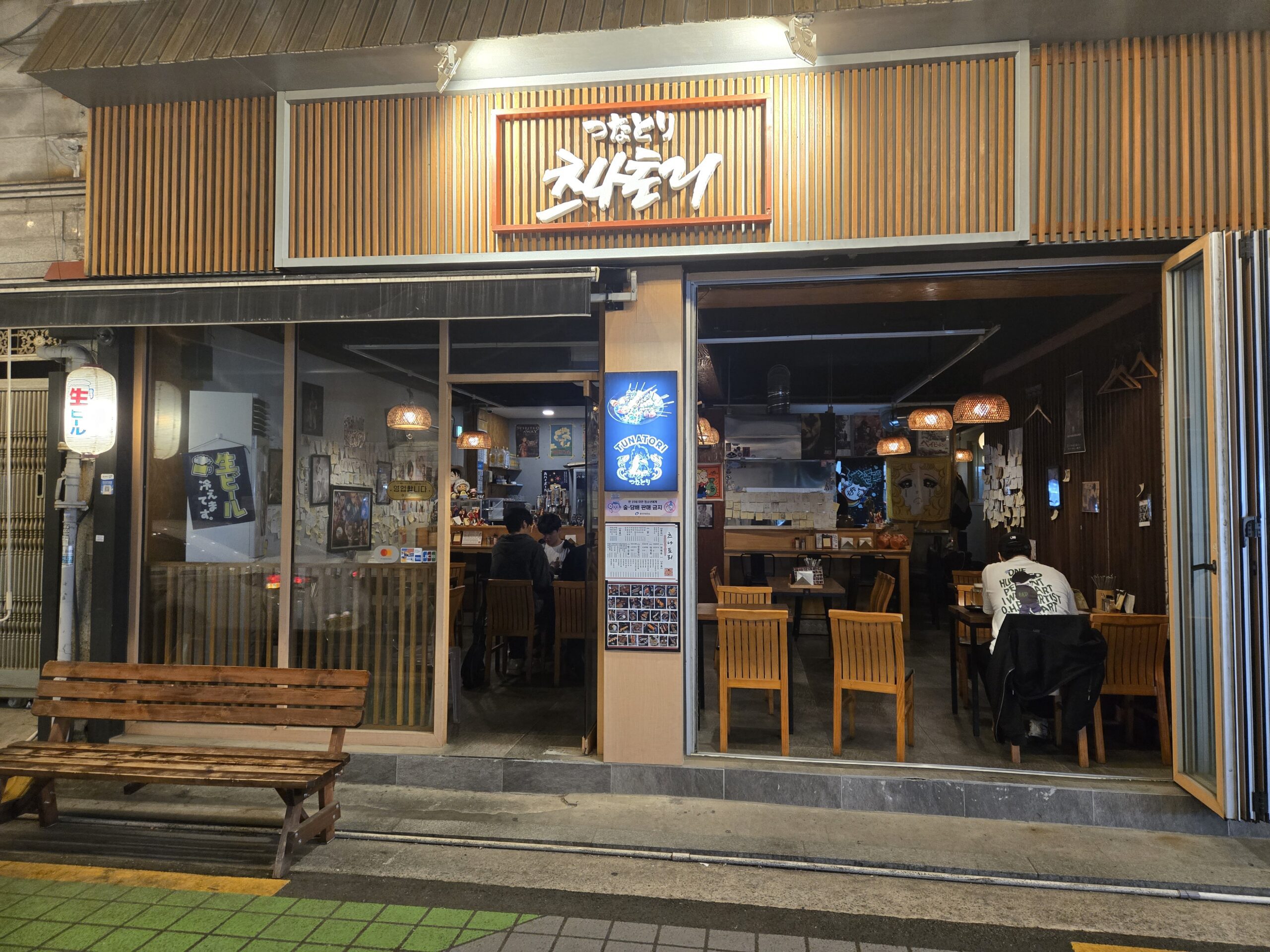
Tunatori sits on a narrow side street about a three-minute walk from Konkuk University Station Exit 6. So once you exit the station, head east, hook left at the convenience store, and the alley opens up to a row of mid-sized restaurants. The shop has wide wooden folding doors that fold all the way open in good weather.
And the signage is unmistakable. A black-on-cream wooden plaque hangs above the entrance with 츠사토리 (Tsusatori) in bold brush calligraphy, plus a smaller English TUNATORI badge with a sumo wrestler mascot. White paper lanterns hang along the front. For a neighborhood that’s mostly franchise chains and student bars, the storefront stands out immediately.
Plus, on the walk over from Exit 6, you’ll pass three other restaurants worth knowing about — a pojangmacha-style spot covered in our Guwoldong Kkachine Kondae review, plus a budget jjigae cafeteria a block south. So this corner of Konkuk is dense with after-work options. Tunatori just happens to be the one with the best storefront vibe at 8 p.m.
Stepping Through the Sliding Doors — Bar, Stickies, and a Sumo Mascot

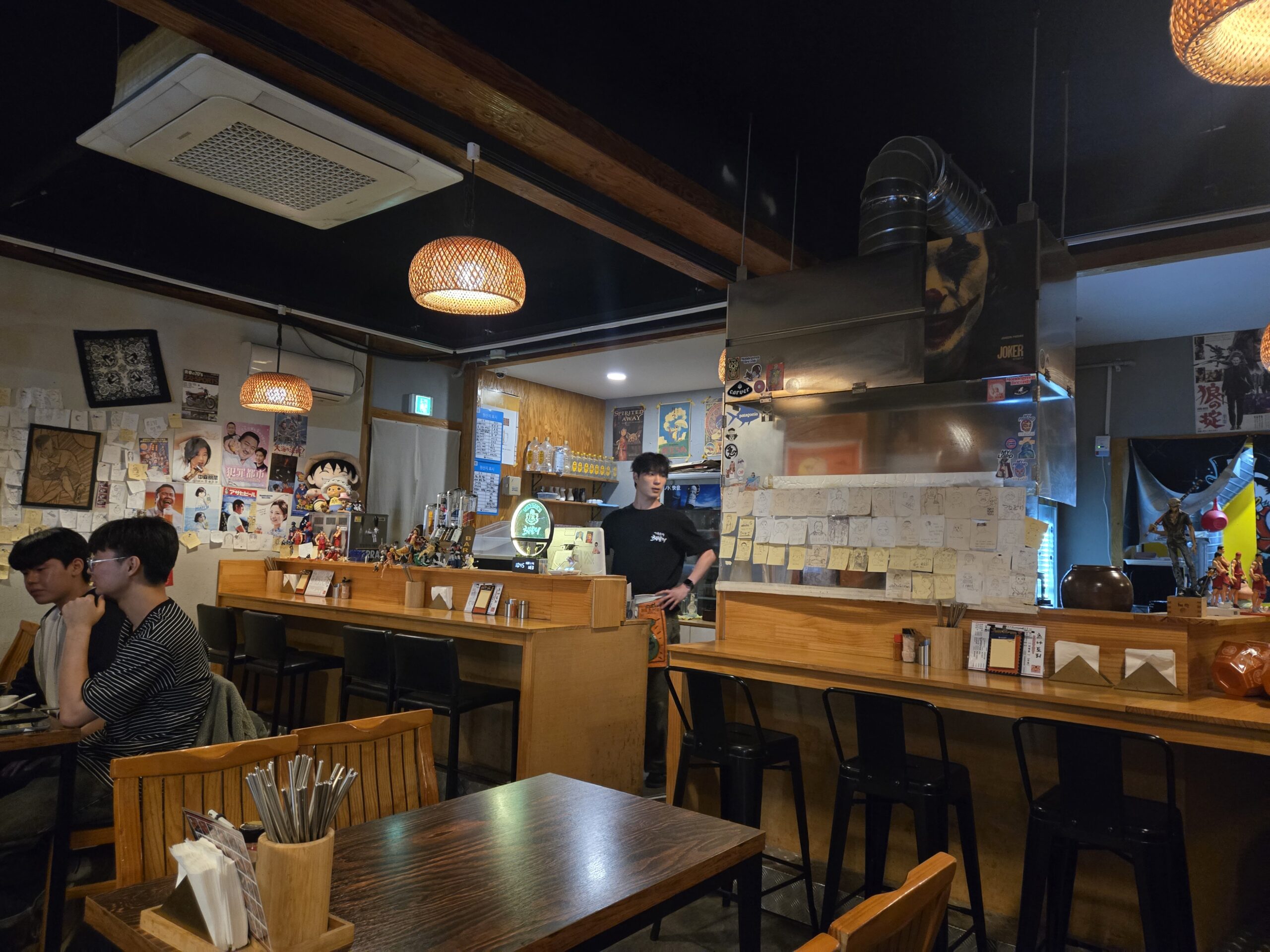
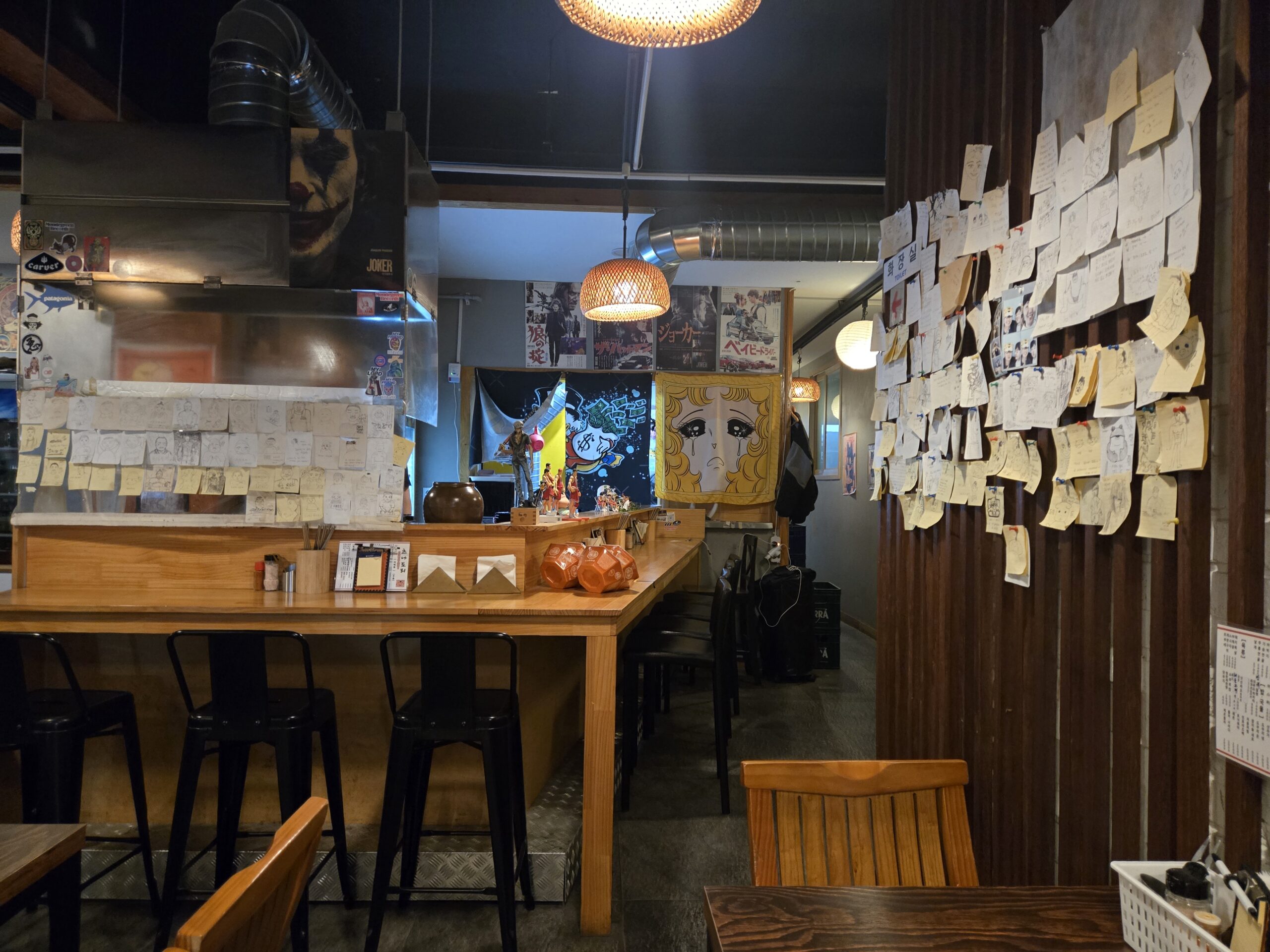
Inside, the layout splits cleanly down the middle. So on the right runs a single wooden bar counter with about eight metal stools facing the open kitchen. On the left, a row of four-tops along the wall, separated by hanging woven pendant lamps that throw a warm yellow light onto each table.
Behind the bar, you can see the yakitori grill in motion. One cook works the skewers over what looks like binchotan-style charcoal, while another plates cold dishes at the prep station. So the air carries a constant low-grade smoke smell — the good kind, from the tare-glazed skewers, not the bad kind from a clogged vent.

And the back wall is where Tunatori shows its personality. A roughly two-meter section is covered with handwritten sticky notes — mostly from past customers leaving short messages, dates, names, and the occasional drawing. Some are clearly from couples on first dates. Others are office crews celebrating Friday. So the wall functions as both decor and customer-engagement gimmick, and it works.
Also, the small touches across the room hint at the owner’s personality. A theatrical hannya mask hangs over the kitchen pass-through. A handful of vintage movie posters — Joker, Akira, a couple of Japanese yakuza films — line the walls. And the sumo wrestler from the menu logo shows up again as a paper cutout near the door, watching every guest leave.
The Tunatori Konkuk Menu: Tuna, Yakitori, and 33,000-Won Junmai

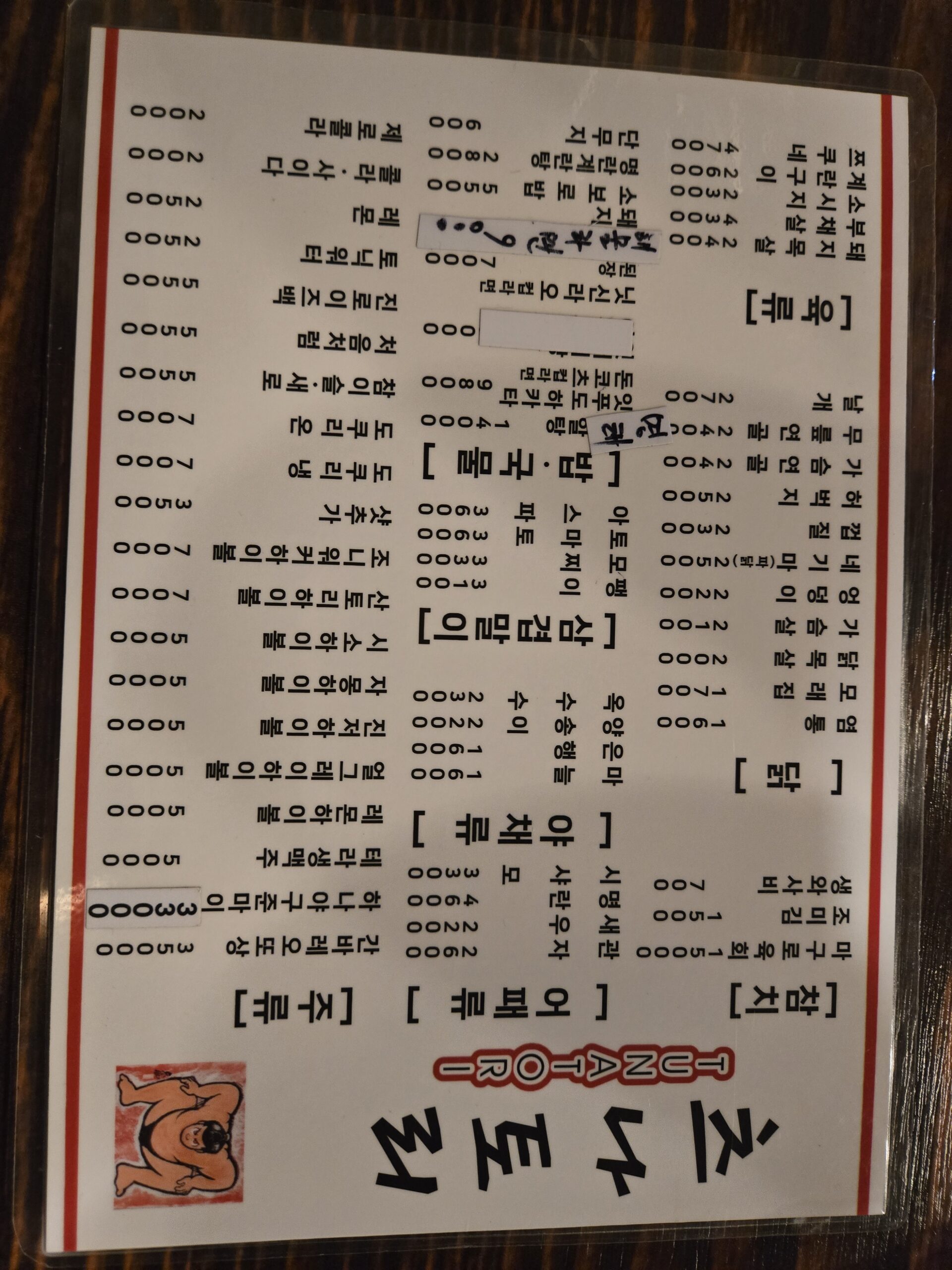
The price menu sits laminated on every table. So you can read it without flagging the server. The layout reads right-to-left in old-school Japanese style, with five sections: tuna (참치), seafood (어패류), drinks (주류), vegetables (야채류), and chicken (닭 — yakitori).
For the headline tuna section, the maguro yukhoe (마구로육회) sits at 15,000 KRW. Plus side dishes of seasoned seaweed (조미김) at 1,500 and fresh wasabi (생와사비) at 700. For yakitori in the chicken section, individual skewers run 1,600 to 2,700 each — gizzard (모래집), chicken neck (닭목살), thigh, wing, breast cartilage, and the signature tsukune (츠쿠네) meatball.

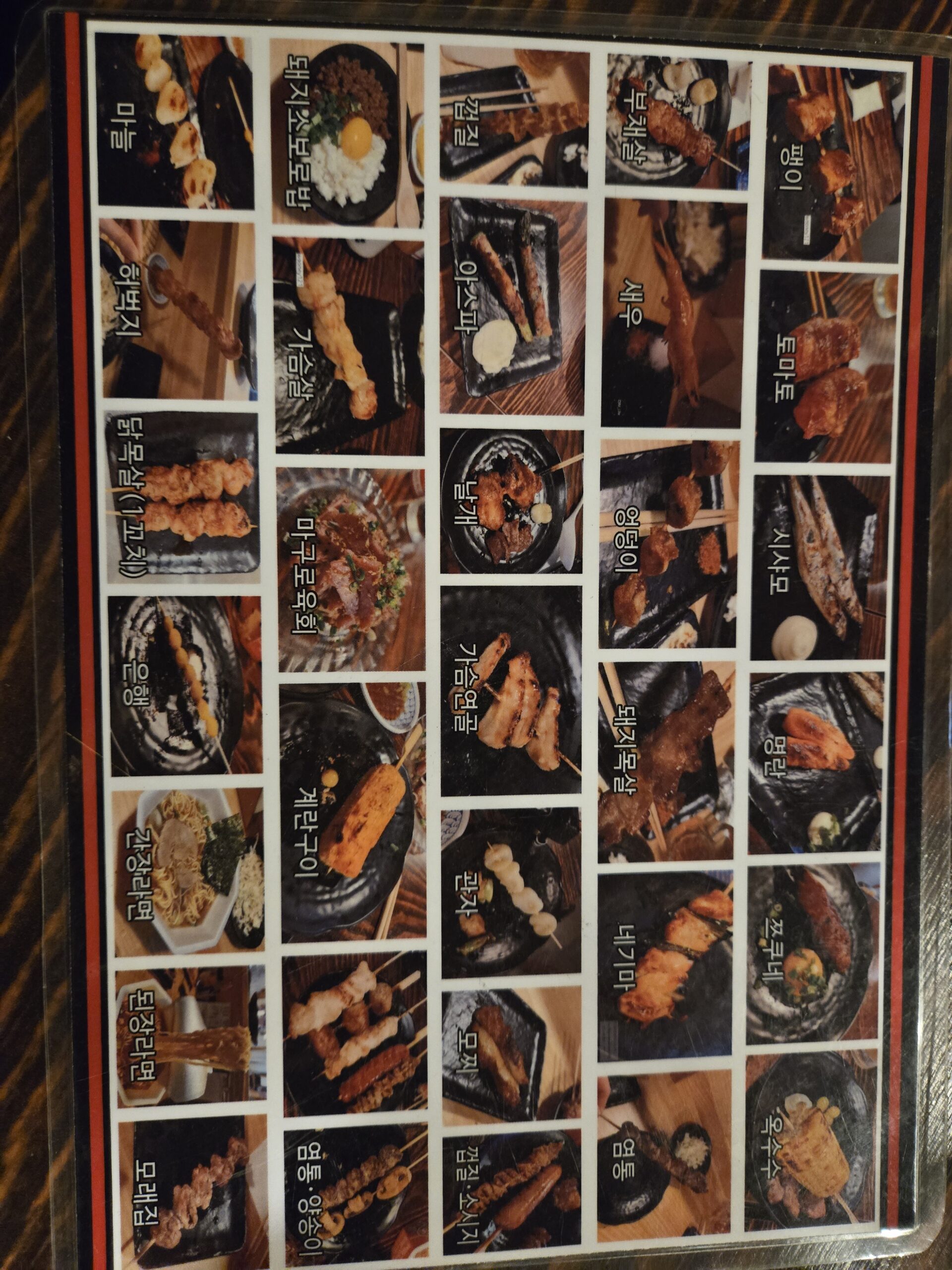
Plus there’s a photo menu mounted on the bar that shows every yakitori and pork option visually. So if you can’t read the Korean writing, just point. Skewers visible in the photo grid include pheasant breast, shrimp, scallop, mochi, pollock roe (명란), and the all-popular charred chicken meatball with raw egg yolk.
And on the drinks side, the lineup is built for serious sipping. Terra draft beer sits at 5,000 KRW per mug. A 33,000-KRW bottle of Junmai-shu (하나야 준마이) is the headline sake. Plus a deep selection of highballs: lemon, earl grey, ginger, grapefruit, shiso, Suntory, Johnnie Walker — each at 5,000 to 7,000.
Maguro Yukhoe (15,000 KRW): Why People Actually Come Here

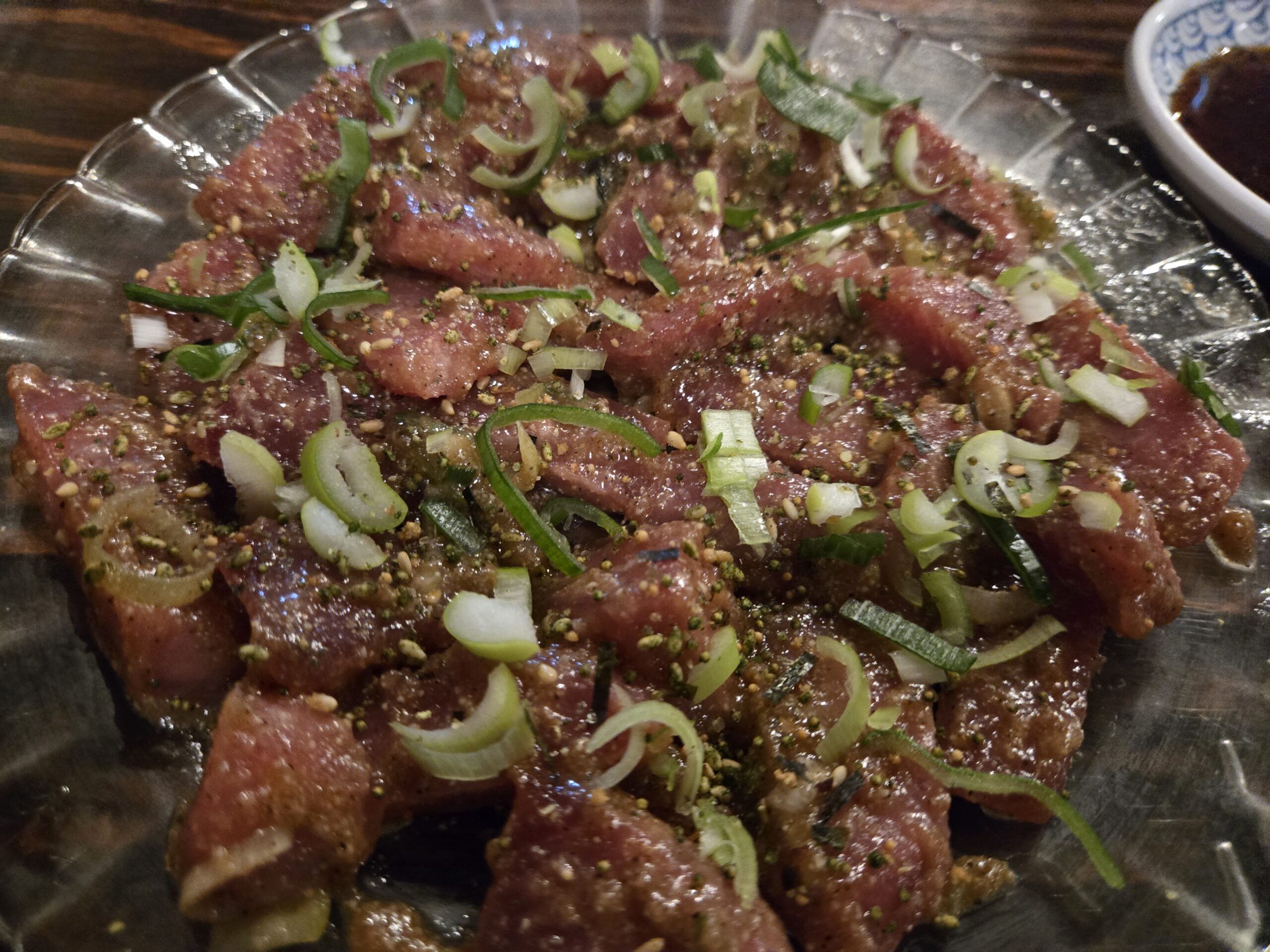
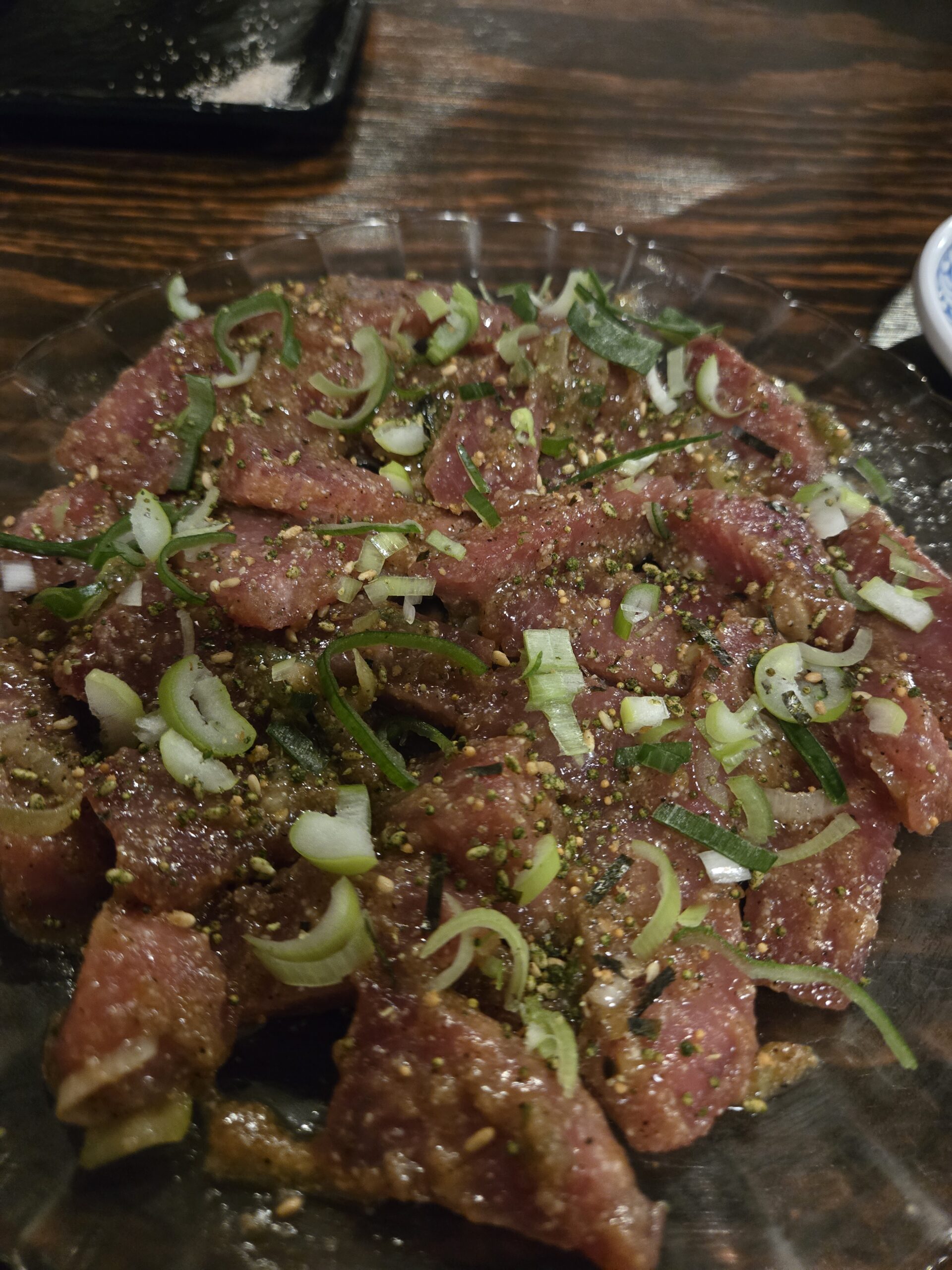
Maguro yukhoe is Tunatori’s headline dish and the reason my coworker recommended the place. So at 15,000 KRW, it’s mid-priced for what you get — about a dozen good-sized cubes of raw bigeye tuna, dressed with sesame oil, finely chopped scallion, sesame seeds, and a faint nori dust on top.
The tuna itself was the surprise. Most chain izakayas in Konkuk use cheaper yellowfin frozen and pre-thawed at the counter. Tunatori’s tuna had the deep red color and the slightly springy texture that means it was thawed properly, probably overnight in a refrigerator rather than under running water. Plus the marinade didn’t drown the fish. So you could still taste the clean, mineral edge of the tuna underneath the sesame.
And the plating fits the dish. Glass plate, room-temp serving (not over-chilled), green-onion garnish in proportion to the protein. For 15,000 KRW, this is hands-down the best ratio of price-to-quality tuna tartare I’ve eaten in eastern Seoul. Period.
For context, the Itaewon izakaya I usually visit charges 22,000 to 28,000 for a comparable plate. So Tunatori is roughly half. And the only spot I’d rate higher on tuna in this neighborhood is a 30,000-won omakase counter near Konkuk Lotte that’s twice the price.
First Frosted Beer and the Shredded Cabbage Banchan

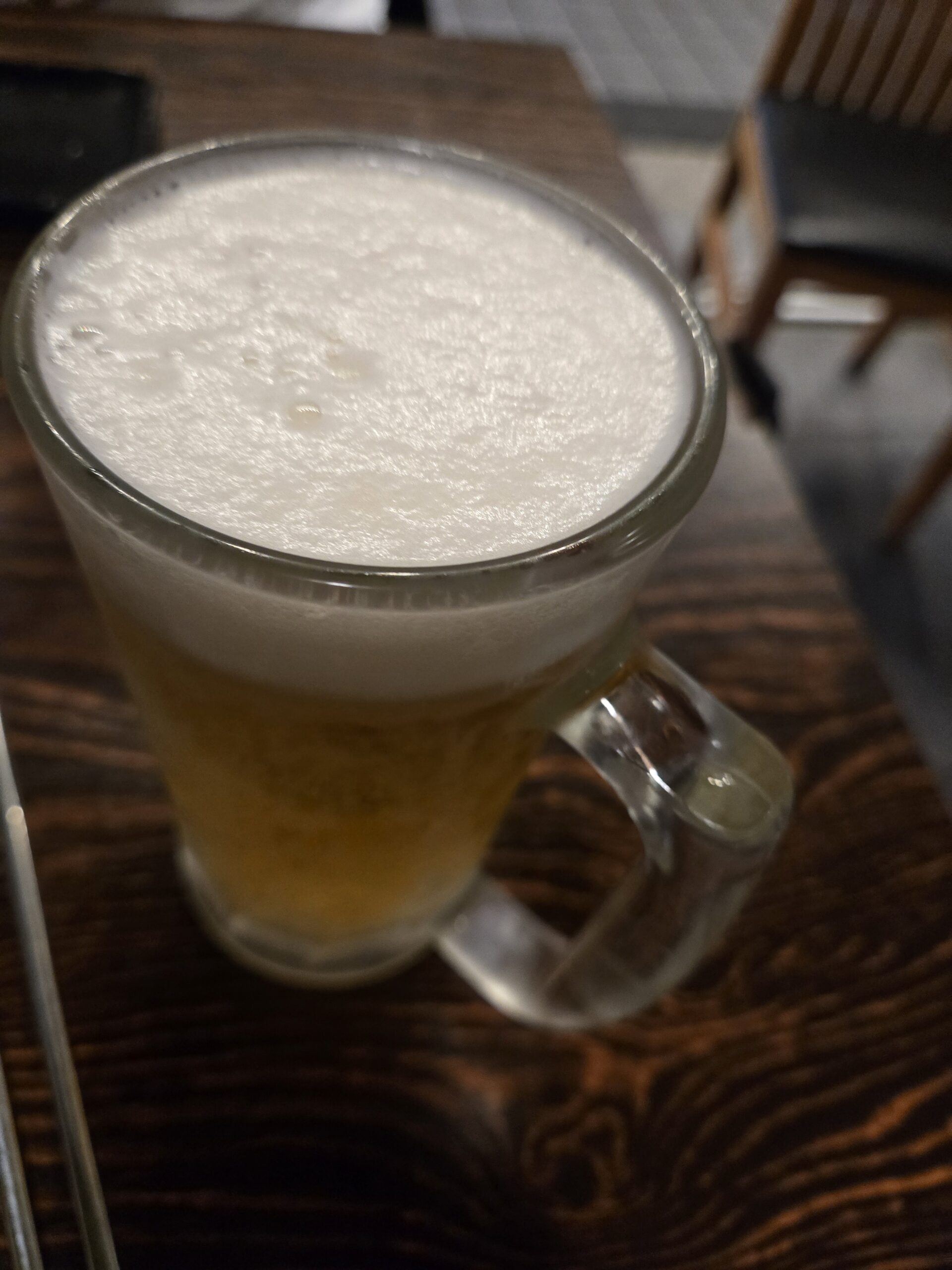
A frosted glass mug of Terra draft beer landed on the table within a minute of sitting down. So the foam was thick — about an inch — and the body underneath was cold enough to fog the inside of the glass. For 5,000 KRW, this is what every after-work draft should feel like.
Tunatori serves beer at the temperature you want, not the temperature that’s convenient for the kitchen. So the glass actually gets frosted, not just lukewarm-rinsed. And the head was poured properly — clearly someone behind the bar takes pride in the pour.

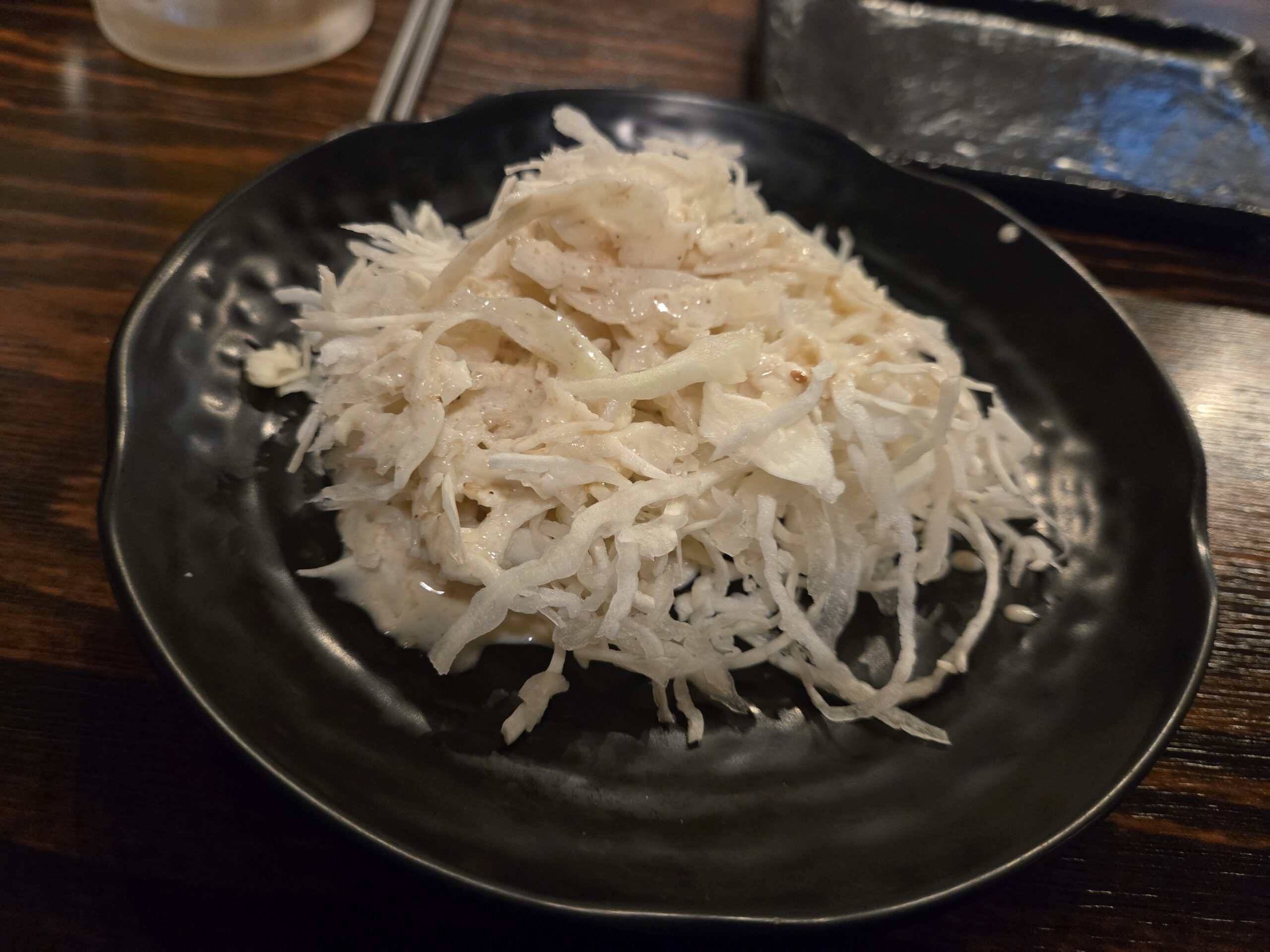
Alongside the beer came a small black plate of shredded raw white cabbage in a light vinegar dressing. So this is the Japanese version of the spicy banchan you’d get at a Korean BBQ shop — lighter, less saucy, designed to cleanse the palate between yakitori bites rather than overwhelm. Plus the cabbage was visibly fresh, not pre-shredded from a bag.
And the dressing was the unexpected detail. Most izakayas in Seoul use a generic ponzu or just leave the cabbage plain. Tunatori’s version had a faint sweetness, a hint of yuzu, and just enough acid to make the cabbage actually interesting. It’s the kind of small thoughtful touch that says the kitchen pays attention.
Tsukune Skewer With Raw Egg Yolk: The Signature Move

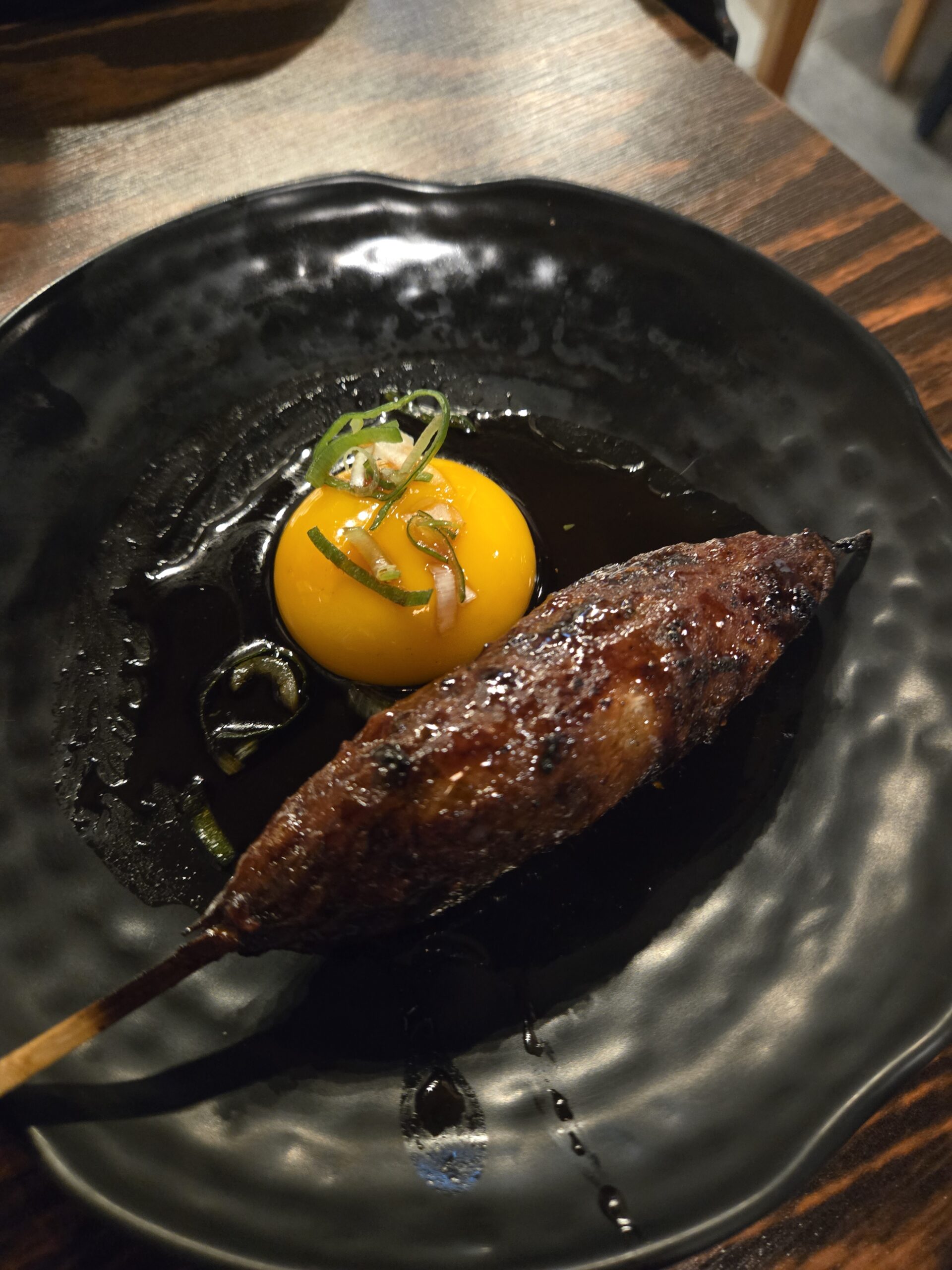
The tsukune skewer is what Tunatori is known for. So it arrives on a heavy black ceramic plate, with the skewered chicken meatball laid across one half and a single raw egg yolk sitting in a shallow pool of tare sauce on the other. Charred grill marks line the meatball. A few strands of green onion garnish the yolk.
And the visual is the point. So you’re supposed to take the skewer, dip it directly into the yolk, and bite. The yolk coats the charred surface. The tare adds sweet umami. And the meatball itself is dense but juicy, with just enough cartilage to give it texture.
Plus the tare here is the real workhorse. Most Korean izakayas use a generic store-bought yakitori sauce. Tunatori’s tare tasted house-reduced — deeper than supermarket teriyaki, with a hint of soy fermentation that suggests it’s been simmering on the grill station for days, picking up drips from every previous skewer.
Sliced Tsukune in a Pool of Yolk — How We Actually Ate It

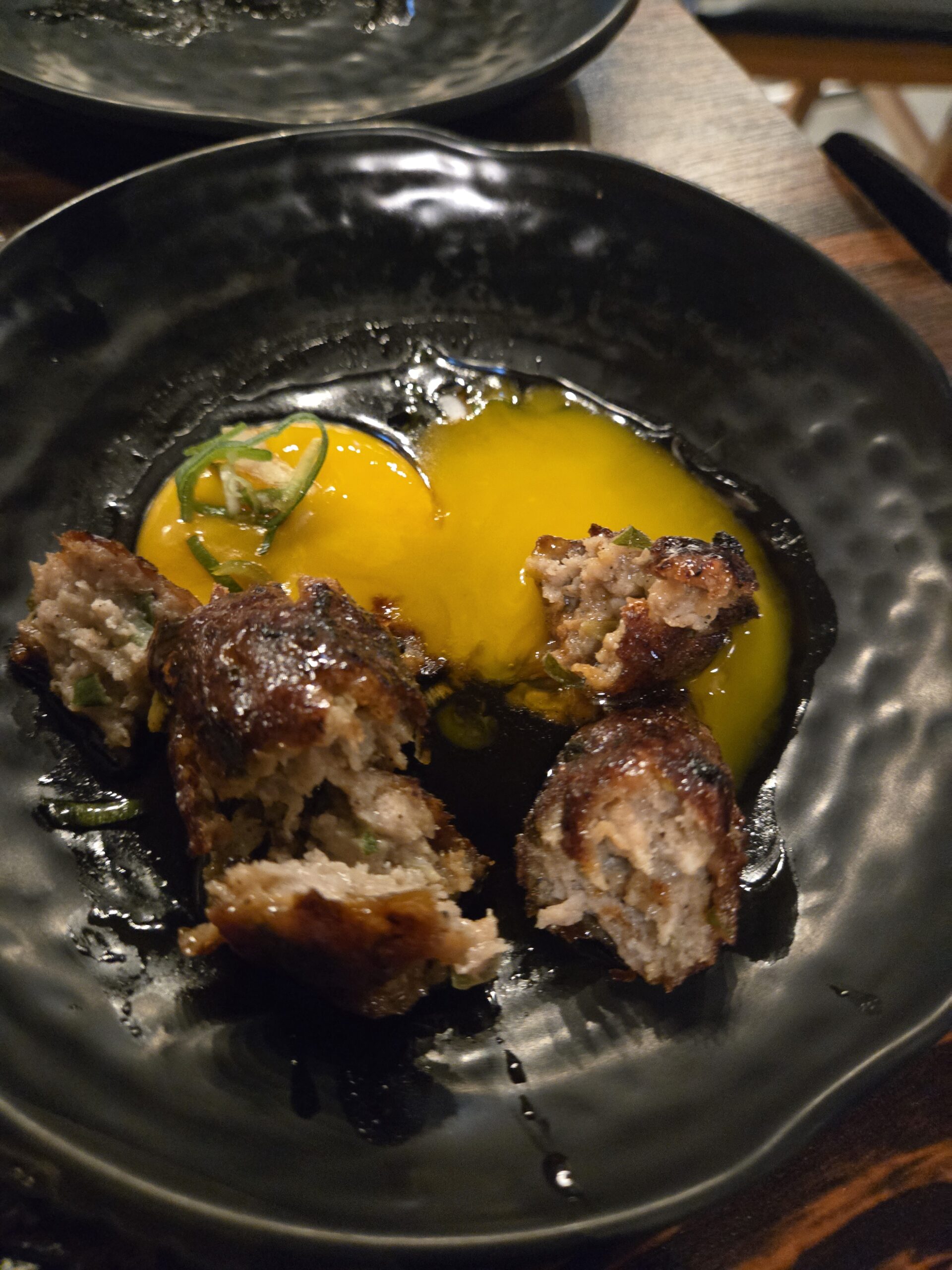
After the first whole-skewer bite, you can ask the bar to slice the rest. So they pull the tsukune off the stick and chop it into four bite-sized pieces, then drop them back into the egg-yolk pool. The yolk breaks fully across the bottom of the plate, and now you’re working with chopsticks instead of a skewer.
And this is the better way to eat it, frankly. So you get the perfect ratio of meatball, yolk, and tare on every bite. Plus you can share the plate easily — one tsukune can comfortably feed two people if it’s sliced. For 3,300 KRW per skewer (or whatever the bar marks), it’s a reasonable shared starter.
Also worth knowing: the egg yolk is raw. So if you don’t do raw eggs — common at Korean izakayas with imported eggs from Japan or premium domestic farms — ask for the tsukune without the yolk. The bar will plate it differently with a side of grated daikon and pickled ginger instead.
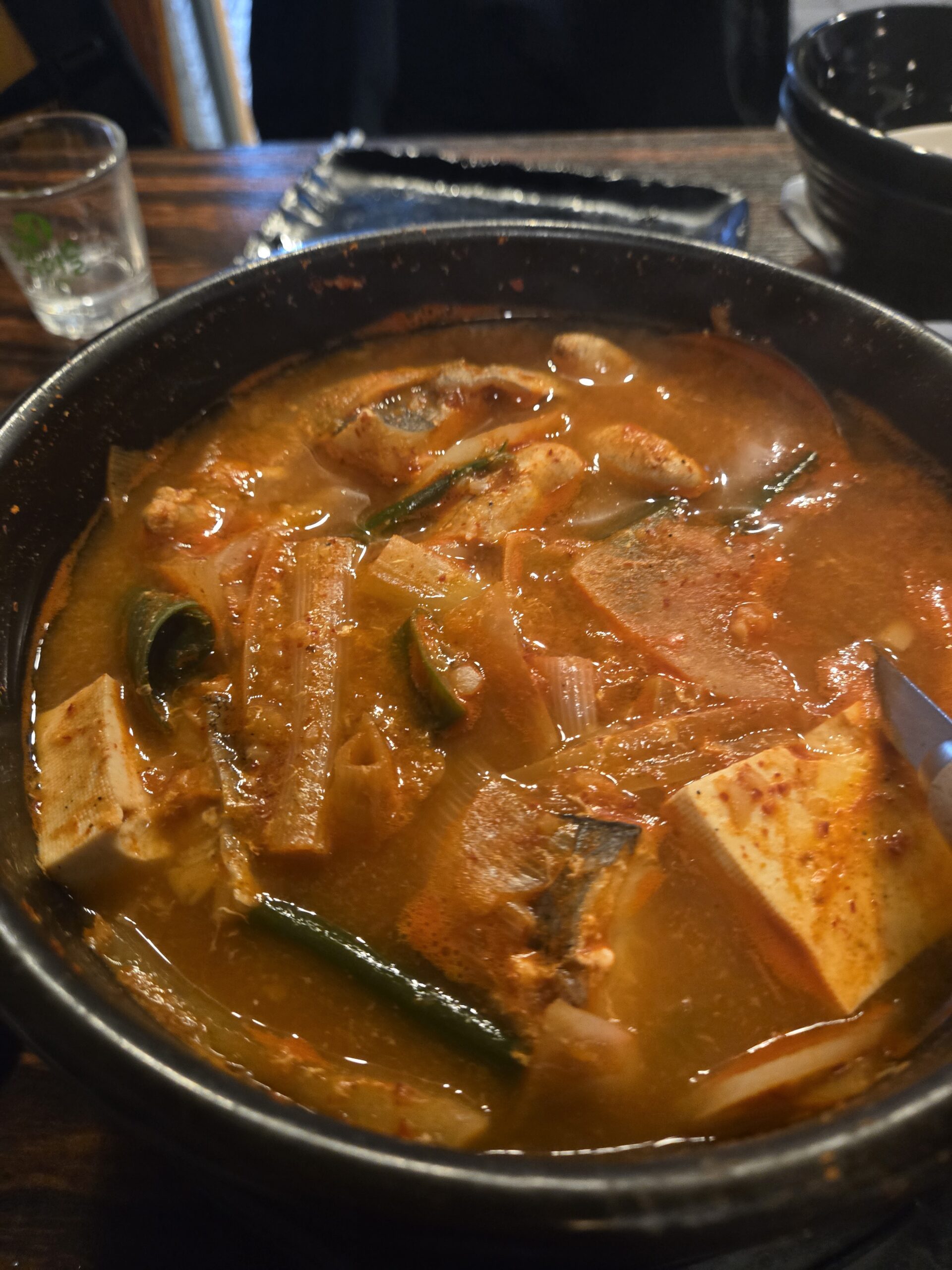
Myeongtae Al-Tang (Pollock Roe Stew): What Saved Us at 10 p.m.

By around 10 p.m., we’d worked through three beers, the tuna, the tsukune, and a side of seasoned seaweed. So the stomach lining was due for something hot. And Tunatori’s myeongtae al-tang — spicy pollock-roe and pollock stew — is the dish I’d come back for solo on a rainy night.
The broth arrived bubbling in a heavy steel pot. Bright red, gochujang-led, with chunks of soft tofu, sliced radish, green chili rounds, scallion, and at least three large pieces of pollock fillet with the skin still on. The roe sacs sat near the bottom, releasing a fatty creaminess into the broth as they cooked down.
Plus the heat was right. So spicy enough to feel like medicine for a beer-heavy night, but not so aggressive that you couldn’t sip the broth. For 2,800 KRW (the menu listed it as 명란계랑탕, pollock-roe egg soup), this was easily the best value-to-flavor ratio of the night. Comparable budget stews show up at 502 Jjigae Maeul Konkuk a few blocks over.
And the moment the lid came off, you could see the broth actively rolling. So that level of heat retention — which most izakayas skip by serving stews in lukewarm ceramic bowls — matters. Stainless conducts heat. The broth stayed bubbling for almost the entire ten minutes we took to finish it.
The Crowd: Young Korean Professionals, Late and Loud
By 9 p.m., Tunatori was full. So the crowd was younger than I expected — mostly Korean office workers in their late twenties and early thirties, with a few couples and one larger group of six celebrating something at the corner table. Average age looked like 29. Nobody was on a phone for more than a minute.
And the noise level was the right kind. Loud enough that your conversation feels private, soft enough that you can still hear the bartender call out the next order. Plus a Japanese-pop playlist runs in the background — nothing too aggressive, mostly mid-tempo, just enough to fill the gaps between conversations.
Also, the staff were dialed in. So I watched the same server take five separate orders without writing anything down, then deliver every plate to the right table. Tunatori clearly hires for memory and speed, which is the right call for an izakaya this small.
And one detail mattered for solo sitters like me. If you sit at the bar alone, the chef plates your dishes facing your seat, not the dining room. So you’re looking down at the food the way it’s meant to be photographed. Plus he’ll tap the wood when he sets down a hot plate. So a small Japanese-grill cue says ‘careful, this just came off the coals.’ This level of trained service is rare in Konkuk. Most counter spots are still figuring out hospitality basics.
Why Tunatori Konkuk Works as a Post-Work Beer Stop
For an after-work team beer of three or four people, Tunatori Konkuk is the ideal Konkuk stop. So you walk in around 8 p.m., grab a bar counter or a four-top, order one tuna plate, two yakitori skewers per person, and a round of frosted Terra. Total per-person spend lands at 25,000 to 35,000 KRW depending on how many highballs you stack.
And the menu lets you ramp slowly. Start with cold (tuna tartare, cabbage banchan). Move into grilled (tsukune, gizzard, chicken thigh). Finish with broth (pollock stew or ramen). So the pacing of a Tunatori session mirrors a real Tokyo izakaya progression rather than a slap-everything-on-the-table Korean BBQ pace.
Plus the highball list is what keeps the table sitting. So for a leisurely two-hour drink, you can move from Terra draft into a shiso highball, then a Suntory, then back to beer without ever pausing the rhythm. Comparable retro-pub vibes show up at our Geumbyeol Maekju Bangi review over in Songpa.
For late-night gukbap routes after closing, Dammion Seongsu is one subway transfer away. And for an outdoor pojangmacha alternative when the weather’s warmer, Pocha Cheonguk Hanam is the bigger-table option.
Practical Info: How to Find Tunatori Konkuk
For first-time visitors, here’s everything you need to find Tunatori Konkuk and order without fumbling.
- 📍 Location: Side alley off Achasan-ro, near Konkuk University Station Exit 6 (서울시 광진구 화양동)
- 🗺️ Nearest station: Konkuk University Station (Lines 2 & 7), Exit 6 — about a 3-minute walk
- 🕒 Hours: Roughly 5:00 p.m. to 1:00 a.m. nightly — confirm by phone before going
- 💰 Pricing: Mains 11,000 to 15,000 KRW, skewers 1,600 to 2,700 each, draft beer 5,000
- 🍶 Drinks: Junmai sake, Terra draft, eight-plus highball varieties, soft drinks
- 🍴 Seating: Bar counter (8 stools) plus 5 four-top tables — about 28 seats total
- 🥩 Headline dishes: Maguro yukhoe, tsukune with raw yolk, myeongtae al-tang
- 👥 Best fit: Couples, small office crews of 3-4, solo bar sitters
- 💳 Cash and card both accepted
For directions from Exit 6, walk straight east about 200 meters, then hook left at the convenience store onto the side alley. The wooden folding doors and the white paper lanterns will be on your right within 100 meters. Plus you can cross-check the broader Konkuk dining district on VisitSeoul for the official area map, or read up on classic Japanese yakitori traditions for what to order.
Final Verdict + Star Rating
For honest takes from someone who walks through Konkuk most weeknights, Tunatori Konkuk is the rare izakaya that hits its target every visit. So the tuna is fresh. The yakitori grill is hot. The tare is house-reduced. And the staff treats a solo bar sitter the same as a six-top of regulars.
Here’s the rating breakdown:
- ⭐ Food Quality: 4.7/5 — tuna and yakitori both consistently above the Konkuk average
- ⭐ Price Value: 4.5/5 — maguro yukhoe at 15,000 is hard to beat in this price tier
- ⭐ Drinks: 5/5 — properly cold Terra, well-stocked highball list, fair sake pricing
- ⭐ Vibe: 5/5 — folding doors, sticky-note wall, sumo mascot, the right kind of loud
- ⭐ Late-Night Fit: 4.5/5 — open until 1 a.m. and the pollock stew saves you
- ⭐ Overall: 4.7/5
For my next visit, I’m bringing two friends and ordering the 33,000-KRW junmai bottle plus the yakitori sampler. Until then, Tunatori is going into my regular Konkuk rotation alongside the budget jjigae spots and one mid-tier sushi counter. So for anyone who works or lives within fifteen minutes of Konkuk University Station, this is the storefront you want to remember the next time a Tuesday turns long. Save the address. Walk in. Order the tuna and the tsukune. Then add the pollock stew when the second beer starts to feel like one too many.