My wife and I had been at home all afternoon when the urge for one drink hit. The kids were already at their cousins’ for the night, the dishes were done, and Hanam in May has the kind of warm evening air that pulls you out of the house even when you weren’t planning to leave. We walked out the front door, wandered toward the local commercial strip, and got pulled in by the smell coming out of an indoor pojangmacha called Pocha Cheonguk Hanam (포차천국).
The place was packed. Tables full of families with kids. We grabbed a window seat, ordered through the tablet, and ended up staying for two hours. Soju and stew — plus a pepperoni pizza, cheese gamjajeon, and jjage-chi we didn’t expect to fall for. Recommended.

Why We Walked Out for Drinks Without the Kids
Not every weekend, but every now and then, my wife and I get a kid-free evening. Our 9-year-old daughter and 10-year-old son spend the night at their cousins’ place once a month or so, and those nights are the rare ones where we can walk out without checking what time we have to be back. This was one of those nights.
So we’d been planning to drink something at home. A bottle of wine, maybe. Then around 7 p.m. my wife said she’d actually rather go out — get out of the house, find an actual seat that wasn’t our living room couch, eat something we didn’t have to cook. Hanam has a small but reliable food strip near our place. We figured we’d walk it, see what called to us, and pick on the spot.
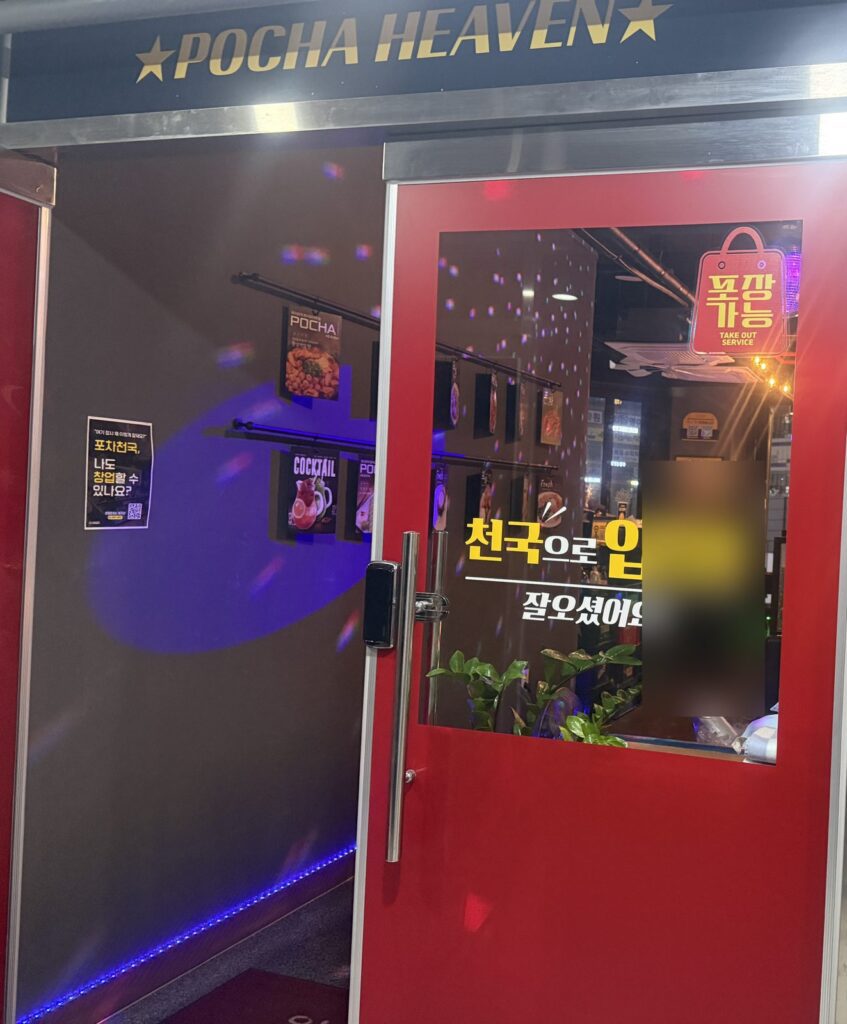
Pocha Cheonguk Hanam pulled us in within about three minutes. The smell hit first — something between Korean stew, charcoal, and pizza dough. Then we saw the red door with “POCHA HEAVEN” written across the top in gold letters, the highball whiskey poster on the side window, and a queue of two parties waiting outside. We added our names to the wait. Five minutes later we were inside.
Inside Pocha Cheonguk Hanam: Indoor Pojangmacha Vibe

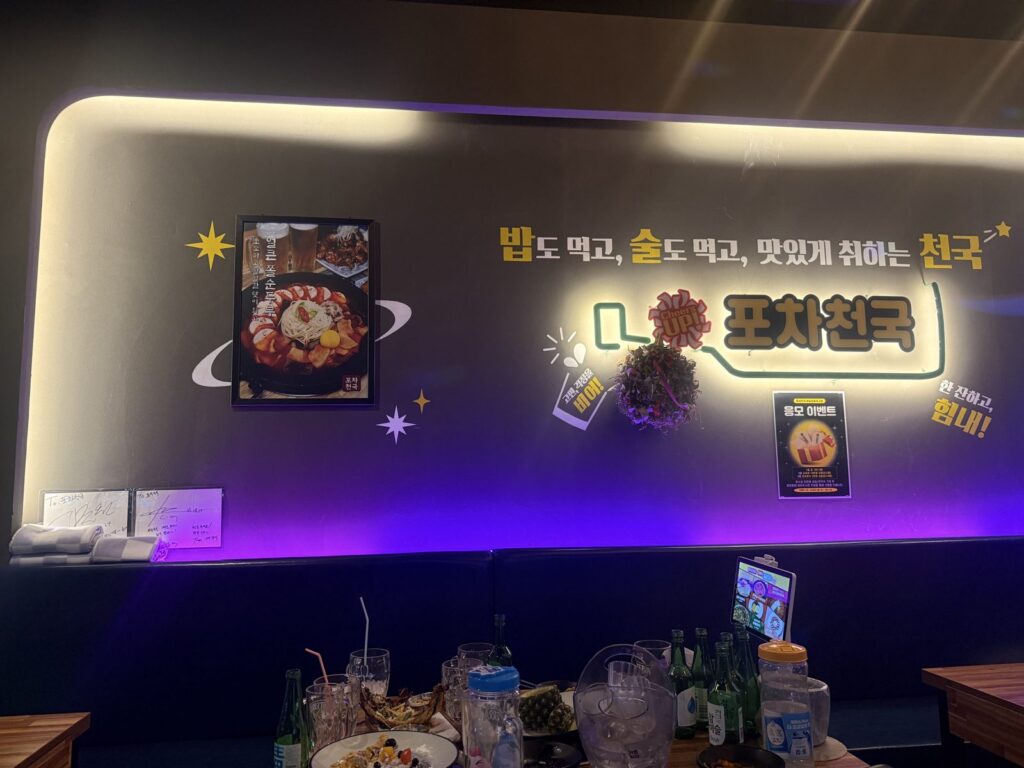
An indoor pojangmacha (포장마차) is the modern Korean evolution of the older outdoor street-tent versions you still see around Jongno or Itaewon. Same casual drinking culture, same emphasis on small plates and shared dishes — but indoors, with proper kitchen, proper lighting, and a much wider menu. Pocha Cheonguk leaned into the format. The interior had purple LED accents, a giant illuminated brand wall reading 밥도 먹고, 술도 먹고, 맛있게 취하는 천국 (eat rice, drink alcohol, the heaven of getting pleasantly buzzed), and a TV in the corner playing the latest variety show.

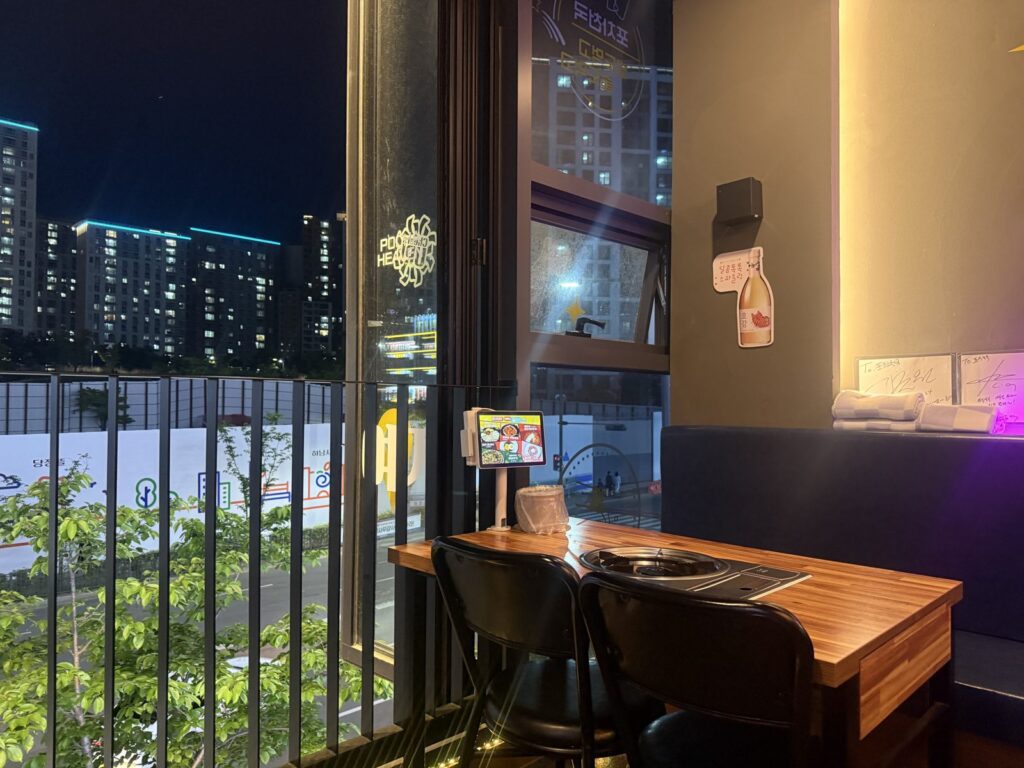
Our window seat looked out over the local Hanam city blocks, with the apartment towers in the distance lit up against the night sky. Every table inside had a built-in burner for hot pots and stews, plus a side panel for tablet ordering. Big difference from the older Korean pubs — modern setup means kids can use the tablet themselves, families don’t have to wave staff down constantly, and the table doesn’t get crowded with paper menus.
So the crowd surprised us. Most pocha I’ve been to lean toward 20-somethings on a weekend or salaryman after-work groups on a weekday. Pocha Cheonguk had families. Three tables visible from where we sat had kids 5 to 10 years old, eating jeon and stew while their parents drank soju. That alone changed the vibe. The place felt like a Korean family restaurant that happened to also serve alcohol — not a bar that happened to also let kids in.
Ordering by Tablet (and Why That Helps Families)

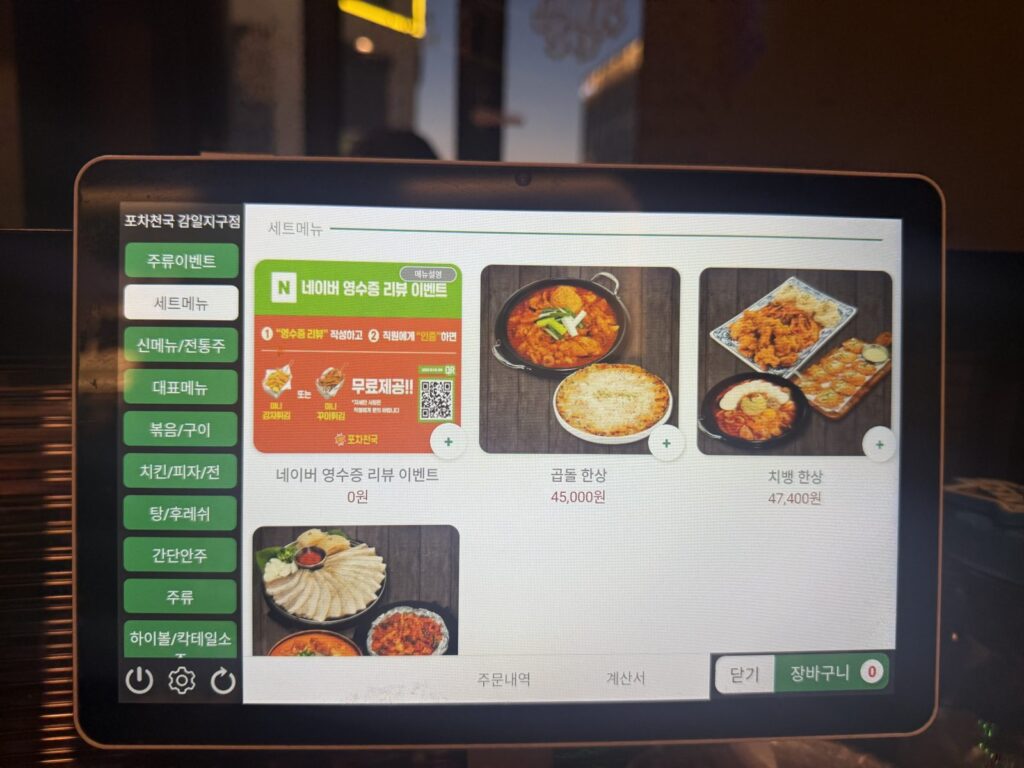
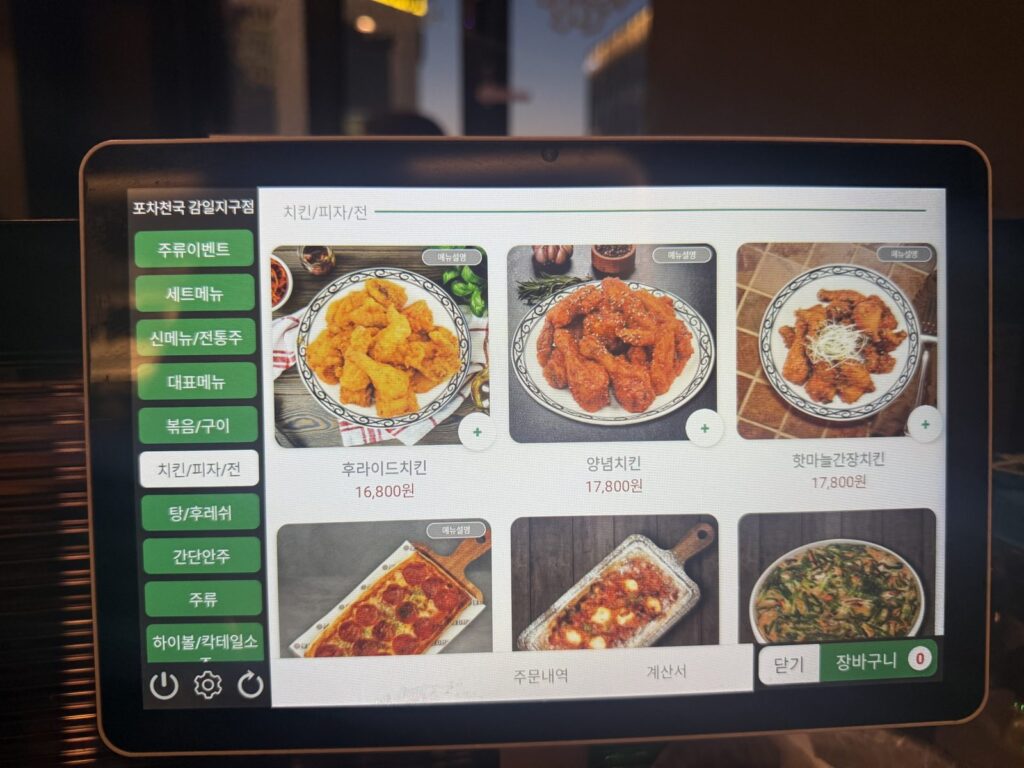
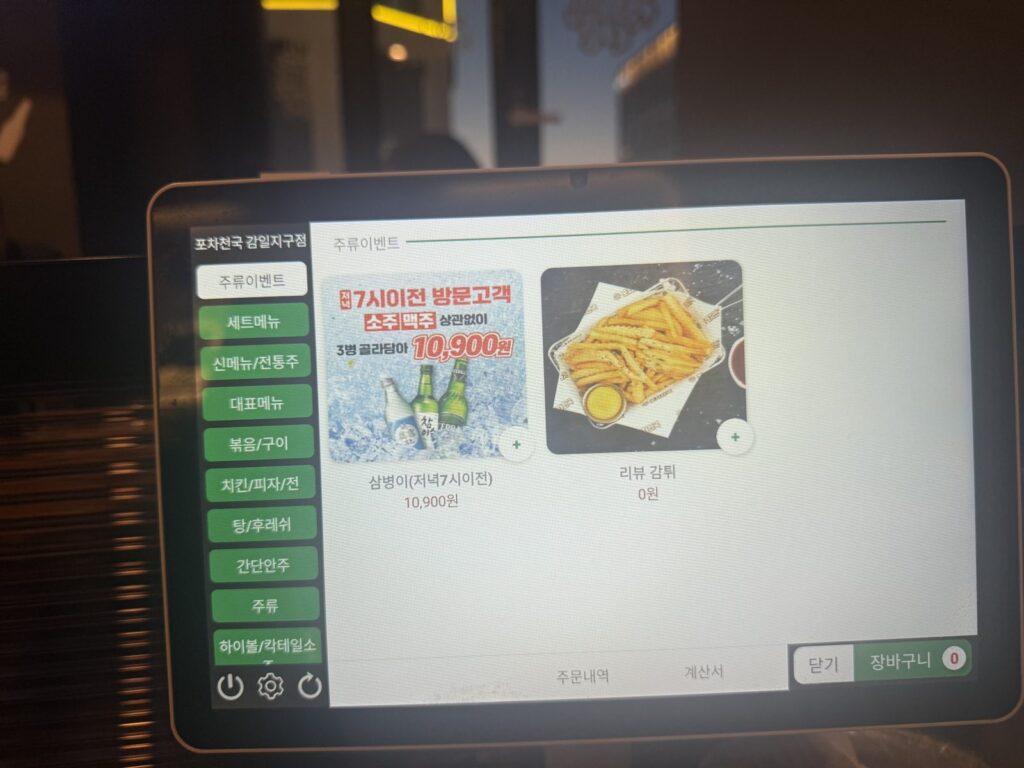
Tablet ordering at Pocha Cheonguk is the kind of detail that turns a casual drinking spot into a family-friendly one. Each table has a tablet on a stand. Categories down the left: 주류이벤트 (alcohol promos), 세트메뉴 (set meals), 신메뉴/전통주 (new items), 대표메뉴 (signature), 볶음/구이 (stir-fry/grill), 치킨/피자/전 (chicken, pizza, jeon), 탕/후레쉬 (stews, Fresh soju), 간단안주 (small bites), 주류 (drinks), 하이볼/칵테일소 (highball / cocktails).

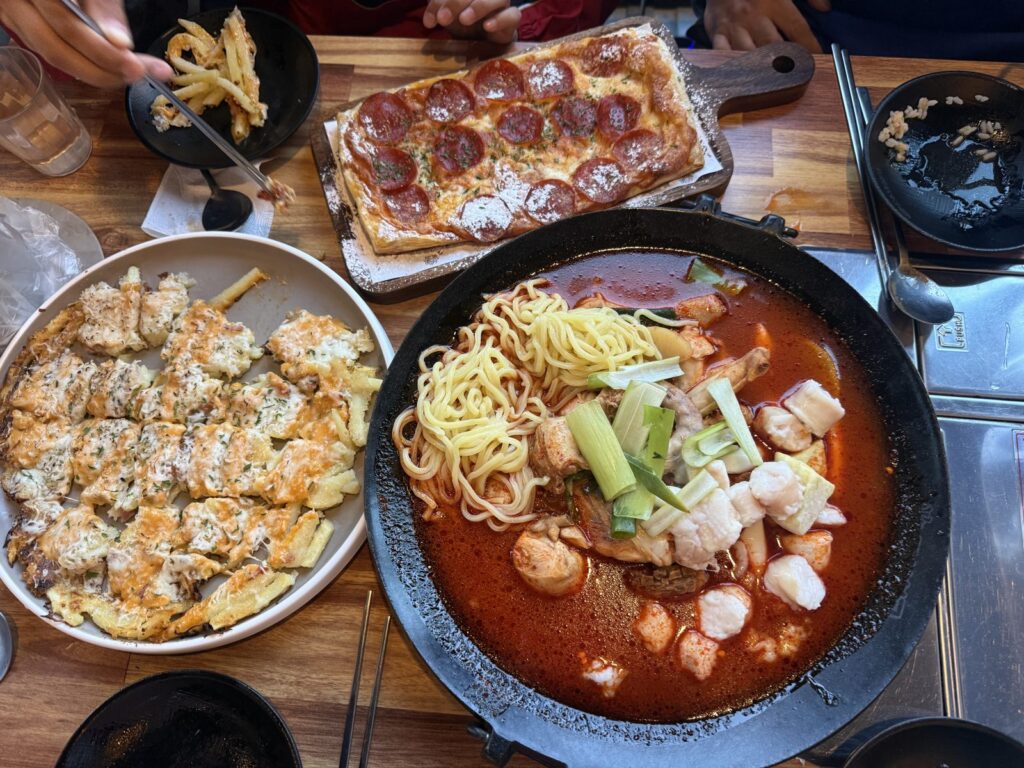
Set menus made the choice easy. The signature combo is 곱돌한상 (Gopdori-set) at 45,000 KRW — it’s the gopdori-tang spicy chicken stew plus a large 감자전 (gamjajeon, Korean potato pancake) on the side. The other big set is 치뼝한상 (Chibbyeong-set) at 47,400 KRW with chicken plus another side. We went with the gopdori. We added a pepperoni pizza for around 18,000 KRW (the menu showed several pizza options under 치킨/피자/전) and 짜계치 (jjage-chi, cheese-rolled rice cake snack) as the small bite. The whole order came to roughly 70,000 KRW for the food before drinks.
For visiting families: the tablet has English support buried in the settings. Most items also show photos, which makes ordering possible even if your Korean is shaky. Staff bring the dishes, but you don’t need to talk to them to order or to pay. Card payments work directly through the tablet at the end. For non-Korean visitors this is the easiest dining-out setup in Hanam.
Gopdori-Tang Hot Pot Was the Centerpiece

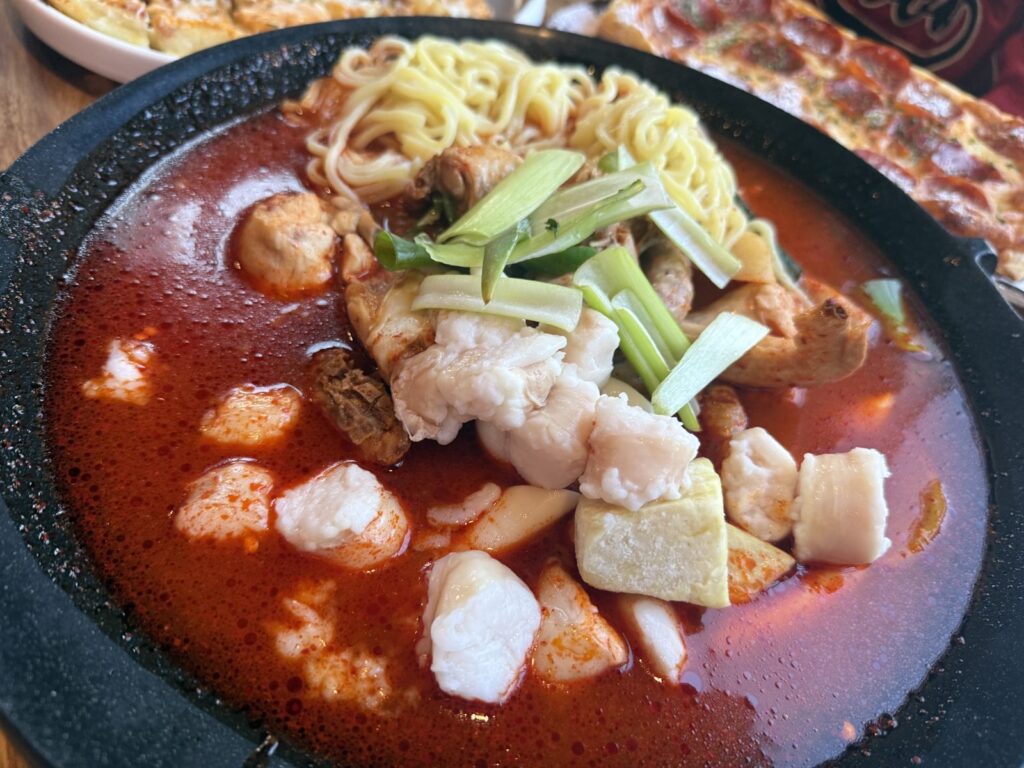
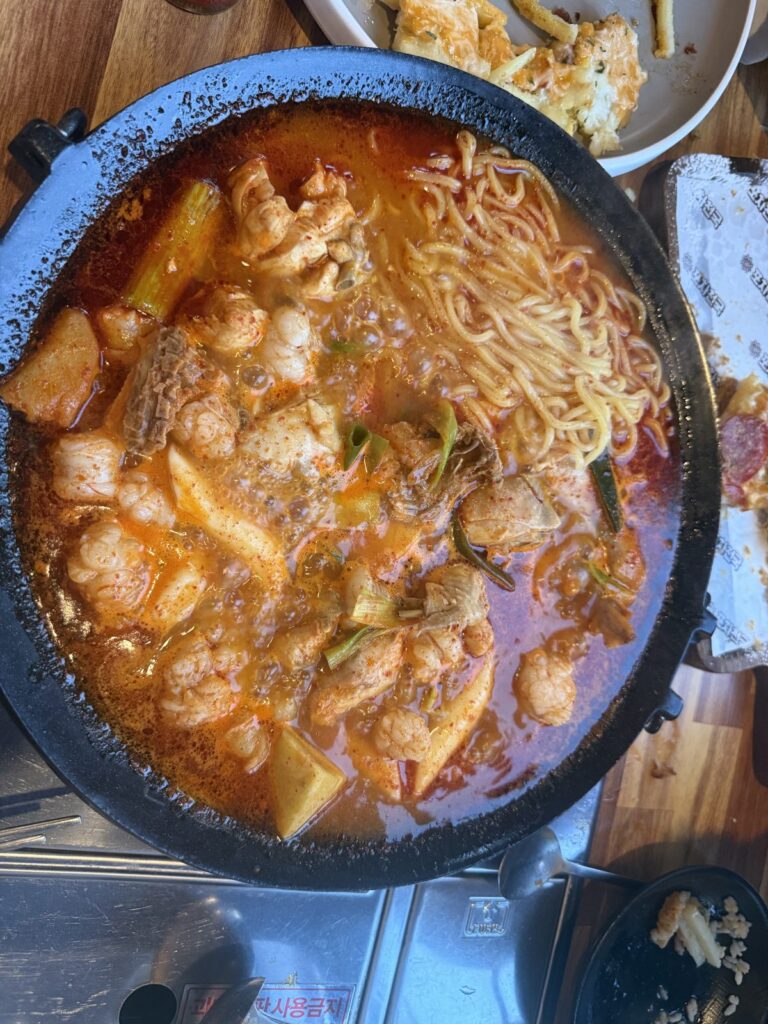
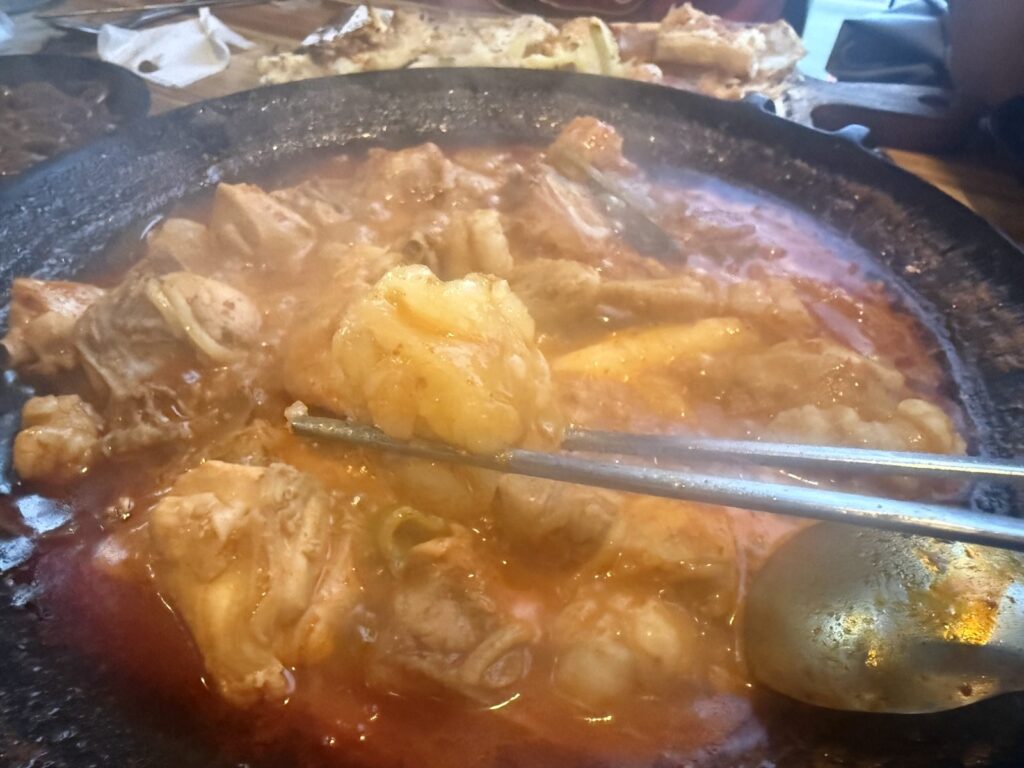
Gopdori-tang (곱도리탕) is a relatively new hybrid dish on the Korean stew scene — a spicy braised chicken stew with chicken intestines added for richness. The “gop” prefix refers to the intestines. The “dori” comes from dak-dori-tang (닭도리탕), the classic spicy braised chicken Koreans have eaten for generations. Combine the two and you get a deep, slightly funky, intensely savory stew that drinks better than the standalone version.

It arrived in a heavy stone pot, already simmering. The staff lit the burner under our table, set the pot on top, and brought out a tray of side dishes. Chicken pieces, intestine, potato, onion, and green chili swam in a deep red broth. The smell was intense in the best way — sweet, spicy, fermented. My wife went in first with a piece of chicken thigh. She nodded once and went back for another piece without saying anything. That’s how I know a stew is good.
How the Ramen Extension Doubles the Stew

About halfway through, we ordered the ramen extension. For around 3,000 KRW extra, the kitchen drops fresh ramen noodles into your remaining stew broth. The noodles soak up the gopdori flavor, and you essentially get a second course out of the same pot.
By the time we were spooning out the last of the noodles and broth, we’d been at the table for an hour and the pot still had broth left. Adding an egg topping is also possible at this point — a few neighboring tables had cracked one in for the runny-yolk effect. We skipped it because we were already full of pizza, but worth knowing.
For visiting families: gopdori-tang is too spicy for most younger kids — chili level lands at a 3 out of 5 by Korean standards, which is moderate-to-hot for non-Korean palates. Older kids who handle Korean spicy food can eat the chicken pieces but should skip the intestines. Adults: this is one of the strongest stews you’ll find in a Hanam pocha.
Cheese-Topped Gamjajeon: The Side That Stole the Set

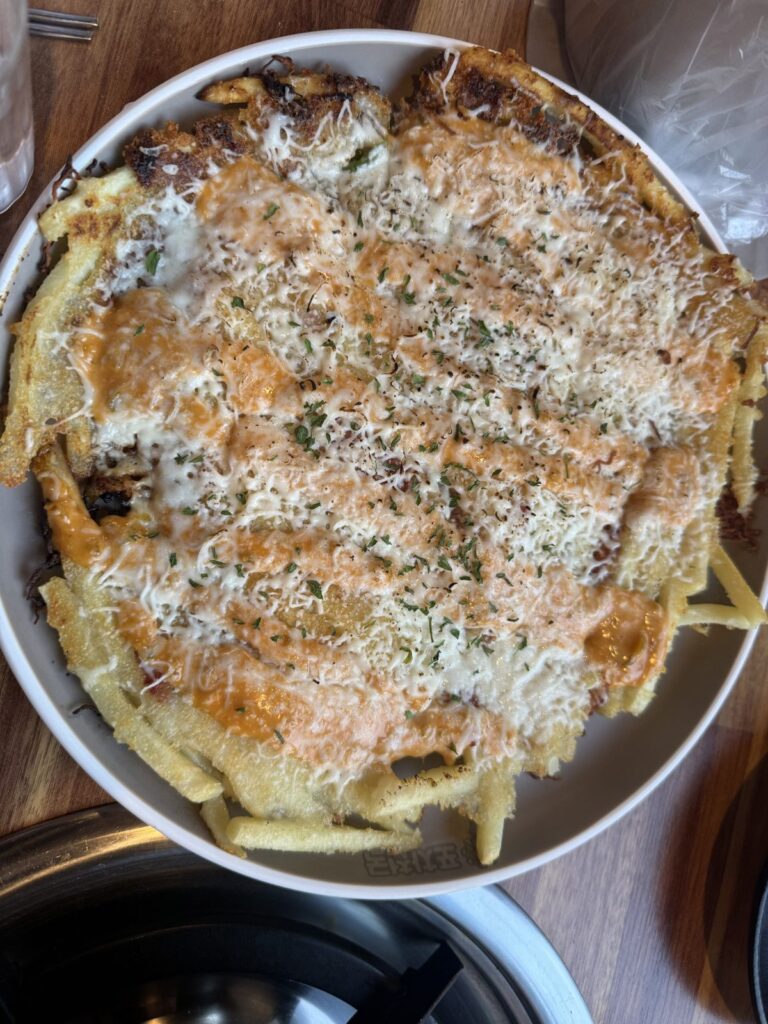
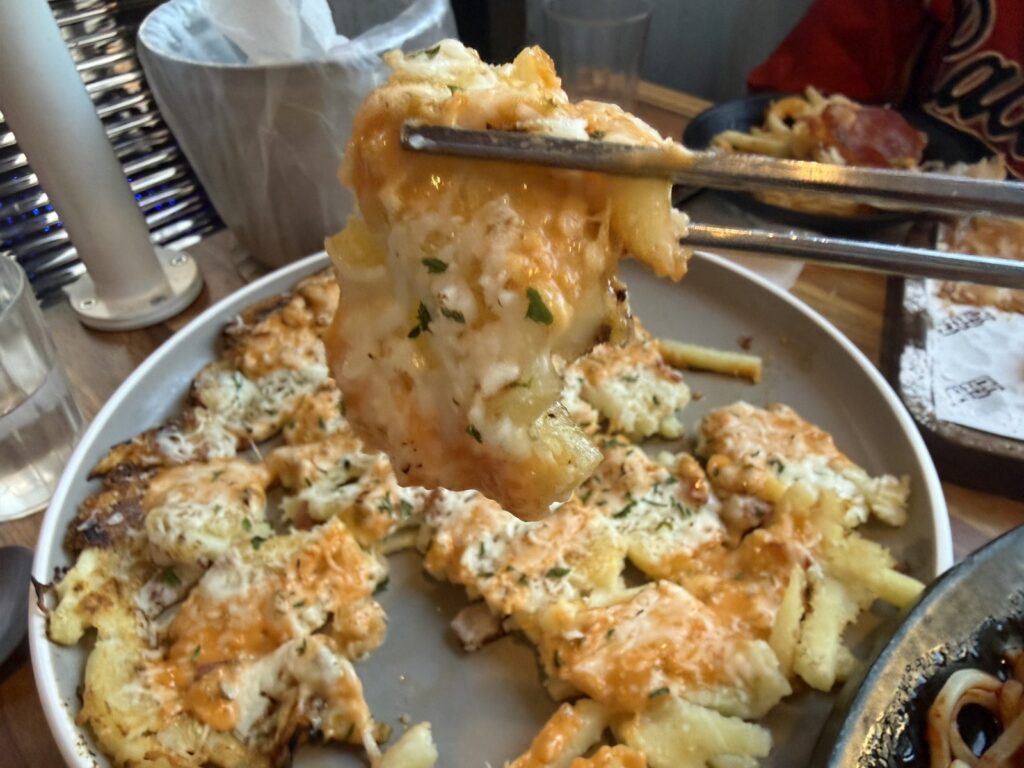
Korean potato pancake (감자전, gamjajeon) is usually a flat, slightly oily, crispy-edged disc served with soy-vinegar dip. Pocha Cheonguk’s version is a different animal. Their gamjajeon comes shredded into thick strips, fried until golden, then covered with melted mozzarella and sprinkled with parsley and orange chili oil. It looks like a cross between Korean potato pancake and Western cheese fries.

Our daughter would have lost her mind over this. (She still talks about the cheese-topped clams from our trip to Pungnyeon Hwesenta on Anmyeondo — same kid-friendly cheese-on-everything energy.) For two adults at a pocha table, the cheese gamjajeon turned out to be the surprise winner of the night. The potato strips stayed crispy underneath the melted cheese. Each bite had texture, savor, and just enough chili oil to keep you coming back.
Pairs perfectly with soju. Pairs even better with a beer. The cheese binds with the carbonation in unexpected ways, and the chili oil keeps the palate alert. By the time we finished the plate, both of us had lost any moral high ground about “small plates” — this was a full course on its own.
For visiting families: cheese gamjajeon is one of the easiest crossover dishes for kids who don’t yet handle Korean spicy food. Mild base, familiar cheese, fries-like texture. Korean kids tend to inhale it. Visiting kids do too.
Pepperoni Pizza That Held Its Own Against the Stew

I rolled my eyes a little when my wife added the pepperoni pizza to the order. Korean pojangmacha pizzas tend to be afterthoughts — frozen base, pre-shredded cheese, factory pepperoni, slid into a small oven and rushed out. We’ve ordered pocha pizzas before and almost always regretted them. So I was bracing for a forgettable side.
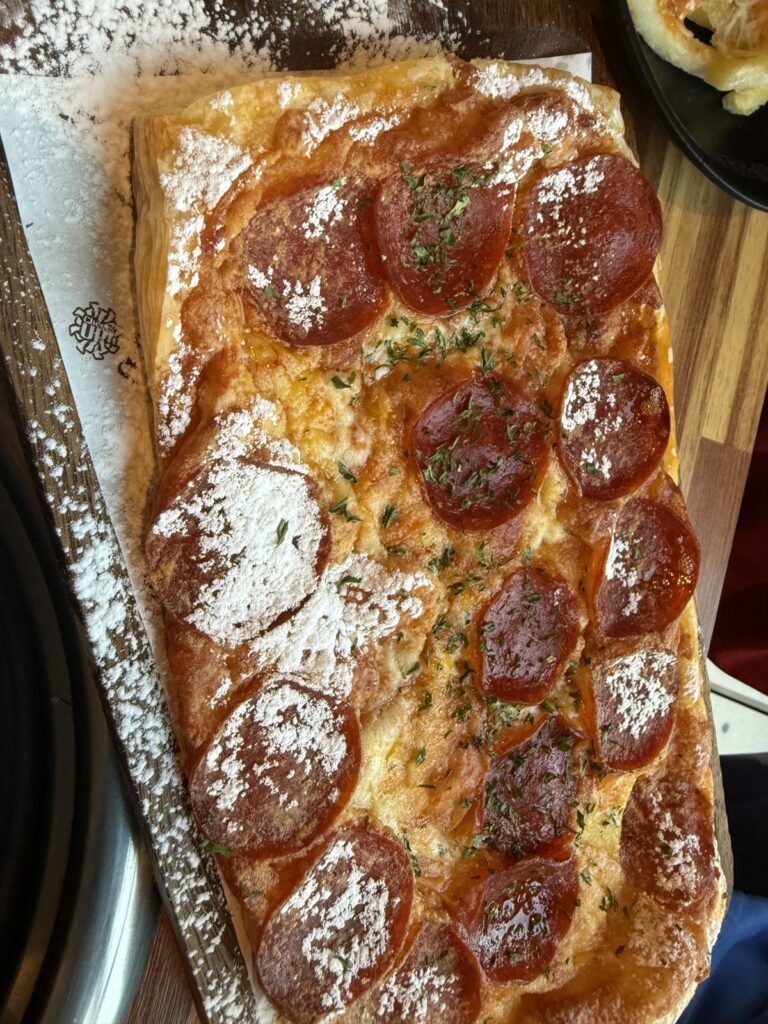
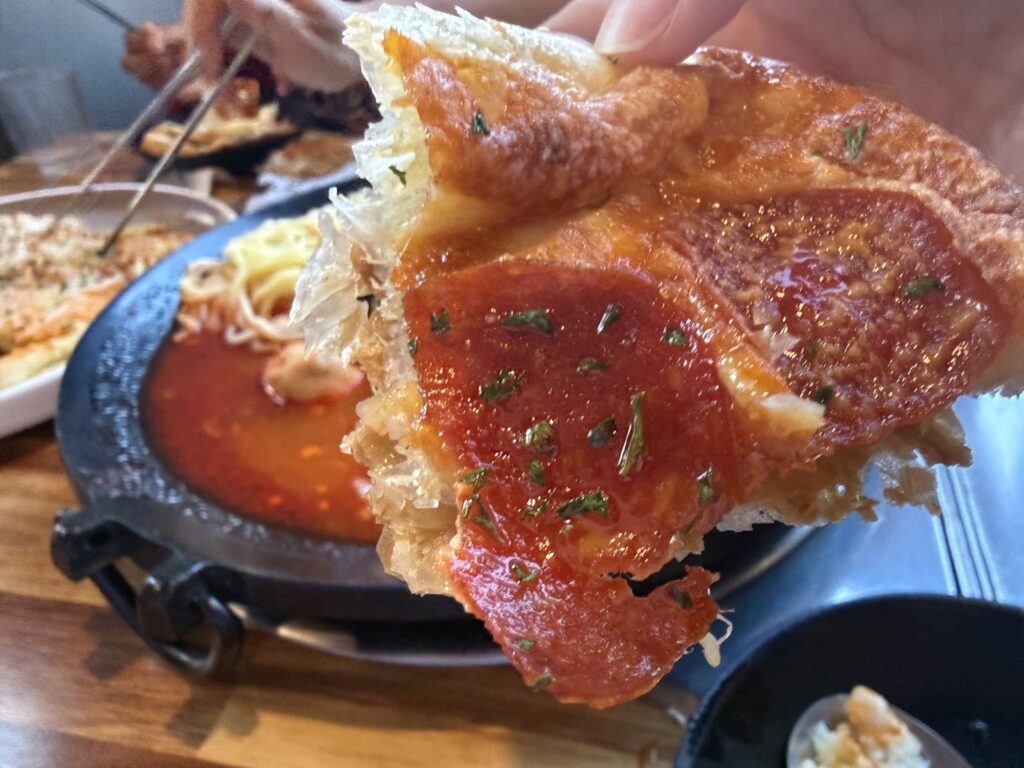
It came out rectangular, dusted with sugar around the crust edges (a Korean style that surprised me at first), with cheese and pepperoni cooked just enough to brown. We picked up a slice each. My wife took a bite and said “오, 이거 진짜 맛있는데.” That’s an unsolicited compliment from someone who orders pizza maybe once every two months. The pepperoni had real fat on it, the cheese was actually melted (not just thawed), and the crust held its shape under sauce. For an 18,000 KRW pocha pizza, this was honestly above expectations.
Pizza pairs surprisingly well with gopdori-tang. The bright tomato sauce cuts through the chili-heavy stew. Melted cheese balances the lean chicken. Korean pocha culture has slowly accepted Western dishes as legitimate side options, and Pocha Cheonguk is the kind of place where the pizza isn’t a marketing gimmick — it’s a real menu item that the kitchen takes seriously. Order it. Don’t second-guess like I did.
Jjage-Chi (짜계치): The Side Dish Even Korean Kids Crave

Korean jjage-chi (짜계치) is the abbreviated street-food name for jjajang-myeon flavored cheese-fried rice cake — basically thick-sliced rice cake stir-fried with black bean paste, then topped with melted mozzarella. The dish is a 2020s Korean kids-menu invention that crossed over to adult comfort food. It looks chaotic on the plate. But it tastes like nostalgia for kids who grew up on jjajang and modern fast food.
Our kids weren’t there to eat it. (Their cousins were probably ordering chicken or kimbap that night.) So my wife and I split the plate ourselves. Cheese was thick and stretchy. Rice cake was perfectly chewy without being too dense. Black bean sauce had been seasoned just enough to balance the cheese richness. Honestly, even adults without kids should order jjage-chi at Pocha Cheonguk. It’s a small bite that anchors a long drinking session — heavy enough to absorb soju, light enough to not fill you up.
For families bringing kids: jjage-chi is one of the most reliably kid-friendly dishes in Korean dining. Mild, sweet, cheesy, no spice. If you have a picky eater, this is the safest order on the Pocha Cheonguk menu. Most of the kids we saw at neighboring tables had a half-finished jjage-chi plate in front of them.
Soju Plus Beer Pairing — Chamisul Fresh and Terra

For drinks, we ordered Chamisul Fresh (참이슬 후레쉬) soju — two bottles — and Terra (테라) beer — also two bottles. The classic Korean somaek (소맥, soju + beer mixed) setup. At Pocha Cheonguk you can mix yourself at the table, or you can ask the staff for the standard 3:7 mix ratio glasses. We mixed our own. Always more fun.
Chamisul Fresh is the lighter green-bottle soju — 16% ABV, slightly sweeter, easier to drink than the regular blue bottle. It pairs naturally with spicy stews because it cleans the palate without adding heat. Terra beer is a relatively new lager from Hite Jinro — crisp, lightly hopped, lower bitterness than imported pilsners. Mixed in a 3:7 ratio you get something that tastes like a smooth cocktail with the body of a beer.
Two bottles of soju plus two bottles of Terra is a moderate pace for two adults eating a heavy meal. We were pleasantly buzzed by the time the gopdori-tang ramen extension arrived, and just past the buzzed line by the time we paid. Total alcohol cost came to roughly 22,000 KRW — Hanam pocha pricing is on the budget side compared to Gangnam or Hongdae.
Why This Pojangmacha Works for Families With Kids
Most Korean pubs aren’t kid-friendly. The lighting is dark, the air is thick with grilled-meat smoke, the music is loud, and the menu skews toward dishes that pair with alcohol — not dishes kids would actually eat. So most Korean parents leave the kids at home (or at the grandparents’) when they want a drink out. That’s the default.
Pocha Cheonguk Hanam breaks the default. Lighting stays bright. Air stays clean (we noticed an air purifier near the kitchen). Music plays at conversational volume. And the menu has multiple kid-targeted dishes: jjage-chi, pizza, chicken, fries, even cheese gamjajeon. Set menus include items adults and kids can both eat. So a family of four can come, order one set plus 2-3 sides, and leave full and happy.
What makes it work, I think, is that the design treats families as a primary customer base — not a tolerated edge case. Most Korean pubs put a “kids are welcome but…” disclaimer on the door. Pocha Cheonguk doesn’t. Kids walk in like everyone else. Parents drink soju at the table while their kids eat jjage-chi and watch the variety show on the corner TV. Nobody complains. The pocha format adapts.
For visiting families: this is one of the rare Korean drinking spots where you can take older kids without it feeling weird. If you’re staying near Hanam or driving through Gam-il-dong, Pocha Cheonguk Hanam is a strong family-friendly option for an evening with both adult drinks and kid-friendly food. The crowd vouches for it — every other table seemed to be a Korean family doing exactly that.
Pocha Cheonguk Hanam Rating Breakdown
⭐ Overall: 4.6 / 5
- ⭐ Stew Quality (Gopdori-Tang): 5 / 5 — Deep, layered, properly spiced. Ramen extension is essential. Worth ordering even if you skip the rest.
- ⭐ Cheese Gamjajeon: 5 / 5 — Crispy potato strips under stretchy mozzarella. The night’s surprise winner.
- ⭐ Pizza Quality: 4.5 / 5 — Crispy thin crust, real cheese, real pepperoni. Above pocha pizza norm.
- ⭐ Jjage-Chi: 5 / 5 — Stretchy cheese, perfect rice cake chew. The kid-magnet item.
- ⭐ Service & Tablet System: 4.5 / 5 — Smooth tablet ordering. Staff bring food fast. Less interaction needed for non-Korean speakers.
- ⭐ Family-Friendliness: 5 / 5 — Bright, clean, family-centric crowd. The rare Korean pub where kids fit in.
- ⭐ Value for Money: 4.5 / 5 — Around 70,000 KRW for food + 22,000 KRW for soju and beer fed two adults generously. Hanam pricing.
Practical Info Before You Walk In
- 📍 Address: Gam-il-dong area, Hanam-si, Gyeonggi-do (감일백제로 일대)
- 🗺️ View on Google Maps
- 🕒 Hours: Roughly 17:00–02:00 (typical Korean pojangmacha hours)
- 🍴 Gopdori-set (곱돌한상): 45,000 KRW · Chibbyeong-set: 47,400 KRW
- 🍕 Pizza: ~18,000 KRW · Jjage-chi: ~10,000 KRW · Cheese gamjajeon: included in Gopdori-set
- 🍶 Soju: ~5,000 KRW per bottle · Terra beer: ~6,000 KRW per bottle
- 📲 Ordering: Tablet at each table. Card payment via tablet at end
- 👶 Family-friendly: Yes — kid-targeted dishes available, bright lighting, clean air
- 🚗 From central Seoul: ~40 minutes by car via Olympic Daero
- 🅿️ Parking: Street parking nearby. Limited spots on busy nights
Walking Home Slightly Tipsy and Already Planning Next Time

By 10 p.m. we left Pocha Cheonguk Hanam. The wait outside had grown to four parties. Kids on the neighboring tables were still eating jjage-chi when we walked past their plates on our way out. Two more groups of families came in as we hit the door. The night was still young by Korean pocha standards, and the place was clearly going to stay full until midnight.
Walking home took fifteen minutes through the cool evening air. My wife was at that pleasant level of buzzed where she gets unusually chatty about random topics. Talked about the kids at their cousins’ place. Discussed whether we should bring the kids next time and order the gopdori-tang as the centerpiece for all four of us. Agreed yes. Our 10-year-old would handle the chicken pieces. Our 9-year-old would eat the pizza and the jjage-chi. Skipping the intestines for the kids’ bowls and keeping them in the adult side seems easy enough.
Pocha Cheonguk Hanam earned a permanent spot on our local rotation. For Hanam-area families looking for a kid-friendly Korean pocha that still feels like a real Korean drinking spot for the parents, this is the one. Gopdori-tang is the reason to come. Cheese gamjajeon, pizza, and jjage-chi are the reasons the kids will actually want to join. And the tablet ordering means visiting families can manage without much Korean.
Pair it with a weekend day around Misari Park Hanam or a longer Hanam-area food crawl that hits a few of our other favorite KFT spots like the charcoal nurungji chicken in Misa. Pocha Cheonguk fits naturally as the closing dinner spot when your day on the road wraps back toward Hanam.