
- Name: 스시이안앤 위례점 (Sushi Ian&, Wirye branch)
- Address: Woosung Tram Tower A, Unit 206, 2F, 310 Wirye-gwangjang-ro, Sujeong-gu, Seongnam, Gyeonggi-do (경기 성남시 수정구 위례광장로 310, 우성트램타워 A동 2층 206호) · Google Maps
- Nearest station: Namwirye Station (Line 8)
- Visited: late November 2025, our family of four
- Wait: about 20 minutes
- Price: 1,990 won per regular plate; chef’s special plates count as two or three plates
- How much we ate: about 30 plates between the four of us
- Hours: daily 11:30 to 21:50, last order 21:10 (DiningCode listing)
- My rating: 4.4 / 5
- Info checked: September 23, 2026
Our kids treated the conveyor belt at Sushi Ian like a game. Every plate that came around was a decision, and they spent the whole meal watching the belt and grabbing what they wanted. My wife and I took our son and daughter there in late November 2025, waited about 20 minutes for a table, and the four of us got through roughly 30 plates. Sushi Ian is a conveyor belt sushi restaurant in Wirye where regular plates cost 1,990 won and chef’s special plates cost more, and this post covers how the pricing works, what we took off the belt, and how to get there.
Where Sushi Ian Wirye is
Wirye is a newer planned town on the southeastern edge of Seoul, and it is split between three cities: Songpa-gu in Seoul, Seongnam and Hanam. This branch is on the Seongnam side, on the second floor of Woosung Tram Tower A at 310 Wirye-gwangjang-ro. If you search for sushi in Seoul’s southeast, it comes up alongside Seoul restaurants, but the address is in Gyeonggi-do. The full name on the sign is 스시이안 (Sushi Ian), and listings use 스시이안앤 (Sushi Ian&) for this branch.

How the 1,990 won pricing works
The sign by the belt says it plainly: regular plates are 1,990 won, and chef’s special plates count as two or three plates. The exception is the chef’s special menu (쉐프 특선 메뉴). Those plates are priced as two or three regular plates, and they come out on round wooden boards instead of the colored plates. In the photo above, the sign reads “1,990원” with the chef’s special note next to it.
Most plates go around the belt under clear plastic domes. You lift the dome, take the plate, and it stays on your table until the end. Thirty regular plates would come to 59,700 won, but that is not our real bill: the chef’s special plates count as two or three plates, the udon was ordered separately, and I don’t remember the exact total.

Why our kids liked it
For our son and daughter, the best part was choosing. At a normal restaurant we order for the table and the food arrives. Here they watched every plate go past, pointed at the ones they wanted and took them down themselves. They were into it from the first plate to the last, and it kept them busy through the whole meal.
The belt also has plates that aren’t sushi at all, which helps with kids. Grilled shrimp with cheese and a dessert cup came off the belt for our table, and the kids also ordered fried shrimp. For their actual meal, though, our kids mostly ate udon. Udon isn’t on the belt; it is ordered separately (6,900 won on the DiningCode listing), and for our two it was the main thing they filled up on while they picked plates for fun.
What we took off the belt

Fried shrimp. Two long panko-crusted shrimp on a square black plate, sitting on a pale sauce.

Grilled shrimp with cheese. Shrimp torched with melted cheese and a sprinkle of dried parsley, on a slate plate.
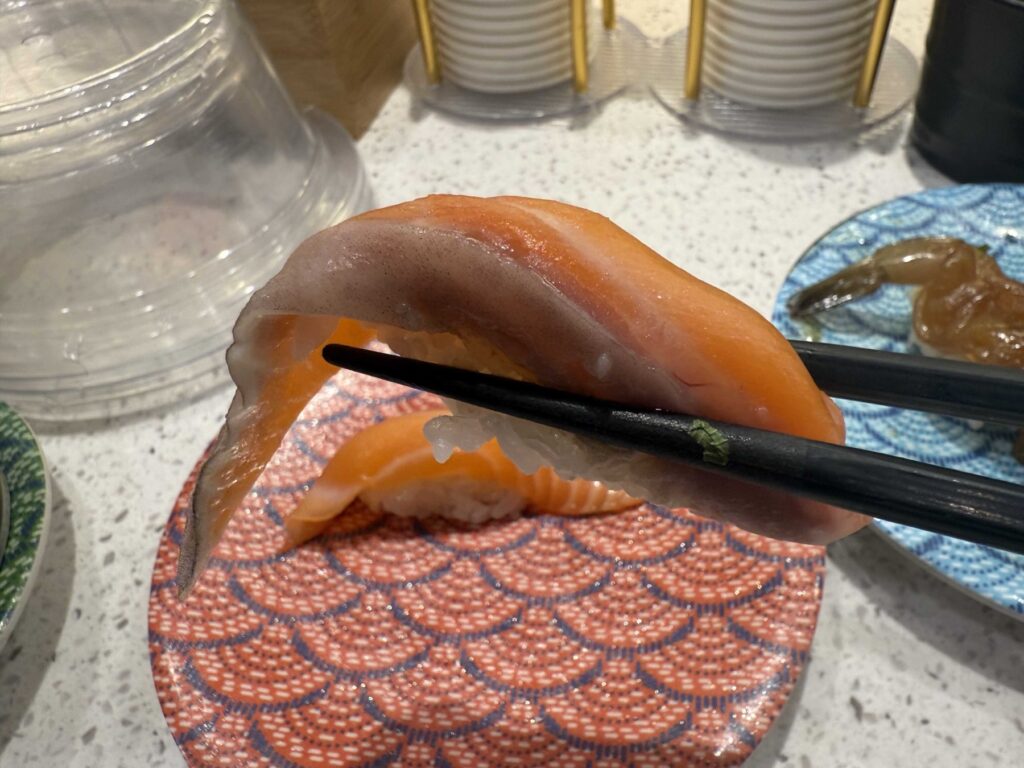
Salmon nigiri. A long, wide slice of salmon over rice, on one of the red wave-pattern plates. This was one of my two favorites of the day.
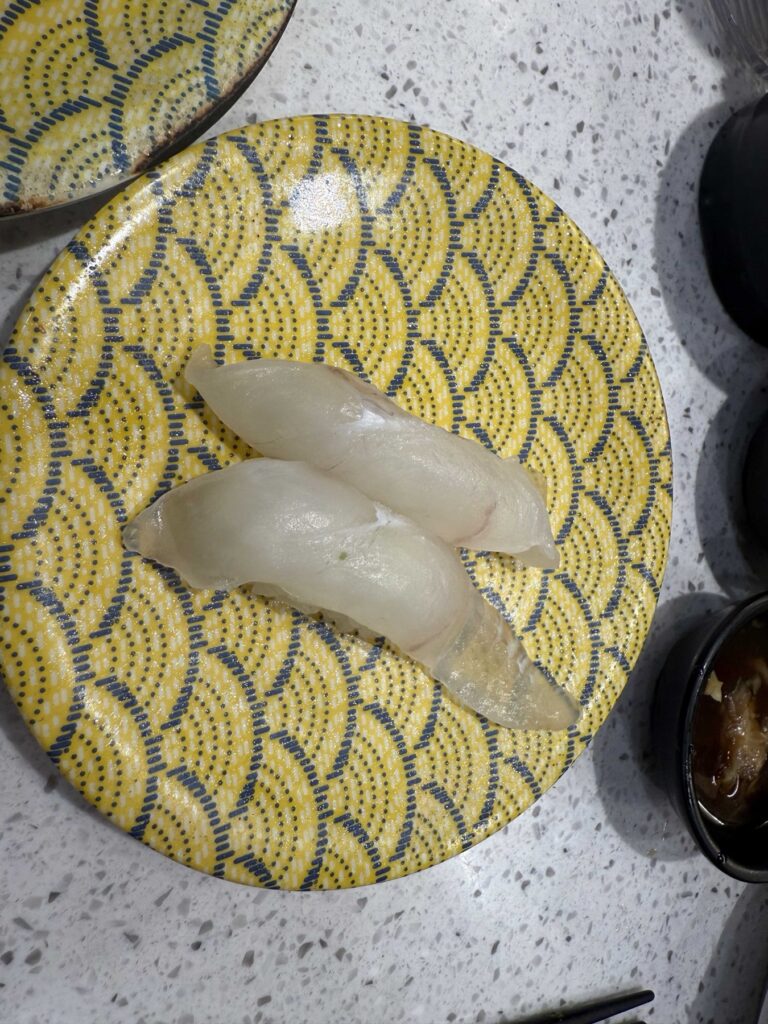
White fish nigiri. Two pieces of translucent white fish on a yellow plate. The DiningCode listing says the restaurant makes sushi from live flatfish (광어, gwang-eo) prepared every morning.
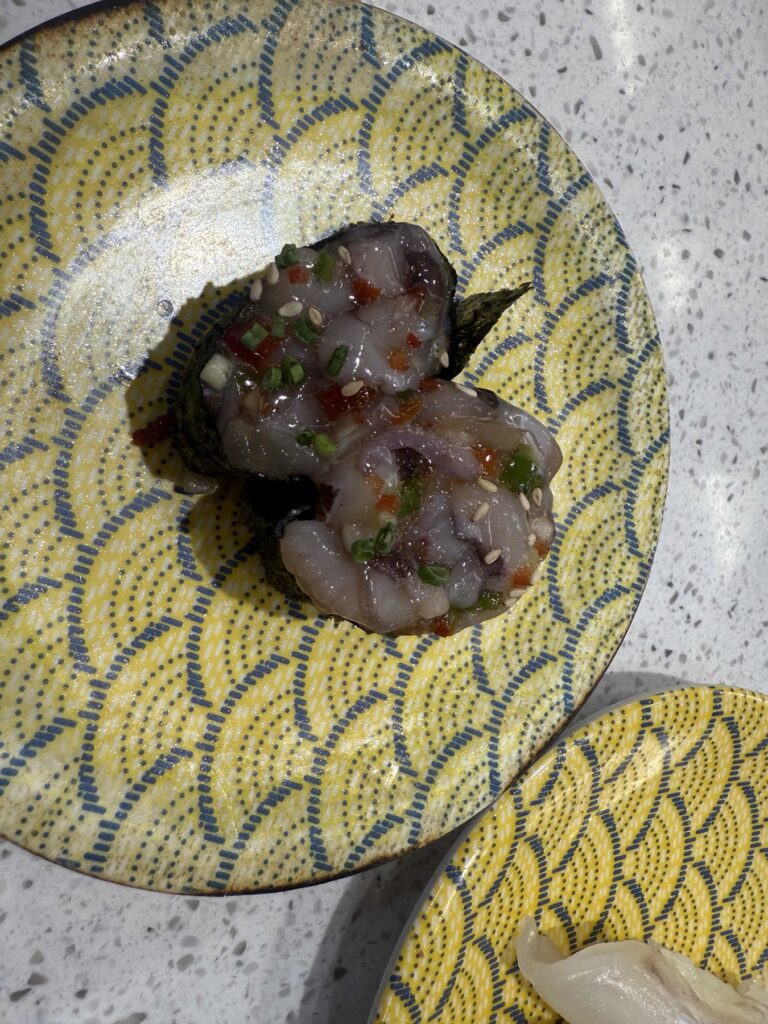
Chopped octopus gunkan. Two seaweed-wrapped rice cups topped with chopped octopus, diced peppers and sesame.

Abalone. A piece served in its shell on a slate plate, with a little red topping.
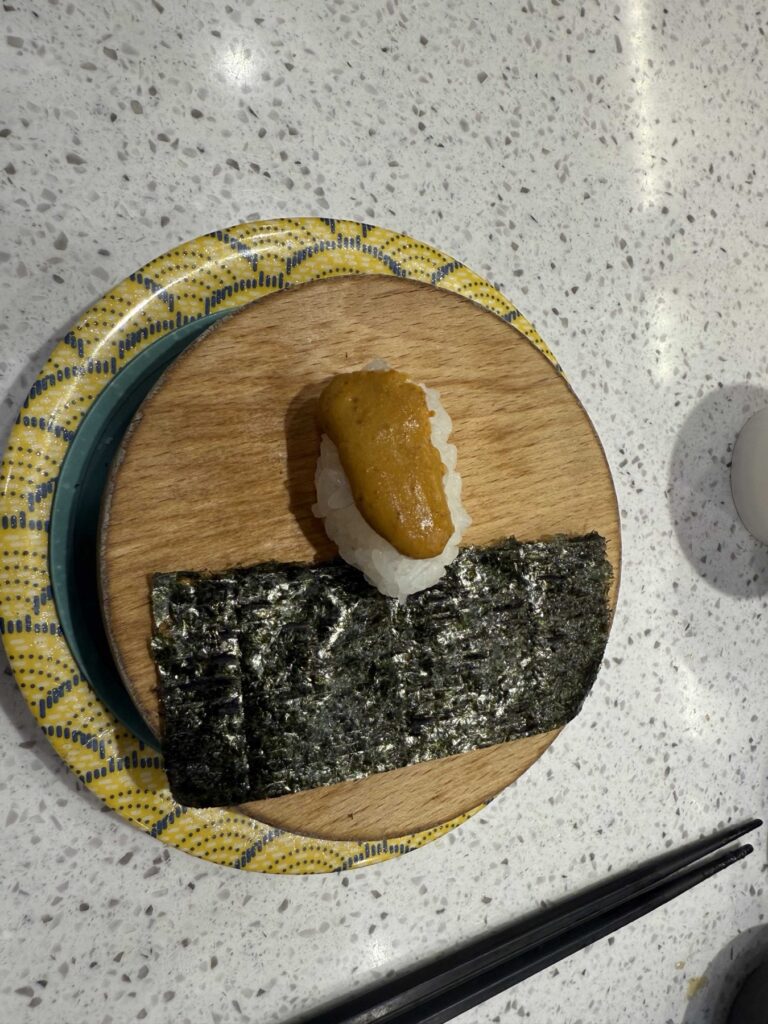

Chef’s specials on wooden boards. These came on round wooden boards, one with a sheet of nori to wrap it yourself and one with a long slice of tuna, an orange topping and sesame. Because they are on wooden boards, they count as two or three plates.

Eel nigiri. Grilled eel over rice with a red pepper topping, on a slate plate. Along with the salmon, this was the best plate for me.
The one I liked least. We also took a plate of hanchi (한치), a small squid, and of everything we tried it was the one I liked least. I didn’t photograph it.
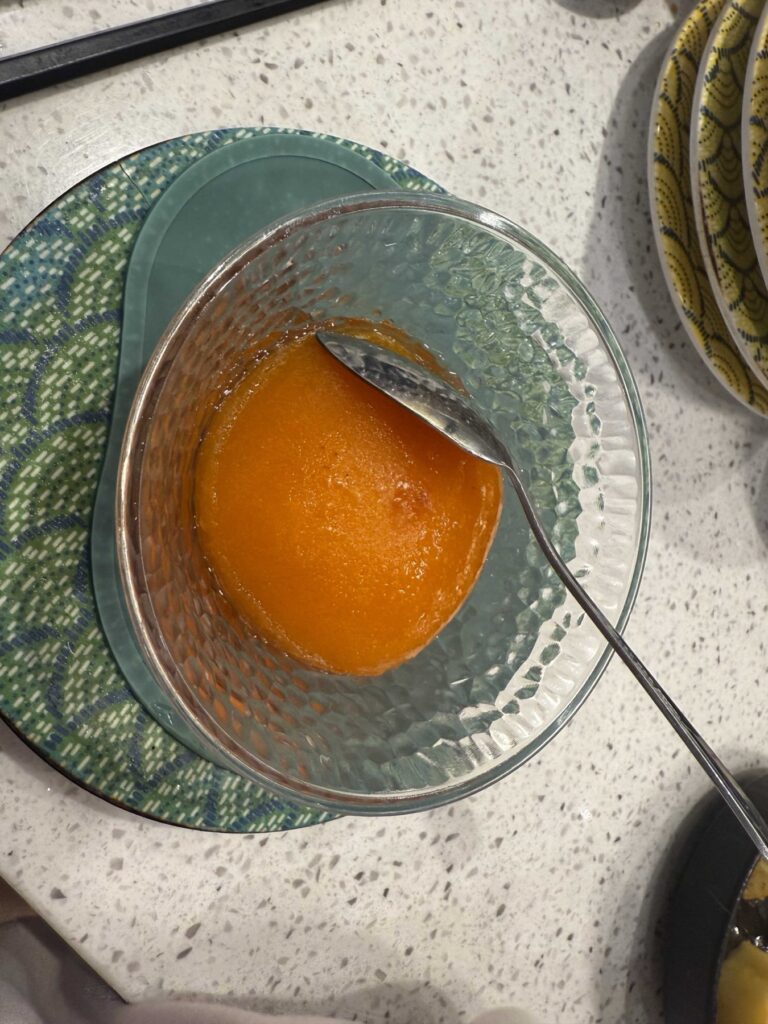
Sorbet. An orange sorbet in a dimpled glass bowl came around on the belt too, so dessert was also a plate we could pick. The ice cream was one of the things I liked most that day.
How to eat at Sushi Ian, step by step
- Expect a wait at busy times. We waited about 20 minutes to get in.
- Sit at the counter or in a booth. Plates come to you on the belt.
- Lift the clear dome and take the plate you want. Everything on a regular colored plate is 1,990 won.
- Plates on round wooden boards are chef’s specials and count as two or three plates.
- Order udon or anything not on the belt separately.
- Stack your empty plates on the table as you go, like the piles in our photos, and pay at the end.
A quick guide to the plates in our photos
| English | Korean | What it is |
|---|---|---|
| Salmon nigiri | 연어 초밥 (yeoneo chobap) | Raw salmon over rice |
| White fish (flatfish) nigiri | 광어 초밥 (gwang-eo chobap) | Raw flatfish, the fish the listing says is prepared every morning |
| Octopus gunkan | 문어 군함 (muneo gunham) | Chopped octopus in a seaweed-wrapped rice cup |
| Abalone | 전복 (jeonbok) | Abalone, served here in the shell |
| Hanchi | 한치 (hanchi) | A small squid; the plate I liked least |
| Eel nigiri | 장어 초밥 (jang-eo chobap) | Grilled eel over rice |
| Fried shrimp | 새우튀김 (saeu twigim) | Breaded, deep-fried shrimp |
| Cheese shrimp | 치즈 새우 (chijeu saeu) | Shrimp torched with melted cheese |
| Udon | 우동 (udon) | Thick wheat noodles in broth, ordered separately |
The best thing about Sushi Ian for us was the price. With regular plates at 1,990 won, our family of four got through about 30 plates and the kids could pick whatever they wanted.
The room and the wait
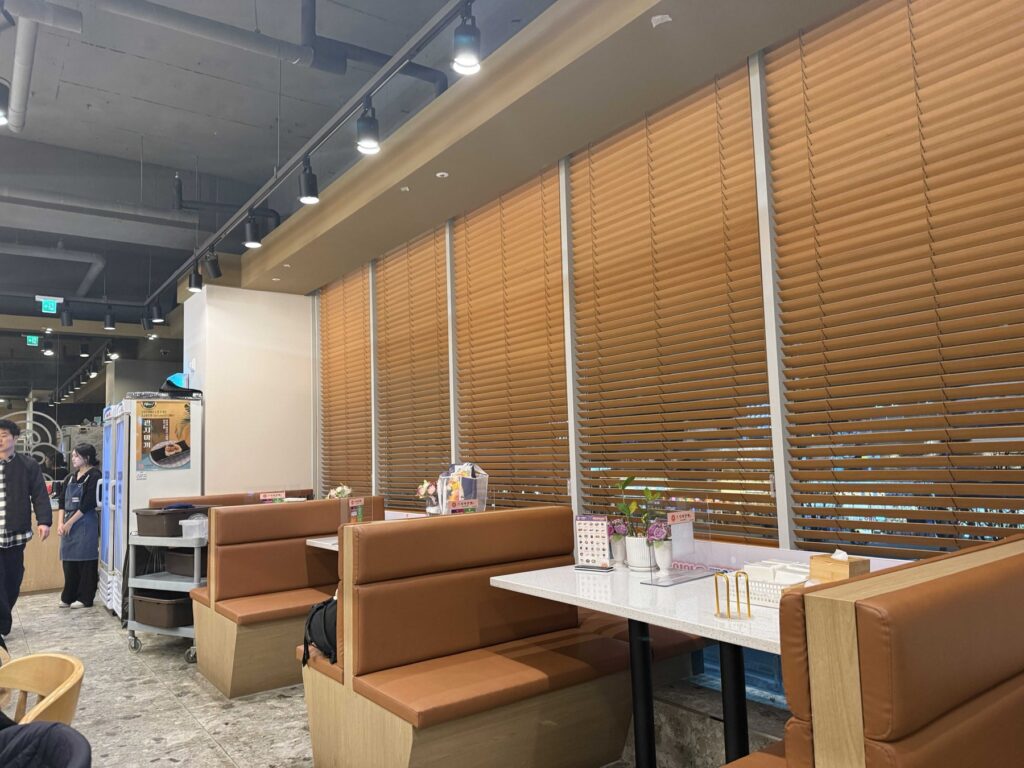
We waited about 20 minutes to get in. Inside there are counter seats right along the belt and tan leather booths by the windows with wooden blinds.
A poster near the entrance advertised a discount for students who had just taken the suneung (수능), Korea’s college entrance exam. Our photos from that visit are dated late November 2025. According to DiningCode, the menu has about 70 kinds of plates, plus udon (6,900 won) and kimchi udon (7,900 won) ordered separately. DiningCode also mentions a Naver receipt review promotion, but promotions can change, so check at the restaurant.
Getting to Sushi Ian Wirye
- Address: 310 Wirye-gwangjang-ro, Sujeong-gu, Seongnam (경기 성남시 수정구 위례광장로 310), Woosung Tram Tower A, Unit 206, 2F (A동 2층 206호)
- Subway: Namwirye Station on Line 8 is the closest station listed on DiningCode.
- Parking: DiningCode lists two hours of free parking in the building.
- Hours: daily 11:30 to 21:50, last order 21:10. Check Naver Map before you go, since listings change.
- Map apps: search 스시이안앤 위례 in Naver Map or Kakao Map.
More sushi and fish near Hanam and Wirye
- Gamil Choice, another conveyor belt sushi spot, in Gamil, Hanam
- Seongsoo Jeong Chamchi, tuna sashimi in Seoul
My rating is 4.4 out of 5. What I liked most was that it is cheap, along with the eel and salmon nigiri and the ice cream at the end. For a family, the belt does the rest: our kids picked their own plates for the whole meal while filling up on udon.