Park Seung-gwang Haemul Son Kalguksu Hanam Misa Review

There’s a moment — you know the one — when you lift the lid on a pot of bubbling seafood broth and the steam hits your face and you just stop. That happened to me at Park Seung-gwang Haemul Son Kalguksu in Hanam Misa, and honestly, it set the tone for one of the best weekday lunch experiences I’ve had in a long time.

Park Seung-gwang Haemul Son Kalguksu Hanam Misa storefront sign

The restaurant sits inside the Misa Riverside Skypollis complex in Hanam, Gyeonggi. Full name: 박승광 해물 손칼국수 하남 미사점 — which loosely translates to “Park Seung-gwang’s Handmade Seafood Knife-Cut Noodles, Hanam Misa Branch.” The signage out front says “SEAFOOD NOODLE” and has this little stamp that reads 最强 (choegang — the strongest/the best). Bold claim. Let’s see if it holds up.

Walking Into the Misa Kalguksu Shop

Park Seung-gwang Haemul Kalguksu Hanam interior packed with lunch crowd

Walking in on a Sunday afternoon, the place was packed. Like, actually packed — families, couples, groups of office workers. There’s a 자율포장대 (DIY packing station) and a 셀프코너 (self-service condiment bar) near the entrance, and right across from the cashier, the 제면실 (noodle-making room) is fully visible behind glass. I appreciated that. It’s a confidence move — we make the noodles fresh, come watch us do it.

Bright interior of Park Seung-gwang Haemul Kalguksu with large windows

The space is surprisingly refined for a kalguksu spot. High ceilings, dramatic chandeliers, floor-to-ceiling windows facing the street. Not what I expected. There are two signs on the wall that I noticed right away: “박승광은 육수가 특별합니다” (Park Seung-gwang’s broth is special) and “박승광은 면이 다릅니다” (Park Seung-gwang’s noodles are different). Bold slogans for a noodle shop — but hey, they’re not wrong.

Entrance of Park Seung-gwang Haemul Kalguksu with celebrity autographs on wall

Near the cashier, there’s an entire wall of celebrity autographs. You don’t put that many signed photos up unless your food is genuinely good — people don’t come back to places that disappoint them. The line at the register during peak hour tells the same story.

The Menu at Park Seung-gwang Haemul Son Kalguksu

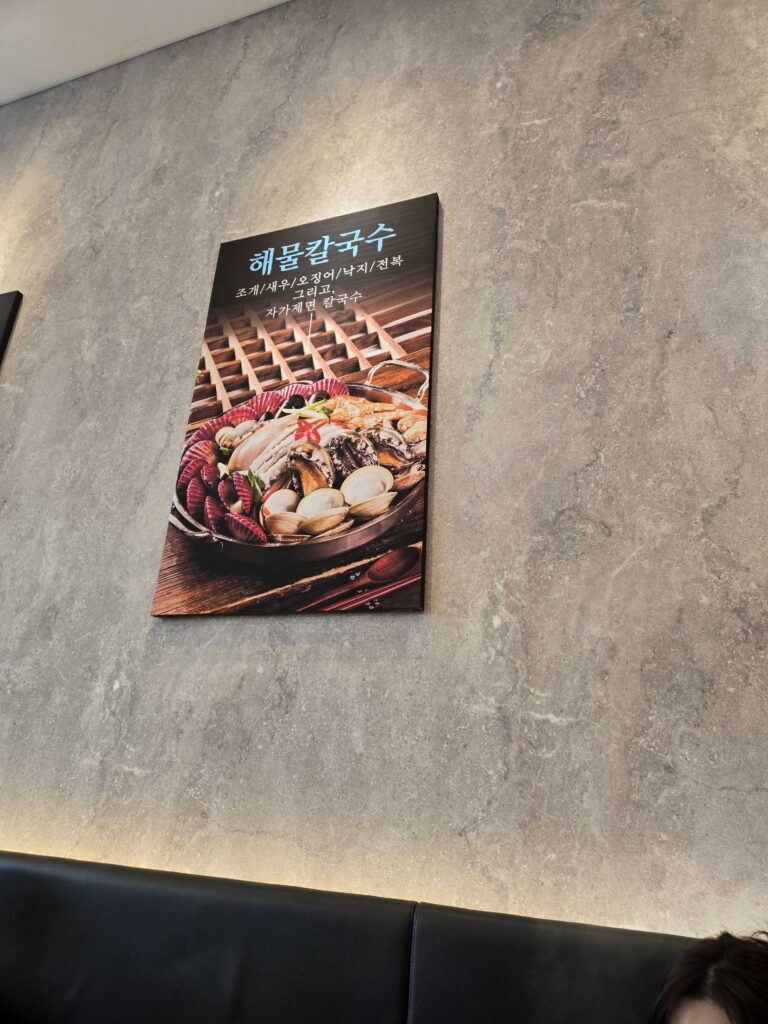
Park Seung-gwang wall menu showing haemul kalguksu ingredients - clams, shrimp, squid, octopus, abalone

Ordering is done via tablet at your table. The main menu wall lists the seafood that goes into the kalguksu: 조개 (clams), 새우 (shrimp), 오징어 (squid), 낙지 (octopus), and 전복 (abalone). They call it “자가제면 칼국수” — self-made noodle kalguksu. Each bowl of 조개칼국수 (shellfish kalguksu) comes in at 10,000원, which is genuinely reasonable for what you get.

Tablet ordering system showing premium set menus at Park Seung-gwang Kalguksu

They also offer Premium Set Menus — a 2-person set for 48,000원, 3-person for 64,000원, and 4-person for 80,000원. Each set combines the haemul kalguksu with haemul (seafood) accompaniments. There’s also a spicy version — 얼큰칼국수 — labeled with a red badge that says “신라면보다 더 매워요” (spicier than Shin Ramyun). We did not order that, but I made a mental note for next time.

Side menu showing Ibuk-style dumplings at Park Seung-gwang Haemul Kalguksu

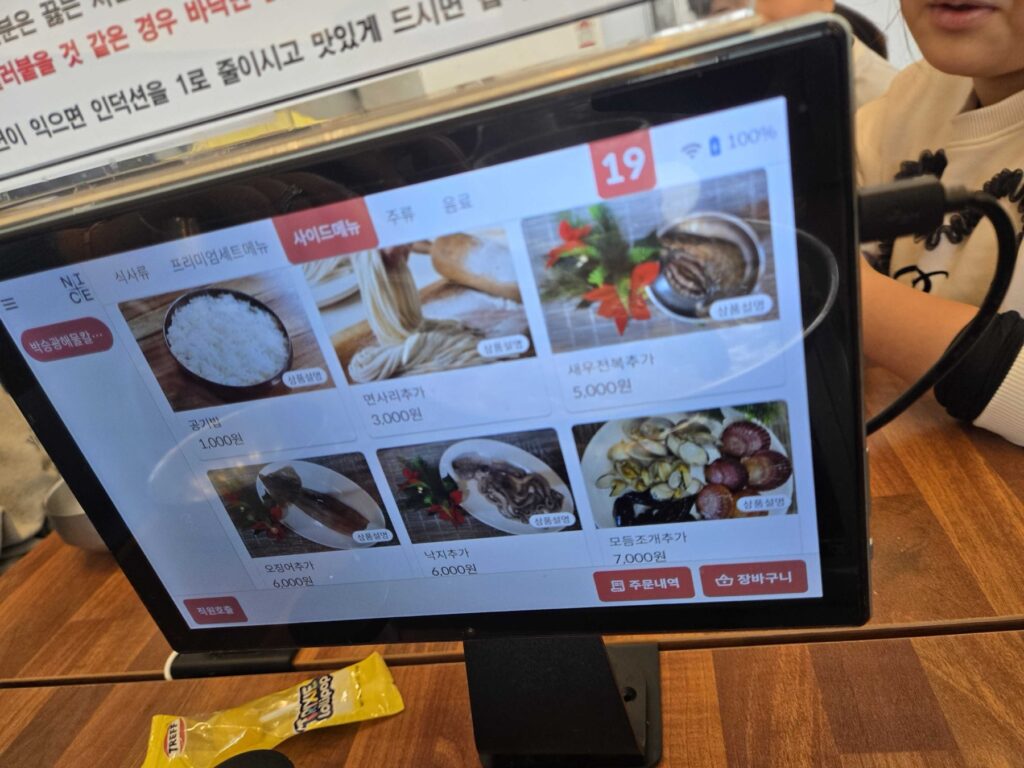
The side menu is where things get interesting. They have 이북식왕만두 — Northern-style large dumplings, your choice of meat (8,000원), kimchi (8,000원), or half-and-half (8,000원). There’s also a long list of add-ons: 면사리추가 (extra noodles) for 3,000원, 모듬조개추가 (mixed clam add-on) for 7,000원, 가리비추가 (scallop add-on) for 7,000원, and even 낙지추가 (octopus add-on) for 6,000원. Basically — build your own shellfish dream pot.

Kiosk Quirks Worth Knowing

Tablet kiosk at Park Seung-gwang showing donkatsu menu with prices and table number 19

A quick word on the tablet itself, because it does a few things well. Your table number sits in the top corner of the screen — ours was 19. No shouting your order across the room. Tabs run across the top: meals, premium sets, sides, alcohol, drinks. A staff-call button lives in the bottom left for anything the screen can’t handle. On the donkatsu page you get four choices, not two. There’s the old-style traditional at 12,000원, the cheese version at 13,000원, and sauce-on-the-side variants of both for people who guard their crispiness.

Add-on menu at Park Seung-gwang with rice noodles shrimp abalone squid octopus and shellfish prices

The add-on page is where you should slow down and read. Steamed rice runs 1,000원. Extra noodles are 3,000원. Then it climbs through the sea. Shrimp and abalone together cost 5,000원, squid 6,000원, octopus 6,000원, and the mixed shellfish platter 7,000원. Every item gets its own photo, so you know exactly what a 낙지추가 looks like before committing.

Scallop add-on and homemade geotjeori kimchi listed on the kiosk at Park Seung-gwang

Scroll one screen further and the scallop-only add-on appears at 7,000원, right next to their house geotjeori sold in 500g packs for another 7,000원. One item was stamped 품절 (sold out) and grayed out the day we went. The kiosk simply won’t let you order it, which beats hearing it from an apologetic server ten minutes later. On the table next to the tablet: a small pink sand timer and a complimentary lollipop. We flipped the timer when the noodles went in. My kind of low-tech precision.

What We Ordered

Receipt from Park Seung-gwang Haemul Son Kalguksu Hanam Misa showing total 53000 won

Our order: 3x 조개칼국수 (30,000원), 1x 치즈돈까스 (13,000원), 1x 모듬조개추가 (7,000원), 1x 공기밥 (1,000원), and a soda (2,000원). Total: 53,000원 for what turned out to be a genuinely heavy, satisfying meal. The date on the receipt was March 1, 2026 — a Sunday afternoon visit.

The Raw Platter That Lands Before the Pot

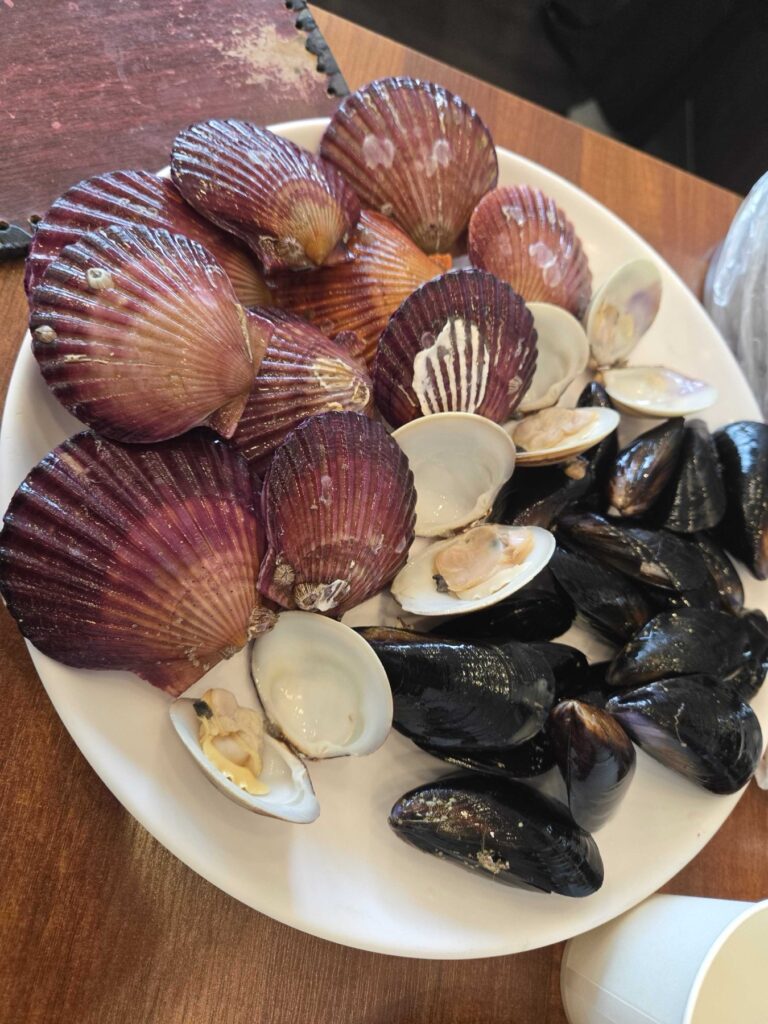
Raw scallops clams and mussels on a white platter before going into the kalguksu pot at Park Seung-gwang

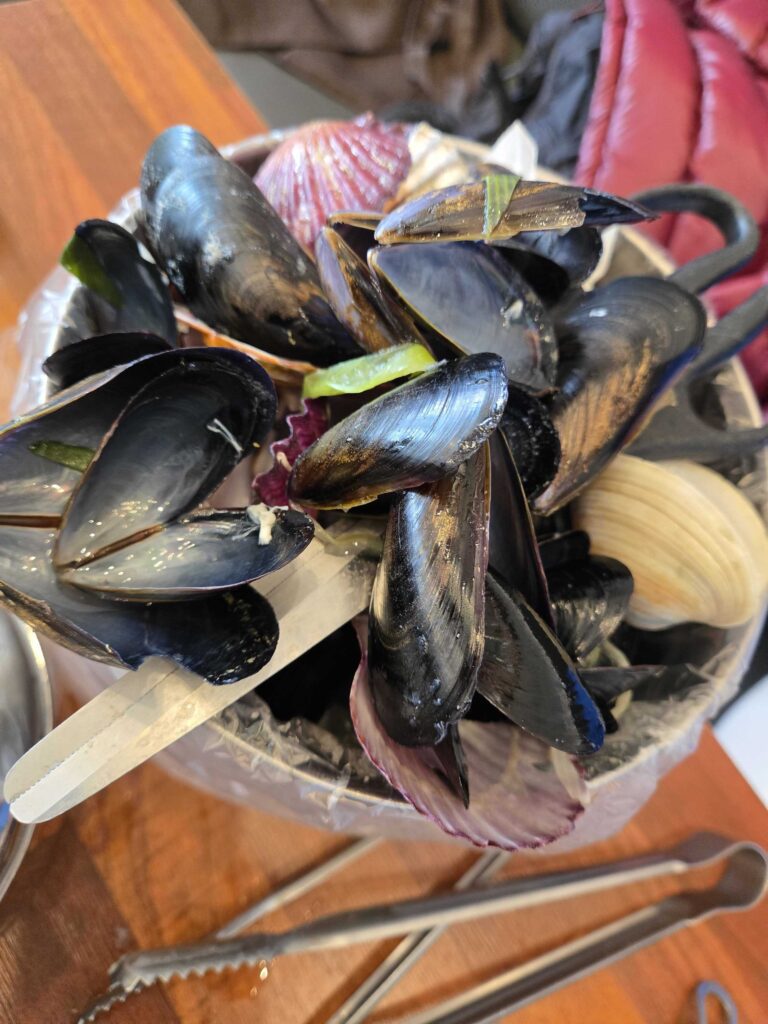
Order the mixed shellfish add-on and it doesn’t arrive pre-dumped into your pot. It shows up on its own white platter, raw, and you get a good look at what you paid for. Fan-shaped scallops stacked in purple and burnt orange. Pale clams sit dense and heavy for their size, a couple already gaping enough to show the meat inside. A dark pile of mussels shining like wet river stones.

Tipping them into the climbing broth yourself is half the fun. It also settles any doubt about freshness — nothing that looks this glossy has been sitting around. Between this platter and the loaded pot, our table briefly resembled a small fish market stall, and nobody was complaining.

The Haemul Kalguksu — Cooking Tableside

Park Seung-gwang Haemul Kalguksu full pot with seafood and noodles

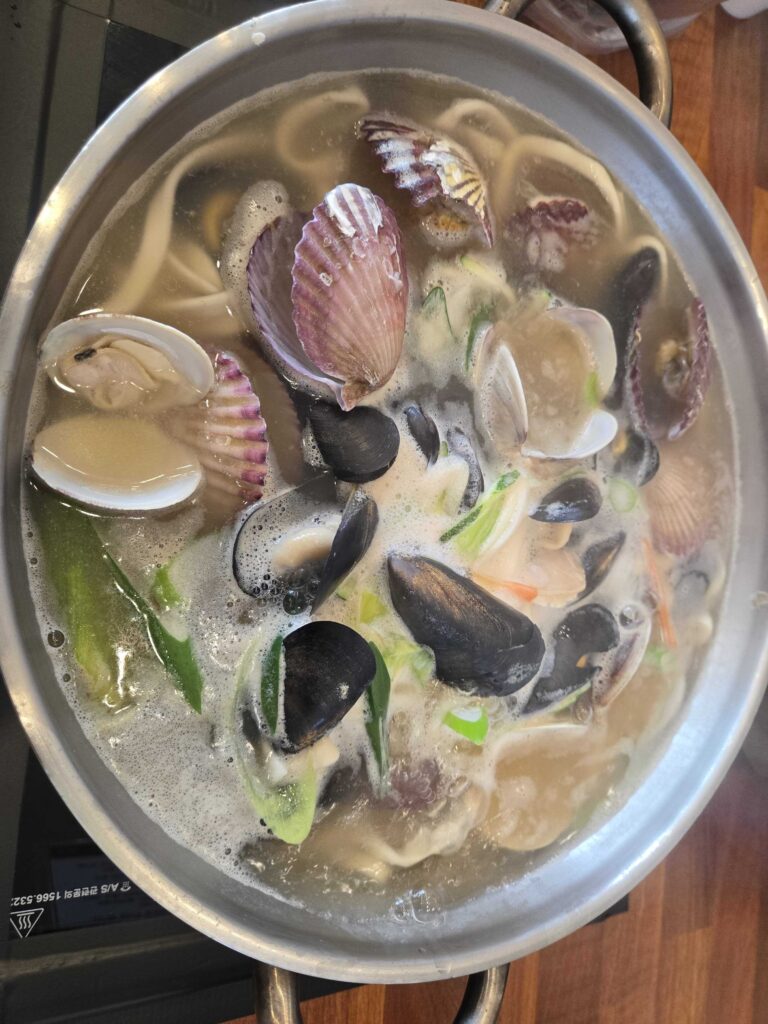
The pot arrives at your table on an induction burner, already loaded with shellfish — mussels, clams, scallops, vegetables, and those flat, wide, handmade noodles buried underneath. The broth at this stage is still relatively clear and light. You can see the care that went into packing each pot — nothing feels skimpy or afterthought.

Top-down view of Park Seung-gwang Haemul Kalguksu pot at the beginning of cooking

There’s a sign at the entrance (and on the table) that explains exactly how to eat it: wait for the broth to boil, open the lid and add any additional squid or octopus, dial the induction down to 3-4, and eat your seafood first dipped in either vinegary chili sauce or wasabi soy sauce from the self-service bar. The condiment bar setup is clever — 와사비, 간장, 다대기, 청양고추 all in one spot. Once you’ve had your fill of shellfish, you call the staff over to add the noodles. Then you wait 3 minutes after the broth boils again, dial down to 1, and eat.

How to eat kalguksu instructions at Park Seung-gwang restaurant

I liked that they took the time to explain all of this. It removes the guesswork and honestly makes the meal more enjoyable — you’re not second-guessing whether you’re doing it right.

Haemul kalguksu pot mid-cook with milky white broth at Park Seung-gwang

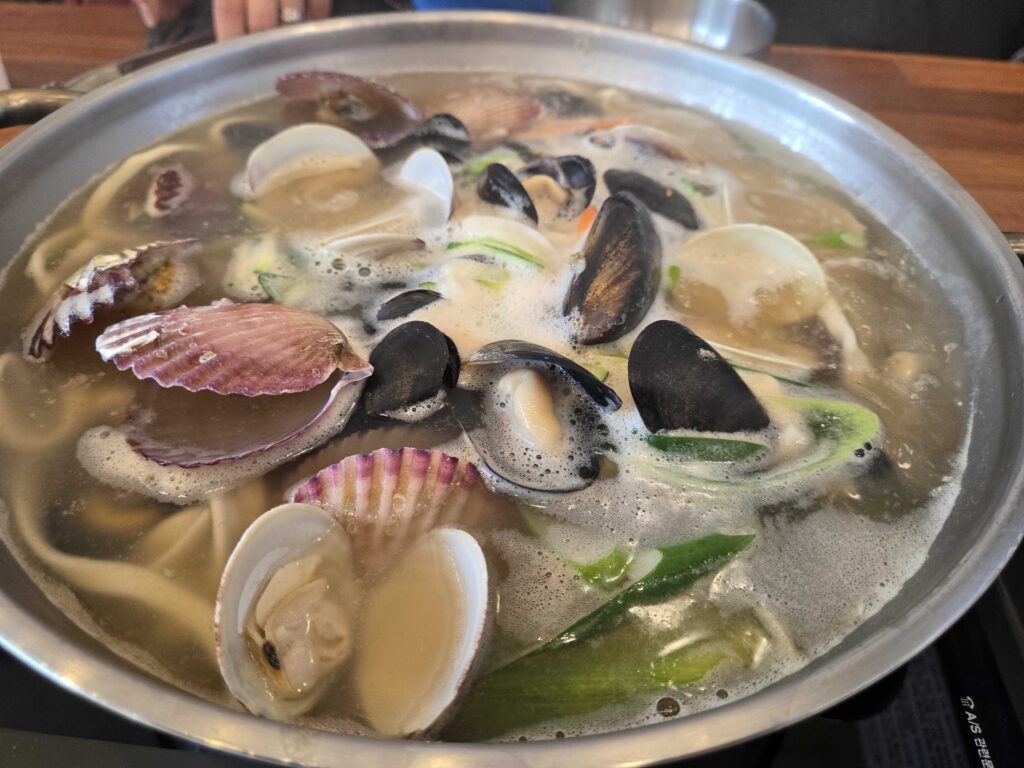
As the pot heats up, the broth turns milky — pulling flavor from every shellfish in the pot. By the time the mussels were fully open and the scallops had curled back, the entire broth had transformed into something deeply savory and a little sweet from the clams. This is what they mean when they say their broth is special. You can taste the time it took.

Two Short Clips From the Table

Park Seung-gwang kalguksu pot at full boil with scallops mussels clams and noodles visible

Photos undersell a pot like this, so here are two short clips. The first catches the broth at a low rolling boil. Scallop shells shift in the current, mussels bob between them, and the surface foams up milky at the edges while the noodles hide underneath.

The second clip is the money shot: a scallop easing open in the heat, bright orange roe curled against the white adductor muscle. When the roe shows itself like that, the scallop is moments from perfect. Fish it out, dip it in the wasabi soy from the self bar, and try not to order a second round. We failed at that part.

Scallop Add-On: Worth Every Won

Scallop add-on cooking in Park Seung-gwang Haemul Kalguksu broth

We added the 모듬조개추가 (mixed shellfish add-on) which brought in more scallops, mussels, and clams. Watching those orange-purple scallop shells open in the bubbling broth was — honestly — a little theatrical. And I mean that in the best way. The scallop meat was tender, lightly sweet, and picked up the broth flavor perfectly. At 7,000원 for the add-on, it’s a no-brainer if you’re going with a group.

Scallops and mussels cooking in the milky kalguksu broth close-up

There’s also a wall panel near the entrance called “해물의 효능” — the health benefits of each seafood ingredient. Abalone for taurine and stamina recovery. Squid for cholesterol reduction, liver function, and anti-aging. Clams for taurine and liver support. Octopus for fatigue recovery. Shrimp for immunity, eye health, and bone density. I don’t know if the restaurant is technically medicinal, but it’s nice that they’ve thought about it this way. It adds something to the experience — you’re not just eating well, you’re being taken care of.

Park Seung-gwang Haemul Kalguksu health benefits of seafood wall sign

The Cheese Donkasseu — An Unexpected Star

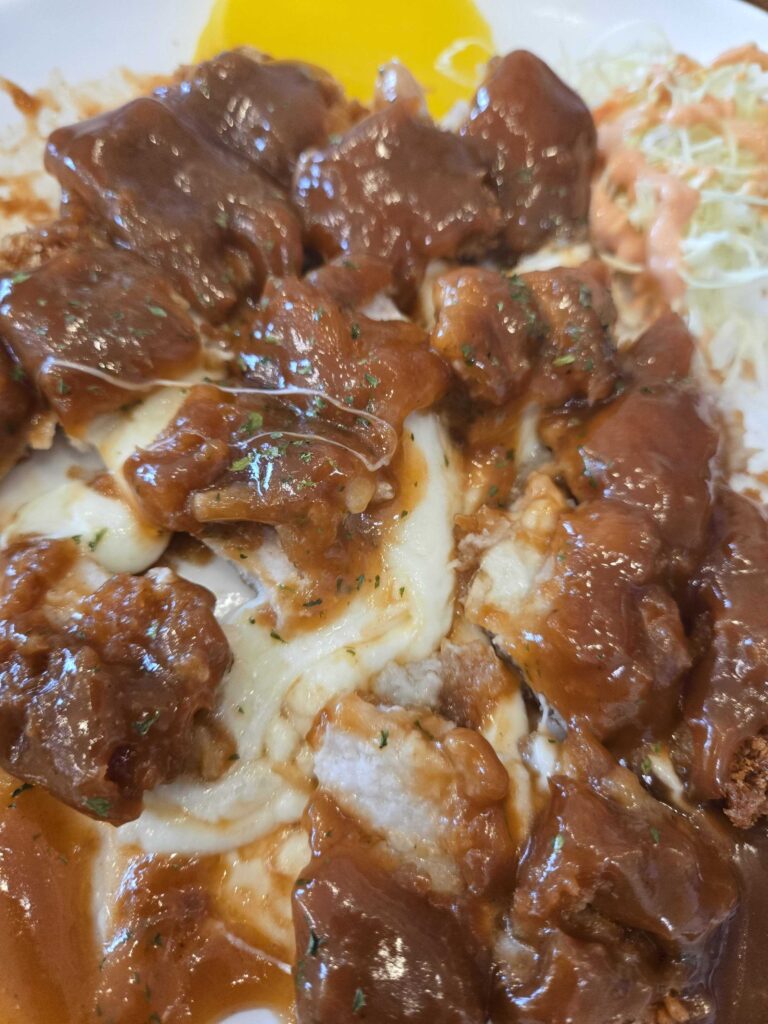
Cheese donkasseu at Park Seung-gwang Haemul Kalguksu with rich brown sauce

Now this caught me off guard. I wasn’t expecting the donkasseu (pork cutlet) at a kalguksu restaurant to be this good. The 치즈돈까스 (cheese donkasseu) at 13,000원 came out crispy, thick, with molten cheese and that glossy brown sauce you only get from a place that’s done this a thousand times. It’s not a novelty item. It’s a proper plate.

Close-up of cheese donkasseu at Park Seung-gwang Haemul Kalguksu

We demolished it. The plate at the end of the meal tells the story — just a smear of sauce, a wedge of lemon, and some leftover coleslaw. That’s a clean plate. They also have the classic 옛날전통돈까스 (old-style traditional donkasseu) at 12,000원 if you want the sauce separate. Both look genuinely good on the menu thumbnail.

Cleaned donkasseu plate after eating at Park Seung-gwang Haemul Kalguksu

The Banchan and the Broth After

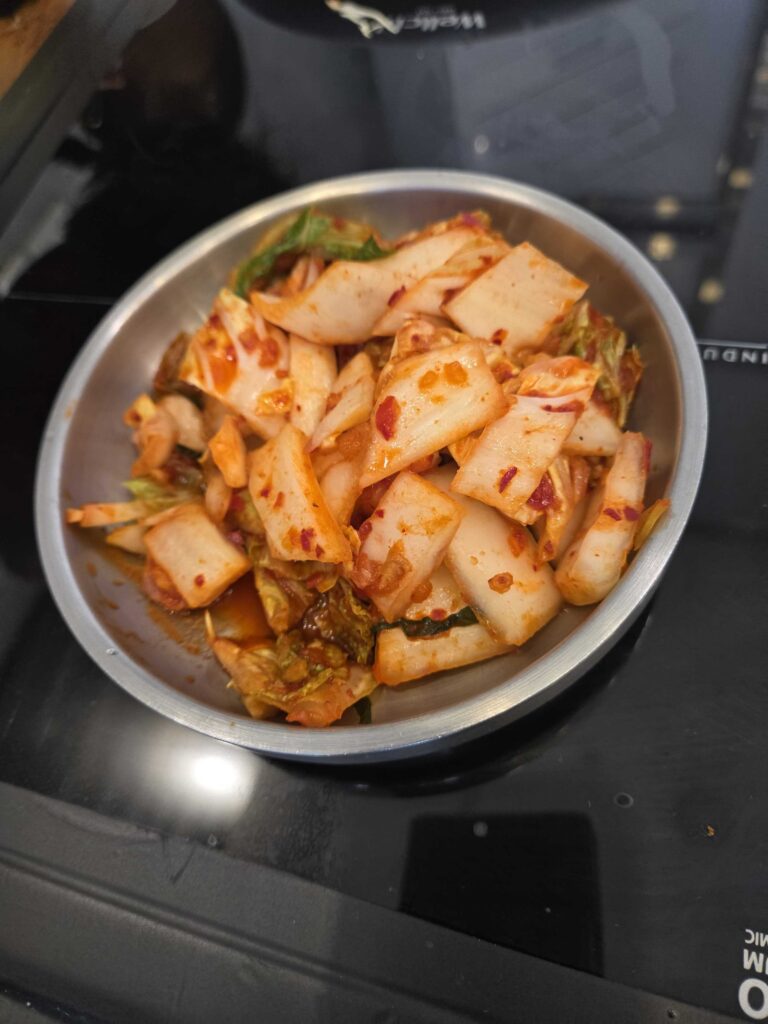
Fresh homemade kimchi banchan at Park Seung-gwang Haemul Kalguksu Hanam

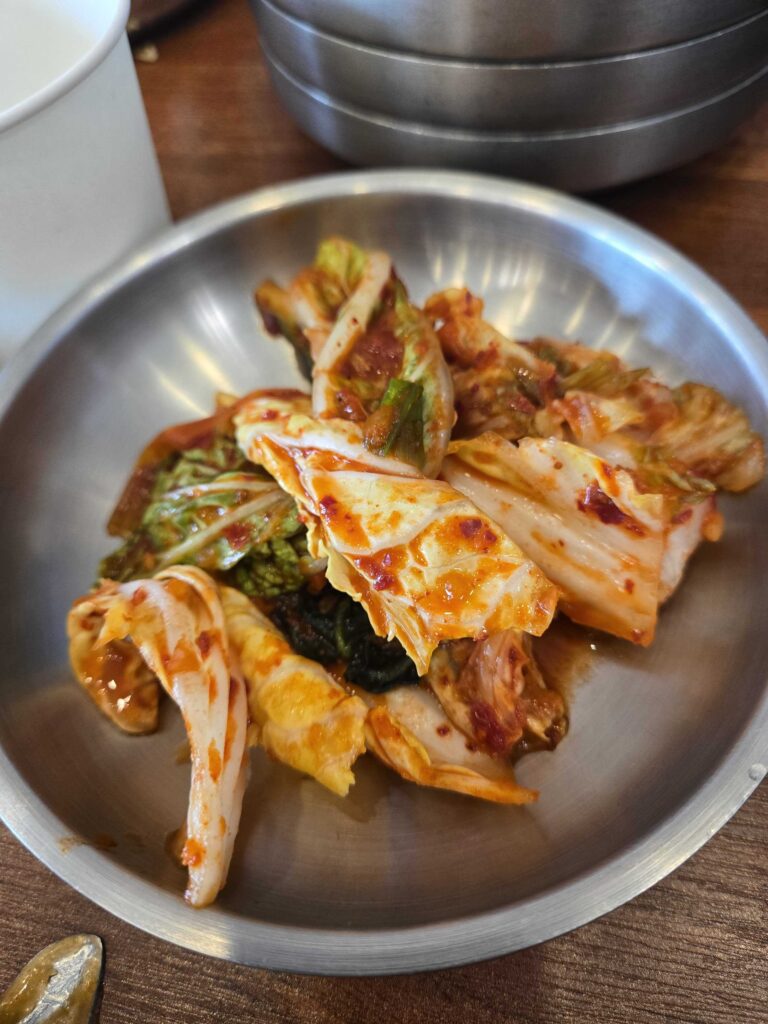
The fresh kimchi (겉절이) they bring out as a side is genuinely good — bright, spicy, not overdone. They sell it as an add-on (직접담근 국산 겉절이 500g, 7,000원) which tells you it’s made in-house and people want to take it home. That’s always a good sign. The banchan is simple and confident — they’re not trying to distract you from the main event.

Bowl of fresh geotjeori kimchi on the induction table at Park Seung-gwang Haemul Kalguksu

Ours sat on the black induction table looking almost too photogenic for a free side. It did not survive until the noodle stage. Refills come from the self-service corner, which we visited twice without shame.

Remaining rich broth in the pot after eating all seafood at Park Seung-gwang Kalguksu

After the noodles and all the shellfish were gone, the broth in the pot had turned a deep, rich amber-brown. A ladle resting on the edge. That broth had absorbed everything — every mussel, every scallop, every clam — and it showed. I wanted to take it home in a thermos. The pile of opened shells that went into a separate bowl confirmed that we had, in fact, eaten quite a lot.

Bowl full of empty mussel and scallop shells after finishing the kalguksu

Park Seung-gwang Haemul Son Kalguksu Hanam — Practical Info

Address: 경기 하남시 미사강변한강로 135, 미사강변스카이폴리스 140-144호
Phone: 031-699-2311
Hours: Check Google Maps for current hours
Price range: 조개칼국수 10,000원 / 치즈돈까스 13,000원 / Premium sets from 48,000원

View Park Seung-gwang Haemul Son Kalguksu Hanam Misa on Google Maps

Parking is available at the Misa Riverside Skypollis complex. It’s a large mixed-use building, so there’s typically enough space, but weekend afternoons can fill up fast — just a heads up.

Honest Verdict on Park Seung-gwang Haemul Son Kalguksu Hanam Misa

If you’re looking for a place where the food actually does what the branding claims, this is one of those rare spots. The broth is the real deal — clearly made with intention, not just water and instant seafood stock. Handmade noodles stay slightly chewy and hold up well even after sitting in the broth for a while. The seafood add-ons are priced fairly. And somehow, the donkasseu belongs there. It just fits.

What I appreciated most was the transparency of the whole experience — from the visible noodle-making room to the “how to eat” instructions to the seafood health benefits on the wall. This is a restaurant that wants you to understand what you’re eating and why it’s good. That kind of confidence usually means the food backs it up. And here, it does.

Whether you’re a Hanam local, a day-tripper along the Misa riverside, or just someone who takes their kalguksu seriously — Park Seung-gwang Haemul Son Kalguksu deserves a spot on your list. Bring a group, order the add-ons without hesitation, and don’t skip the cheese donkasseu. Korean food culture has always tied comfort, community, and craft into a single bowl — and places like this one are exactly why that tradition keeps thriving, one pot of seafood broth at a time.

After the Kalguksu: Where We Went Next

Park Seung-gwang Haemul Son Kalguksu

4.5 / 5

Hanam Misa, Gyeonggi-do  |  Korean  |  ₩₩

Handmade seafood kalguksu noodle soup in Hanam Misa — hearty, flavorful, and made fresh to order.


Casting a Wider Net Around Misa

Written by

Jun Kim

Dad of two in Hanam who eats out several times a week and writes about it. Every restaurant on this blog is a place I walked into as a regular customer — real orders, real bills, real opinions.

More about this blog

Leave a Comment

Your email address will not be published. Required fields are marked *

Scroll to Top