
There’s a specific kind of food experience that only Seoul’s traditional markets can offer — and Garak Market is the gold standard for it. This isn’t a tourist-polished seafood spot with ambient lighting and English menus. It’s the real thing: raw, lively, and packed with locals who know exactly where to go and exactly what to order. I visited Hyanggi Susan (향기수산) on a Saturday afternoon, and left convinced it was one of the best sashimi decisions I’ve made in this city.
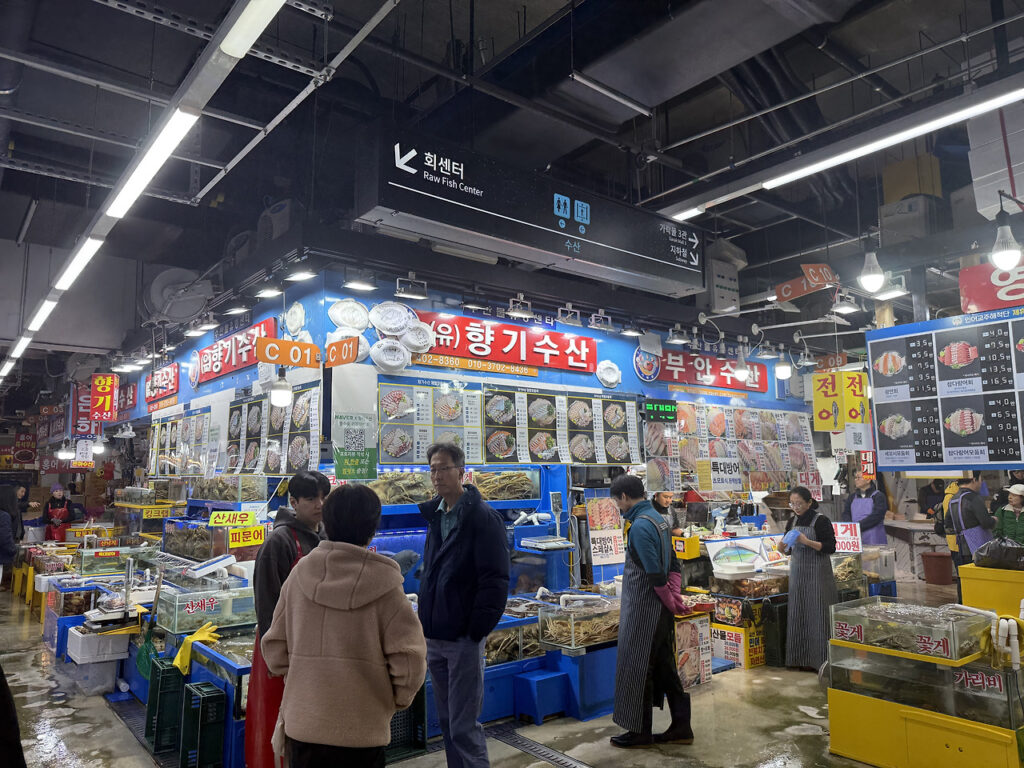
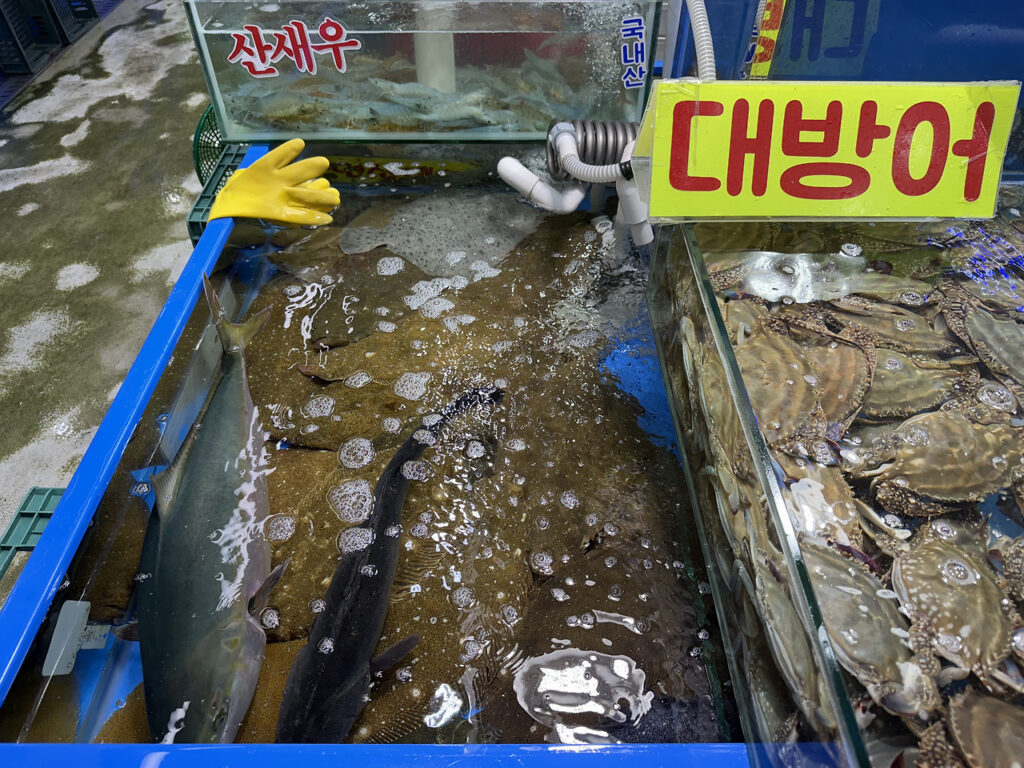
Garak Market’s Raw Fish Center is a whole floor of competing stalls, each with tanks of live fish, freshly sliced sashimi on display, and vendors who will ask you directly how thick you want your cuts. It can feel overwhelming the first time, but once you settle in, it’s exhilarating. I walked past several stalls before stopping at Hyanggi Susan — the tanks looked immaculate, the fish were visibly healthy, and the staff had that particular energy of people who genuinely care about what they’re selling.
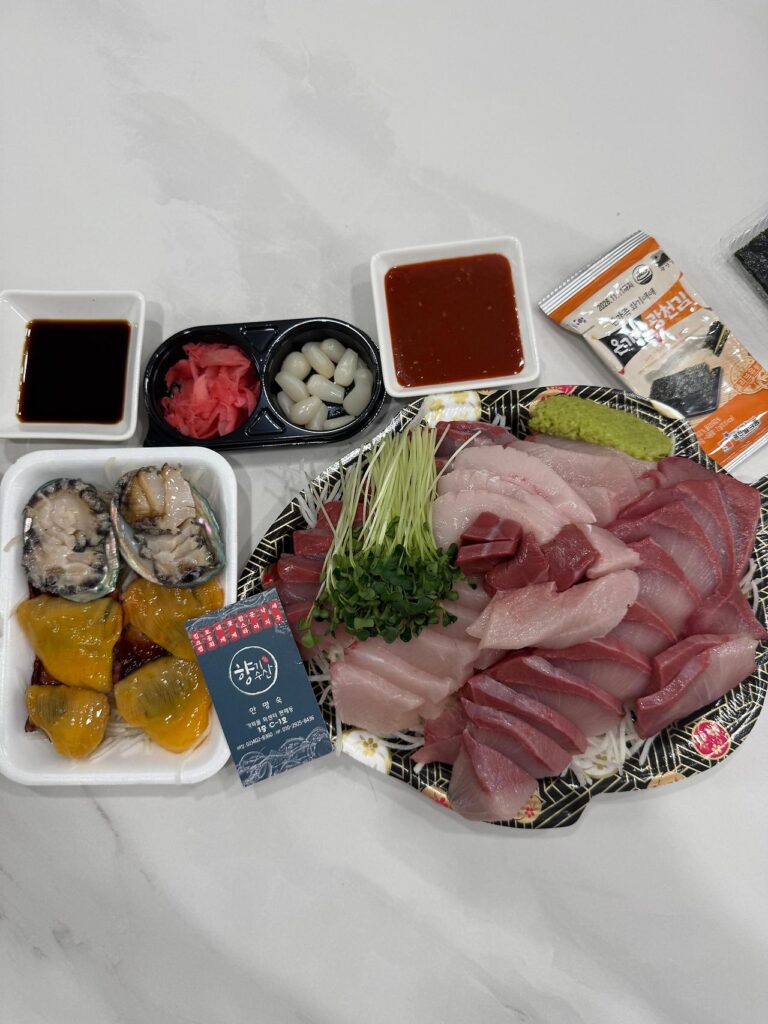
What I Ordered – 돼지방어회 Small Set (85,000 KRW)
I went with the 돼지방어회 (dwaeji-bangeo hoe) — fatty winter yellowtail sashimi — in the small set, which came to 85,000 KRW. I’ll say this now: the “small” label is completely misleading. The portion was massive, more than enough for two people and honestly stretching to three. We genuinely could not finish it, which felt like both a victory and a minor tragedy.
돼지방어회 is a seasonal Korean favorite. The “dwaeji” (pig) nickname comes from the fish’s notably high fat content during winter months — the flesh develops a rich, buttery quality that regular yellowtail simply doesn’t have outside of the cold season. Timing matters here. If you’re visiting Seoul between November and February, this is one of those dishes you shouldn’t miss.
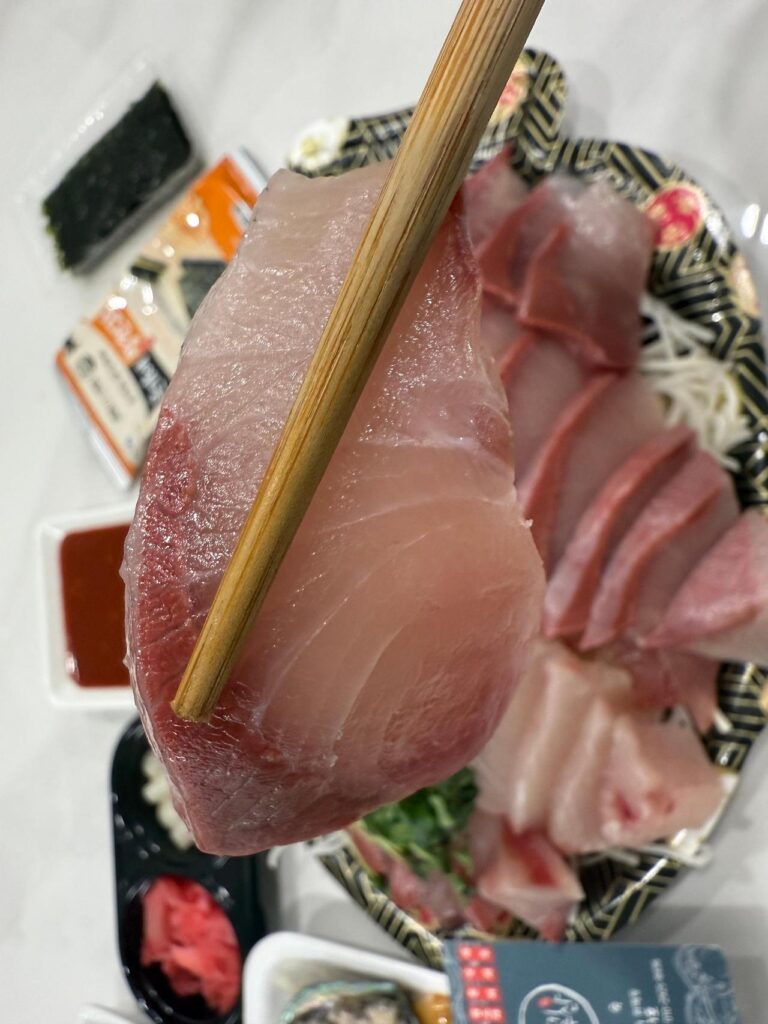
Taste and Texture – Rich, Sweet, and Borderline Addictive
The moment I picked up the first slice with my chopsticks, I could already tell this was going to be good. The flesh had a glossy sheen to it — a visual cue for freshness that you learn to recognize after eating enough sashimi. The shine, the firmness under the chopsticks, the way it held its shape without being rubbery — everything pointed to a fish that had been out of the water for a very short time.
And the taste? Rich and sweet in a way that feels almost indulgent. Winter yellowtail carries more fat than its summer counterpart, and that fat distributes into every bite with a buttery softness that’s hard to describe if you haven’t tried it. It was soft enough to melt slightly on the tongue but still had enough texture to feel substantial. Honestly, it was better than yellowtail I’ve had at mid-range sashimi restaurants in Gangnam — and at a fraction of the price.
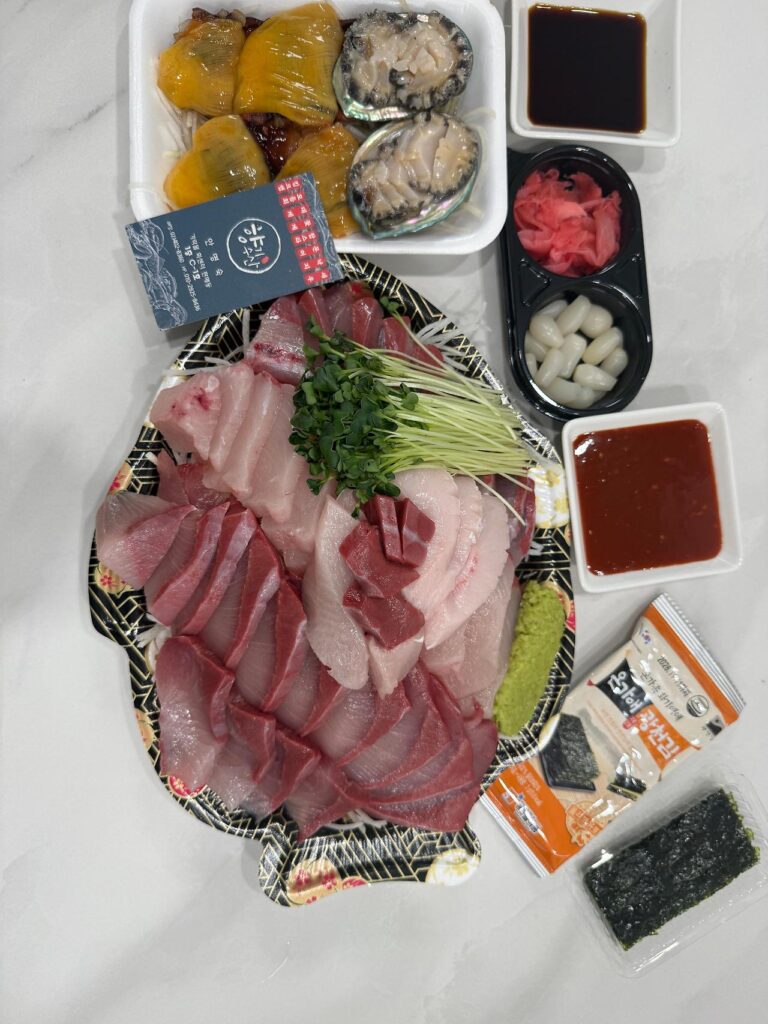
Side Dishes and Packaging – Thoughtfully Complete
The set came with everything you need for a proper Korean sashimi experience: soy sauce, chojang (Korean chili vinegar dipping sauce), fresh wasabi, pickled ginger, pickled garlic, and roasted seaweed. All neatly packed, clearly labeled, and practical. If you’re taking it home — as I did — everything travels well. The packaging held up without any leaking or mess, which matters more than you’d think when you’re carrying fresh fish on public transit.
A small note on the chojang: if you haven’t tried sashimi with this sauce before, don’t skip it. The chili vinegar brightness cuts through the fat of the yellowtail in a way that’s genuinely revelatory. It’s not just a condiment — it’s part of the eating experience in Korean-style hoe culture.
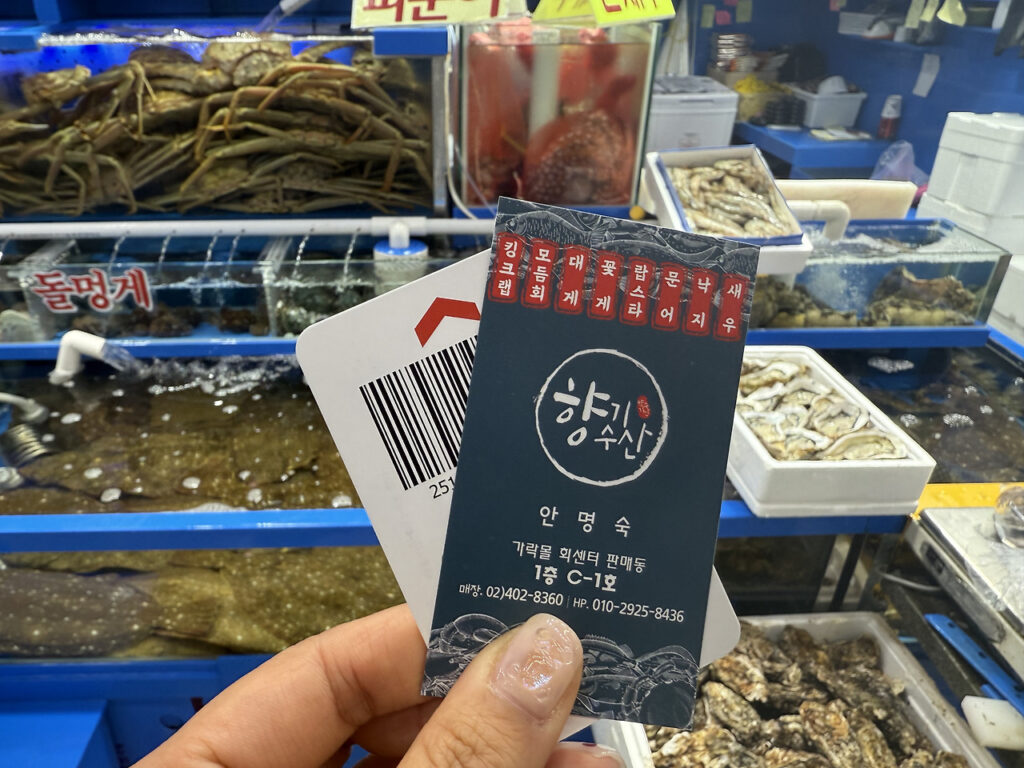
Where I Bought It – Hyanggi Susan (향기수산), Garak Market
There are a lot of stalls in Garak Market’s Raw Fish Center, and they’re not all created equal. What made Hyanggi Susan stand out immediately was the cleanliness of their tanks, the quality of the displayed cuts, and the attentiveness of the staff. When they asked how thick I wanted my slices, I was honestly caught off guard — I’m used to vendors who just cut what they cut. That kind of personalization is rare at a market stall and speaks to a level of care that translates directly into the final product.
For international visitors, Garak Market can be navigated with Google Maps, though the English signage inside the fish center is minimal. The vendors I dealt with communicated well through a mix of basic Korean phrases and gestures — don’t let the language barrier deter you. Pointing at what you want and holding up fingers for quantity works fine, and most vendors are patient with visitors who are clearly figuring it out.
Hyanggi Susan (향기수산)
Garak Market Raw Fish Center, Seoul
Open on Google Maps
Practical Tips for Visiting Garak Market
A few things worth knowing before you go: Garak Market is best visited in the morning or early afternoon when the selection is freshest and the crowds are manageable. Weekends get significantly busier, so if you prefer a quieter experience, a weekday morning is ideal. The Raw Fish Center is located inside the main market complex — follow signs for 수산물 (seafood) once you’re inside.
Bring cash if possible. While some vendors accept cards, the market culture runs heavily on cash transactions and it’s smoother to come prepared. Also, the eating area adjacent to the stalls has basic tables and chairs if you want to consume on-site — many people do. Either way, the experience is worth it.
Final Thoughts – A Must-Visit for Sashimi Lovers in Seoul
Hyanggi Susan at Garak Market delivered one of the cleanest, most satisfying sashimi experiences I’ve had in Seoul — and I’ve had a fair number of them. The 돼지방어회 was exceptional: thick, fresh, beautifully marbled, and served with everything you need to eat it properly. At 85,000 KRW for a set that fed two people comfortably (and almost a third), the value is genuinely hard to argue with.
For anyone traveling to Seoul with a genuine love of seafood — whether you’re chasing the best raw fish the city has to offer or just curious about Korean hoe culture — Garak Market is a destination worth making time for. And Hyanggi Susan, specifically, is a stall worth seeking out. Korean seafood markets like this one are part of a broader culinary tradition that extends well beyond Seoul, from Noryangjin to Jagalchi in Busan and beyond — each one its own universe of flavor, freshness, and local character worth exploring.
What Sashimi Actually Costs at Garak Market
Garak Market is one of the most affordable places in Seoul to eat genuinely fresh, high-quality sashimi. Here’s a rough breakdown of what to expect at Hyanggi Susan and comparable stalls in the Raw Fish Center:
- 돼지방어회 Small Set (Small Fatty Yellowtail) — 85,000 KRW. Feeds 2 people comfortably, nearly 3.
- 돼지방어회 Medium Set — approximately 120,000–140,000 KRW. Better for groups of 3–4.
- 일반 방어회 (Regular Yellowtail) — 50,000–70,000 KRW for a small set. Leaner and less fatty than the winter version.
- 광어회 (Halibut Sashimi) — typically 50,000–80,000 KRW depending on size. A classic Korean hoe choice.
- 모둠회 (Assorted Sashimi) — varies by stall, usually 60,000–100,000 KRW. Good for trying multiple fish in one visit.
Prices at Garak Market are generally 30–50% lower than equivalent sashimi at a dedicated restaurant in central Seoul. The trade-off is the market environment — no table service, bring your own patience — but for the quality and value, it’s hard to argue. Pro tip: prices can be slightly negotiable, especially for larger orders or if you’re a regular.
Yellowtail Season: Timing Your Visit
The term 돼지방어회 (dwaeji-bangeo hoe) — literally “pig yellowtail sashimi” — refers specifically to the fat-rich winter yellowtail caught between November and February. During these months, the fish builds up significant fat reserves, resulting in the buttery, sweet flesh that makes this dish worth seeking out. Outside of this window, yellowtail is still available but notably leaner and less rich.
For the best overall Garak Market experience, weekday mornings between 9 AM and noon are ideal. The selection is freshest, the stalls are fully stocked, and the crowds are manageable. Weekend afternoons can get genuinely busy — not unpleasant, but noisier and with longer waits at popular stalls. If you’re planning a weekend visit, arriving before 11 AM gives you the best of both worlds: fresh stock and a calmer atmosphere.
Navigating to the Sashimi Halls
Address: 29 Garak-dong, Songpa-gu, Seoul (서울특별시 송파구 가락동 29)
Nearest Station: Garak Market Station (가락시장역), Seoul Metro Line 3 & 8 — Exit 2 or 3
Walk from station: approximately 5–8 minutes
Hours: Raw Fish Center generally open from 6:00 AM – 10:00 PM daily. Best selection before noon.
Parking: Large parking lot available on-site. Free for market visitors (validate at stall).
For visitors coming from central Seoul, the trip takes about 25–35 minutes by subway from Gangnam or City Hall stations. By car, the market is easily accessible from the Garak IC off the Olympic Expressway. Garak Market is also a popular stop for travelers staying in the Jamsil or Songpa area — it’s only a few stations away from Jamsil on Line 8.
Hyanggi Susan (향기수산) – Garak Market Raw Fish Center
Open on Google Maps ↗
Garak Market Yellowtail, Summed Up
Freshness: 5/5 — Some of the freshest sashimi in Seoul, full stop
Value: 5/5 — Significantly cheaper than restaurant sashimi at the same quality
Experience: 4/5 — Market atmosphere is part of the charm, not for everyone
Accessibility: 4/5 — Easy by subway, manageable for first-timers with a little prep
Overall: 5/5 — A must-visit for any serious food lover in Seoul
Rookie Mistakes to Avoid at the Market
Garak Market’s Raw Fish Center can be overwhelming on a first visit. A few things that help:
- Bring cash — Most vendors prefer cash. Some accept cards but not all, and the process is smoother with cash.
- Look for clean tanks — Healthy, active fish in clear water is the best indicator of freshness. Hyanggi Susan scores well here.
- Ask for your preferred cut thickness — Good vendors will ask, but if they don’t, speak up. Thicker cuts hold up better and carry more texture.
- Eat on-site if possible — The eating area adjacent to the stalls is basic but functional. Sashimi is always best eaten immediately.
- Come hungry — Portions are large. The small set at Hyanggi Susan is enough for two, don’t let the word “small” fool you.
- Try the chojang (초장) — The spicy vinegar dipping sauce. Non-negotiable with fatty yellowtail.
More Fresh Food Finds in Seoul
If raw fish and fresh Korean food is your thing, here are a few more reviews worth reading on Korea Food Trails:
- Sushi Ian Wirye Review — Conveyor belt sushi at just 1,990 KRW per plate near southeastern Seoul. Great for a fast, affordable sushi fix.
- Dongdaemun Yeopgi Tteokbokki – Gildong Branch — Mild, chewy tteokbokki that delivers on every order. A reliable delivery staple in eastern Seoul.
- YONEZ Hanam Review — A warm, family-friendly Korean-Japanese restaurant in Hanam. Nabe, katsu, and katsudon done right.
Deeper Into Seoul Fish Territory
- Sushi Ian Wirye: Affordable Conveyor Belt Sushi in Seoul
- Seongsoo Jeong Chamchi: Premium Tuna Sashimi in Seoul
Garak Market Raw Fish Center (향기수산)
4.7 / 5
Garak Market, Seoul | Korean Seafood | ₩₩
Best yellowtail and fresh sashimi at Garak Market’s raw fish center — unbeatable value and incredibly fresh seafood.