Dajeongine Gimbap Seogwipo: Egg-Packed Jeju Kimbap Review

Not every great meal in Jeju needs a reservation or a view. Sometimes it is a foil-wrapped roll eaten in the car, and you spend the rest of the trip thinking about it. That was Dajeongine Gimbap for us, a kimbap shop in Seogwipo we stumbled onto on the way to Soesokkak.

We were driving, the kids were hungry, and we needed something quick. So we pulled in, ordered a few rolls to go, and ate them on the road. It turned into one of the small food memories that stuck harder than some of the fancy stops.

This is the honest little review of that stop. Which roll to get, what it costs, the surprisingly nice space we walked past, and why a five-thousand-won kimbap ended up on my list of favorite things we ate all week.

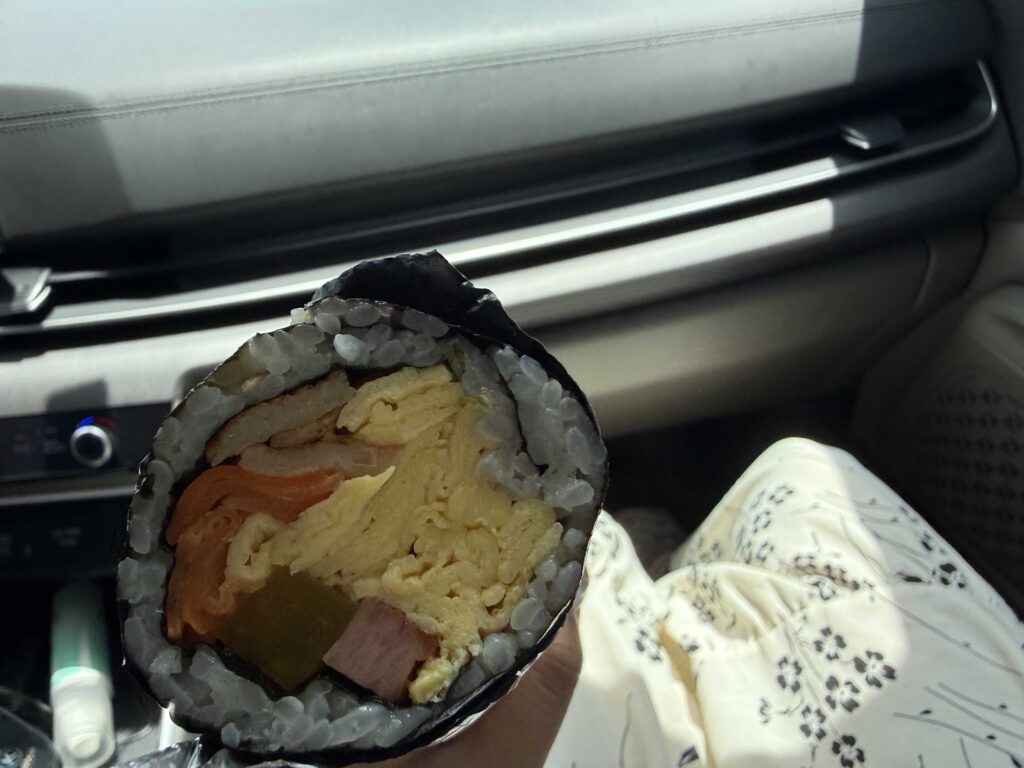
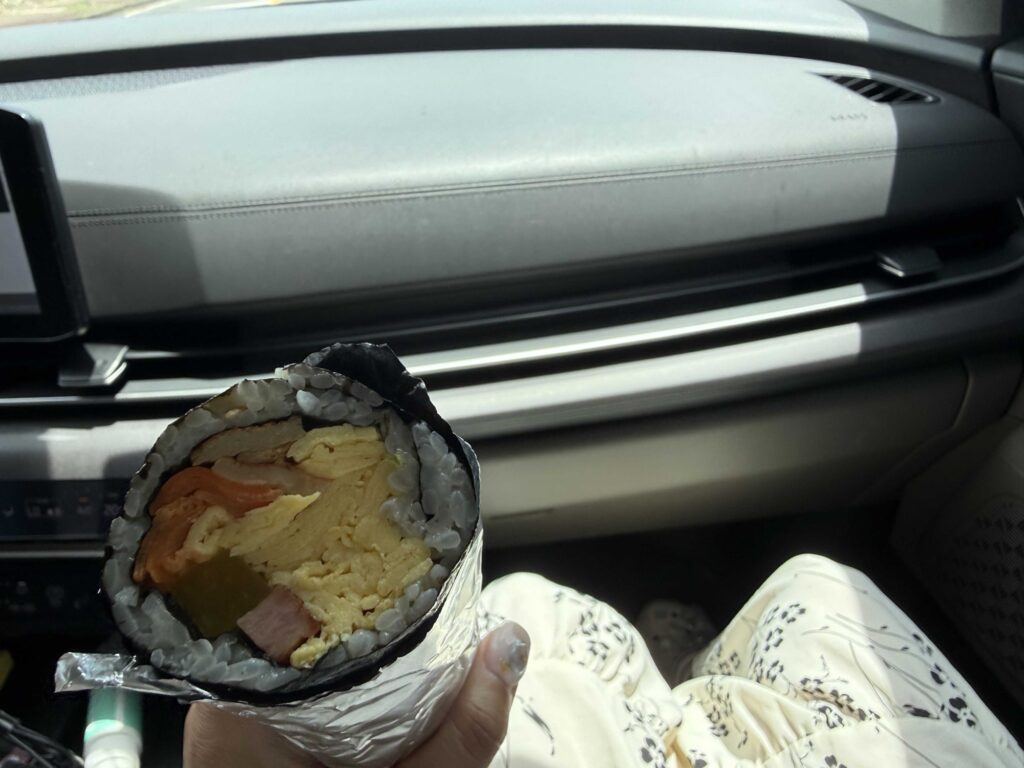
Egg-packed regular Dajeongine Gimbap roll held in the car
The regular roll, packed with egg. This is what we kept thinking about later.

What Makes Dajeongine Gimbap Worth a Stop

The draw is simple. Fresh kimbap, made to order, stuffed fuller than the convenience-store kind, and cheap. The signature Dajeongine roll runs just 4,500 won, and even the loaded options stay well under ten thousand. For a family grabbing a fast bite between sights, that is hard to beat.

This is a small local chain with a Seogwipo branch, a neighborhood kimbap shop of the sort you find all over Korea but rarely as polished as this one. It clearly takes its rolls seriously, from the fresh fillings to the tidy, welcoming space. So while the price says quick and casual, the quality punches above it.

It was busy when we stopped, even on a weekday, which is usually a good sign for a food place. Locals came in for takeout the whole time we waited, a steady stream of regulars grabbing rolls to go. You learn to trust a spot the neighbors keep coming back to, and this was clearly one of those.

What surprised me was the egg. Each roll carried a thick, folded layer of it, almost a third of the filling. That gives the kimbap a soft, rich bite that plain versions never manage. So even a basic roll here tastes like someone cared about it, which is the whole point of a good kimbap shop.

You can tell the fillings are cut and rolled fresh, not sitting pre-made in a case. The vegetables had a snap to them, the egg was still faintly warm, and the whole roll held together without being packed hard. Those are the marks of a shop that makes each order rather than pulling it off a shelf.

Close-up of the thick egg in Dajeongine Gimbap
Look at that egg layer. It carries the whole roll.

Why the Egg Makes the Difference

Plenty of kimbap treats egg as an afterthought, a thin ribbon lost among the other fillings. Here it is a headline ingredient, folded thick and slightly sweet, and it changes the whole texture of the roll. Each bite goes soft and custardy where the egg sits, which is exactly what makes a simple roll feel special. Kids love it for the same reason, since the flavor is gentle and familiar rather than sharp or fishy.

  • Location. Seogwipo new town, Jeju (Seogwipo branch)
  • Category. Kimbap shop, dine-in or takeout
  • Price. Signature roll 4,500; tuna 5,500; loaded rolls 6,000–7,500
  • Best For. A fast, cheap breakfast or a road-trip lunch
  • Overall. 4.5 / 5
  • Regular Roll. 5 / 5. The one to order
  • Tuna Roll. 4 / 5. Good, but the regular wins
  • Value. 5 / 5. Hard to spend much here
  • Kid-Friendliness. 4.5 / 5. High chairs, mild flavors, easy to share
  • Speed. 4.5 / 5. Quick even freshly rolled

Regular vs Tuna: The Verdict

We ordered two regular rolls and two tuna, wanting to compare. The regular won, and it was not close. Its balance of egg, pickled radish, ham, and fish cake just worked, clean and comforting in every bite.

That is the thing about a classic kimbap done right. No single filling shouts over the others, and the whole roll eats better than the sum of its parts. The pickled radish added a little crunch and tang, the ham gave it a savory edge, and the egg tied it all together. It is the sort of roll you can eat three of without getting tired of it.

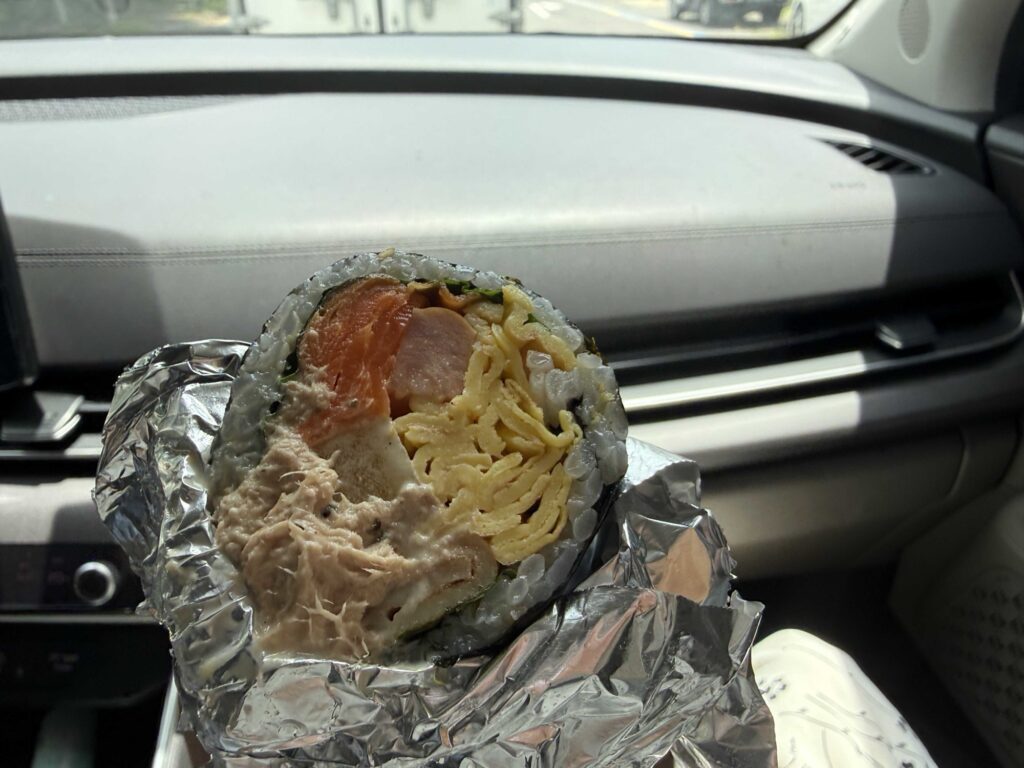
Tuna mayo Dajeongine Gimbap roll cross-section
The tuna roll, with a big scoop of mayo-dressed tuna.

Tuna was good too, generous with the mayo-dressed filling, but it leaned heavier and a little one-note. If you love tuna kimbap, order it and enjoy. For everyone else, the plain Dajeongine roll is the smarter pick. Next time we will get three regular to one tuna, not an even split.

Which Roll to Order

It says something that the cheapest roll was also the best. At 4,500 won, the signature undercut the tuna and beat it on flavor. That almost never happens, where the value pick and the taste pick are the same roll. So my honest advice is to start with the regular, and only branch out once you have had it.

The kids were split, which was interesting. Our daughter went for the tuna, drawn to the creamy filling, while our son declared the regular the clear winner. That gave us a lively little debate in the car about which roll was best. Between them they settled it as a draw, though I am firmly on the regular side.

If you are ordering for a group, mix it up but lean regular. Get more of the signature than anything else, add a tuna or two for variety, and maybe a half-and-half to sample. That spread keeps everyone happy without over-ordering the heavier rolls. We over-indexed on tuna and slightly regretted it, so learn from our split and tilt toward the plain roll.

A Space We Wish We Had Sat In

Here is my one small regret. We took the rolls to go, but the shop itself is genuinely nice inside. Bright and airy, with a sunflower painting, a big kimbap mural, and high chairs lined up for little kids.

Bright interior with kids high chairs and gimbap wall art at Dajeongine Gimbap
The interior, brighter and cozier than a kimbap shop needs to be.

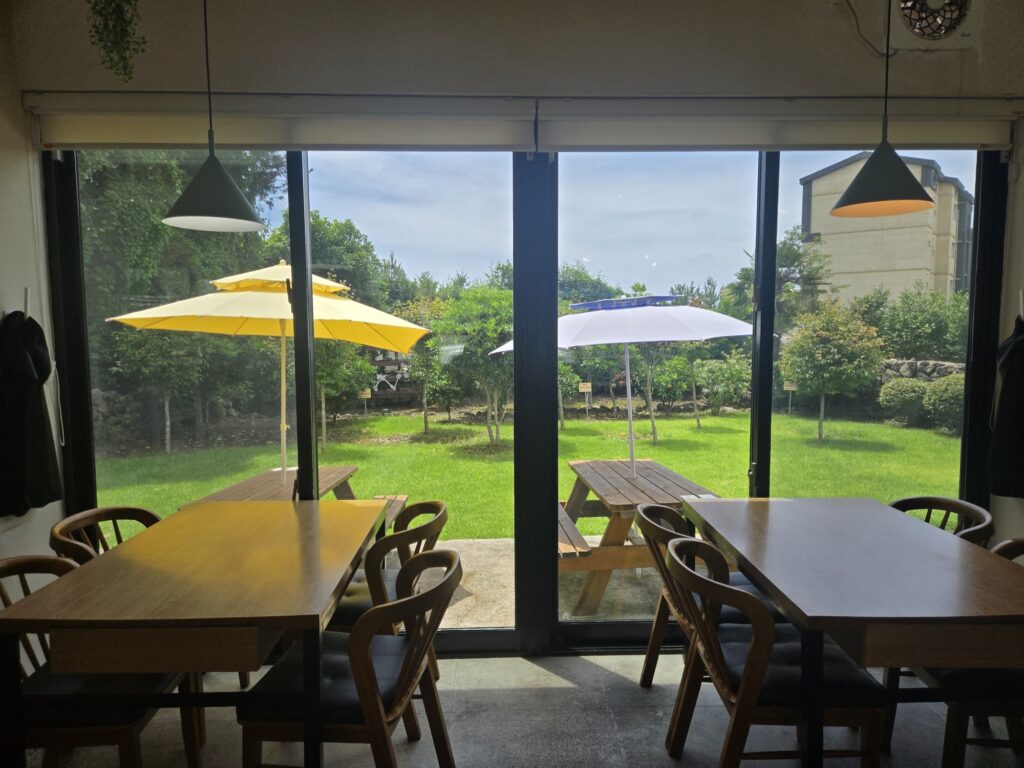
Better still, one side opens onto a garden with picnic tables and yellow umbrellas, framed by big windows. There is even a tangerine-tree corner with little painted mascots that the kids would have loved. If you have time, eat in and enjoy it, because this is not a grab-and-go counter, it is a proper little space.

The high chairs by the tables tell you they take families seriously. So does the bright, clean, cheerful room. It would be an easy, low-stress spot to feed toddlers, with mild flavors and plenty of space. A kimbap shop that bothers with a nice room and kid seating is going the extra mile, and it shows in the whole experience.

The Space We Skipped, and Would Not Again

It is a place I would happily build a slow breakfast around on a future trip. Order a few different rolls, grab drinks, let the kids run in the garden, and take our time. That we did not this visit is my only real regret about the stop, and an easy one to fix next time.

Tangerine-tree corner inside. The kids missed this one.
Garden view seating with umbrellas at Dajeongine Gimbap Seogwipo
The garden side, with picnic tables just outside the glass.

Looking back, sitting in that garden would have made a lovely slow breakfast. Sunlight through the big windows, the kids at a picnic table, fresh rolls on the plate. We were on a schedule and chose the road instead, but if you are not rushing, this is a spot to linger in.

The garden also makes it a good stop with younger kids who need to run off energy. They could eat, then burn around the lawn while the adults finished coffee in the shade. For toddlers especially, a kimbap shop with outdoor space is a small stroke of genius.

Eating It in the Car on the Way to Soesokkak

We were headed to Soesokkak, so the rolls came with us, still warm in their foil. There is a particular joy to a fresh kimbap eaten one hand on the wheel, the coast rolling by outside. The kids demolished theirs before we were halfway there.

On the road with a roll in hand, headed for Soesokkak.

It made the perfect road-trip food, honestly. No mess, no fuss, filling but not heavy, and gone in a few happy minutes. By the time we reached the water, everyone was fed and content, which set the whole afternoon up well. A simple roll doing exactly what you need it to do, right when you need it.

Foil-wrapped kimbap travels better than almost any food. It holds together, it does not leak, and it stays good at room temperature for hours. For a family bouncing between sights, that portability is worth a lot. We have since made a rule of grabbing a couple of extra rolls whenever we pass a good shop, just to have them in the car for later.

There is a small ritual to eating kimbap in a moving car, too. The foil peels back like a wrapper, you eat down the roll piece by piece, and there is almost no mess. The kids have it down to an art now, working through a roll without dropping a grain of rice. It has quietly become one of our favorite travel-day routines, and this stop is where it really clicked.

A quick look inside the shop before we took our order to go.

How It Beats Convenience-Store Kimbap

Anyone traveling Korea leans on convenience-store kimbap at some point, and it does the job. But a fresh roll from a shop like this is a different food entirely, and the gap shows in the first bite. The rice was warm and soft, not fridge-cold and firm, and the fillings tasted made that morning.

Price is the surprise. You might expect a made-to-order roll to cost two or three times the convenience-store version, and it barely does. For a few hundred won more, you get a roll that is fresher, fuller, and genuinely better. On a trip where every meal adds up, that value adds up too, and it makes you a repeat customer.

So if you have been grabbing rolls from the cooler, treat yourself once. Pull into a real kimbap shop, order it fresh, and you will taste why the local spots still thrive next to every convenience store on the island.

The freshness shows in small ways. The seaweed still had a little crispness, the rice was seasoned and just-cool rather than cold and packed hard. These are the details a convenience roll cannot match, no matter how good the brand. You only notice them side by side, and once you do, it is hard to go back to the cooler version.

The Menu, and What Else to Try

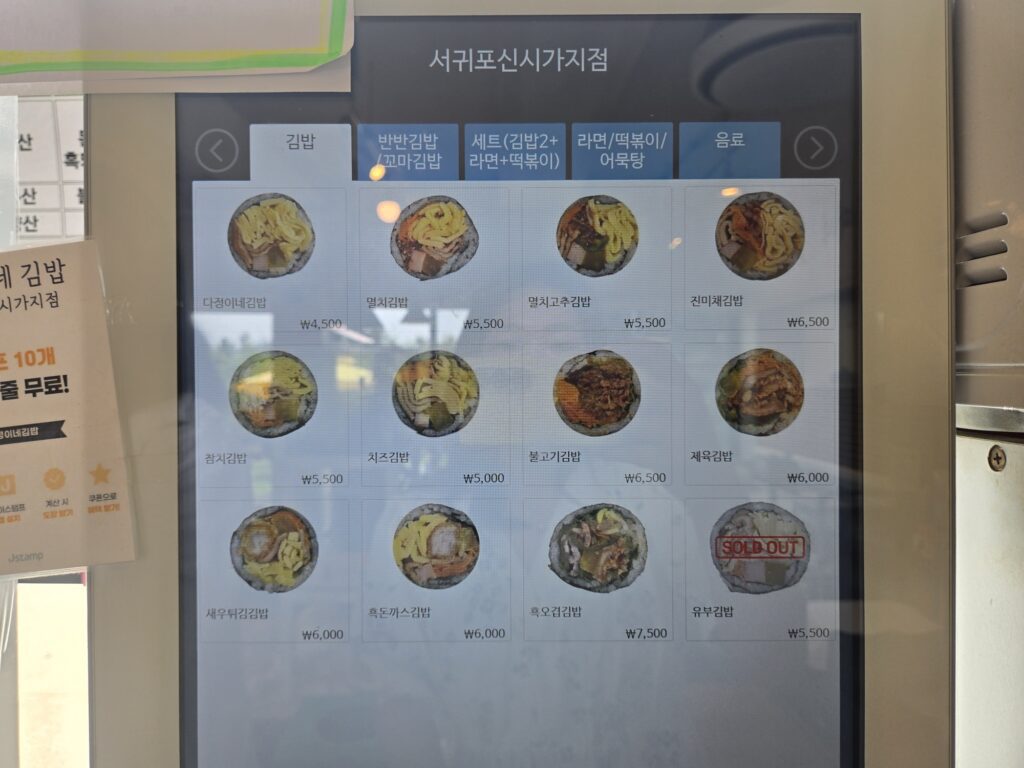
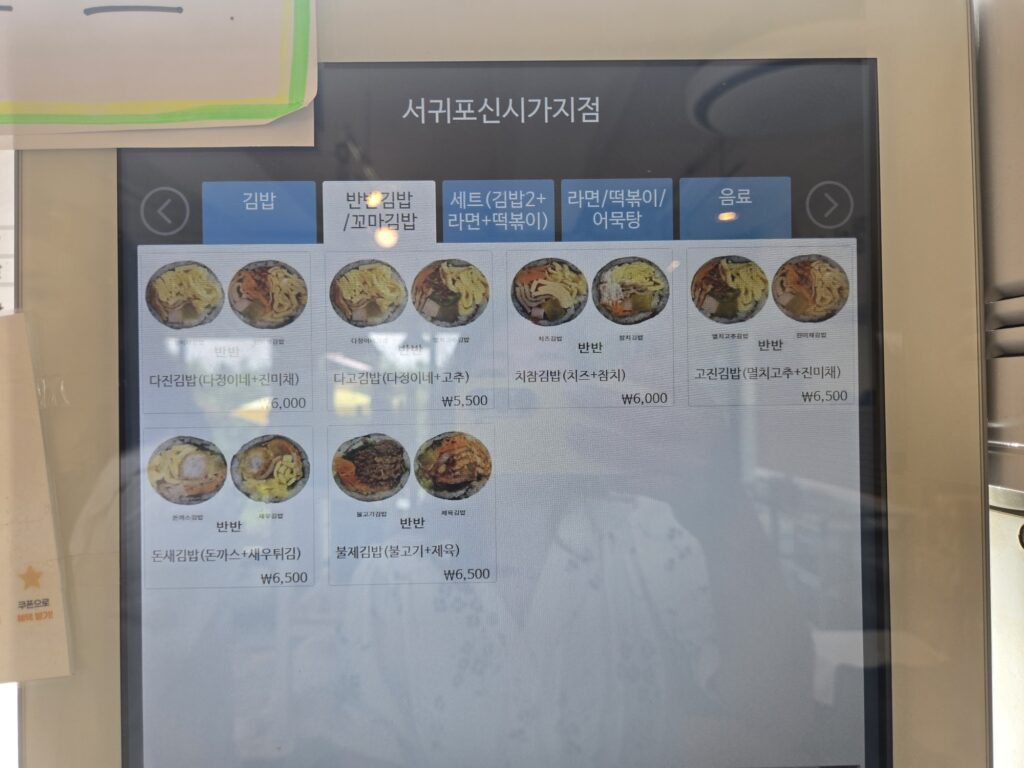
A full wall of kimbap greets you, far more than the two we tried. Beyond the signature and tuna, there are anchovy rolls, cheese, bulgogi, jeyuk, shrimp tempura, and a black-pork cutlet version. They also do half-and-half rolls, so you can pair two fillings in one.

Menu screen of gimbap options at Dajeongine Gimbap Seogwipo
Plenty on the kimbap board we did not get to.

That half-and-half idea is smart, and I wish we had used it. Pairing the signature roll with a spicier or richer filling would let you taste more in one order. Next visit, a signature-and-bulgogi half roll is going straight on the list.

The range on the board is genuinely wide for a kimbap shop. Beyond the basics there are premium fillings, spicy options, and heartier meat rolls. So it works whether you want a light snack or something closer to a full meal. For a family with different appetites, that spread means everyone finds a roll they actually want.

Half-and-half gimbap menu at Dajeongine Gimbap Seogwipo
Half-and-half options, for tasting two fillings at once.

Kids, Drinks, and the Little Details

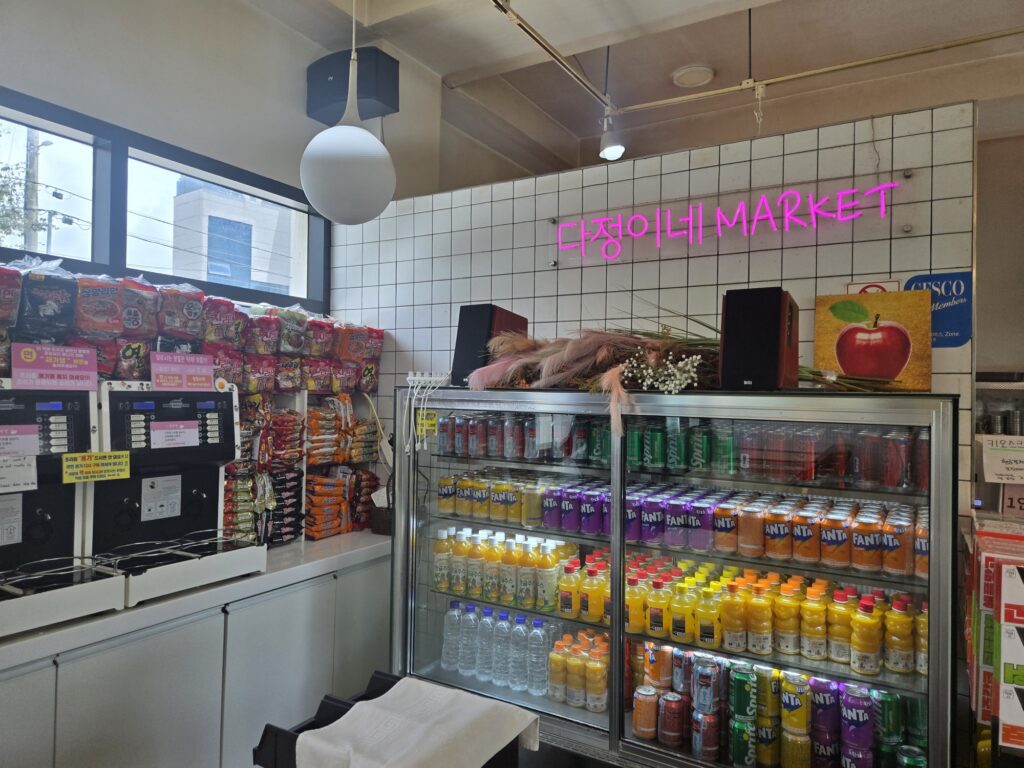
For families, the details add up. Mild flavors that kids actually eat, high chairs by the tables, and a small market counter with drinks by the door. You can grab a juice or water on the way out, which is handy for a car full of children.

Drink fridge at the Dajeongine market counter
A little drink counter by the door, easy to grab on the way out.

Rolling everything into one stop is underrated on a travel day. Food, drinks, high chairs, and parking, all in the same place, with no second errand. We filled a bag with rolls and a few bottles and were back on the road in minutes. When you are managing a car full of kids and a packed itinerary, that one-stop ease is worth seeking out.

Parking was simple, right out front, which sounds trivial until you have circled a block with hungry kids in the back. Pull in, order, wait a few minutes for the rolls, and go. The whole stop cost us barely fifteen minutes. For a fresh, hot breakfast that good, that is about as efficient as a travel-day meal gets.

Our kids rated it high, and they are a tough crowd on a long trip. The soft egg and clean fillings went down without a single complaint, which almost never happens. When both of them ask for the same thing again the next day, I take note.

Why Kimbap Is the Ideal Travel Food

Kimbap is quietly one of the best travel foods for children. It is mild, it is handheld, and it hides vegetables inside rice they will actually eat. A picky eater who refuses a plate of banchan will happily work through a roll, one slice at a time. On a two-week trip with two kids, that reliability is worth more than any single fancy meal.

It travels anywhere, too. Beach bag, hiking pack, glovebox, it survives them all without turning to mush. We took to grabbing extra rolls whenever we passed a good shop, just to have a backup meal on hand. More than once, a stashed roll saved a long afternoon when the kids got hungry miles from anywhere.

There is also something nice about everyone eating the same thing, no negotiating, no separate orders. We each held our own roll, the car went quiet, and for a few minutes the only sound was chewing and the road. Small wins like that keep a long travel day from unraveling.

That drive to Soesokkak is a pretty one, the road dipping toward the coast, and eating as we went made it better. A good roll and a scenic drive is a simple pleasure, but it is the sort of moment a trip is really made of. We still talk about that impromptu car breakfast more than some of the planned meals.

Swing By on Your Route

A few quick notes if you want to swing by on your own Jeju route.

  • Where. Seogwipo new town, on the south side of Jeju, with parking out front
  • Handy for. A stop on the way to Soesokkak or the Seogwipo waterfalls
  • Order this. The signature Dajeongine roll; add a half-and-half for variety
  • Budget. Rolls from 4,500 won; a family eats for very little
  • Eat in or out. Nice dine-in space and garden, or takeout for the road
  • Great for. An early breakfast before a full day of sights

Two More Jeju Food Stops

For the other end of the Jeju food spectrum, our lunch at Jeju Gwanghae in Aewol is the sit-down, splurge version of an island meal. And for street food by the dozen, the Jeju Dongmun Market night market is where to graze after dark.

Why It Stuck With Us

Already planning it, and next time we are sitting down. A cheap, fresh roll of gimbap done this well is the kind of food that quietly outshines meals three times the price.

I still think about that egg-heavy regular roll, weeks later, which is more than I can say for some of the famous stops. Sometimes the best food memory of a trip is the cheapest one, eaten in the front seat with the windows down.

If your Jeju plans run through Seogwipo, put this on the list, even just for a quick breakfast before the waterfalls or Soesokkak. Order the signature roll, grab a drink from the counter, and decide whether to sit in that sunny garden or take it to the road. Either way, you will spend almost nothing and eat better than the price suggests. That combination is rarer than it should be.

Written by

Jun Kim

Dad of two in Hanam who eats out several times a week and writes about it. Every restaurant on this blog is a place I walked into as a regular customer — real orders, real bills, real opinions.

More about this blog

Leave a Comment

Your email address will not be published. Required fields are marked *

Scroll to Top