Jeju Dongmun Market Night Guide: What to Eat and Skip

We booked a week in Jeju for the summer, and the plan for the first night was simple. Drop the bags at the guesthouse, then go eat. Jeju Dongmun Market was the place I had circled on the map weeks before we flew. I have a soft spot for old Korean markets, and this is the biggest one on the island.

By the time we walked in, the sun was gone and the night market was already glowing. Both kids stopped dead at the first row of stalls. So did I. There was more food in a single aisle than we could finish in a week. The smell made most of our decisions before we did.

We had flown in that afternoon, picked up a rental car, and checked into a hotel near the airport for the first night before heading to the coast. Dinner was the only real item on the agenda. When you land somewhere new and the kids are wired from travel, a market beats a sit-down restaurant every time, because it gives them room to move and something new to look at every few steps.

This is the honest account of our first night there. What we ate, what was worth the line, how much it cost, and the one thing nobody tells you before you go.

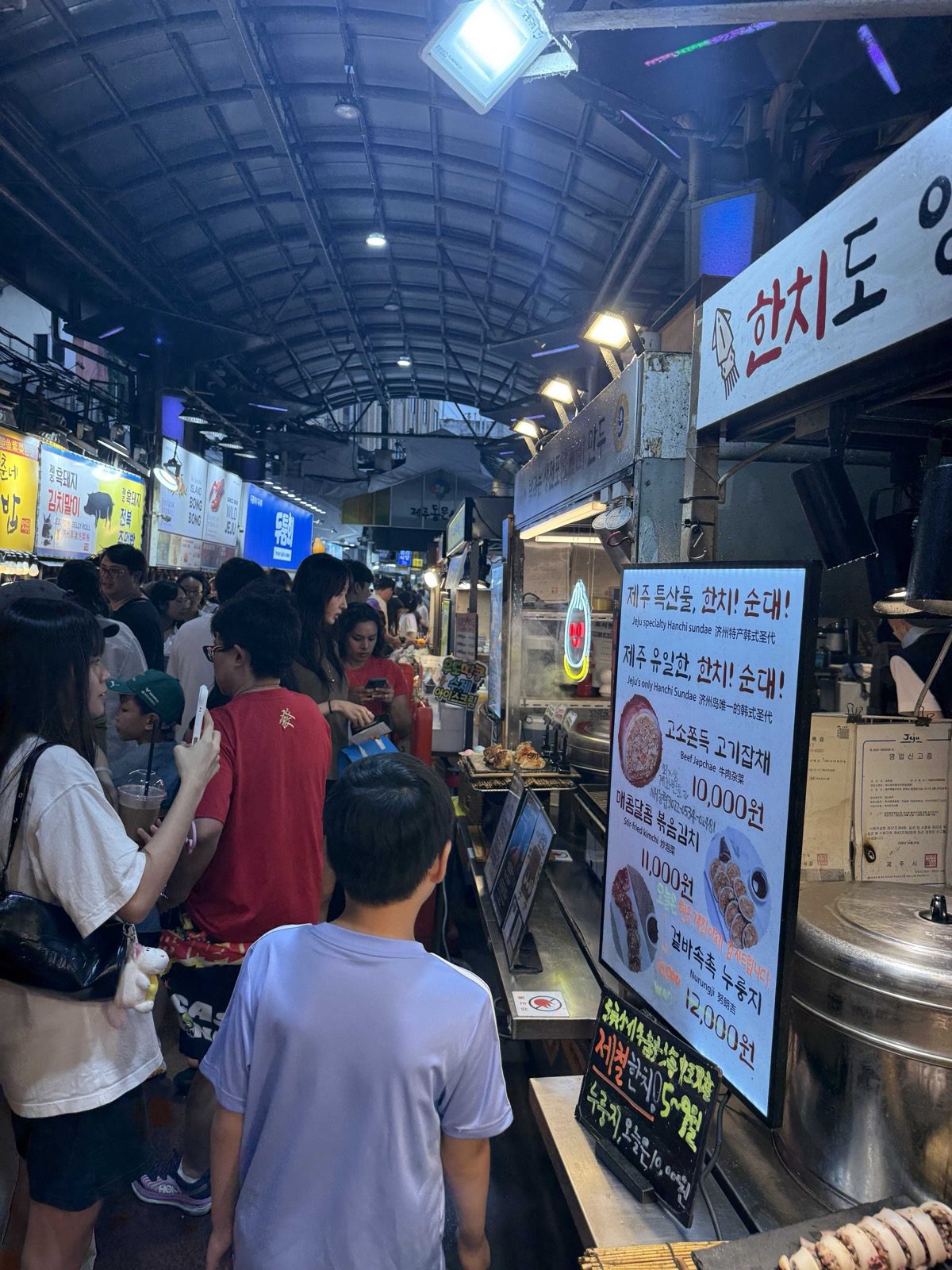
Walking into the Jeju Dongmun Market night market aisle
The first aisle after sundown. This is where the kids stopped walking.
  • Location. Dongmun Traditional Market, Jeju City, Jeju
  • What to eat. Night-market gimbap, geobukibap rice balls, black pork, grilled squid, tangerine juice
  • Price. Most snacks 3,000–6,000 won; a full plate around 10,000–15,000 won
  • Overall. 4.5 / 5
  • Food Variety. 5 / 5. You could eat here for a week and not repeat
  • Value. 4.5 / 5. Snack prices, not tourist-trap prices
  • Atmosphere. 5 / 5. The night market is the reason to come
  • Family-Friendliness. 4 / 5. Kids loved it, but keep a hand on the little ones in the crowd
  • Seating & Comfort. 3 / 5. You eat standing up, and that is the catch

Why the Night Market Is the Version You Want

The market runs in the daytime too, and it is fine. But the night market is a different animal. From early evening the covered aisles fill with food stalls. String bulbs come on overhead. The whole place shifts from grocery run to street feast in the space of an hour.

We came in from the east side, and the crowd swallowed us right away. Vendors were calling out prices. Griddles were hissing. Every few steps something new was on fire or on ice. My younger one kept tugging my sleeve to point at the next thing before we had finished looking at the last.

If you only have one evening in Jeju City, this is a strong way to spend it. You are not sitting down for a set meal. You are grazing, stall to stall, and letting the market decide the menu. That suits a family with kids better than any restaurant would, because nobody has to sit still and nobody has to agree on one thing.

Come hungry, and come with a rough plan to share. We split almost everything four ways so we could taste more without wasting food. That turned out to be the right way to do it.

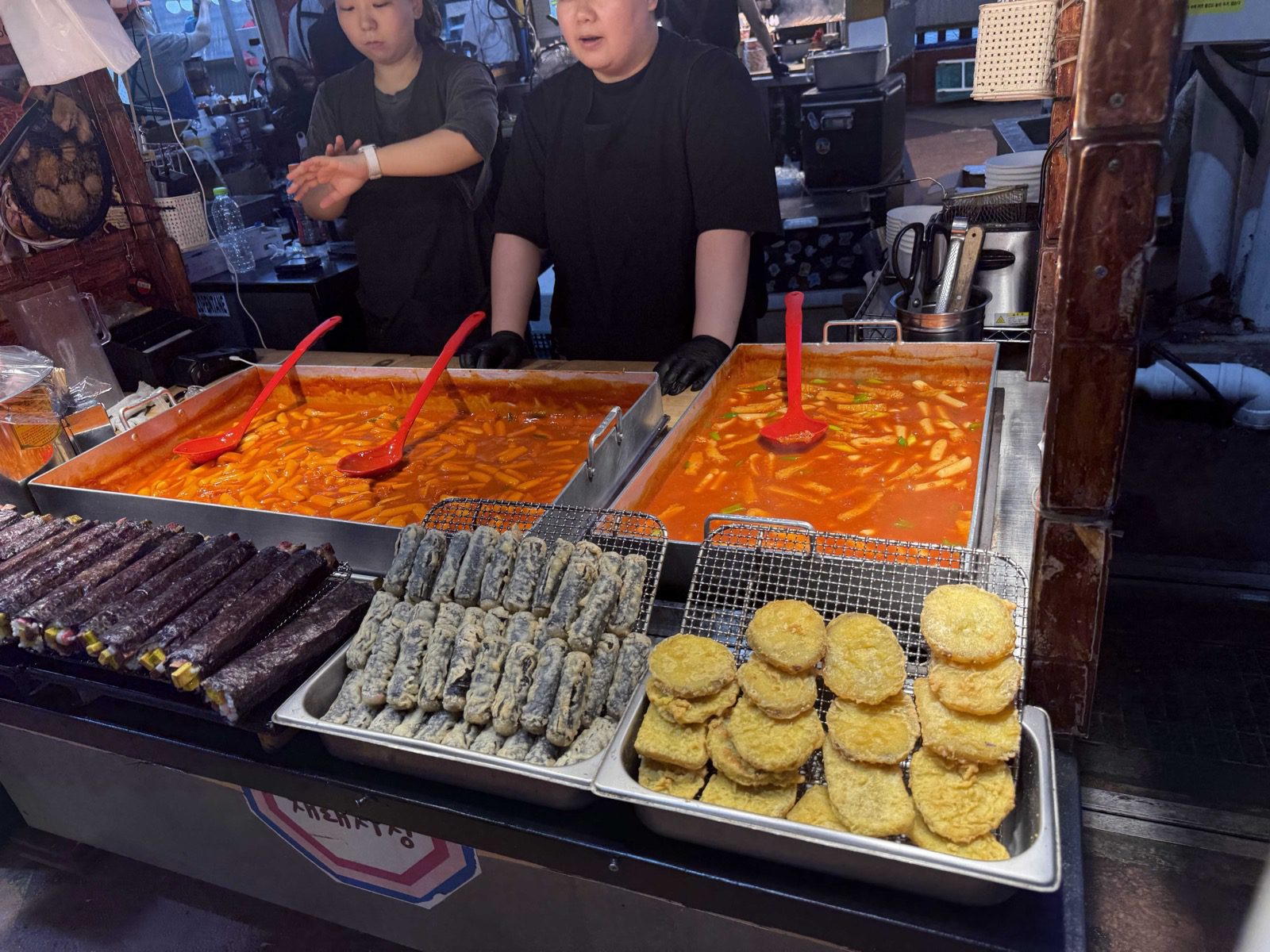
Tteokbokki and fried gimbap stall at Jeju Dongmun Market
Tteokbokki, fried gimbap, squid, and fritters. The classic opening move.

The Egg-Wrapped Gimbap That Started Us Off

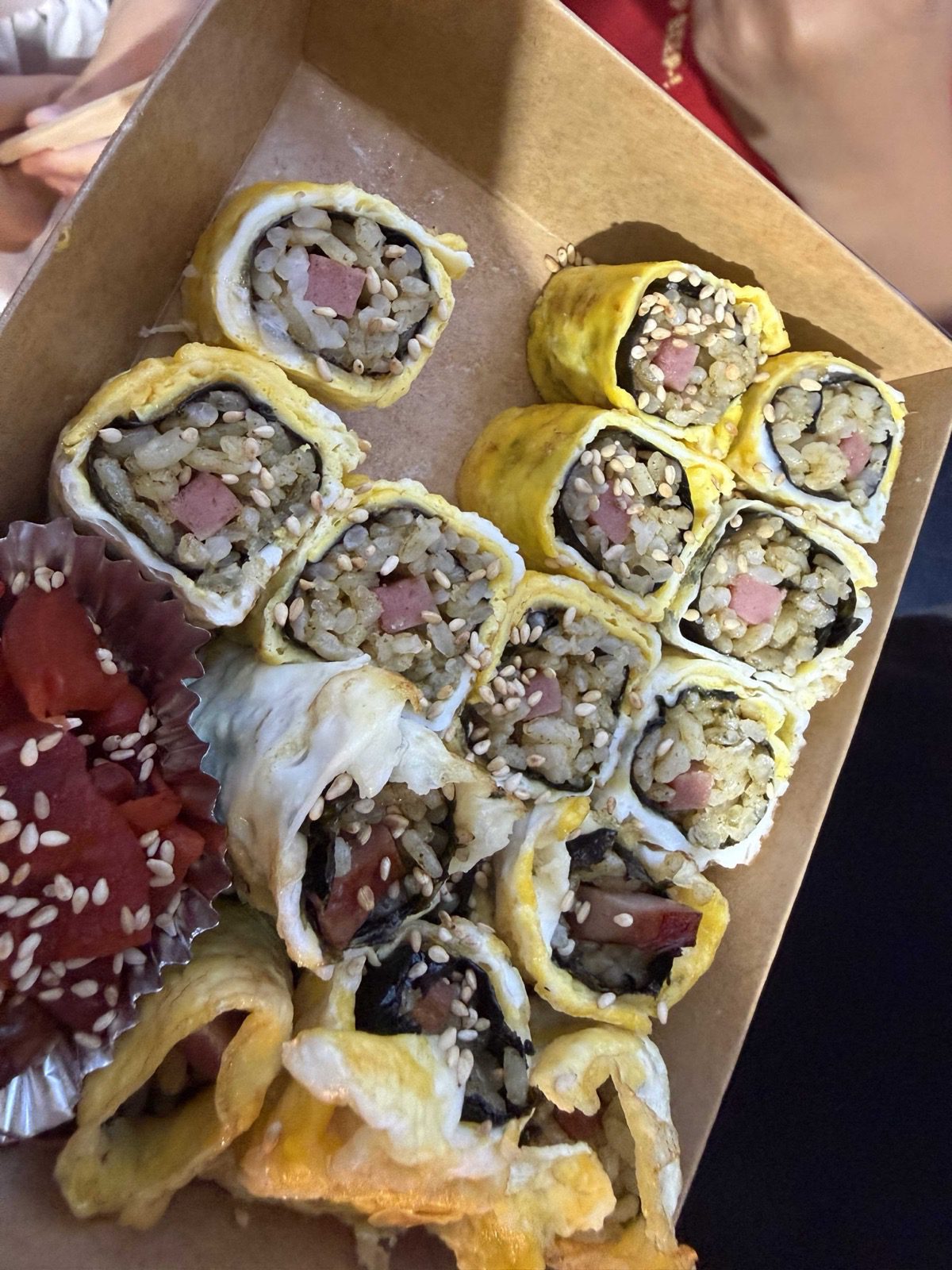
Our first buy was gimbap, because it is easy to eat on your feet. The kids will never say no to it either. The stall we stopped at was rolling a version wrapped in a thin egg blanket instead of seaweed. It came sliced into fat rounds and boxed with a little pickled ginger on the side.

It was warm, a bit sweet from the egg, and gone in about two minutes. For a few thousand won it did exactly what it needed to do. It bought us time to look at everything else without a hungry ten-year-old melting down in the middle of the aisle.

If you have never had gimbap, it is the Korean rice roll that often gets called a “seaweed rice roll” in English. This egg-wrapped one is a market twist, and you will not see it in every neighborhood shop. You can read the basics of how gimbap is made if you want the background. But honestly, you just eat it and move on to the next stall.

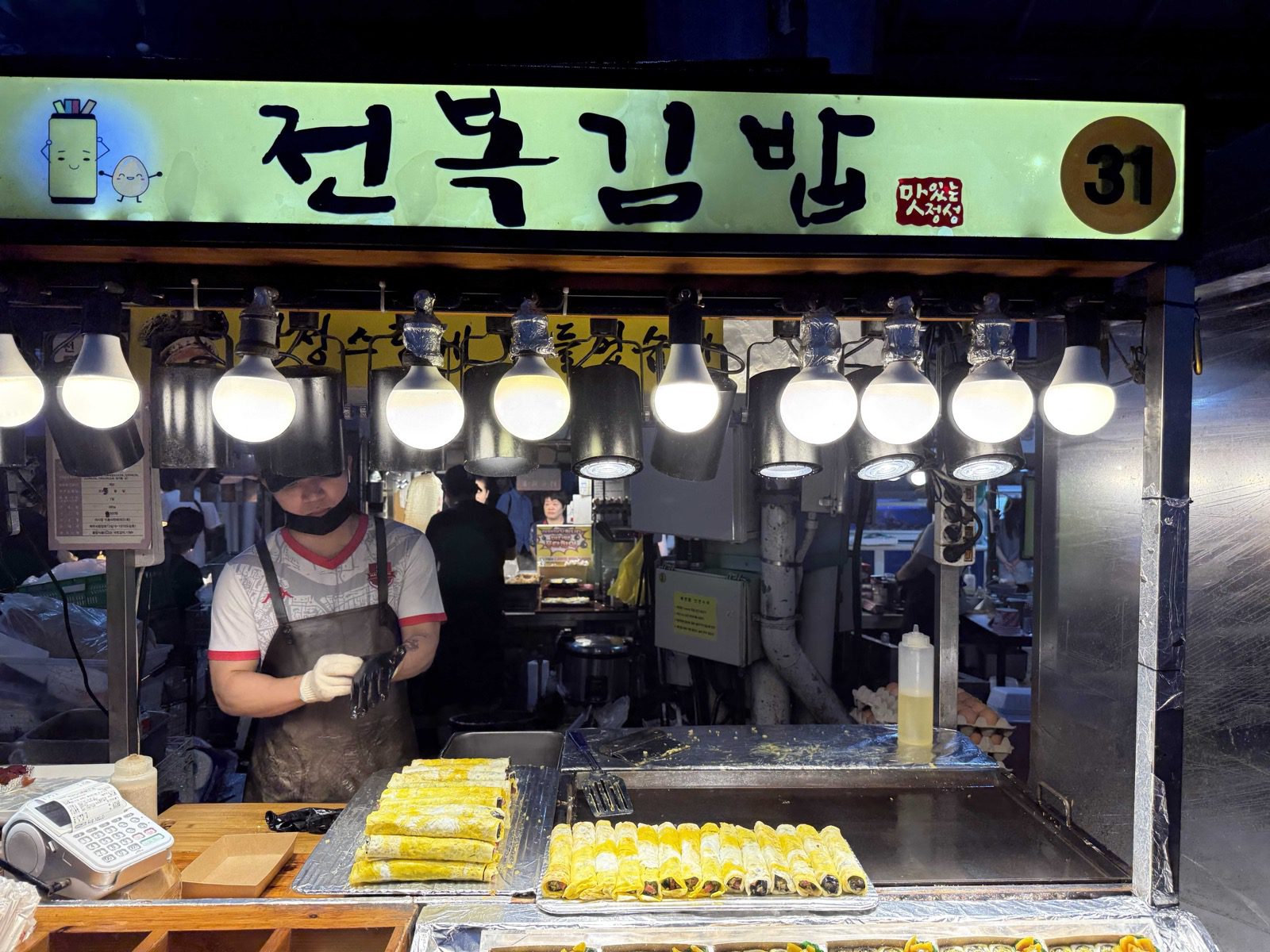
Abalone gimbap stall under bulb lights at Jeju Dongmun Market
Stall 31, rolling abalone gimbap under a row of bulbs.

Some of the gimbap stalls here go fancier. They fold in abalone or other Jeju seafood, and a few of them had a real line by the time the crowd peaked. We stuck with the simple egg version this round. Still, I made a note to come back hungrier and try the abalone roll. If you love a seafood-heavy bite, you will find it here without looking hard.

Egg-wrapped gimbap takeout box from Jeju Dongmun Market
Egg-wrapped, sliced thick, ginger on the side.
Rolling the egg-wrapped gimbap on the griddle.

Geobukibap, the Rice Balls We Carried to a Ledge

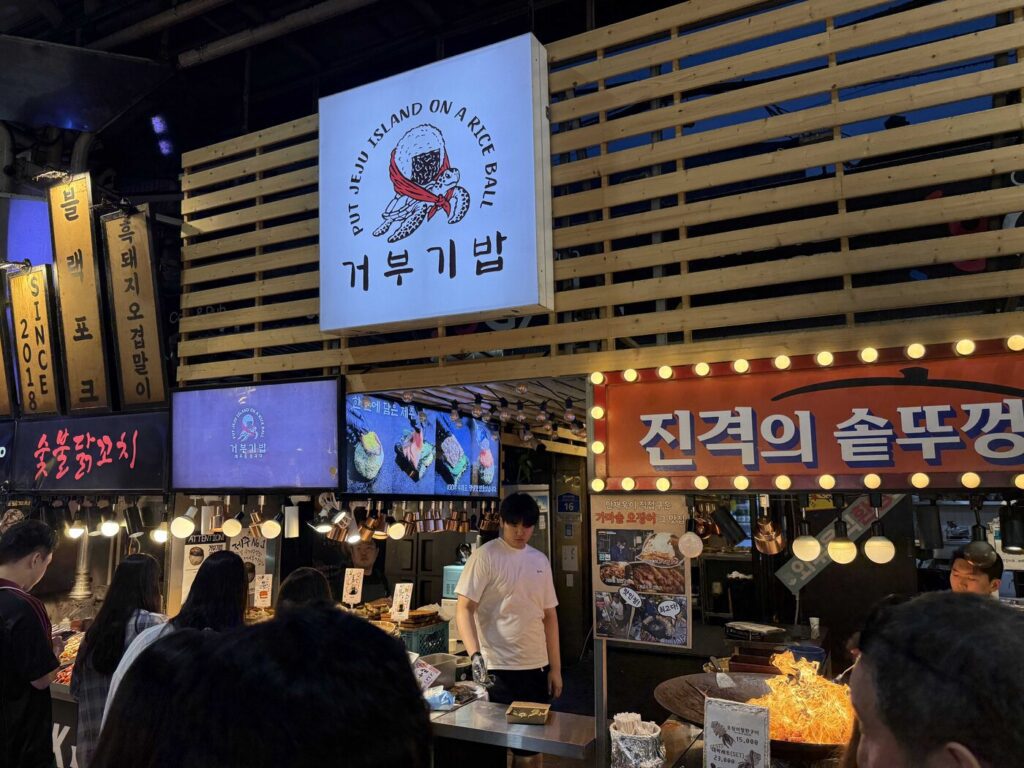
The stall we kept circling back to was Geobukibap. It has a little turtle on the sign. The whole idea is Jeju on a rice ball: seafood, black pork, and tangerine, packed into palm-sized snacks you grab and go.

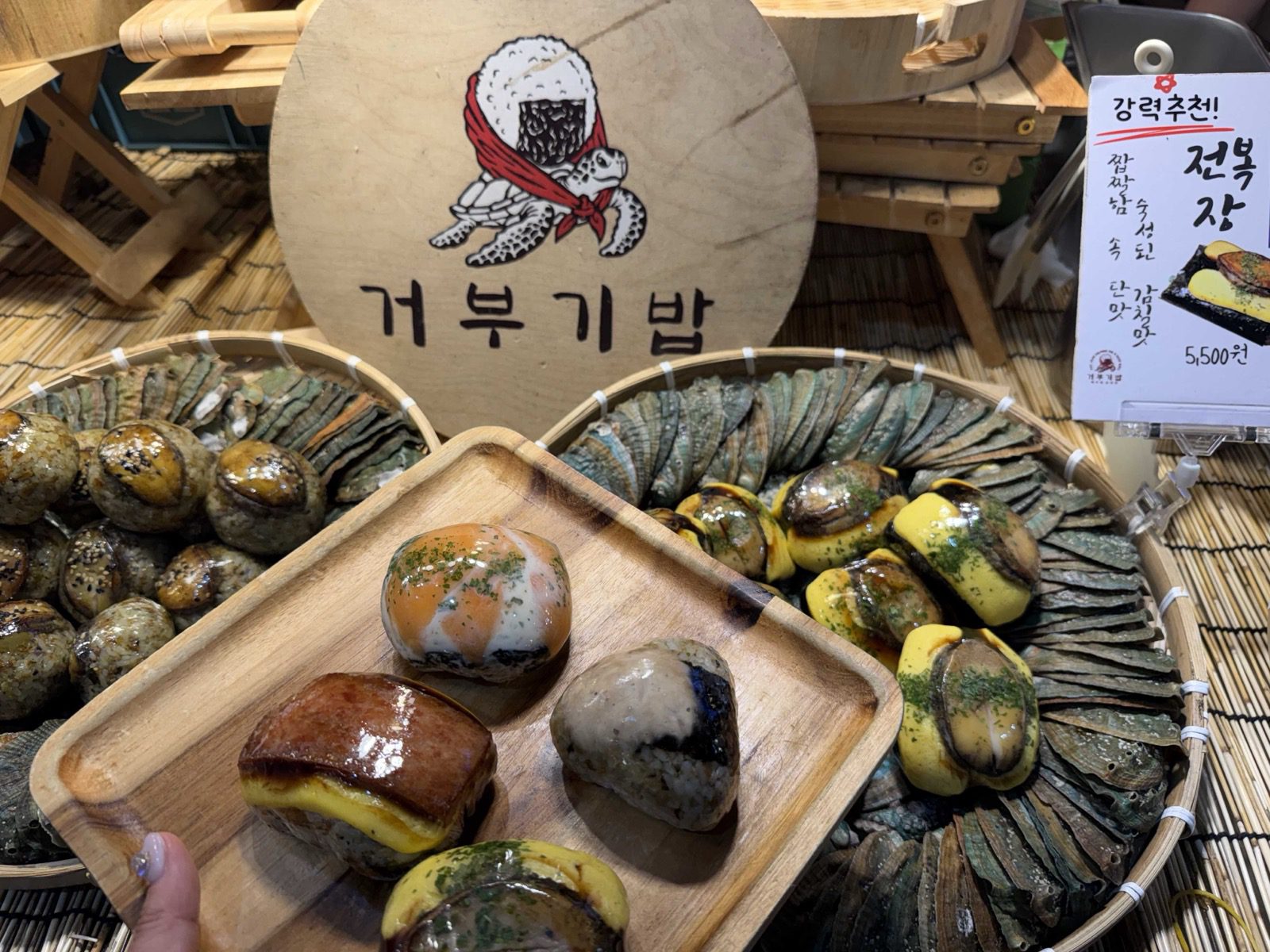
We ordered a takeout tray and carried it off to a quiet ledge to eat. That is how most of the night ended up going. The abalone rice ball was the one I would order again. It was glazed, savory, and just rich enough that one felt like a real bite instead of a filler snack.

Geobukibap rice ball stall at Jeju Dongmun Market
The turtle logo. Hard to miss once you know it.

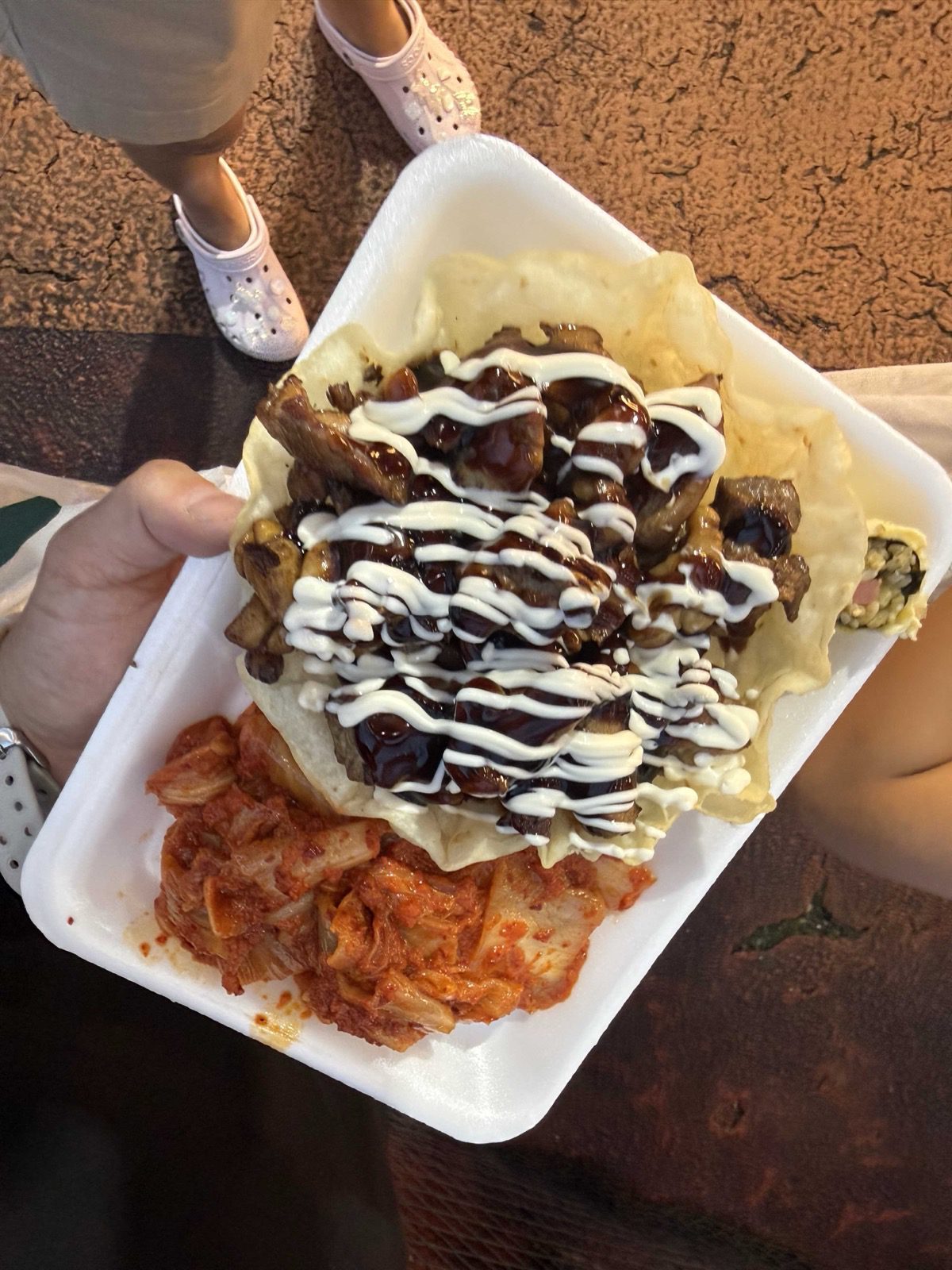
The black pork version came drizzled with mayo and a dark sauce over a crisp base. A little kimchi sat on the side to cut the richness. It is not subtle food. But after a travel day and a late arrival, subtle was not what any of us wanted.

Both kids went for the tangerine-topped one first, which I expected. The tangerine gives it a sweet edge that reads as dessert to a nine-year-old. My wife and I split the seafood ones while they fought over the last sweet bite.

Abalone rice balls from Geobukibap at Jeju Dongmun Market
The abalone rice balls. My pick of the night.

Prices sat around 4,000 to 5,500 won per rice ball, which felt fair for what they were. If you are trying to taste a lot of Jeju in a short trip, this stall is a shortcut. We came back a second time later in the night, and that tells you enough about how we felt.

Black pork mayo rice dish at Jeju Dongmun Market
Black pork, mayo, dark sauce, kimchi on the side.

Black Pork, Grilled Squid, and the Smell That Pulls You

Jeju is famous for its black pork, and the market leans into it hard. Whole stalls do nothing but grill it. The smoke drifts down the aisle and quietly reroutes your feet toward it. We did not sit for a full black-pork meal here, since we were saving that for a proper restaurant later in the week. But the smell alone was worth the walk past.

Grilled black pork stall at Jeju Dongmun Market night market
One of many black-pork grills working the aisle.
Black pork on the grill, working non-stop down the aisle.

Jeju black pork comes from a local pig breed, and it is a genuine island specialty rather than a menu label. If you want the wider food context, VisitKorea is a decent starting point. Inside the market, though, you can skip the reading and just follow your nose.

Grilled squid was the other smell that kept catching me. Vendors flip whole squid on the grill, slice it, and hand it over on a little board. It is chewy, smoky, and exactly the kind of thing you eat while walking. My older one, who claims not to like squid, ate half of ours anyway and then asked for more.

Squid on the grill. This is the smell that kept pulling me back.

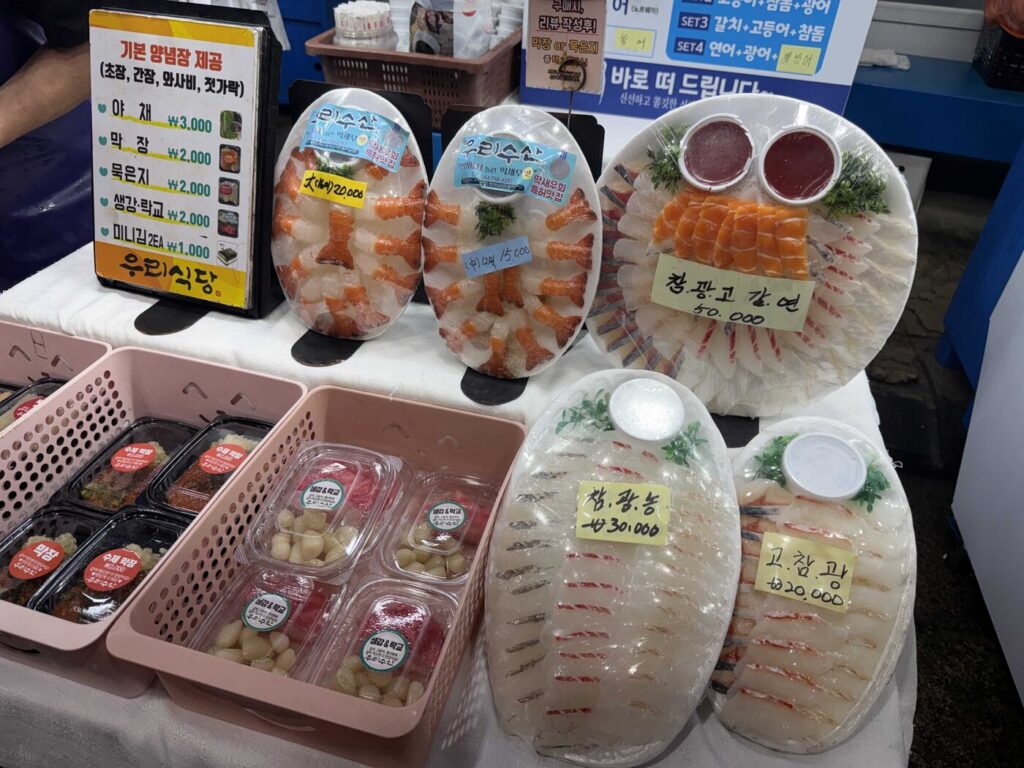
There is also a lot of raw seafood if that is your thing. Sashimi counters slice fresh fish to order, and a few had tanks out front. We passed this time because of the kids, but a couple next to us walked off with a whole tray of hoe and a small crowd of envious onlookers.

The Snacks We Grazed On Between the Big Bites

Between the rice balls and the pork, we kept picking up small things. That is really how the night market works. You never finish one snack before the next stall reels you in with a smell or a sizzle.

Tteokbokki was an early stop. The rice cakes were chewy and coated in that sweet-spicy sauce, and even my younger one, who usually flinches at spice, kept going back for more. Next to it were trays of twigim, the battered fritters you dunk in the same red sauce. We grabbed a few pieces of fried squid and a fat fried gimbap roll and shared them straight out of the paper.

Then came the skewers. Eomuk, the Korean fish cake, is sold on sticks with a cup of hot broth to sip alongside, and it hit the spot once the evening air cooled. There was hotteok too, the griddled sweet pancake stuffed with brown sugar and seeds, though by then we were running low on hands to hold things. None of these cost much. Each one was a couple thousand won, which is exactly why you end up trying ten of them.

If you are new to this kind of food, do not overthink it. Point at what looks good, hold up a couple of fingers, and taste as you go. That grazing rhythm is the whole appeal of a Korean market at night.

One Thing Nobody Warns You About: There Is Nowhere to Sit

Here is the catch. For all the food, there is almost nowhere to sit down. You buy, and then you stand somewhere and eat. Or you balance the box on a ledge like we did. With two kids and several trays going at once, that got old fast.

It is not a dealbreaker. But go in knowing it. Wear comfortable shoes. Do not order more than you can hold at one time. Have a rough plan for where you are going to actually eat each thing before you buy it. We ended up rotating between a couple of low walls near the edge of the market.

The one thing they get right is the bins. Trash and recycling points are set up through the market and kept in good shape. So you are never wandering around holding a greasy box with nowhere to put it. After eating in a lot of Korean markets, I appreciated that more than I expected to.

Busy night crowd in the Jeju Dongmun Market aisle
Peak-hour crowd. Fun, but hold onto small kids.

The Gift Shops Are Half the Fun

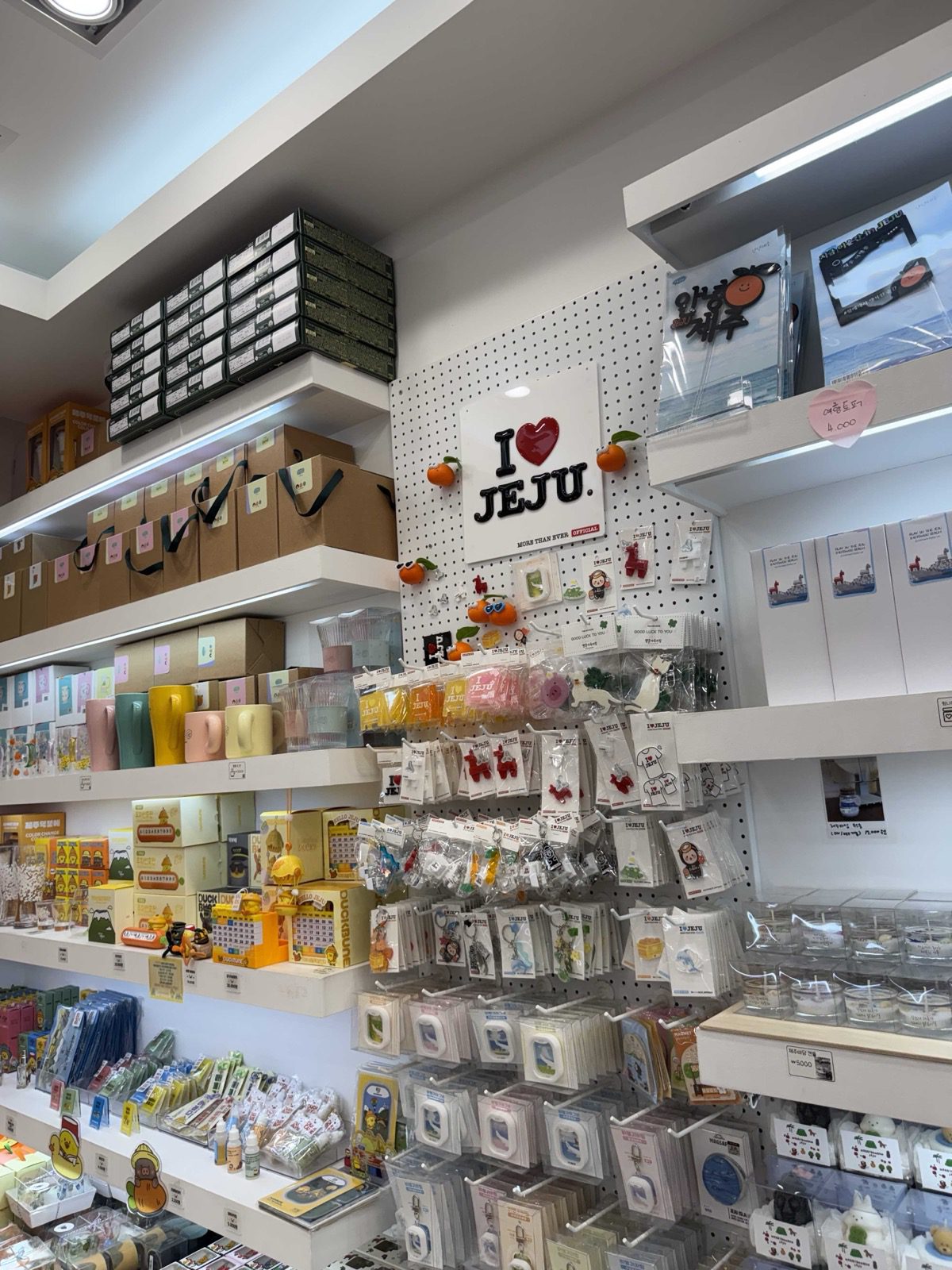
What surprised me was how much of the market is not food at all. Whole rows are gift and souvenir shops. The browsing turned into its own event for the kids while I finished eating.

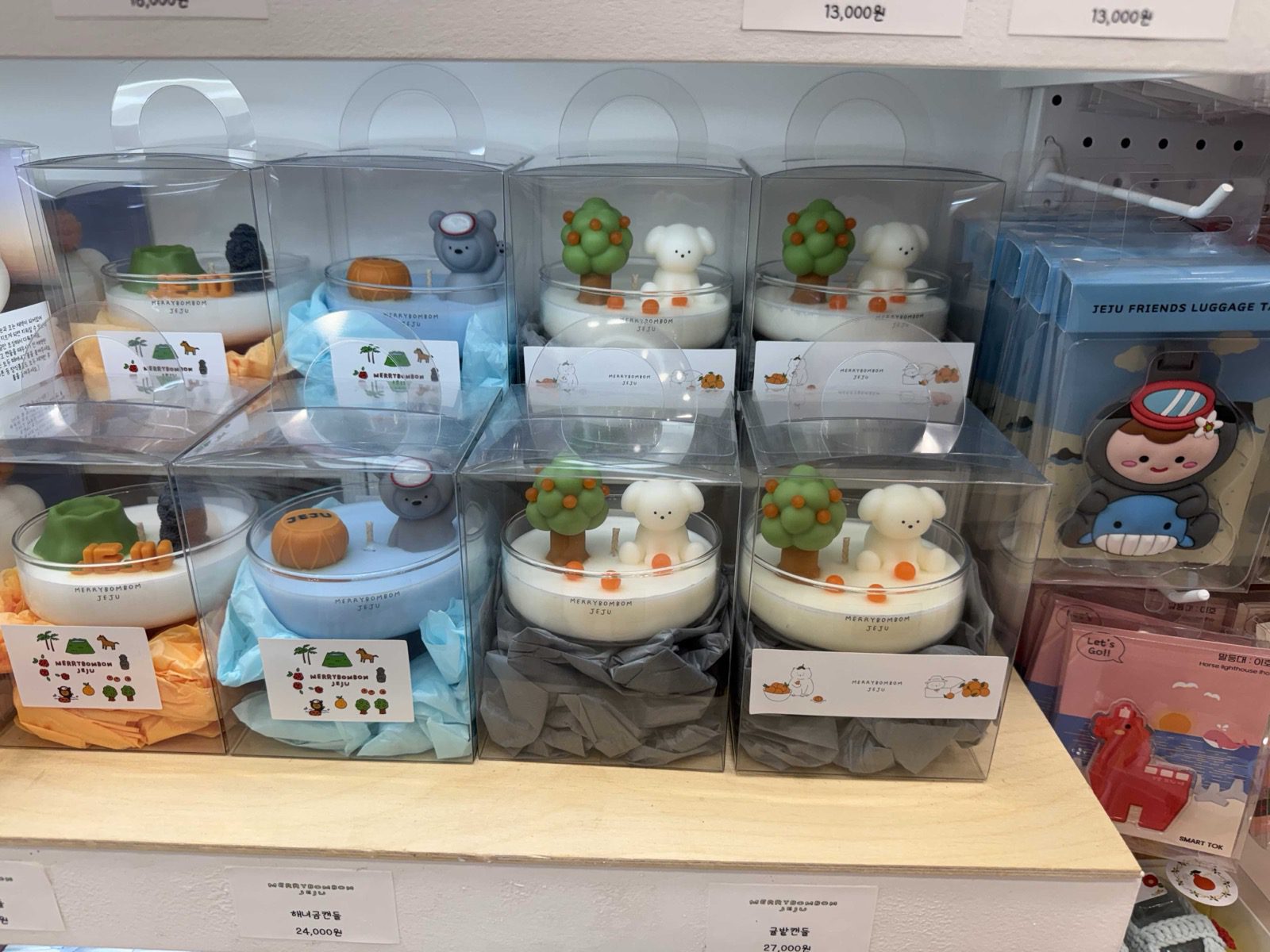
Jeju leans into its own brand, so you get tangerine everything. Tangerine candles, tangerine chocolate, tangerine keychains, little dol hareubang figures, and enough magnets to cover a fridge. Prices were reasonable. It beat hunting for souvenirs at the airport on the way out, which is where we usually panic-buy gifts.

I love Jeju souvenir shop inside Jeju Dongmun Market
One of the “I ♥ JEJU” shops.

If you are buying gifts to bring home, the candle and snack shops are a safe bet. We grabbed a couple of boxes of tangerine sweets and a candle. The kids each picked a small keychain. Small money, and it kept everyone busy while the grown-ups grazed a little longer.

Jeju tangerine candle souvenirs at Dongmun Market
Tangerine candles, because of course.

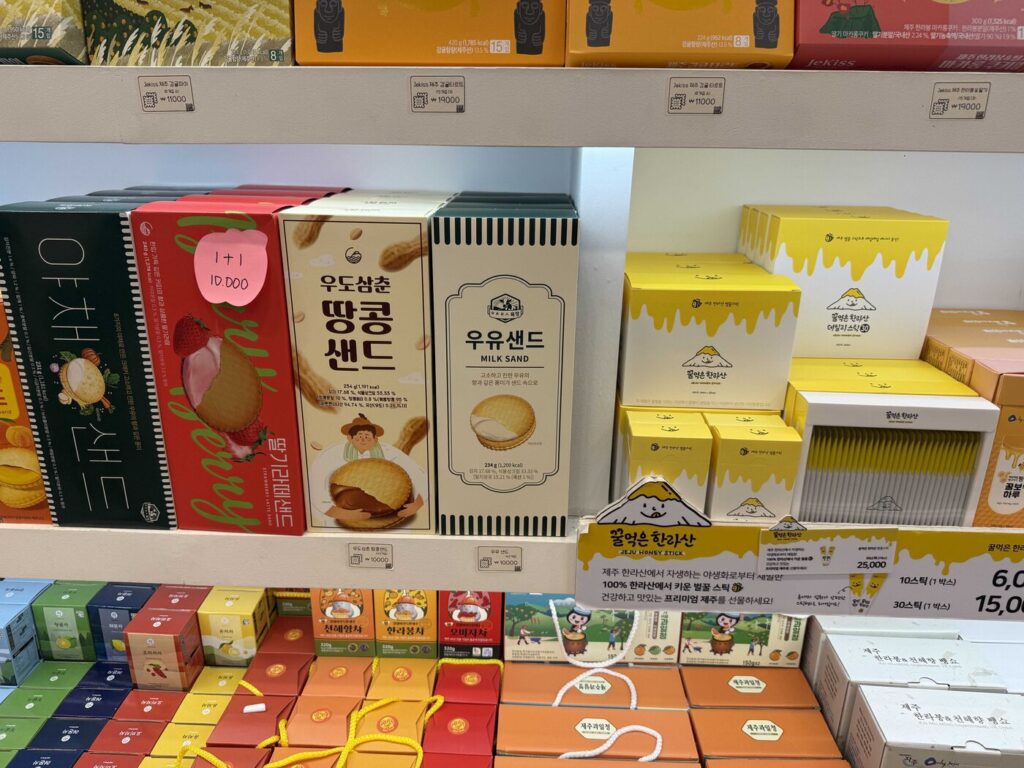
The edible souvenirs are where I would actually spend money, though. Jeju has a real lineup of local sweets, and the market carries most of them under one roof. A few that kept showing up on the shelves:

  • Hallabong chocolate. Made with the island’s prized citrus. Sweet, a little tart, and an easy gift for coworkers.
  • Udo peanut sweets. Peanut sand cookies and milk-peanut treats from the little island off Jeju’s east coast.
  • Tangerine pies and tarts. Boxed and travel-friendly, sold at several stalls with samples out front.
  • Omegi tteok and other rice cakes. A Jeju rice-cake specialty if you want something more traditional.

Buying these here beat the airport for two reasons. The prices were better, and we could taste before we committed. We left with a small bag of chocolate and pies that survived the rest of the week, mostly because we hid them from the kids.

Fresh Tangerine Juice and a Very International Crowd

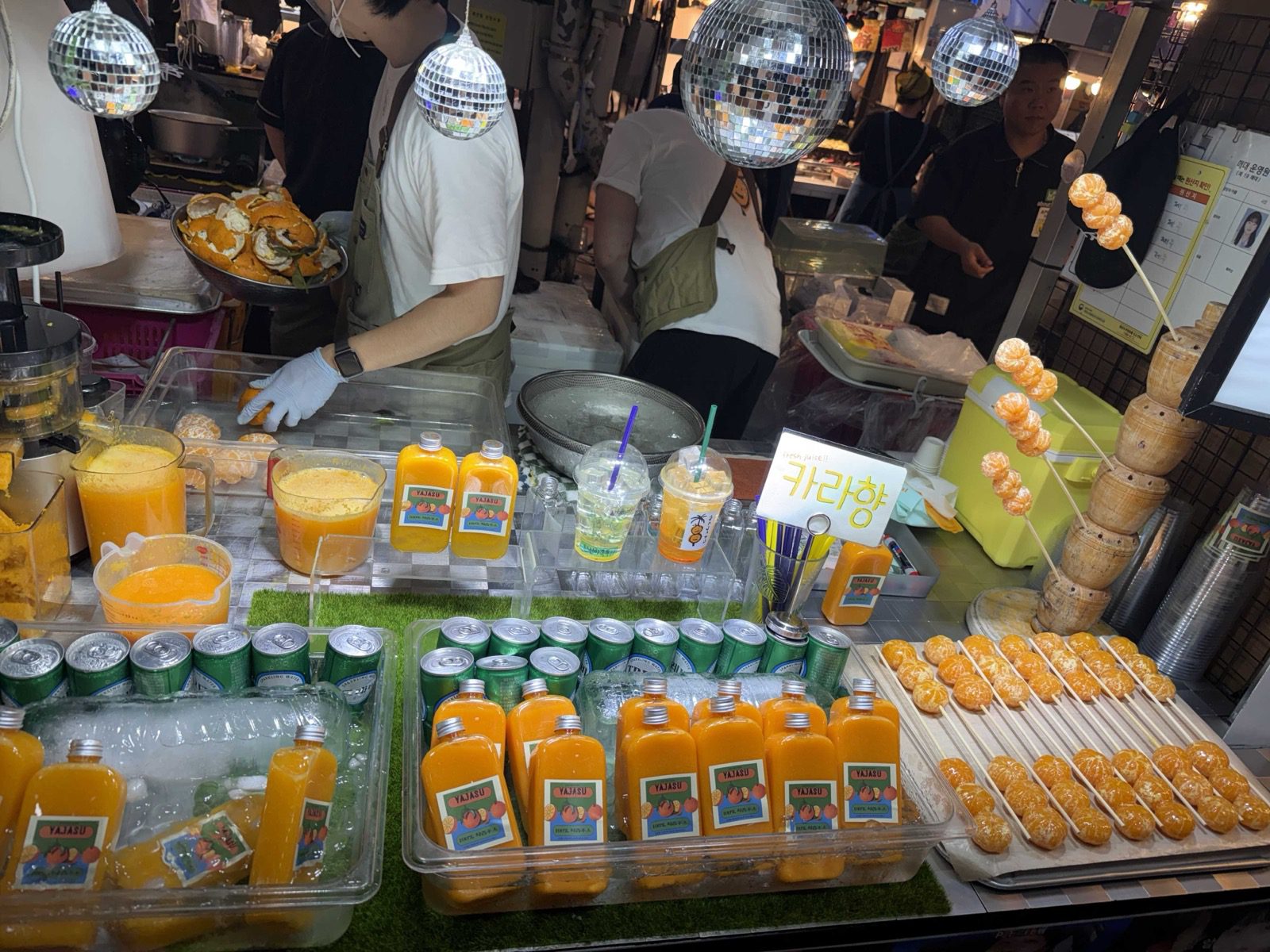
We finished the night with fresh tangerine juice, pressed right there and poured over ice. On a warm Jeju evening it was the right call. It was cheap enough that we bought a round for everyone. The kids drained theirs before we reached the next stall.

Fresh tangerine juice stall at Jeju Dongmun Market
Fresh-pressed tangerine juice over ice.
Fresh tangerine juice, pressed right in front of us.

The other thing I noticed was the crowd. There were foreign visitors everywhere, more than at almost any market I have been to on the mainland. You hear a lot of languages in one aisle. The vendors are used to it, so ordering as a tourist is genuinely easy. Point, hold up fingers, done.

That international mix is part of why the place feels the way it does now. It is a Jeju City institution, but it has clearly become a first stop for a lot of visitors. After one night there, I understood why it earns that spot.

What struck me was how relaxed it all felt despite the crowd. Nobody was rushing us, even at the busy stalls. Vendors handed the kids extra napkins and pointed them toward the milder options without being asked. For a place that busy, on a summer night, with that many first-time visitors moving through, it ran smoothly. That is harder to pull off than it looks, and it is part of why the market has kept its reputation while so many tourist spots lose theirs.

How to Get to Jeju Dongmun Market and When to Go

The market sits right in the middle of Jeju City, which is what makes it such an easy first-night plan. From Jeju International Airport it is a short drive, usually well under twenty minutes unless traffic is bad. If you have a rental car, you will not have to go far out of your way to reach it.

A few practical notes from our visit:

  • Best time. The night market gets going in the evening and builds through dinner. We arrived around sunset and it was already busy.
  • 🅿Parking. There is market parking, but it fills up fast at peak hours. If you are staying nearby, walking in is easier than fighting for a spot.
  • Cash. Many stalls take cards now, but keep some cash on hand for the smaller vendors and quick snacks.
  • Shoes. You will be on your feet the whole time, so wear something comfortable.
  • Napkins. Grab extras when a stall offers them. The food is messy and you are eating standing up.

One more tip. If you are staying in Jeju City for a night before heading to the coast, this market pairs perfectly with a hotel near the airport. That was our exact route, and it made the first evening feel like a real start to the trip instead of a travel day that never ended.

A Few Honest Things We Would Do Differently

No place is perfect, and I would rather tell you the rough edges than pretend they are not there. The seating is the big one, and I have already made you aware of it. A couple of smaller things stood out too.

We arrived hungry and ordered too fast at the first few stalls. By the time we found the ones we really liked, we were already half full. If I did it again, I would do a slow lap first with nothing in my hands, scout the stalls, and then commit. The crowd also peaks hard around dinner, so if you want a bit more room, come a touch earlier or later than the main rush.

One last note for families. It is loud, tight, and easy to lose a small kid for a heart-stopping few seconds. We kept our younger one’s hand the whole time, and I would tell any parent to do the same. None of this changed how much we loved the night. It just would have made a great evening run a little smoother.

Would We Go Back to Jeju Dongmun Market

Yes, without thinking twice. For a first night in Jeju, the Dongmun Market night market is close to perfect. It is cheap, varied, alive, and easy with kids, as long as you accept the no-seating reality going in. We walked out full, carrying gifts, and the kids were already asking when we could come back.

On the drive to the guesthouse, my younger one fell asleep mid-sentence, still holding an empty juice cup. That is about the highest review a market can get in our house.

More Korean Street Food and Seafood Stops Worth a Trip

Written by

Jun Kim

Dad of two in Hanam who eats out several times a week and writes about it. Every restaurant on this blog is a place I walked into as a regular customer — real orders, real bills, real opinions.

More about this blog

Leave a Comment

Your email address will not be published. Required fields are marked *

Scroll to Top