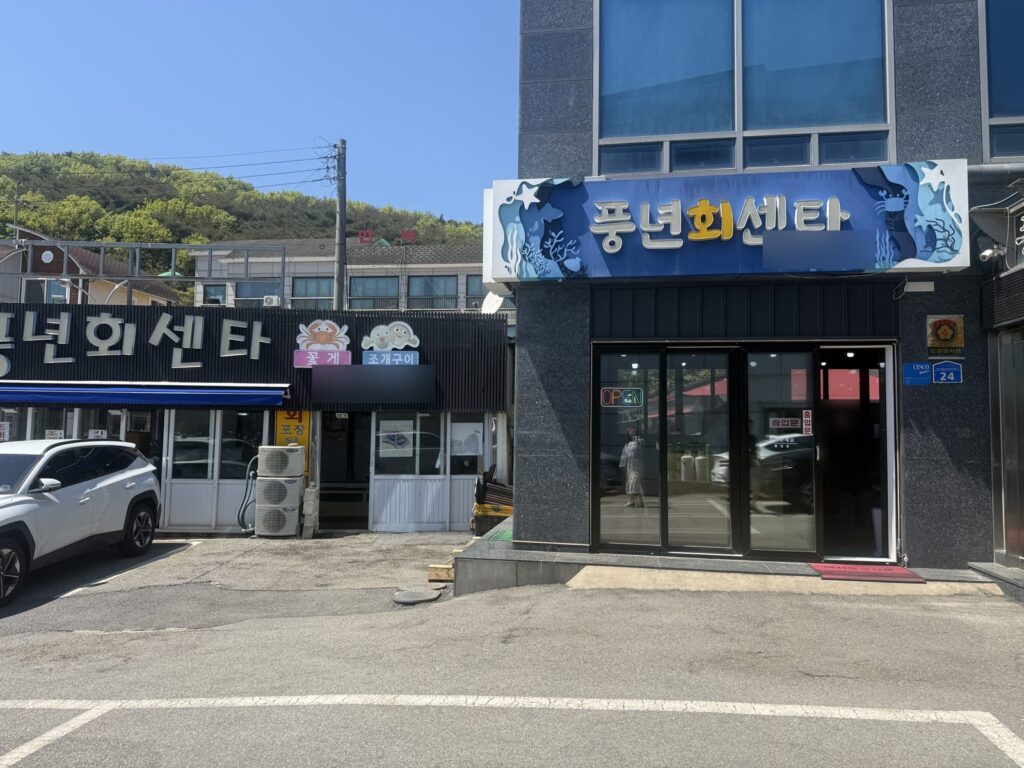
We had been camping on the western coast for four days, and somewhere on day three the kids stopped asking what was for dinner and started asking when we were going to eat real food. That’s when Anmyeondo grilled clams moved from “maybe one afternoon” to “let’s go right now.” Pungnyeon Hwesenta (풍년회센타) sits in a small parking-lot cluster of clam shacks on Anmyeondo, about an hour from where we had pitched our tents. We pulled up at two in the afternoon, half worried we were too late for lunch, half hoping the post-noon lull meant a table without a wait. We got the table. And the four of us walked out three hours later quiet, full, and arguing about whether the king prawns or the scallops had been the best part. That’s a strong argument for a beach-town grill spot.

Why Anmyeondo Grilled Clams Pulled Us Off the Camping Trip for Lunch
Camping food is great until day three. Then everyone starts noticing that the bread is dry, the snacks are repetitive, and the cheese has been in the cooler too long. We had planned to drive out for a proper lunch at some point, and Anmyeondo grilled clams sat near the top of my list before we even left Hanam.
The west coast is famous for clams. Anmyeondo specifically gets boatloads of mussels, scallops, abalone, and razor clams that move straight from the boat to the grill. On a normal weekend the wait at the popular spots can stretch past an hour. We had read about a few options in advance, and Pungnyeon Hwesenta kept coming up in Korean blog posts as a place locals trust — busy at peak hours, but not in the tourist-trap pricing tier.
So when the rain finally let up on our third afternoon, we grabbed the kids and drove. Our route from our campsite at Naepo Camping Square to Pungnyeon Hwesenta took just under an hour. The kids didn’t complain, which I read as them sensing that food was at the end of this drive. The 9-year-old fell asleep in the car. Our 10-year-old asked if grilled clams meant scallops or “the long ones” — meaning razor clams. I told him both, probably.
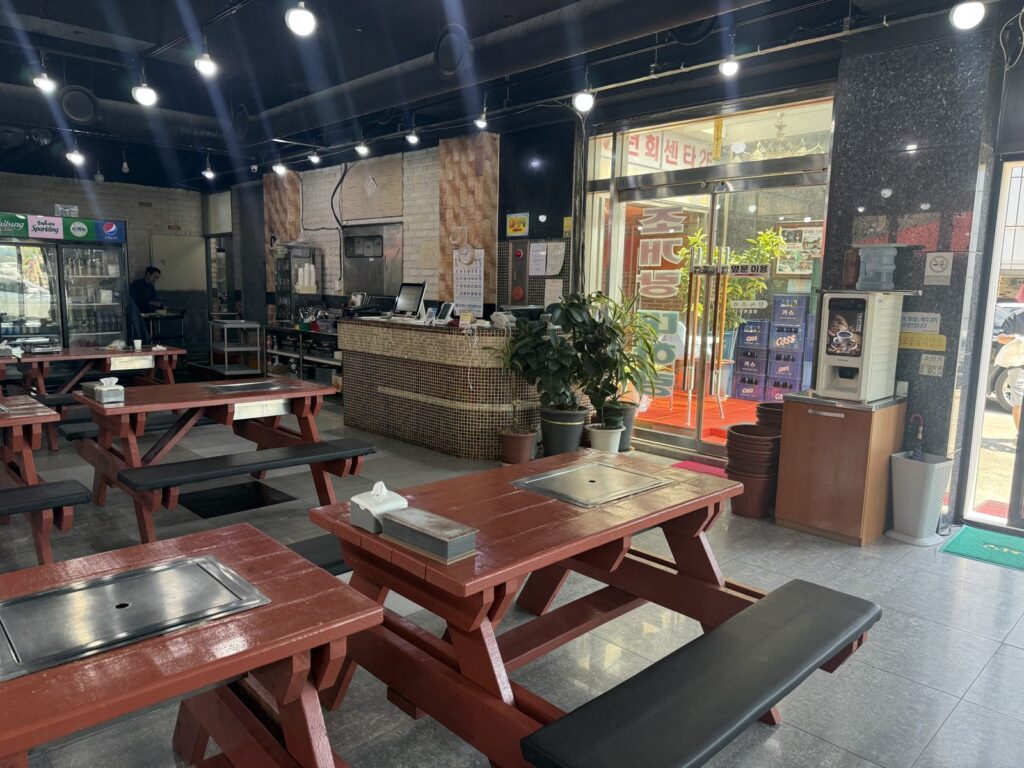
We walked in at 2 p.m. on the dot. Past the lunch rush, before the dinner crowd. The room had three or four tables seated, the rest empty and waiting. We picked a four-person picnic-style table with a built-in grill and started reading the menu board.

The Menu Board We Stood In Front of for Five Minutes Solid

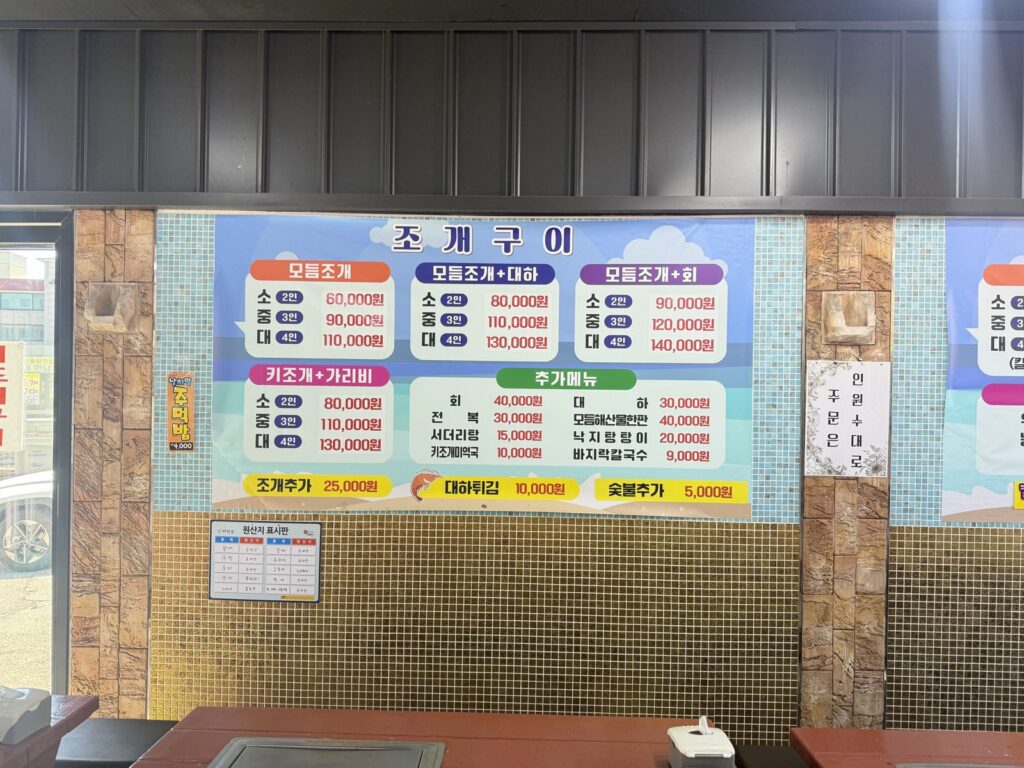
In fact, Korean clam grill spots tend to organize the menu by combo size. Pungnyeon Hwesenta does the same. Three main paths exist: the mixed clam combo, the mixed clam + king prawn combo, and the mixed clam + sashimi combo. Each comes in small (2-person), medium (3-person), and large (4-person) portions. Add-ons like abalone, sea cucumber, ramen toppers, and cheese corn round out the board.
The mixed clams alone go from 60,000 KRW (2-person) to 90,000 (3) to 110,000 (4). Add the king prawns and you’re looking at 80,000 / 110,000 / 130,000. Add sashimi instead and the numbers climb a bit higher. We talked through it for a few minutes and landed on the medium mixed clams + king prawns combo at 110,000 KRW. With four of us — me, my wife, my 10-year-old son, my 9-year-old daughter — the medium felt about right. The kids don’t eat as much as adult portions assume, and we knew we’d add a few sides.
The add-ons section had bajirak kalguksu (9,000 KRW), naktji tangtangi at 20,000 KRW, and a small flying-fish-roe rice ball as another option. We started with the naktji tangtangi to see if the kids would even try it. Bajirak kalguksu we’d order later, after watching a neighboring table demolish a bowl. The rice balls came later as well. Strategy: order the centerpiece, see what happens, add as we go.
The kids had no input on the seafood menu but were loud about wanting “the white noodles” once they spotted the kalguksu drifting past. Adults set the order. Kids set the pace.
The Mixed Clams Plus King Prawn Combo That Anchored Our Lunch

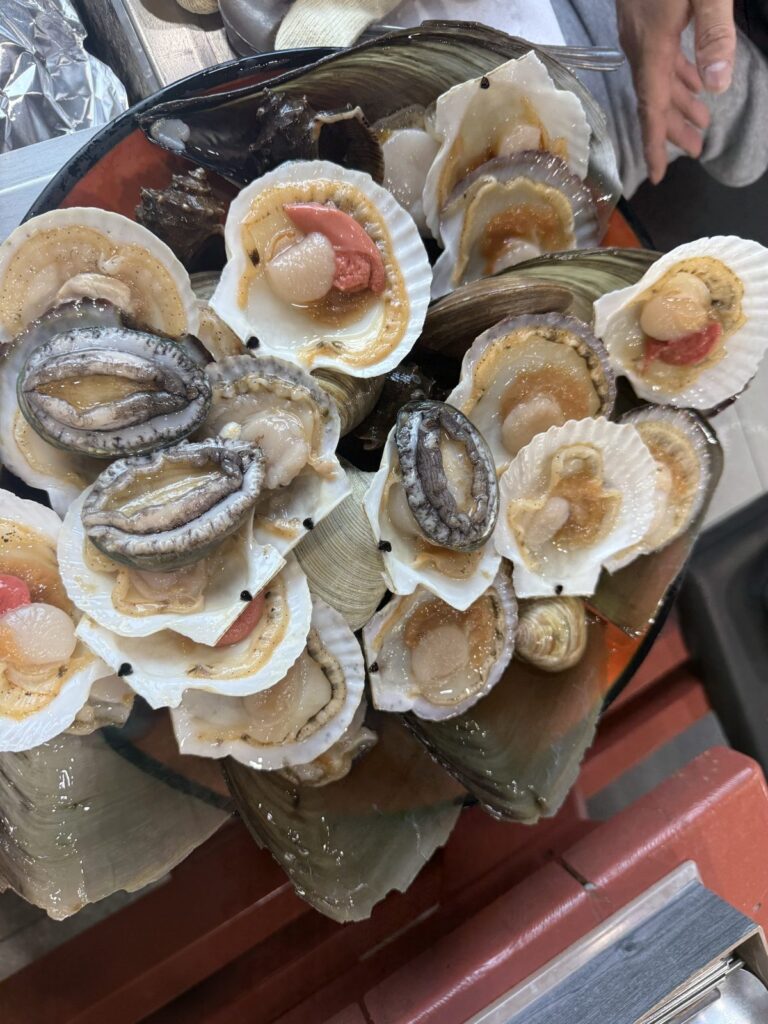
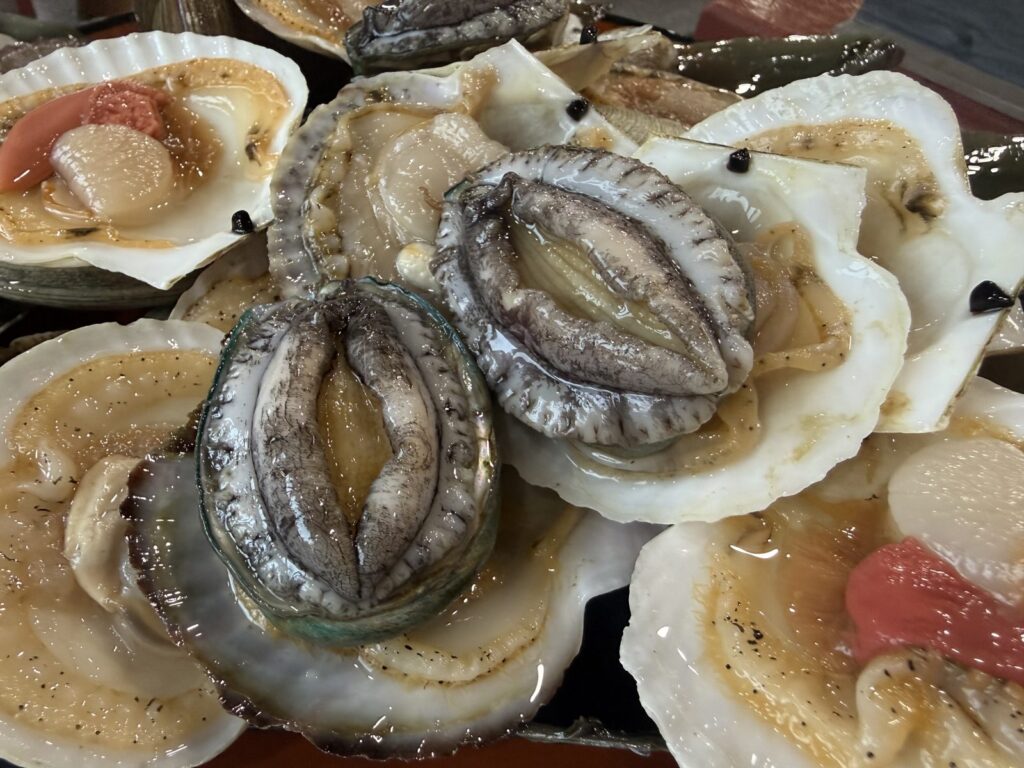
Our combo arrived faster than expected. A single platter, dome-shaped, packed with shells of every size: scallops, abalone, key clams, and the king prawns layered underneath. The whole thing went on the grill at once and started hissing immediately.
We had ordered the medium (3-person), and looking at the platter I briefly worried it wouldn’t be enough for four. But once you start cracking open scallops and pulling out abalone meat, you realize the volume is deceptive. Each shell looks like a single bite, but the actual seafood inside fills you up faster than expected. By the time we were halfway through, the worry flipped — we might have ordered too much.

How the Aunt Worked the Grill for Us
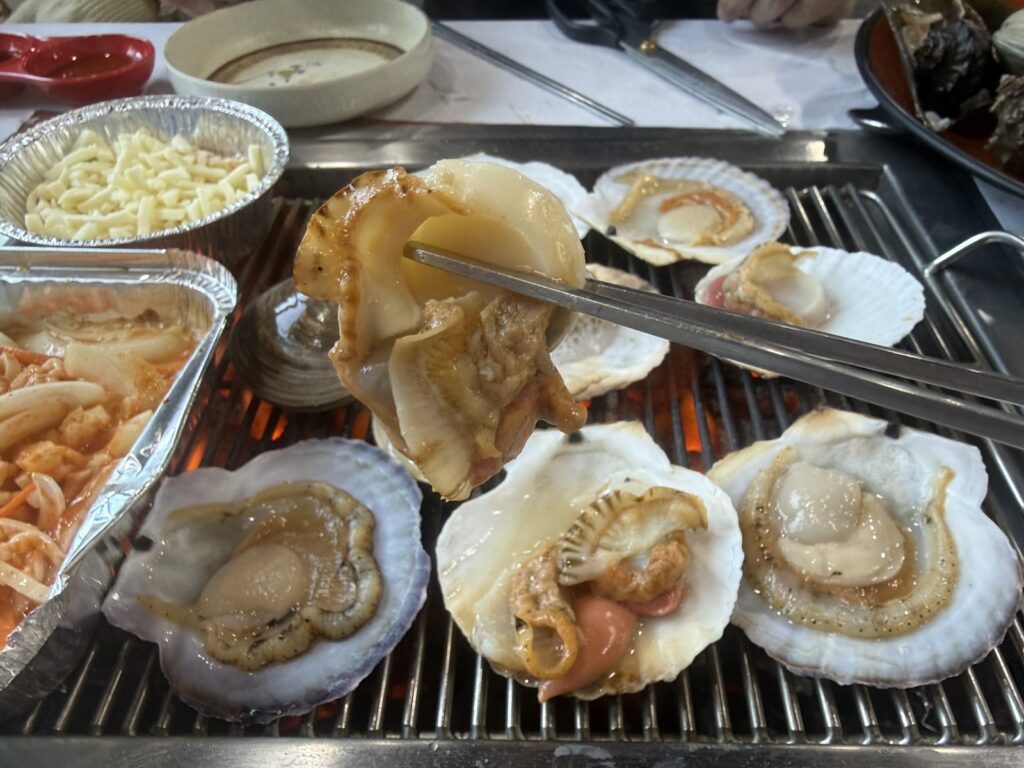
Also, the aunt running our table came by every few minutes to flip shells, redistribute the heat, and add new pieces from the side trays. She had a system: scallops in the front center where the heat was highest, abalone on the side where it could cook slow, key clams on the cooler edge to steam open without overcooking. She didn’t speak English, but the gestures were clear. When something was ready to eat, she’d tap the shell with the tongs.
The 10-year-old took to scallops first. He held one in the half-shell, the meat plump and slightly seared, and looked over at me to confirm he should eat it like it was. I nodded. He tried it. Then he asked for another.
The 9-year-old went straight for the abalone. She’d had abalone before at her grandmother’s table, but never one she had to wait for at the grill. The texture is firmer when you grill it yourself versus when it comes pre-cooked in a soup. She decided she liked it more this way.
Cooking Scallops, Abalone, and Cheese-Topped Clams on the Charcoal Grill

The grill at Pungnyeon Hwesenta uses real charcoal, not gas. The smoke matters. Charcoal pulls liquid out of the shells slower, holds the heat longer, and adds a faint char to the meat that gas-fired grills can’t quite match. We had eaten charcoal grill spots before — once on a friends’ weekend in Incheon, once at a place near Daebu Island — and both had felt rushed compared to this one.
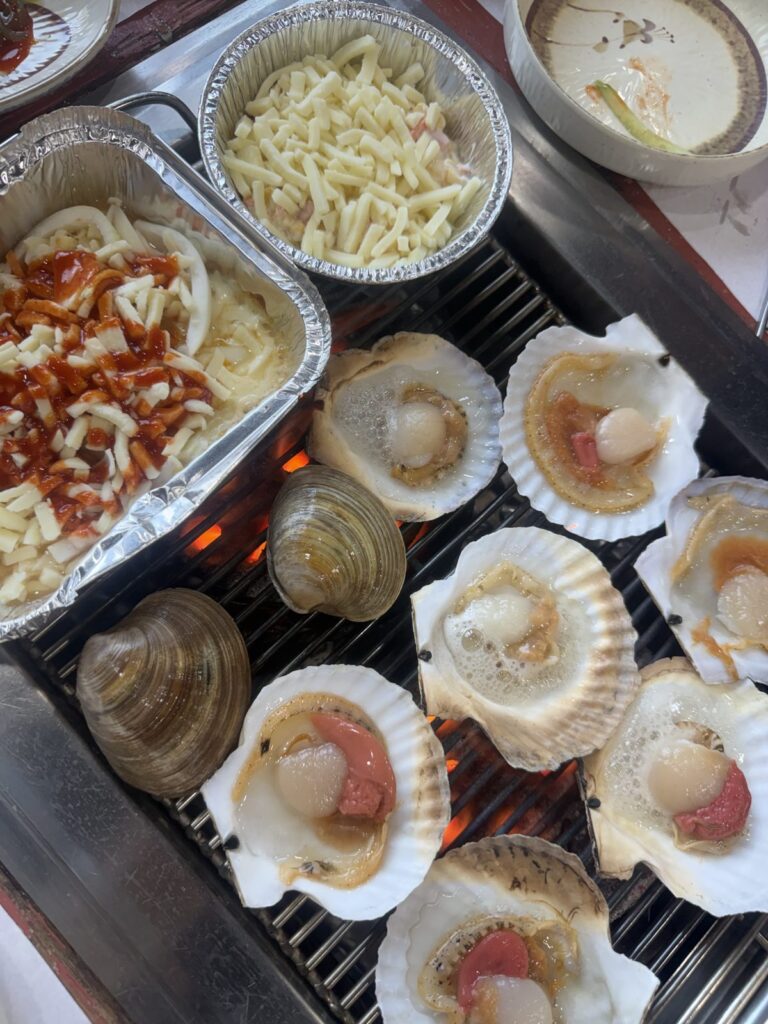
The cheese-topped clams were a side dish we hadn’t planned to order. The aunt brought a small foil tray over with what looked like clams arranged under a layer of melted mozzarella and corn. She set it on the grill, told us to leave it for a few minutes, and walked off. The 9-year-old watched it bubble for the entire wait. By the time the cheese had pulled into stretchy strings she was practically bouncing.
I’m not always a fan of the Korean trend of putting cheese on everything. Cheese on tteokbokki, cheese on dakgalbi, cheese on sushi — it feels like an addition that crowds out the original flavor. But on grilled clams the cheese-corn topper actually works. The clams underneath stay clammy. The cheese melts into something more like a bread topping. Kids declared it the favorite single item from the meal.
How the Grill Layout Worked for Four of Us
The grill itself stayed manageable for four of us.
Two adults, two kids — no wrestling for prime grill real estate, no shells flying off the edges. The picnic-style table works well for this setup because you can reach the grill from any of the four seats. No one ends up stuck in a bad spot.
The King Prawns That Tasted Better Than They Had Any Right To

Korean king prawns (대하) have a clear peak season — late September through November. Fishermen on the western coast pull them up at scale during those weeks, and the markets across Seoul fill with mountains of fresh prawns. By May the season has been over for half a year, and what’s served is usually farmed, frozen, or both.
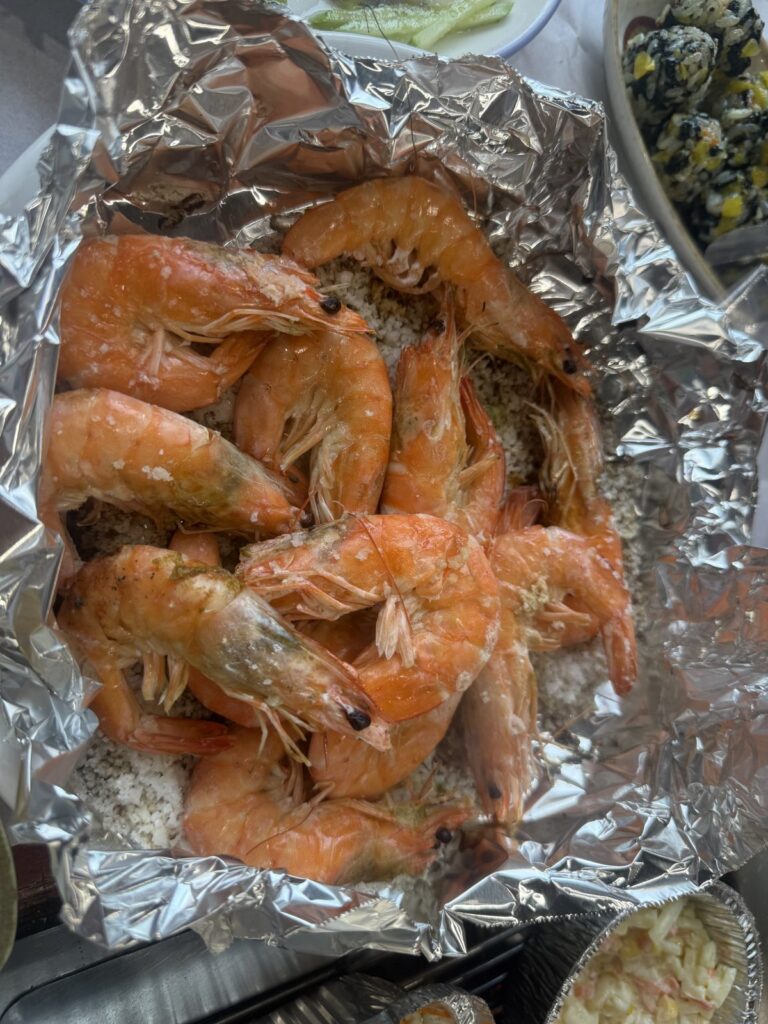
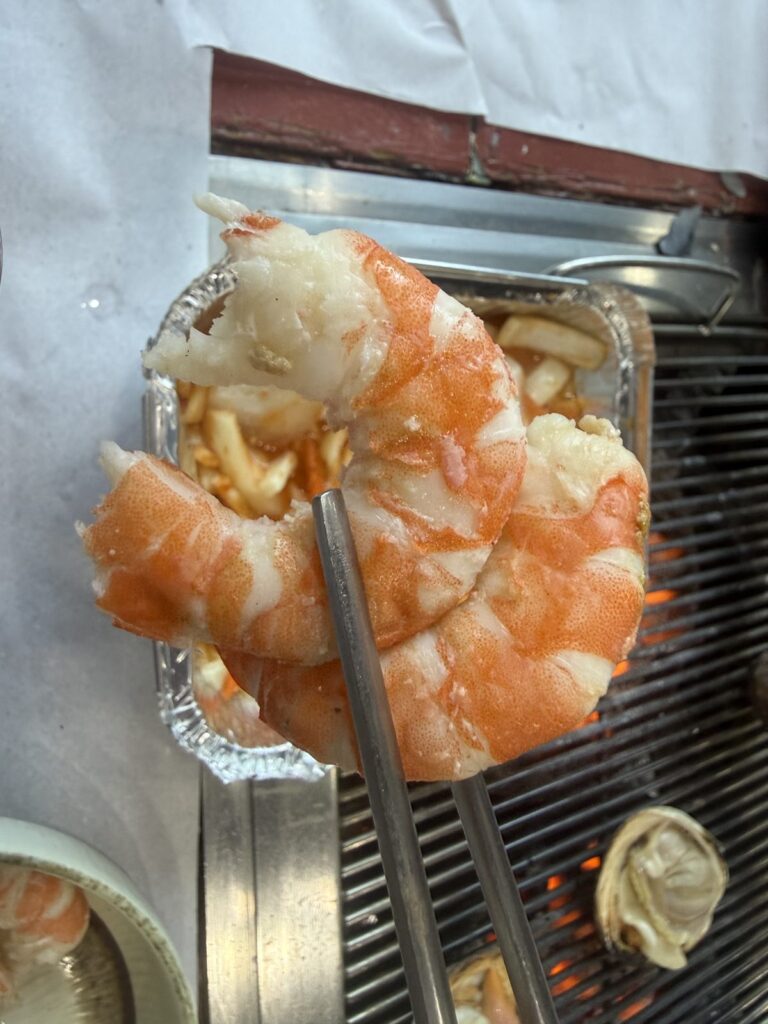
So I had low expectations going in. We ordered the king prawn combo because it felt complete, not because I expected the prawns to be the star. But they were excellent. Whether the source was fresh or smartly stored I couldn’t say. The texture had that snap you only get when prawns haven’t been thawed and refrozen, and the salt crust the staff packed around them on the foil tray brought out the sweetness rather than masking it.
For instance, my wife isn’t usually a prawn person — she likes them, but she’d rather order something else if given the choice. She ate three. She said she’d rather have these than the salt-grilled prawns we sometimes get at chain Korean grill spots in the city. That’s a meaningful endorsement. She doesn’t compliment food twice.
The kids tackled the prawns with their hands. Salt all over the table by the time they were done. The 10-year-old kept the heads to suck out, which his sister found revolting and copied two minutes later. I peeled mine out of the shell properly, like an adult, but I got distracted halfway through. Got my fingers messy too. Worth it.
Naktji Tangtangi: The Plate the Kids Couldn’t Stop Touching

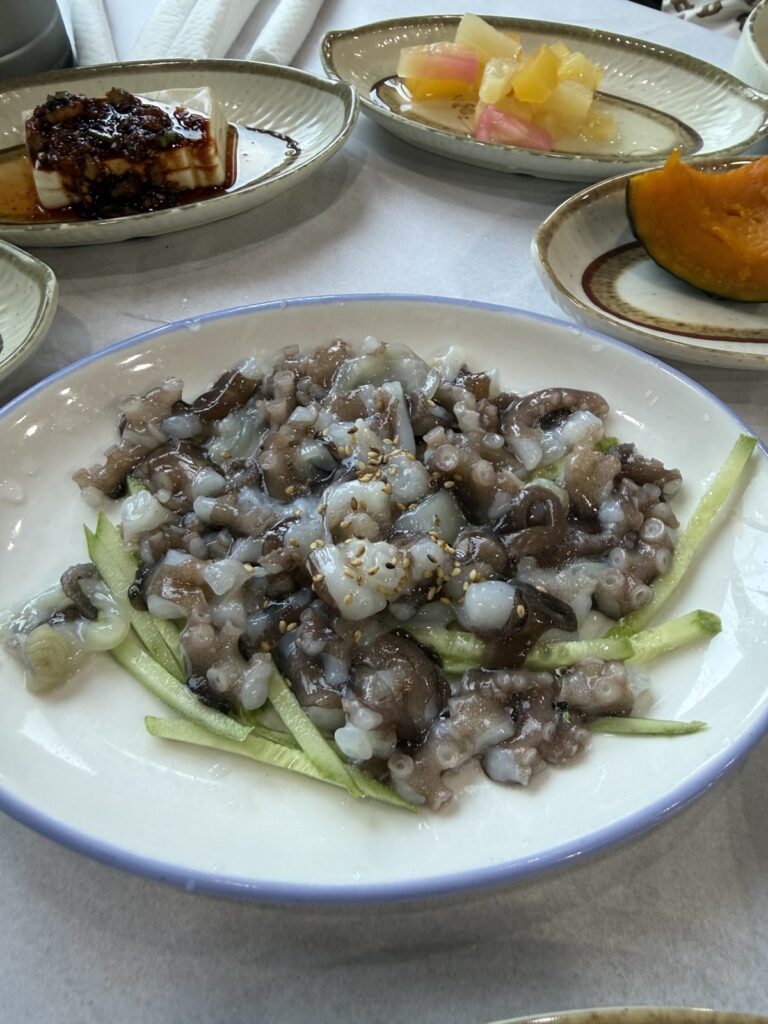
Korean naktji tangtangi (낙지탕탕이) is small octopus chopped fresh and served before the muscle stops twitching. The pieces still move on the plate. For Korean kids it’s a rite of passage. For adult visitors from outside Korea it’s either a delight or a hard pass. Our kids had eaten cooked octopus and squid plenty of times, but live tangtangi was new for them.
We added it to the order half as a test, half because the menu kept catching my eye. 20,000 KRW for a plate. The aunt brought it out maybe ten minutes after the order, slivers of cucumber and tentacle pieces still moving slightly under the sesame oil. She showed the kids how to dip a piece in the chogochujang sauce — sweet vinegared red pepper paste — and how to chew firmly so the suction cups don’t grab.
The 9-year-old picked up a piece with chopsticks and stared at it for a full thirty seconds. The piece stopped moving. She put it in her mouth, chewed. She declared it “the best one.” She wanted another. Her brother, who was being slower because he was watching her reaction, picked one up and copied. Same verdict.
Still, what surprised me was that they kept eating it. Not as a stunt, not as a one-time dare. They went back for second and third pieces, then asked if we could take some home. (We could not. The whole point is freshness.) My wife and I ate the rest, and the plate emptied faster than I expected.
If you have visiting kids and you’re feeling ambitious, naktji tangtangi at Pungnyeon Hwesenta is a worthy first try. Just brief them on chewing.
Bajirak Kalguksu We Ordered Halfway Through and Didn’t Regret

Halfway through the meal, the table next to us got a bowl of bajirak kalguksu, and we watched the steam rise off it for a solid minute. Then the next table over got one. Then a couple by the door ordered one. The kalguksu was clearly the unspoken sequel order at Pungnyeon Hwesenta — most groups added it once they’d eaten through the grill.
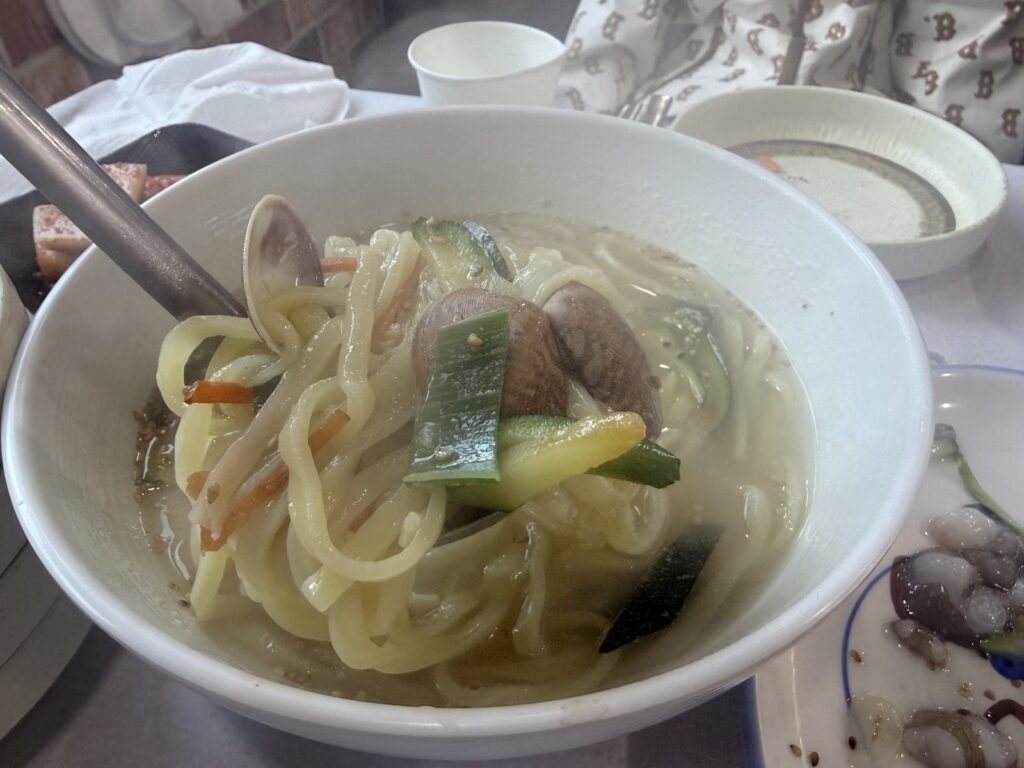
And so we caved. 9,000 KRW. The kids had been eyeing the noodles since the first bowl walked past. The aunt brought ours out about ten minutes later, and the broth alone was enough to convince me we’d made the right call. Clear, briny, deeply savory, with the kind of clam flavor that takes hours to coax out of bajirak shells. The noodles were thick, fresh, and slightly chewy. Hand-cut, not factory.
The 9-year-old finished half the bowl by herself. The 10-year-old took the other half. My wife and I shared the last few sips of broth. Nothing left. The clams in the bowl had cooked just past the point of opening, plump and tender, their flavor pulled into the broth without being overcooked into rubber.
In other words, this is a dish that you order once and remember as the highlight even when the actual centerpiece of the meal was something else. The grilled clams were the reason we drove out. The kalguksu is the reason we’d come back.
For anyone visiting Pungnyeon Hwesenta with kids, the bajirak kalguksu is the safest order on the menu. The grilled clams are the show. The kalguksu is the comfort.
Side Dishes That Kept Coming Until We Asked Her to Stop

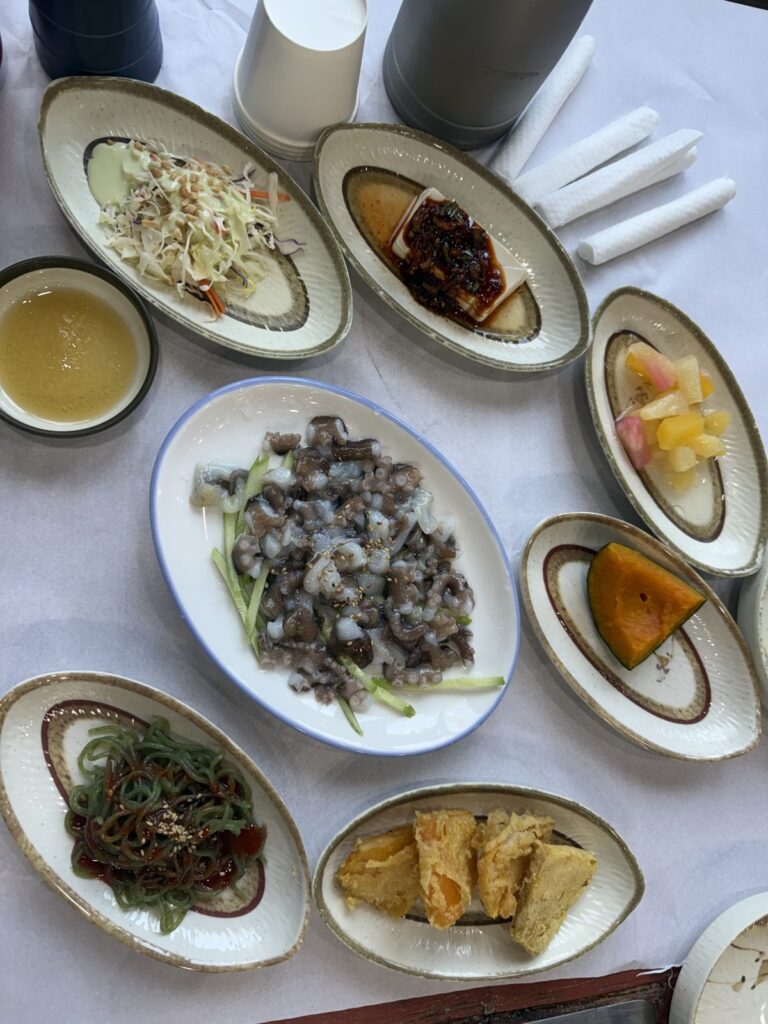
Korean restaurant culture comes with banchan — small side dishes that arrive automatically and refill themselves whenever the staff notice an empty plate. Pungnyeon Hwesenta took this seriously. The first round of sides included kimchi, kkakdugi (radish kimchi), japchae, pickled yellow radish, mungbean jelly, gyeranmari (rolled omelette), and a few more dishes I couldn’t identify by sight.
About twenty minutes in, the aunt walked by with a tray and started replacing every dish that had even a small dent in it. Kkakdugi halfway gone — refilled to the rim. Japchae had two strands left — full plate replaced. The kids had eaten all the gyeranmari — second plate appeared.
This kept up for nearly an hour. I’m not exaggerating. Eventually I had to gently flag her down and ask her to please stop refilling. We were already past full from the grill plus the prawns plus the kalguksu plus the tangtangi. The banchan refills had become absurd. She laughed and said okay, but slipped a fresh plate of pickled radish onto the table on her way back to the kitchen anyway. Hospitality wins.
Also, this level of refill generosity is rare even by Korean standards. Most restaurants will refill once or twice if asked. Pungnyeon Hwesenta refills automatically and aggressively. If you’re going hungry and want to see how far Korean banchan culture can go, this is a good place to test the limit.
The kids cleaned out the gyeranmari plate twice. Twice. They never finish the banchan at home. Different rules at the beach.
Anmyeondo Grilled Clams Rating Breakdown
⭐ Overall: 4.7 / 5
- ⭐ Seafood Freshness: 5 / 5 — The scallops, abalone, and prawns all passed the snap test. Out-of-season prawns this good is unusual.
- ⭐ Variety of Items: 5 / 5 — Mixed clams, prawns, octopus tangtangi, kalguksu, banchan — the menu spans every Anmyeondo seafood category we wanted to try.
- ⭐ Service & Hospitality: 5 / 5 — The aunt running our table managed pacing, refills, and the grill perfectly. Banchan refills were almost too generous.
- ⭐ Value for Money: 4.5 / 5 — 110,000 KRW for the medium combo plus 39,000 KRW in add-ons fed four people generously. Anmyeondo grilled clams are not budget food, but the per-person cost lands fair for the quality.
- ⭐ Family-friendliness: 4.5 / 5 — Picnic-style tables fit a four-person family easily. The grill heat is manageable for kids. Naktji tangtangi worked as a kid adventure. Mostly Korean-speaking staff — non-Korean families should bring a translation app.
- ⭐ Atmosphere: 4 / 5 — Casual, no-frills clam shack. Charcoal grills, picnic benches, fluorescent lights. Not romantic. Honest. The kids loved it.

Practical Info for Pungnyeon Hwesenta Before You Drive Out
- 📍 Address: 충남 태안군 남면 탄도길 일대 (Tando-gil area, Nam-myeon, Taean-gun, Chungnam)
- 🗺️ View on Google Maps
- 📞 Phone: 041-674-4254
- 🕒 Hours: Roughly 10:00–21:00 daily (call ahead in winter — clam shacks on Anmyeondo sometimes close on slow weeks)
- 💰 Mixed clams: 60,000 KRW (small) – 110,000 KRW (large)
- 💰 Mixed clams + king prawn: 80,000 KRW (small) – 130,000 KRW (large)
- 💰 Bajirak kalguksu: 9,000 KRW · Naktji tangtangi: from 20,000 KRW
- 🚗 From Seoul: ~2 hours via Seohaean Expressway. From the Naepo Camping Square area: ~1 hour
- 🅿️ Parking: Free, on-site lot. The restaurant sits in a cluster of clam shacks with shared parking
- 🍴 Family-friendly: Picnic-style benches, kid-friendly add-ons (rice balls, kalguksu)
- 👶 Stroller access: Ground level, no stairs. Easy for strollers
Heading Back to Camp With Full Bellies and Quiet Kids
We left at 4 p.m. on the dot. Most tables had filled up by the time we paid. The aunt walked us out, said something kind to the kids, and waved as we got in the car. The 10-year-old asked if we could come back the next day for the kalguksu. I told him probably not — we had a horseback riding session at the camping site the next morning, plus a flea market in the afternoon. He pretended to be disappointed.
Halfway back to Naepo Camping Square the 9-year-old asked when we’d next eat naktji tangtangi. I said maybe next time we visit her grandfather, who lives near a fish market on the east coast. She seemed happy with that.
My wife dozed in the passenger seat. I kept driving with the windows down, the smell of charcoal and grilled scallops still in our hair. The drive felt shorter going back. Camping food started looking better again now that we’d had real food in the middle of the trip. We’d planned the rest of the days around the morning activities. Pungnyeon Hwesenta gave us a good break.
So if you’re planning a family trip to Anmyeondo and you want one strong seafood meal that works for both adults and kids, Anmyeondo grilled clams at Pungnyeon Hwesenta is the safer call than the showier sashimi spots like the ones we usually visit in Wirye or pricier raw-fish counters near Garak Market. The grill is what you want. The kalguksu is the bonus. And the aunt with the unlimited banchan is the reason you’ll think about it on the way home.