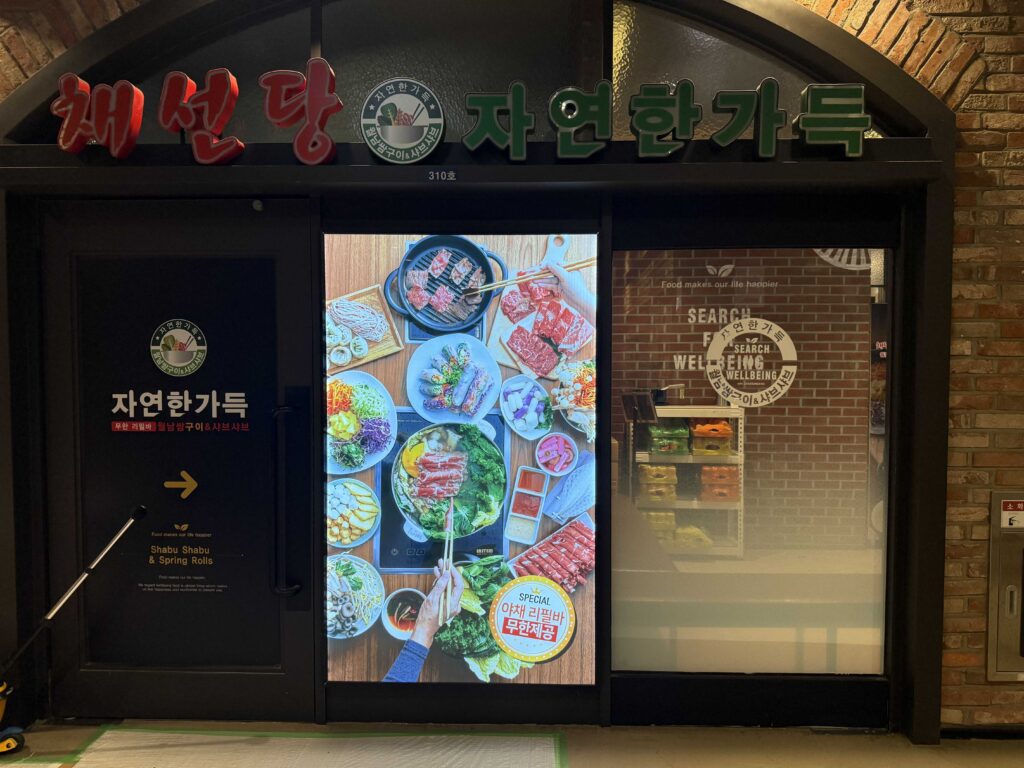
We weren’t even planning to eat out that night. My wife and I had just finished grocery shopping near Hanam Starfield, and we were about to drive home. But then she looked at me and said, “I really don’t feel like cooking tonight.” And just like that, five minutes later, we were standing in front of Chaesundang Hanam Misa (채선당 자연한가득 하남미사점), reading the menu through the glass door and trying to decide whether to walk in.
I’d passed this place probably a dozen times before without ever going in. Shabu-shabu chains never really excited me, to be honest. However, something about the warm brick archway caught my eye this time. So we walked in on impulse. Looking back, that turned out to be one of the best spontaneous food decisions we’ve made in months.

What Makes Chaesundang Hanam Misa Different?
The name “채선당” (Chaesundang) roughly translates to “a hall of fresh vegetables,” which tells you a lot about their philosophy. The “자연한가득” (Jayeonhangadeuk) part means “full of nature.” It’s a brand built around freshness and natural ingredients rather than luxury cuts of meat — and after eating here, I’d say they live up to that name.
Over the past year, I’ve eaten at quite a few shabu-shabu restaurants around Hanam and Seoul. Most of them follow the same formula — a pot of broth, some sliced meat, and maybe a few side dishes. But Chaesundang Hanam Misa does something different. It combines three distinct experiences into one meal: unlimited shabu-shabu hot pot, a DIY Vietnamese spring roll station, and a creamy rice porridge (죽) finale made from the enriched leftover broth.
That triple combination is what sets it apart. You’re not just dipping meat into a pot for an hour. Instead, you’re cooking, assembling, creating, and finishing with comfort food — all at one table, all for around 16,900 won per person. The meal never gets boring. Every stage feels like a new course, and every trip to the buffet bar opens up new flavor combinations.
I’ve tried Shabeu 20 in Gangdong, another popular shabu-shabu buffet in the Seoul area. It’s solid, but Chaesundang Hanam Misa edges it out on the spring roll experience and overall buffet bar variety. If you’re comparing options, both are worth visiting — but Chaesundang gives you more creative freedom at the table.
First Impressions: Walking Into Chaesundang Hanam Misa
The Entrance and Exterior
Right from outside, you notice the arched brick facade. Bold red letters spell out “무한 리필바” — unlimited refill bar. A green welcome mat with the Chaesundang branding sits on the floor. Even before stepping inside, the place has a warm, almost European bistro vibe that I didn’t expect from a Korean chain restaurant.

The Interior and Atmosphere
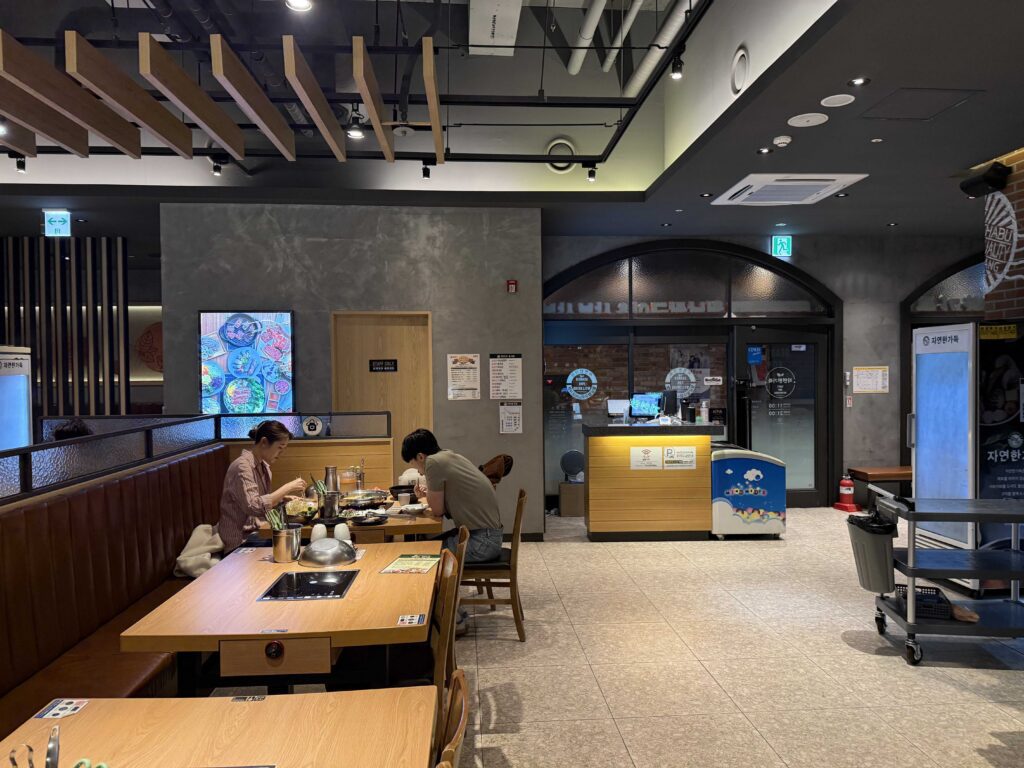
Inside, the space opens up immediately. Dark ceilings with wooden slat accents create a modern, industrial look. Brown leather banquettes line the walls, and warm pendant lights hang at just the right height. The atmosphere feels cozy without being cramped. On top of that, my wife noticed the stained-glass geometric partition that divides sections of the dining area. “That’s actually really pretty,” she said — and she was right. It gives the room character that most chains don’t bother with.
A friendly staff member greeted us at the front counter. Behind her, a neon sign glowed: “월남쌈구이 & 샤브샤브” — Vietnamese spring roll grill and shabu-shabu. That neon against the dark wall photographs beautifully, so bring your phone.


The Buffet Bar at Chaesundang Hanam Misa
Let me be straight with you. The buffet bar is what separates Chaesundang Hanam Misa from every other shabu-shabu spot I’ve tried in this area. It’s not a sad afterthought with wilted lettuce. Instead, it’s a multi-station spread that genuinely surprised me. And I say that as someone who has been disappointed by too many “unlimited” buffets.
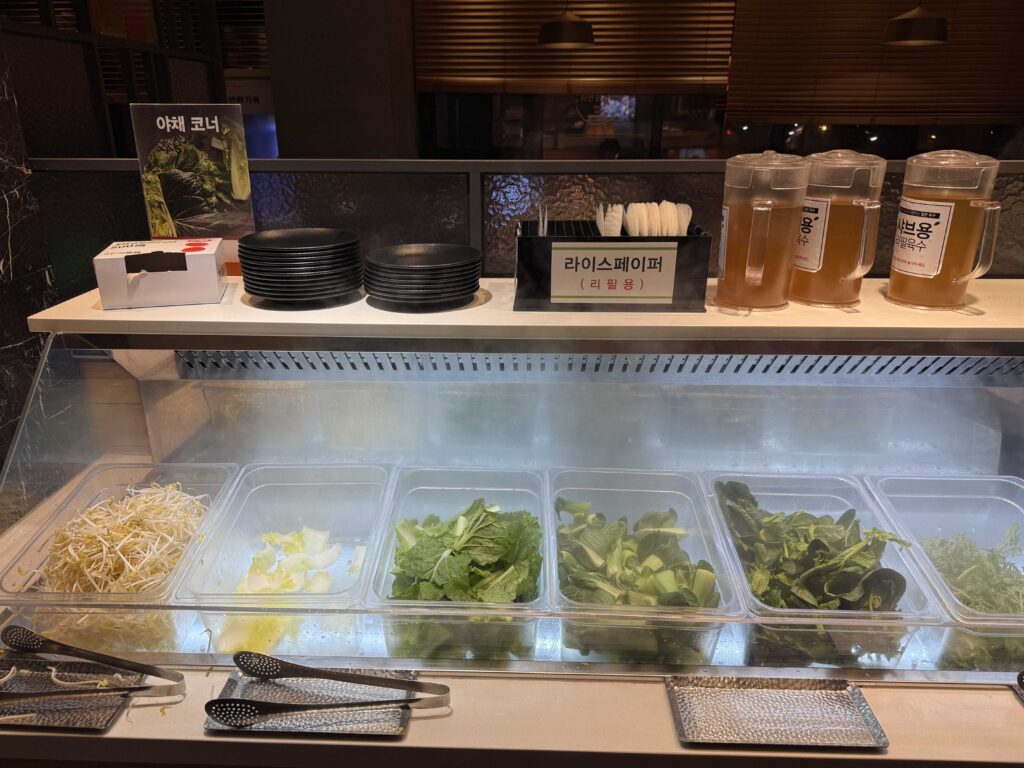
Vegetable Corner (야채 코너)
A large refrigerated display holds crisp bean sprouts, napa cabbage, bok choy, and several varieties of baby greens. Everything looked freshly restocked — no brown edges, no wilting. Right next to it, stacks of real rice paper sit ready for spring rolls, alongside pitchers of warm broth for dipping. For anyone who cares about freshness at a buffet, this corner immediately builds confidence.

Vietnamese Spring Roll Station (월남쌈 코너)
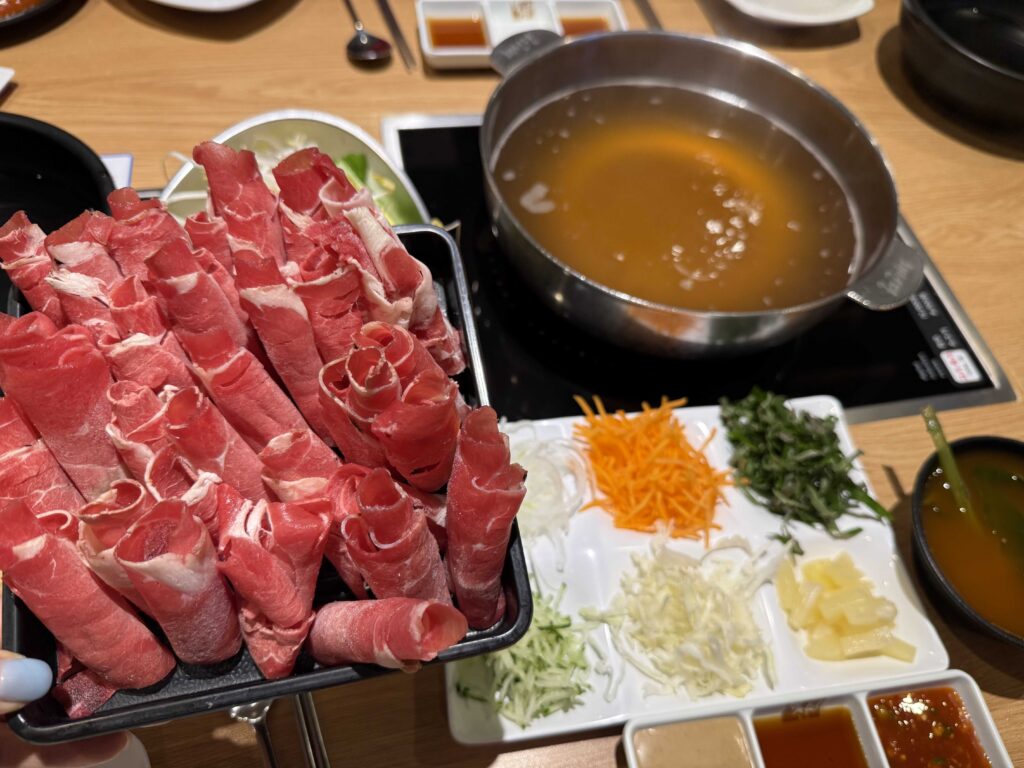
This section honestly blew me away. About eight different bowls hold colorful fillings: julienned carrots, seaweed strips, sprouts, shredded radish, and several things I couldn’t even identify. Naturally, my wife and I both returned to this station at least three times during our meal. As a result, each combination tasted completely different, which kept the experience exciting from start to finish.

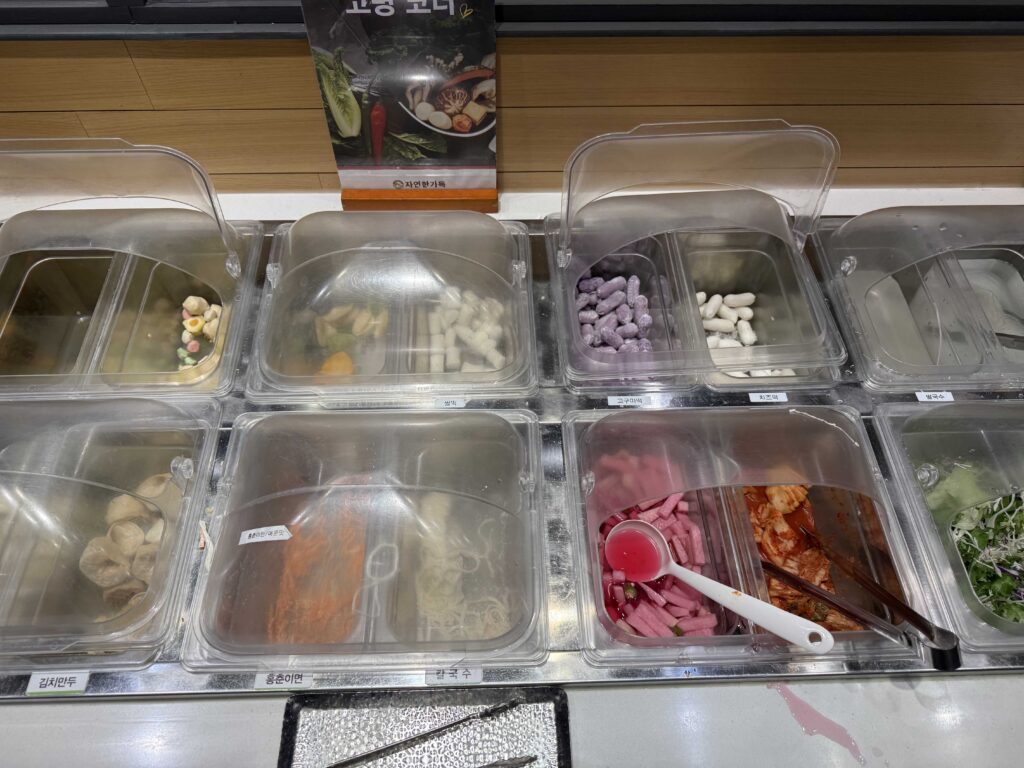
Garnish Corner (고명 코너)
The garnish corner also offers toppings specifically for your hot pot. Handmade-looking dumplings, assorted mushrooms, purple and white rice cakes, kimchi, and white beans — each in its own labeled container. This lets you really personalize your shabu-shabu. Want a heavier, Korean-style pot? Load up on rice cakes and kimchi. Prefer something lighter? Stick with mushrooms and sprouts.

Sauce and Condiment Station
There’s also a dedicated area with warming trays, hammered metal sauce dishes, and seasoning bottles. In total, I counted four different dipping options: a soy-based sauce, something citrusy like ponzu, a spicy gochujang blend, and a creamy sesame one. So every bite throughout the meal can taste completely different.

Food Safety and Freshness Policy
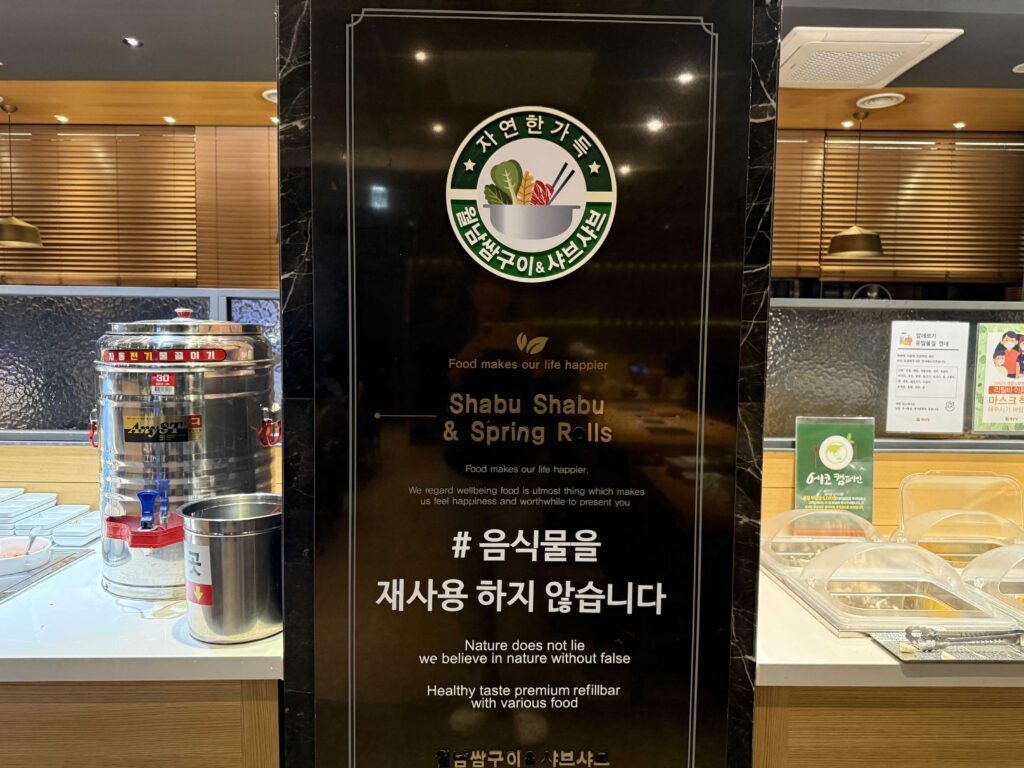
One detail that earned my genuine respect: a prominent black sign states “음식물을 재사용 하지 않습니다” — we do not reuse food. In Korea, this isn’t always a given. After all, some restaurants have been caught recycling side dishes, so that transparency actually matters. An eco campaign banner also warns that leftover food incurs a 5,000 won surcharge. Fair enough — don’t waste good food.

Shabu-Shabu Beef at Chaesundang Hanam Misa
The Table Setup
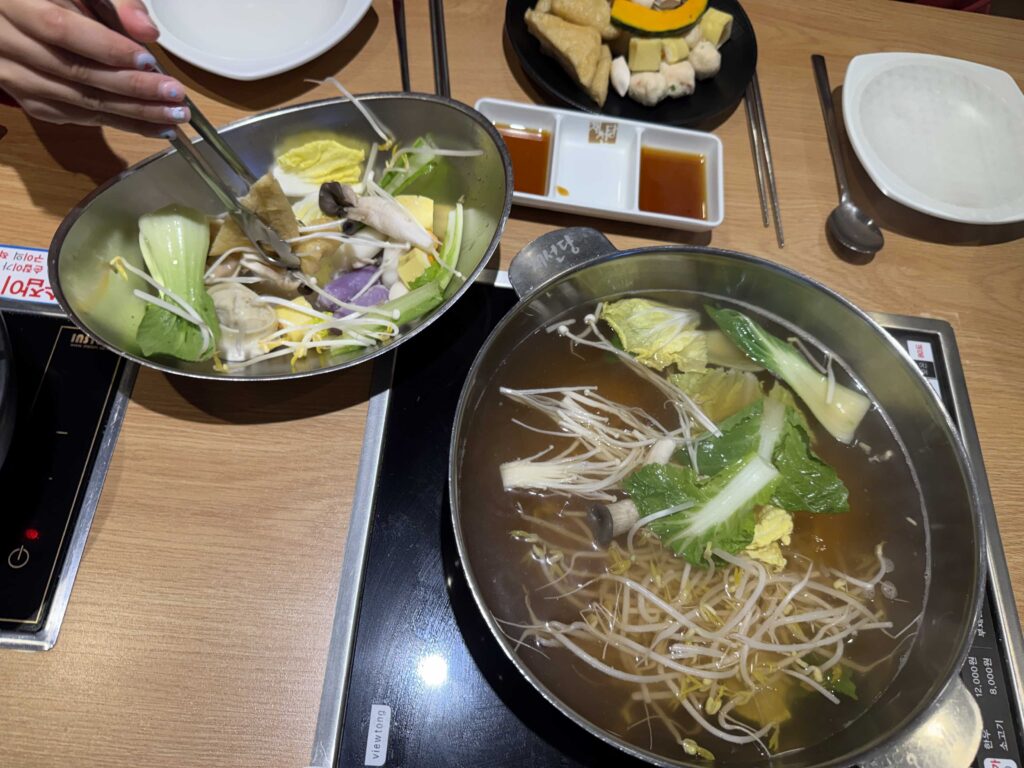
Once you sit down at your booth, you’ll find a built-in induction cooktop recessed into the table. A stainless steel pot arrives filled with clear golden broth — it smells subtly of kelp and dried anchovy, a classic Korean base. Alongside it comes a metal bowl overflowing with raw vegetables: bean sprouts, bok choy, napa cabbage, and leafy greens.

The Beef — Generous and Surprisingly Good
But the moment that truly gets your attention? The beef.
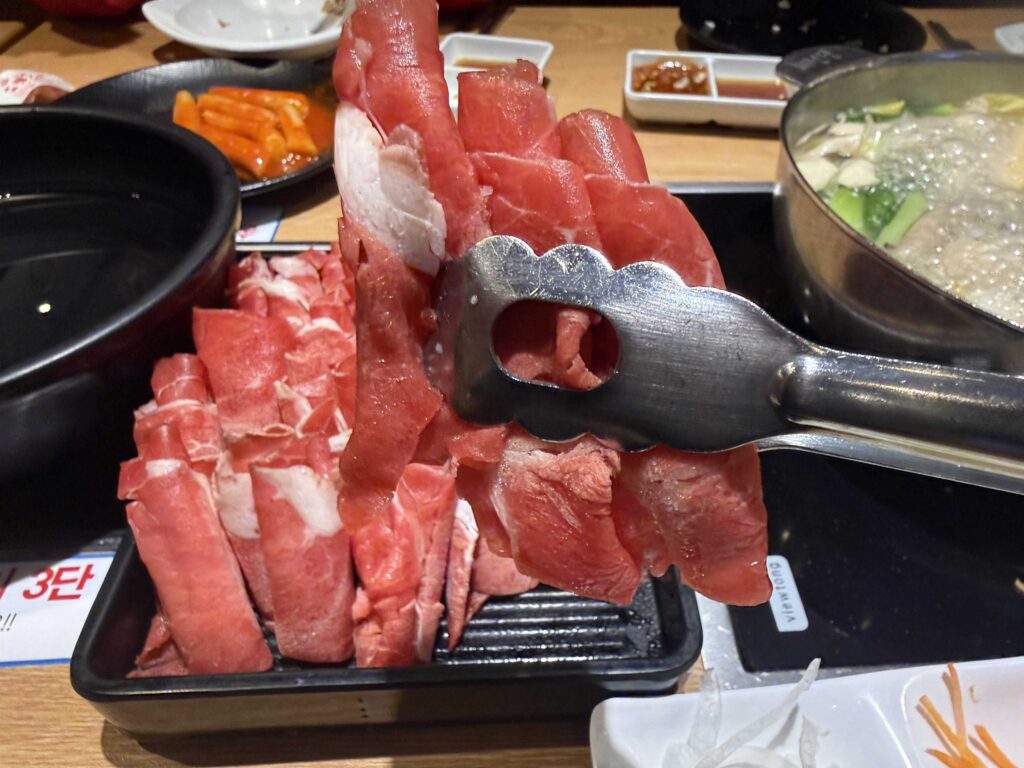
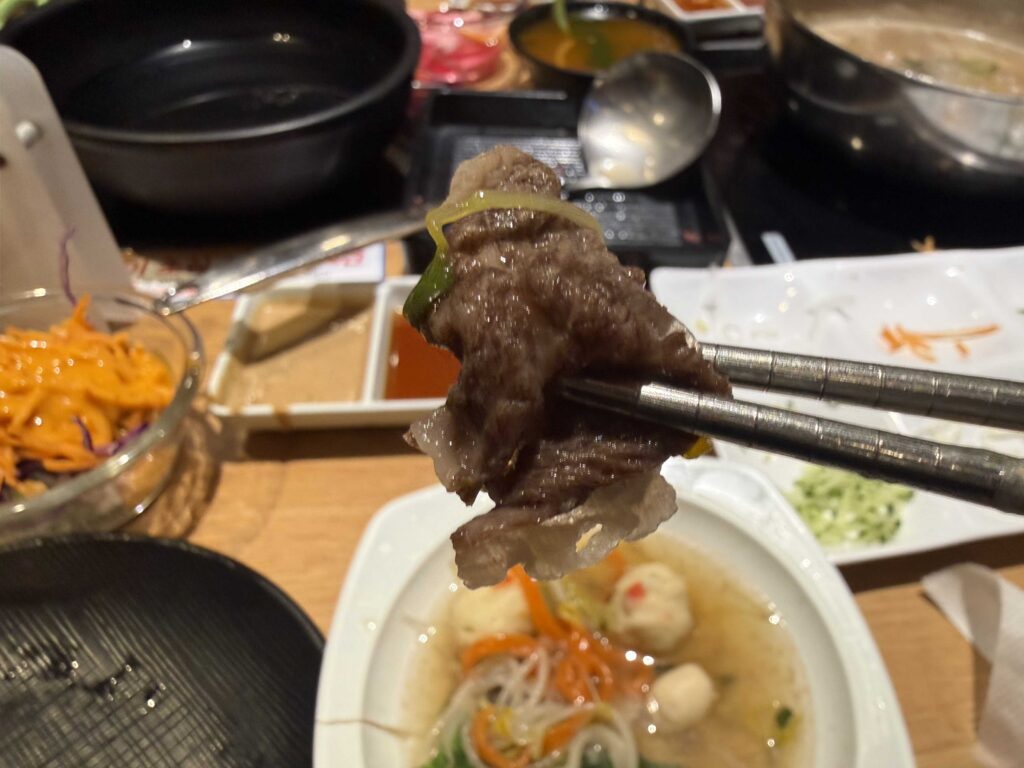
Thin, vibrant pink-red rolls of shabu-shabu beef arrive on a black tray, packed tightly together and standing upright like little meat roses. The portions are genuinely generous — and I want to emphasize that. I’ve been to standalone shabu-shabu places in Gangnam that charge 30,000 won per person and serve half this amount. My wife looked at the tray, then at me, and said, “Seriously? All of this?” Yes. All of it. And you can order more whenever you want.


Cooking the Beef and Vegetables
I grabbed a slice with the tongs and swished it through the bubbling broth for about five seconds. That swishing motion is actually where the name “shabu-shabu” comes from — a Japanese onomatopoeia for the sound. Although the dish originated in Japan, Korean shabu-shabu has evolved into something distinctly its own. Korean versions typically use a lighter, kelp-and-anchovy-based broth instead of the richer Japanese kombu dashi. They also incorporate more vegetables and almost always end with the rice porridge finale — a tradition you won’t find in Japanese shabu-shabu restaurants. The beef came out tender, silky, and clean-tasting. Is it premium hanwoo? No, and nobody claims it is. However, for an all-you-can-eat spot at this price, the quality impressed me.

We loaded the pot with vegetables too — enoki mushrooms, bean sprouts, napa cabbage, pumpkin slices, and green onions from the buffet bar. The broth kept evolving throughout the meal. By our second round, my wife said it tasted completely different — deeper, richer, almost sweet from all the vegetable sugars that had dissolved into it.

Meanwhile, we developed a little system. She handled the spring roll assembly while I managed the hot pot, dropping in vegetables and beef in rotation. This turned our dinner into a genuinely collaborative experience — more fun than just staring at meat on a grill at a regular Korean BBQ place.

Vietnamese Spring Rolls at Chaesundang Hanam Misa: The Hidden Highlight
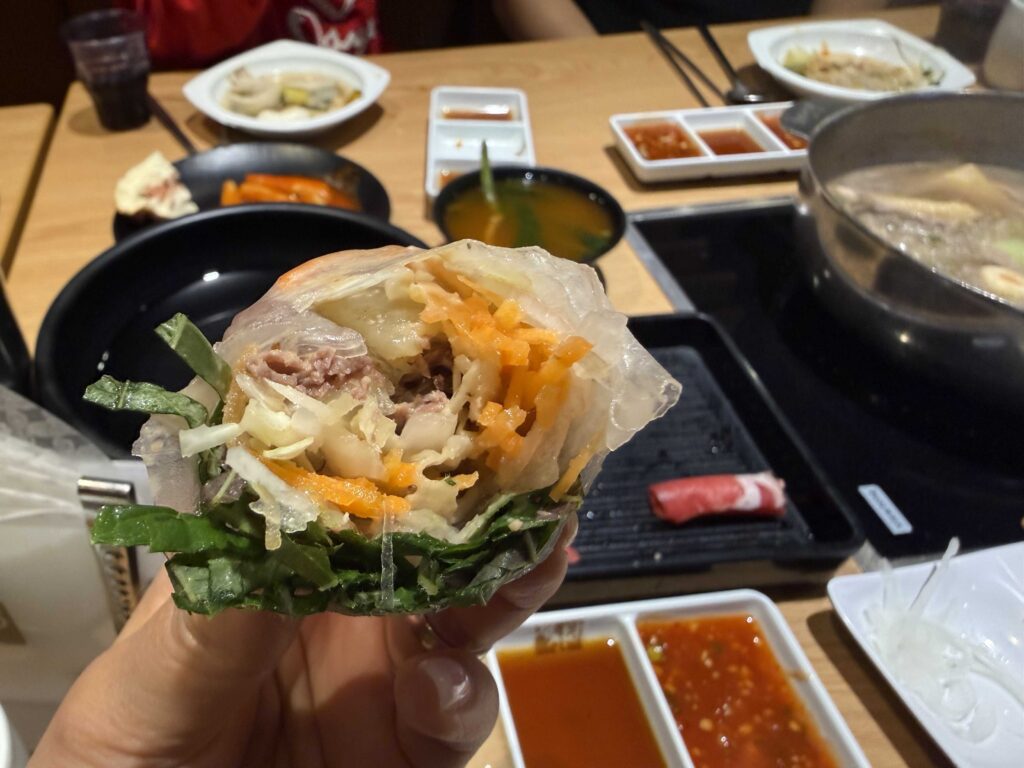
This was my wife’s absolute favorite part of the meal. Here’s how it works: grab rice paper from the buffet station, dip it briefly in warm water, lay it flat, pile on cooked beef and fresh vegetables, roll it tight, dip in sauce, and bite. Simple as that.

What makes this so satisfying is the contrast of textures. Warm beef meets crunchy raw carrots. Soft rice paper wraps around herbal perilla leaf. Regular shabu-shabu alone doesn’t offer that kind of variety. With the spring roll station, Chaesundang Hanam Misa feels like two restaurants in one.
My wife made about six or seven rolls over the course of the evening. I honestly lost count of mine. At one point she laughed and said I was spending more time at the spring roll bar than at our actual table. She wasn’t wrong. If you’ve visited before but only focused on the hot pot, commit to the spring roll experience next time. It completely transforms the meal.
Rice Porridge Finale at Chaesundang Hanam Misa: Don’t Skip This
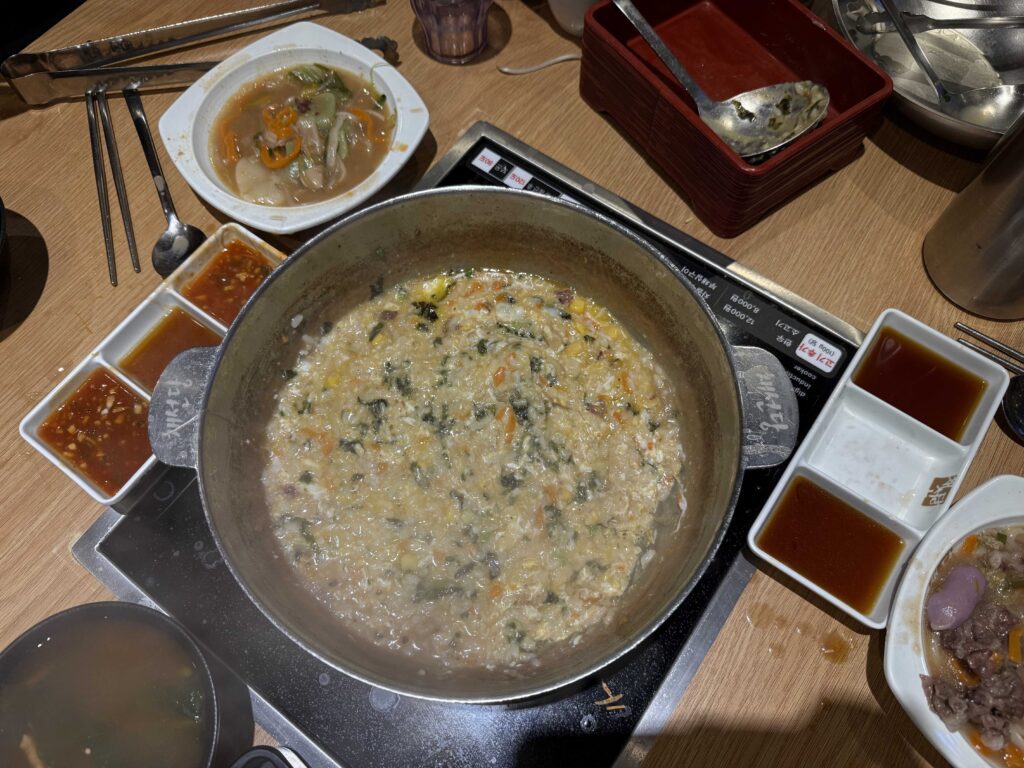
If you’ve never had the closing act of a Korean shabu-shabu meal, you are missing one of the most comforting food experiences in Korean cuisine. This tradition of making 죽 (juk, rice porridge) from leftover hot pot broth goes back generations in Korea. It’s rooted in the philosophy of not wasting a single drop of flavor — the broth has absorbed the essence of everything you cooked in it, so turning it into porridge is both respectful and delicious. After cooking all your meat and vegetables, the remaining broth is incredibly rich. Add cooked rice, stir it around, and it becomes a thick, creamy porridge that tastes like liquid gold. If you enjoy this kind of Korean comfort food, you might also love the budae suyuk gukbap at Dammion in Seongsu — another soul-warming Korean soup experience.

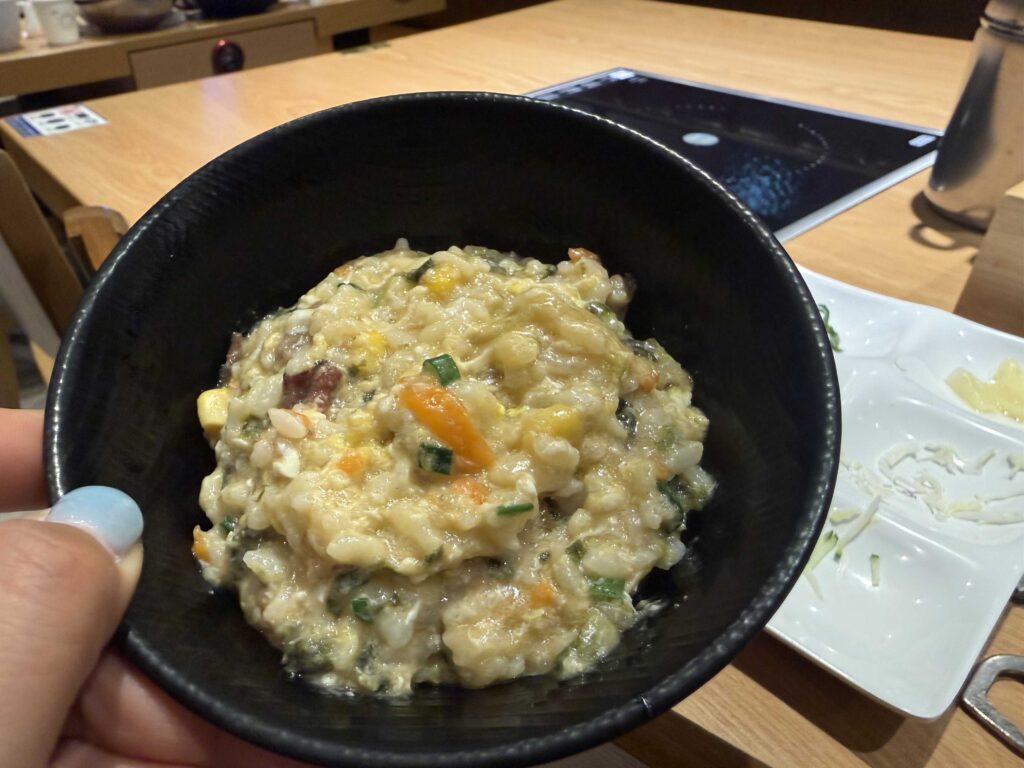
At Chaesundang Hanam Misa, a staff member came over and helped us with this step. She added the rice, adjusted the induction heat, and let it simmer. Ours came out studded with tiny bits of carrot, green onion, corn, and mushroom fragments. I scooped it into a bowl and just sat there for a moment, eyes closed. That probably sounds dramatic, but if you know, you know.

Some people skip the porridge because they’re already full. However, I strongly recommend pacing yourself throughout the meal specifically so you have room for this. Eat a little less beef. Make one fewer spring roll. The porridge is the emotional climax of the entire experience. Skipping it is like leaving a movie theater before the ending.
Pricing at Chaesundang Hanam Misa: What We Actually Paid
Chaesundang operates on a per-person pricing model. At the time of our visit, the standard adult price was 16,900 won per person for the beef shabu-shabu course. That covers unlimited beef refills, full buffet bar access (vegetables, spring roll station, garnishes, sauces, rice for porridge), and the complete table setup.
For two adults, our total came to 33,800 won — roughly $25 USD at current exchange rates. No additional drinks or premium upgrades, so that was our entire bill. To put that in perspective, a comparable meal at a standalone shabu-shabu restaurant in Gangnam would easily run 50,000 to 70,000 won with fixed portions and no refills. Therefore, the value here is genuinely hard to beat. Additionally, they offer a premium course at a higher price with upgraded beef cuts, but the standard course satisfied us completely.
How to Get to Chaesundang Hanam Misa
📍 Address: 채선당 자연한가득 하남미사점, Hanam-si, Gyeonggi-do, South Korea (Unit 210호, 2nd floor)
🚇 Nearest Station: Hanam Misa Station (Seoul Metro Line 5) — about a 10-minute walk or quick taxi ride from the exit.
🅿️ Parking: Available in the building’s underground lot. No issues finding a spot on a weeknight.
🚗 From Seoul: About 30 to 40 minutes via the Olympic Expressway heading east, depending on traffic.
Once inside the building, the brick archway entrance on the second floor is easy to spot once you’re in the building. If you’re in the Hanam area and need a great bakery for dessert afterward, Chacha Bakery in Gamil is nearby and makes an excellent post-meal coffee stop.

Chaesundang Hanam Misa — My Rating
📍 Location: Hanam Misa, Gyeonggi-do
🍽️ Category: Shabu-Shabu / Vietnamese Spring Roll Buffet
💰 Price: ~16,900 KRW per adult (unlimited)
👥 Best For: Couples, families, groups
⭐ Overall: ⭐⭐⭐⭐ (4.2 / 5)
- ⭐ Beef Quality: 4 / 5 — Solid and fresh for all-you-can-eat. Not hanwoo-grade, but well above average for the price.
- ⭐ Buffet Bar: 5 / 5 — Genuinely impressive variety, freshness, and organization. Best shabu-shabu buffet bar I’ve seen in this price range.
- ⭐ Spring Rolls: 4.5 / 5 — The DIY rice paper roll experience adds a whole extra dimension to the meal.
- ⭐ Rice Porridge (죽): 4.5 / 5 — Rich, creamy, and deeply comforting. The perfect ending.
- ⭐ Atmosphere: 4 / 5 — Clean, modern, and spacious. Comfortable for families, couples, and groups.
- ⭐ Value for Money: 4 / 5 — Two people, unlimited food, 33,800 won total. Hard to argue with that math.
Compared to premium standalone shabu-shabu restaurants, you won’t find wagyu-grade beef here. But that’s not what Chaesundang is trying to do. Instead, it delivers an incredibly well-rounded, all-you-can-eat hot pot and spring roll experience at a price that makes you feel like you got away with something. In fact, the buffet bar alone puts it ahead of most competitors.

Also Worth Reading
Exploring the Hanam and greater Seoul area? Here are some other food experiences I’ve reviewed that pair well with a visit to Chaesundang Hanam Misa:
If the beef at Chaesundang impressed you, I’d highly recommend trying Galbi Saenggak in Pocheon Idong — it’s a legendary hanok restaurant serving premium charcoal-grilled galbi that practically melts in your mouth. A completely different style of Korean meat, but equally satisfying.
For pork lovers, Mongttang Saenggogi in Seongsu serves some of the freshest thick-cut samgyeopsal you’ll find in Seoul. It’s become one of my regular spots after work.
Need dessert after your shabu-shabu feast? Chacha Bakery in Gamil, Hanam is right in the area and makes an excellent post-meal coffee stop. And if you’re craving another soup-based meal in Hanam Misa, Park Seung-gwang Haemul Kalguksu does rich seafood broth with handmade knife-cut noodles.
Final Thoughts on Chaesundang Hanam Misa
Here’s what I keep coming back to when I think about this meal. Chaesundang Hanam Misa doesn’t try to overcomplicate things. It gives you quality broth, fresh beef in generous portions, a stacked buffet bar with real variety, and the creative freedom to build Vietnamese spring rolls right at your table. The rice porridge finale seals the deal.
For a couple or a family looking for something filling, satisfying, and genuinely fun in the Hanam Misa area — this is the one. Korean shabu-shabu culture is evolving, and places like Chaesundang Hanam Misa are proof that chain restaurants can still deliver when they actually care about quality and freshness.
I’d honestly rank this above several independent shabu-shabu spots I’ve tried across the greater Seoul area — and that says something, because I almost always prefer small, family-run restaurants over franchises. But Chaesundang earned it. The buffet bar is best-in-class for the price range. The beef surprised me. And the spring roll experience adds an interactive layer that most competitors simply don’t offer.
Whether you’re a tourist looking for authentic Korean hot pot, a Hanam local seeking a date night spot, or a family needing hands-on dining — Chaesundang Hanam Misa deserves a spot on your list. We’ll definitely be going back. My wife has already mentioned it three times since that night.