Our second base in Jeju was a stay inside the Seongeup Folk Village, and we needed dinner close by. Gaseureum Sikdang came up as the nearest spot with a real reputation, a pork house a short drive from where we slept. So we walked in hungry, with two tired kids, hoping for an easy local meal.
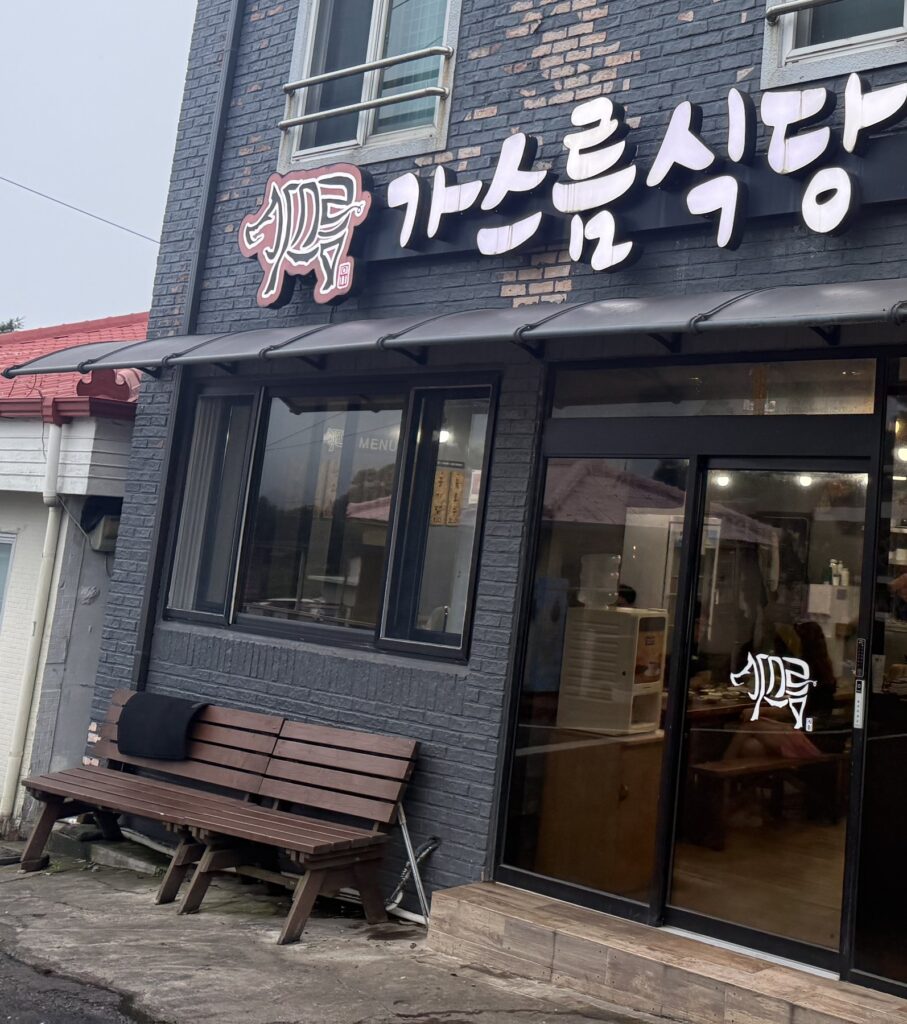
The front is easy to miss, a black-brick building with a small pig logo and a phone number. Inside, the ceiling shows its ductwork, the walls are bare brick, and the smell of grilled pork hangs in the air from other tables. It felt like a place regulars keep to themselves, and that is usually a good sign.
It was easy, mostly. Some of what we ordered landed hard, and one dish did not land for us at all. This is the honest version, the good plates and the one we would skip next time.
We had spent the afternoon wandering the stone lanes and thatched roofs of the folk village, so by dinner the kids were spent. A place we could reach in a few minutes was worth more than a famous name across the island. Gaseureum Sikdang fit that need, and it turned out to be a genuinely local room rather than a spot built for visitors.

What Gaseureum Sikdang Is, and Isn’t
Gaseureum Sikdang is a Jeju pork restaurant, plain and honest about it. The pork is island-raised, the menu is short, and the room is a working local spot rather than a tourist set piece. Wood benches, grills sunk into the tables, a wall of hand-burned menu boards near the counter.
So this is not a polished galchi-and-view place like some Jeju restaurants aim to be. It leans into pork three or four ways, adds a couple of soups, and trusts the cooking to carry it. For a family staying nearby, Gaseureum Sikdang made sense as a quick, close, no-fuss dinner.

Why Jeju Pork Gets Its Own Reputation
Jeju black pork is a point of pride on the island, raised here and served nearly everywhere. The fat is meant to be sweeter and the meat firmer, and locals will argue it beats anything from the Korean mainland. A place like this trades on that, sourcing island pork and keeping the menu tight around it. You are not paying for decor, so the money goes into the meat, which is exactly how I like a pork house to work.
- Location. Near Seongeup Folk Village, Pyoseon, Jeju
- Category. Jeju pork, soups, and boiled pork
- Price. Duruchigi 10,000; head-meat suyuk 16,000; soups around 10,000
- Best For. Families staying near Seongeup wanting a close, local dinner
- Overall. 3.5 / 5
- Duruchigi. 4.5 / 5. The reason to come back
- Suyuk. 4.5 / 5. Clean and tender, kid-approved
- Blood Sausage Soup. 2.5 / 5. Not to our taste, and that is on us
- Value. 4 / 5. Fair prices for the amount
- Atmosphere. 3.5 / 5. Honest local room, nothing staged
Reading the Menu Boards
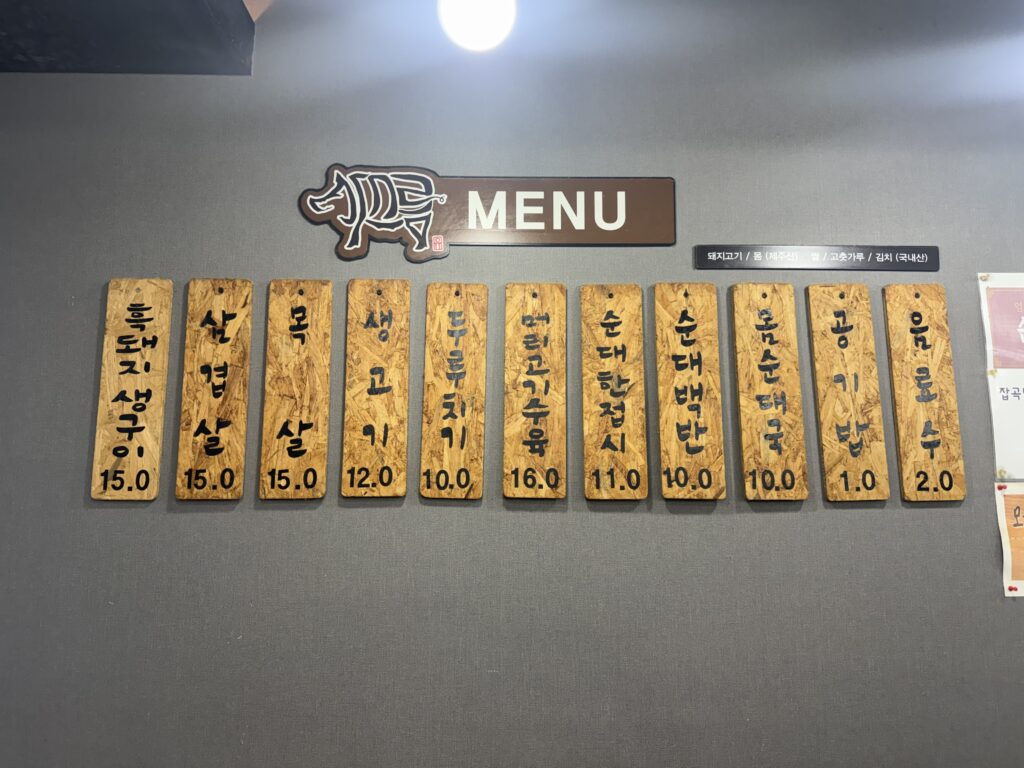
The menu hangs on the wall as a row of wood slats, each dish burned in by hand. Black pork grilled cuts sit at the top, then samgyeopsal, moksal, and raw-cut pork. Lower down come the duruchigi, the head-meat suyuk, and the sundae plates. It reads fast, which I appreciated with two hungry kids beside me and no patience for a long menu.
Prices are gentle. Most mains land near ten thousand won, with the grilled cuts a little higher. A note on the board lists the pork as Jeju-raised and the kimchi and rice as domestic. We skipped the grill this time and went for the cooked dishes, since the kids were too tired to wait on barbecue.
For four of us, we settled on duruchigi, the head-meat suyuk, and a bowl of the sundae soup, plus rice. It looked like plenty on paper, and it was. The total sat comfortably under what a barbecue spread would have run, which felt fair for the amount of food that eventually covered the table.


If you have the time and energy, the grilled cuts are clearly the headline order here. The tables are built for it, with grills set into the wood and tongs ready. We just did not have it in us that night, so I cannot speak to the samgyeopsal. Next trip, that is the plan.
The Grill Is the Real Draw
You can tell the grill is the main event by looking around the room. Most of the other tables had smoke rising off them, families cooking their own black pork. The smell of it filled the place, and more than once I regretted not having the energy to join in. So take this as a note to self as much as a tip to you. Come hungry and rested, and do the grill.
There is a decent drinks list too, the usual soju, beer, and makgeolli lined up in the fridge by the counter. It is that kind of room, where a table of adults settles in for a long grill and a few bottles. With the kids in tow we kept it quick, but I could see the appeal of a slower night here.
The Village Just Outside the Door
Part of why this dinner worked was where it sat. Seongeup Folk Village is a preserved old settlement of stone walls, thatched roofs, and narrow lanes, and we were sleeping inside it. After a day of poking around the village, nobody wanted a long drive. A local restaurant a few minutes away was the whole appeal.
Eating where the locals eat, close to a place with this much history, added something to a plain pork dinner. The food was not fancy, and it did not need to be. It matched the setting, honest and unhurried. If you base yourself around Seongeup, having a solid pork house this near is a small but real luxury.
It also saved us the worst part of a Jeju evening, the long drive to a famous restaurant across the island. After a full day out, the last thing tired kids want is another hour in the car. A good meal five minutes from where we slept was worth more to us than any hyped name a long drive away.
Duruchigi: The Dish That Carried the Meal
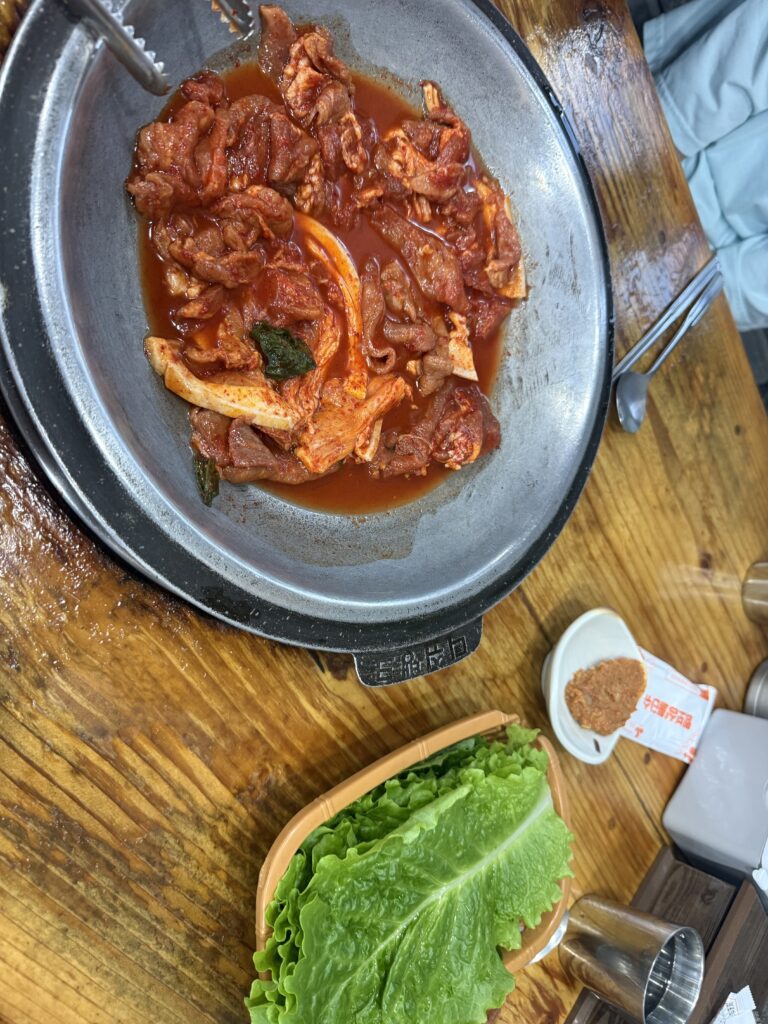
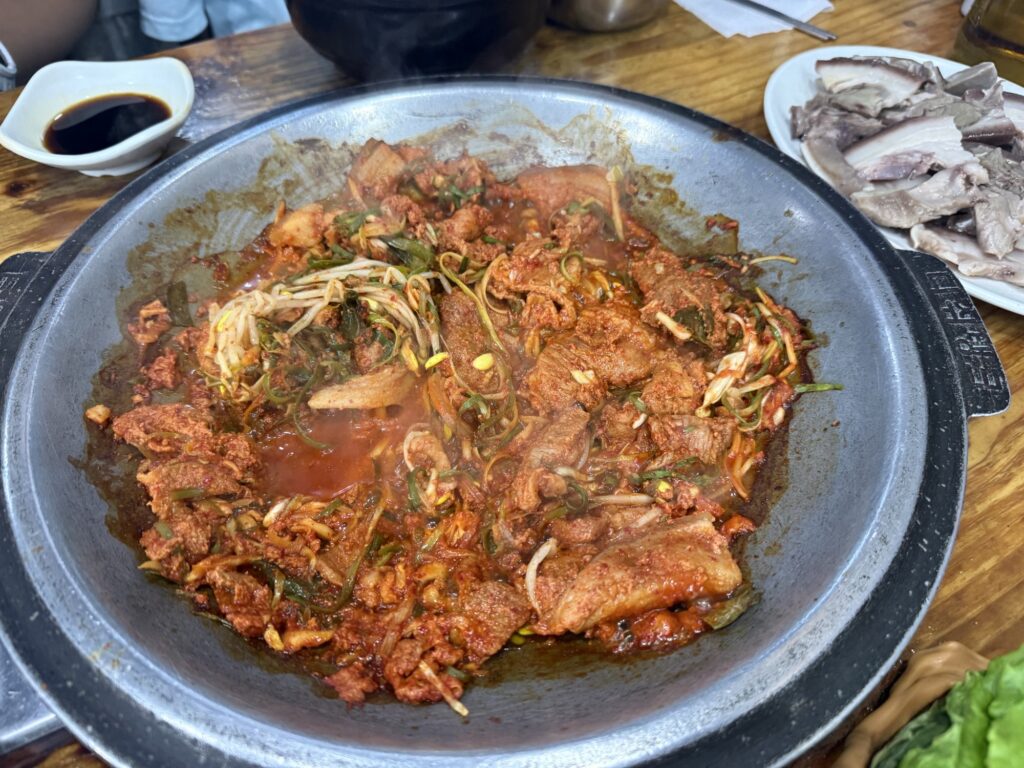
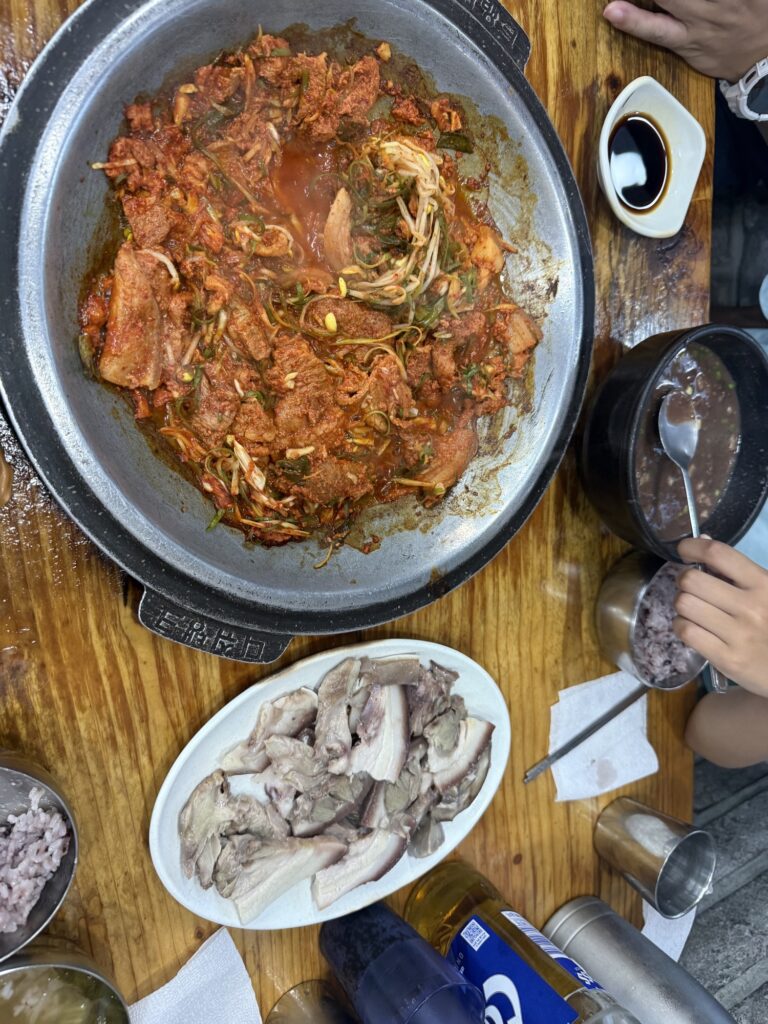
The duruchigi was excellent, and it landed first. Thin pork stir-fried in a red gochujang sauce, sweet and spicy, glossy in the pan. It came with a basket of lettuce and a dab of ssamjang, so we built wraps and kept building them.

Building the Wraps
The right way to eat this is one wrap at a time, and slowly. Take a lettuce leaf, add a piece of pork, a smear of ssamjang, and a little rice. Fold it, eat it, repeat. We got into a rhythm, four sets of hands assembling wraps over the same pan, and the table went quiet in the good way.
It was good enough that we added rice halfway through, which is the surest sign a dish is working. Bean sprouts got stirred in near the end, soaking up the sauce and adding crunch. The heat sat right in the middle, warm but not punishing, so even the kids nibbled at the milder edges.

What I liked most was the balance. The sauce was sweet up front, then the chili came in behind it, and the pork stayed tender through both. It never turned into the sugary, one-note stir-fry you sometimes get. Wrapped in cool lettuce with a smear of ssamjang, it was the bite we kept going back to until the pan was scraped clean.
Suyuk the Kids Actually Fought Over
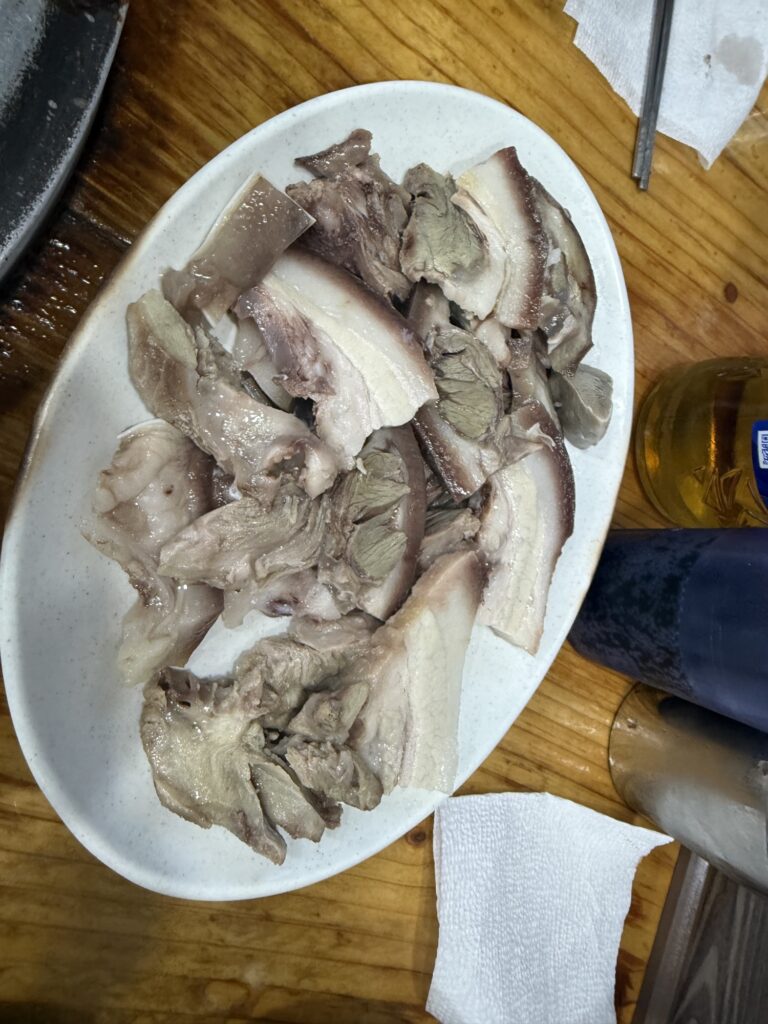
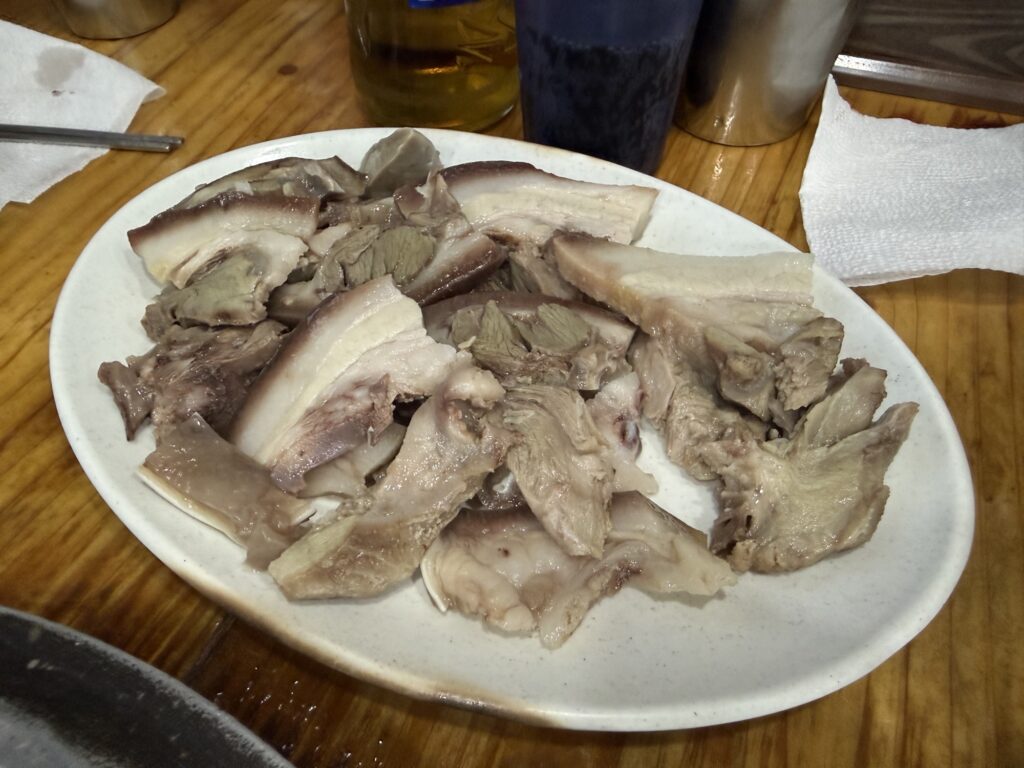
The boiled pork was the quiet winner. Head-meat suyuk arrived in clean slices, tender and mild, the fat soft rather than heavy. It needed almost nothing, a light dip and a piece of kimchi, and it was gone.

Both kids took to it fast, which surprised me for a plate of boiled pork. They wrapped slices in rice and ate more than I expected, and we watched the plate empty faster than the duruchigi. If you bring children who are wary of spice, this is the safe, satisfying order.
Head-meat suyuk can be a gamble, since the texture varies a lot between kitchens. Here it was clean, with soft gelatin edges and no gaminess at all, the kind of boiled pork that wins over skeptics. We dipped it in the salted shrimp sauce, added a leaf of kimchi, and that was the whole trick. Sometimes simple wins.

It also paired well with the duruchigi, which I did not plan. A bite of the spicy pork, then a cool slice of suyuk to settle it, then back again. The two dishes balanced each other, one loud and one calm, and together they made a more complete meal than either would alone.
The Blood Sausage Soup We Won’t Order Again
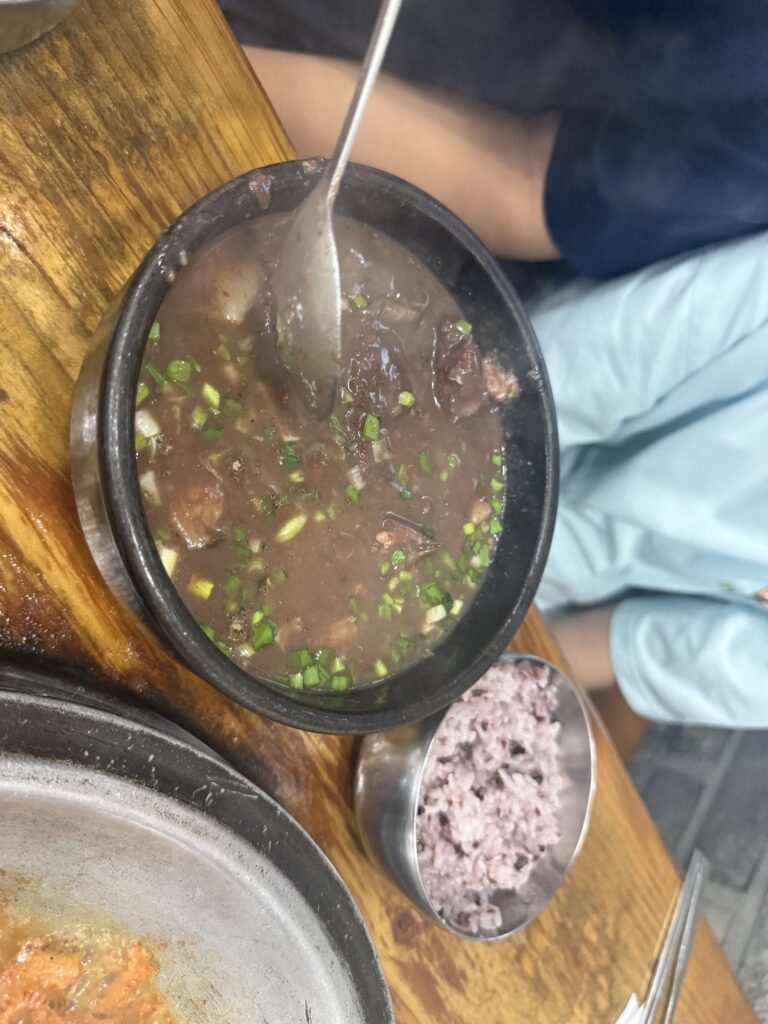
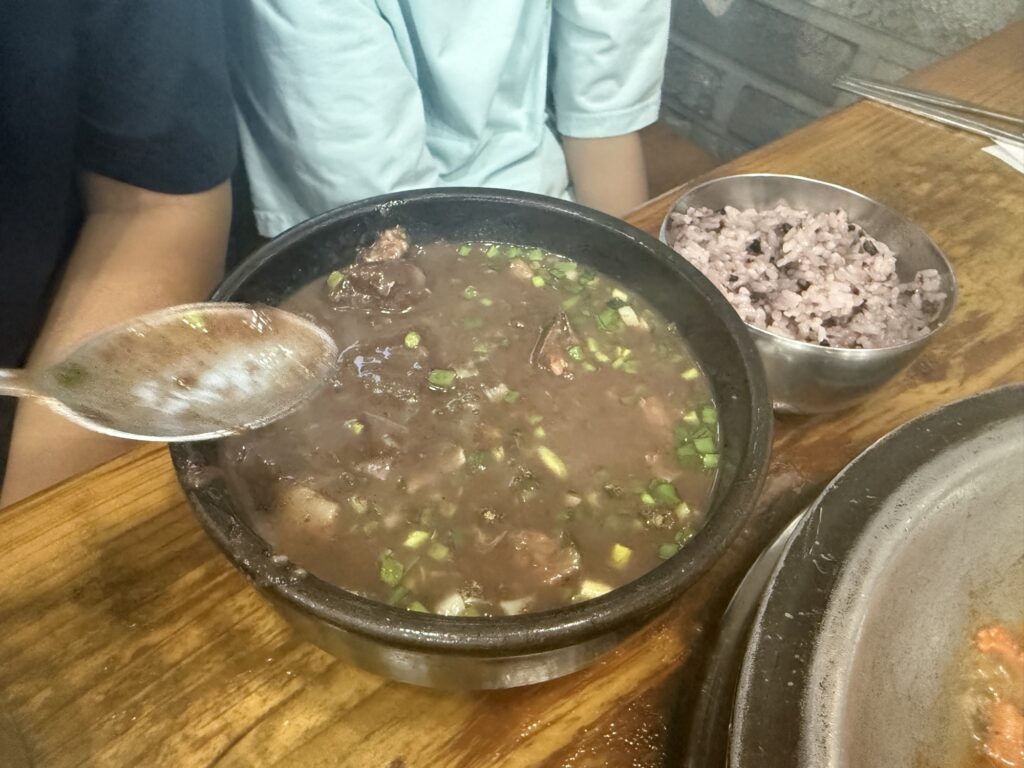
Here is the honest miss. We ordered the sundae-guk expecting the pork-and-noodle blood sausage soup we know from the Korean mainland. What arrived was a pi-sundae version, built around seonji, the coagulated blood, in a dark and mineral broth. That was our own misread of the menu, not a switch by the kitchen, but the gap between what we pictured and what we got was wide.

It is a real regional style, and plenty of people love exactly this. But it was not for our table. The flavor ran strong and iron-heavy, and after a few spoons we drifted back to the pork. That is a taste mismatch, not bad cooking, so I score it low for us while admitting the fault is ours.

If you already enjoy seonji, the version here looked well made, thick with blood-sausage pieces and green onion. The purple rice on the side was good, and I spooned some broth over it to give it a fair try. Still, my advice for anyone expecting the milder Korean mainland gukbap is to check which style the kitchen serves before ordering. Ask for the pork instead if you are unsure, and you will eat happier.
Banchan and the Rest of the Table
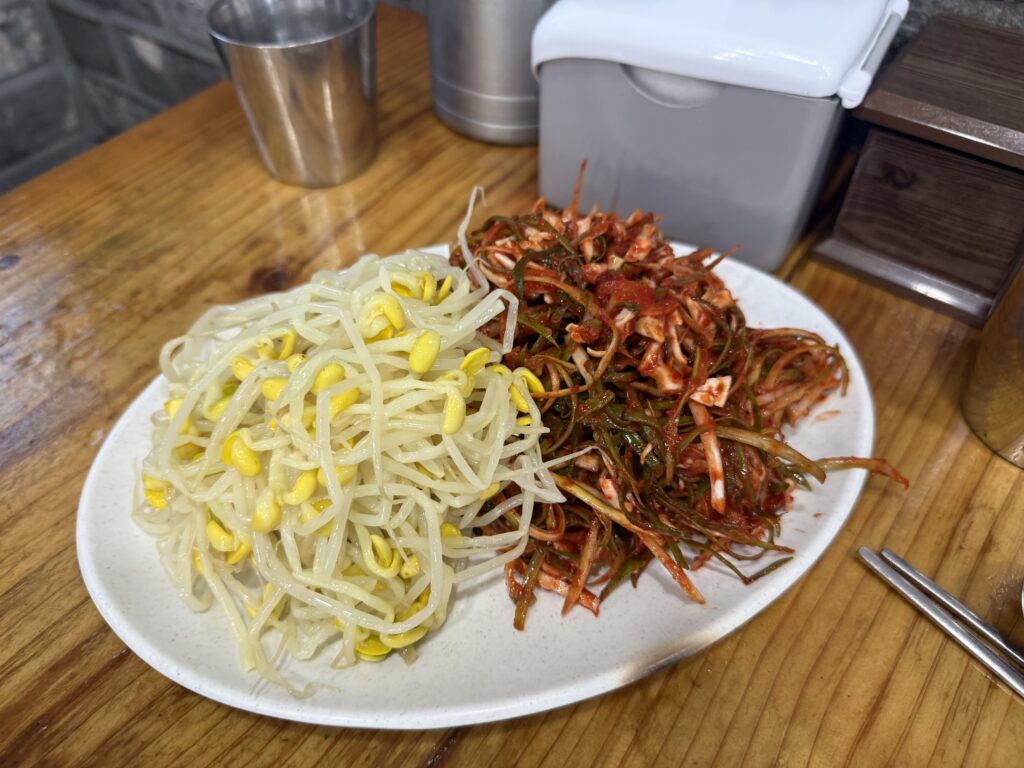
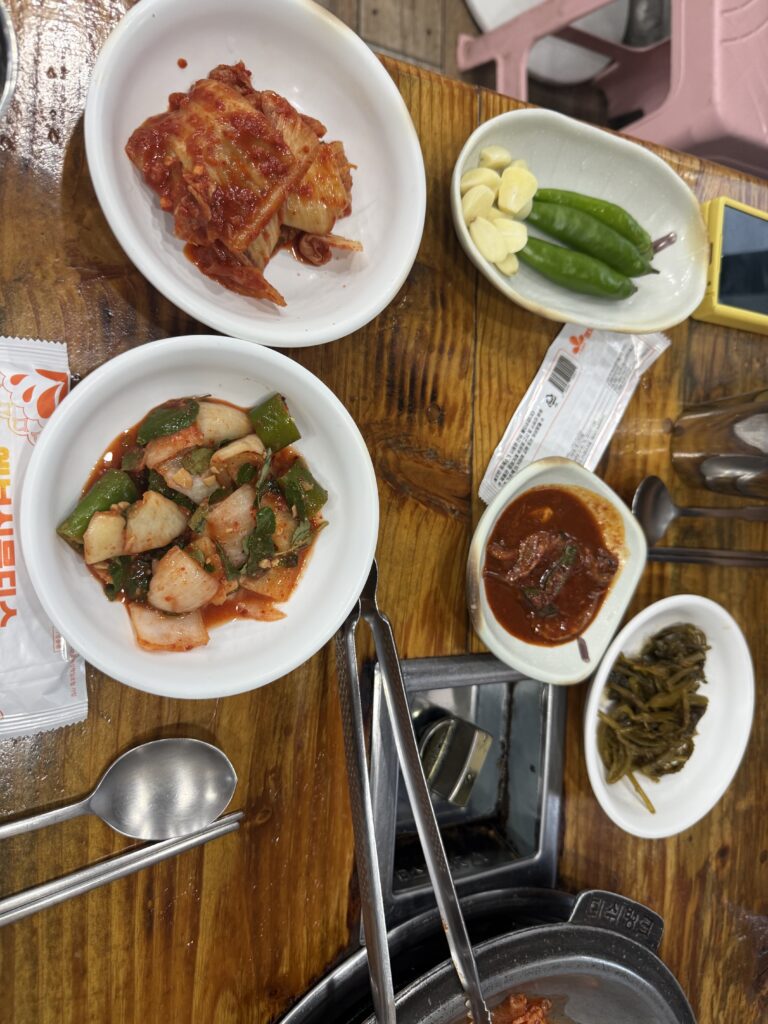
The side dishes were solid and refilled without fuss. Fresh kimchi, a crunchy radish salad, pickled greens, and raw peppers with garlic for the wraps. A plate of bean sprouts and spicy radish came alongside, cool and sharp against the pork.
None of the sides tried to be clever, and that was the point. Each one had a clear job next to the pork. The raw peppers and garlic went into the wraps, the pickled greens reset the palate, and the radish salad added crunch. When a kitchen gets the small plates right, the whole meal feels considered even when the menu is plain.


The kimchi deserves a note. It had that proper sour-sharp bite, clearly not sitting in a fridge for weeks, and it cut the pork fat perfectly. My wife, who judges a Korean restaurant almost entirely on its kimchi, gave a small approving nod after the first piece. Good kimchi tells you the kitchen cares about the basics, and that carried over to everything else.
The Room and the Service
The room itself is worth a word. Exposed ductwork overhead, bare brick walls, wooden benches worn smooth by use. It is not styled for photos, it just is what it is, a working village restaurant. That honesty is part of the charm. You feel like you are eating somewhere real, not somewhere designed to look real.
Service moved at the right pace for a family. Nobody rushed us, but the food came quickly, which matters when kids are hungry and tired. The staff were unfussed about the children, refilled without being asked, and let us settle the bill without a wait. Small things, but they add up to a dinner that felt easy from start to finish.
Put together, the pork plates and the sides made a full, warming meal. The room stayed busy with what looked like locals, always a good sign in a village this small. We ate well on the duruchigi and suyuk, added rice twice, and left full even after leaving the soup behind.

Looking at the spread all together, it was a lot of food for the price. The duruchigi pan, the plate of suyuk, the soup, the rice, and a run of sides filled the whole table. Even setting the soup aside, four of us ate to full on the rest, and that is really all you can ask of a village dinner.
Bringing Kids to Gaseureum Sikdang
For families, this was an easy room. Nobody minded the kids, the benches gave them space, and the food came fast. The suyuk was the perfect kid order, mild and soft, and the duruchigi worked once we picked out the less spicy pieces.
Since we were staying inside Seongeup Folk Village, the short drive back after dinner sealed the choice. A close, honest meal beats a long haul to a famous name when you have tired children in the back seat. On that measure alone, Gaseureum Sikdang did its job.
The staff were relaxed and quick, refilling sides and rice without us flagging them down. Because the room ran on locals, the pace felt lived-in rather than staged for tourists. That is worth something on a family trip. You want a place that treats a table with kids like any other table, and this one did.
By the end, even the plate we did not love had done its job of teaching us something. We now know the difference between the Korean mainland gukbap and the Jeju pi-sundae style, learned the hard way over one dinner. That is travel, really, a mix of hits and small misfires that you laugh about later. This dinner gave us both, and we were glad we came.

If You’re Heading to Seongeup
If you are basing yourself in the southeast of the island, a spot like this is worth knowing about. The big-name restaurants cluster around the coast and the tourist hubs, and getting to them from Seongeup means a real drive. Having an honest, close pork house in your back pocket changes how relaxed dinner feels, especially with kids winding down. A few practical notes from our meal, in case you are staying out this way too.
Quick Reference for the Drive
- Where. A short drive from Seongeup Folk Village, in Pyoseon, southeast Jeju
- Getting there. Easiest by car; handy if you are lodging in or near the village
- Order this. Duruchigi and head-meat suyuk, plus extra rice
- Think twice on. The pi-sundae soup, unless you already like seonji broth
- Budget. Around 10,000 to 16,000 won per main; sides included
- With kids. Suyuk is the safe, mild pick; benches give them room
The suyuk stuck with me most, oddly, more than any grilled cut I have had elsewhere. Boiled pork lives or dies on the boil, and a careless kitchen turns it rubbery or bland. Here it stayed silky, faintly sweet, with just enough seasoning in the water to carry it. That silkiness quietly tells you the cooks care.
For value, it is hard to argue with. Three dishes, endless sides, two extra bowls of rice, and everyone left full for a modest bill. On an island where the famous restaurants can run high, a solid, cheap, local dinner is worth knowing about. We spent less here than at almost any other meal on the trip, and ate better than at a couple of the pricey ones.
One more small thing sold me on the place. As we left, a couple of older regulars walked in and were greeted by name. You cannot fake that. A restaurant that keeps its neighbors coming back, in a village where everyone knows everyone, has earned its spot. We were just passing through, but for one dinner we got to eat where the locals do.
Other Jeju Tables Nearby
If you want to compare soups, our Dukkeobi sundae-guk in Hanam covers the Korean mainland pork-and-noodle style, which is closer to what we expected here. And for the busier side of Jeju eating, our night at the Jeju Dongmun Market night market is the loud counterpart to this quiet village dinner.
Our Honest Bottom Line
Yes, but with a smarter order. Next time it is duruchigi, suyuk, extra rice, and no blood sausage soup. The sundae style here is just not our lane, and now we know.
I want to be fair about the score. A 3.5 is not a knock, it is an average of two dishes we loved and one that missed for us. Rate it on the duruchigi and suyuk alone and it climbs. The soup pulled our number down, and your mileage there may differ entirely.
If I could redo the order, I would go simple. Duruchigi, a plate of suyuk, extra rice, and skip the soup entirely. Maybe add a grill order if we had the energy. That version of the meal would have been close to perfect for our family. The lesson is to lean into what this place does best, the pork, and not get adventurous with the soup unless you know you like seonji.
On the drive back to the village, my older one asked if we could have that boiled pork again before we flew home. That is the review in one line. Not every dish worked, but the ones that did are worth the short trip out.