
Seongsu-dong gets a lot of attention for its coffee shops and boutique sneaker brands. Fair enough — that stuff is genuinely good. But if you know where to look, this neighborhood hides some of the best eating in Seoul. Seongsoo Jeong Chamchi (성수 정참치) is one of its strongest arguments. Indeed, this is a tuna specialty restaurant that takes the ingredient seriously, plates it beautifully, and somehow flies under the radar compared to the flashier spots a few streets over.
In fact, I went in expecting a solid sashimi meal. What I got was one of the better tuna experiences I’ve had in Seoul — and I’ve eaten at a lot of places claiming to specialize in it.
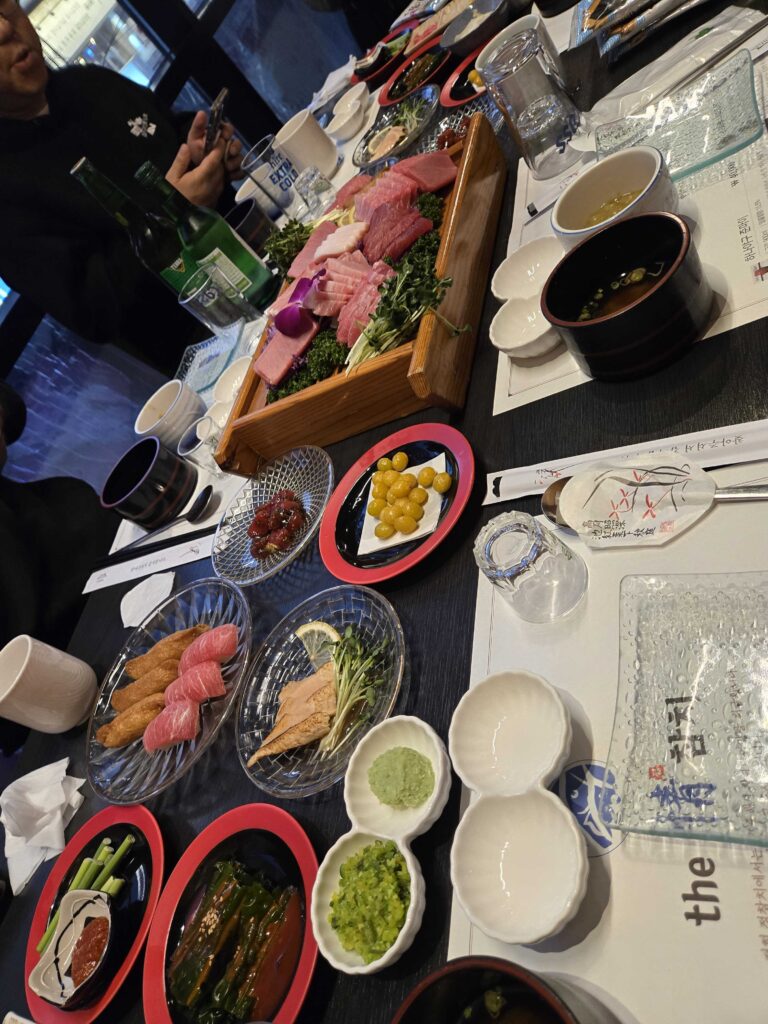
What Is Seongsoo Jeong Chamchi and Why Does It Stand Out?
First of all, chamchi (참치) means tuna in Korean, and at Jeong Chamchi, it’s the only thing on the menu worth obsessing over. Seongsoo Jeong Chamchi sits in the Seongsu area — not the trendy main drag, but tucked into the quieter side streets where the locals actually eat. The interior is low-lit, table spacing is generous, and the whole vibe leans toward a proper sit-down dinner rather than a quick bite. This is a place you go with people you want to spend time with.
However, what separates this from your average chamchi restaurant is the cut quality and the presentation. Korean tuna restaurants are common — there are hundreds of them in Seoul — but the range in quality is enormous. At the lower end, you get pre-frozen commercial tuna sliced thick and served without ceremony. At the higher end, you get what Seongsoo Jeong Chamchi does: premium cuts presented with thought, plated on wood boards with garnishes, and served in a way that actually honors the fish.
The Tuna Platter: Otoro, Chutoro, and Akami All on One Board
Naturally, the centerpiece of any meal here is the 모둠 참치회 — the mixed tuna sashimi platter. And it arrives like something that belongs in a photograph. Large pieces of pale pink 대뱃살 (otoro, fatty tuna belly) and deeper-red 중뱃살 (chutoro, medium fatty) are fanned across a wooden board, surrounded by shiso leaves, microgreens, and what I can only describe as an orchid that has absolutely no business being that purple. It’s dramatic. It earns the drama.
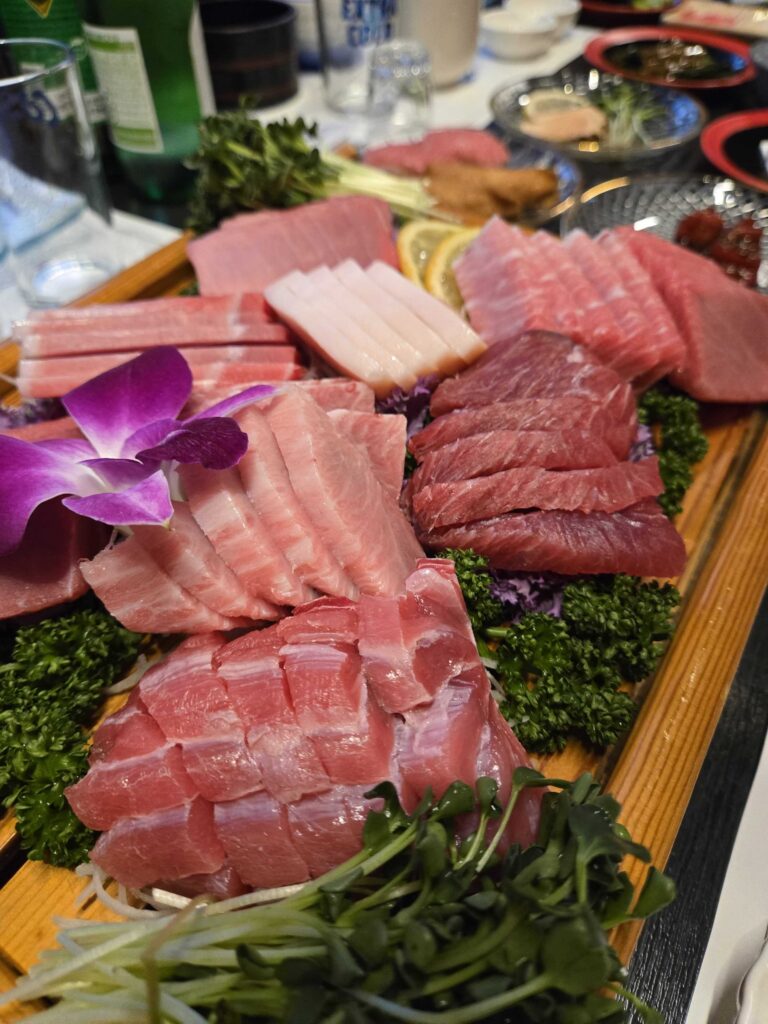
Above all, the otoro pieces were the ones I kept coming back to. Pale, marbled, with that fatty density that melts at body temperature before you’ve even finished chewing. The chutoro offered more bite — slightly firmer, the fat more evenly distributed, with a cleaner finish. And tucked in between were what appeared to be slices of 아카미 (lean tuna), deeper red and more assertive in flavor, a good counterpoint to the richness of the belly cuts.
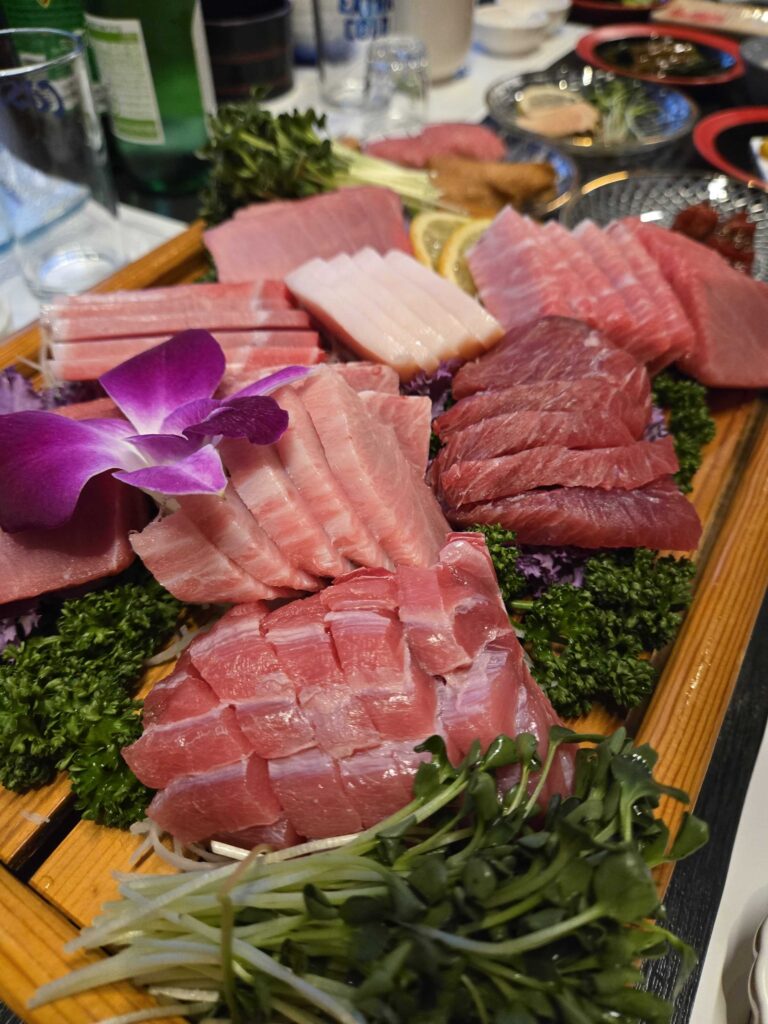
In my honest opinion, the otoro here competes with what I’ve had at much more expensive omakase restaurants in Seoul. The texture is right, the temperature is right, and the slicing is done with enough care that each piece holds together cleanly on the chopstick. That last part matters more than people realize — poorly sliced sashimi tears and loses texture. These didn’t.
Nigiri, Aburi, and the Individual Plates
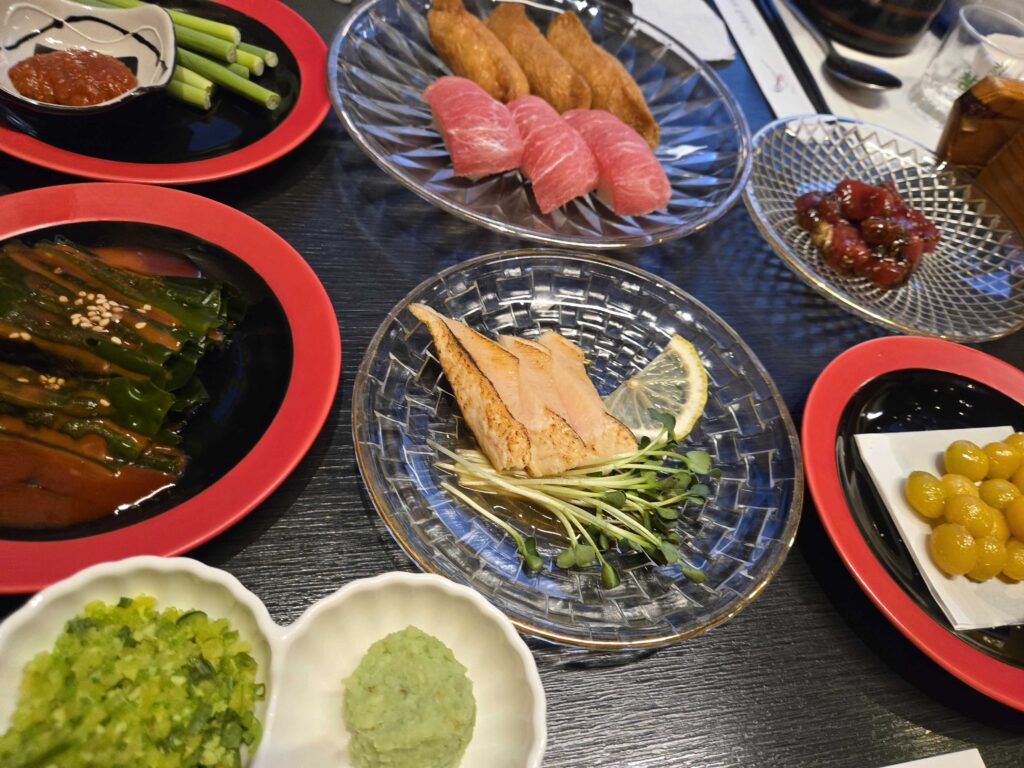
Furthermore, beyond the main platter, there are individual serving plates that arrive throughout the meal. We had tuna nigiri — two pieces, well-formed, clean rice-to-fish ratio — alongside what appeared to be a piece of 아부리 참치, lightly torched on top. The aburied piece had that slightly caramelized surface note that contrasts beautifully with the cool interior of the fish. A small mound of wasabi and some spring onion threads completed the plate without overcomplicating it.
Seongsoo Jeong Chamchi’s Side Dishes and Accompaniments
Good sashimi restaurants in Korea live and die by their accompaniments, and Jeong Chamchi puts real thought into the surrounding elements. There was a small bowl of what looked like 참치 타다끼 — lightly seared tuna, dressed with a ponzu-style sauce — alongside marinated cherry tomatoes, a few pieces of pickled daikon-style radish, and something I can only describe as yellow mochi balls that were more textural surprise than flavor statement. Everything on the table had a reason to be there.
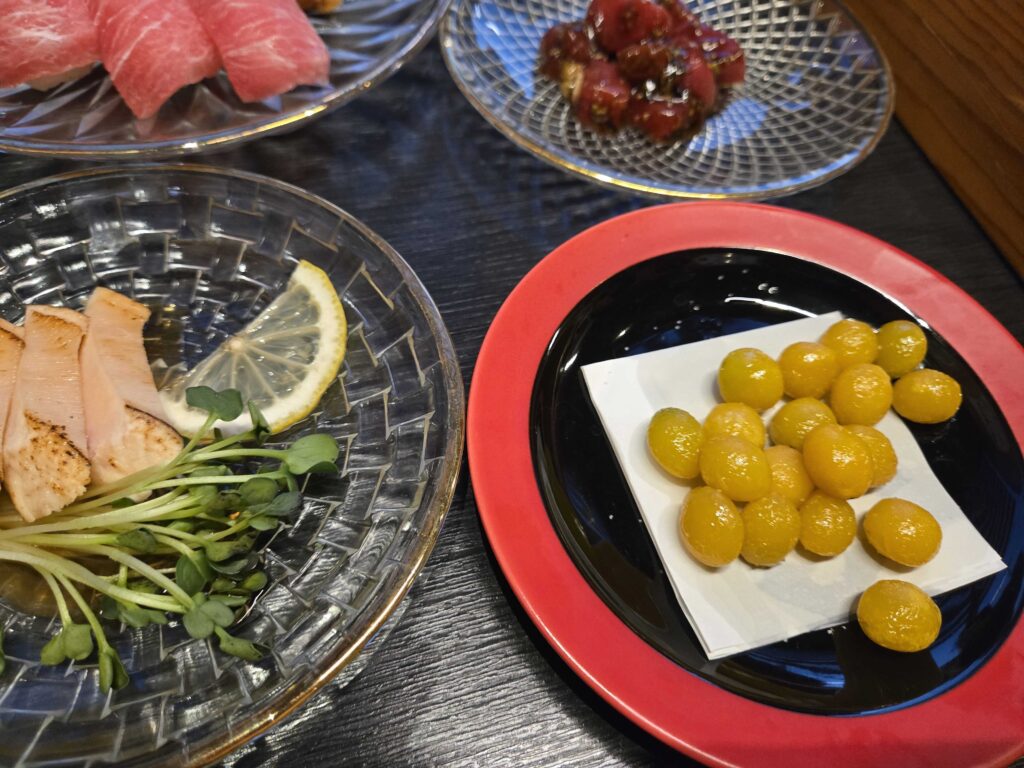
Additionally, there was inari sushi — the sweet fried tofu pocket filled with sushi rice and topped with a slice of tuna — which served as a nice palate break between rounds of richer cuts. The sweetness of the inari against the savory tuna is a classic pairing that works, and it works here.
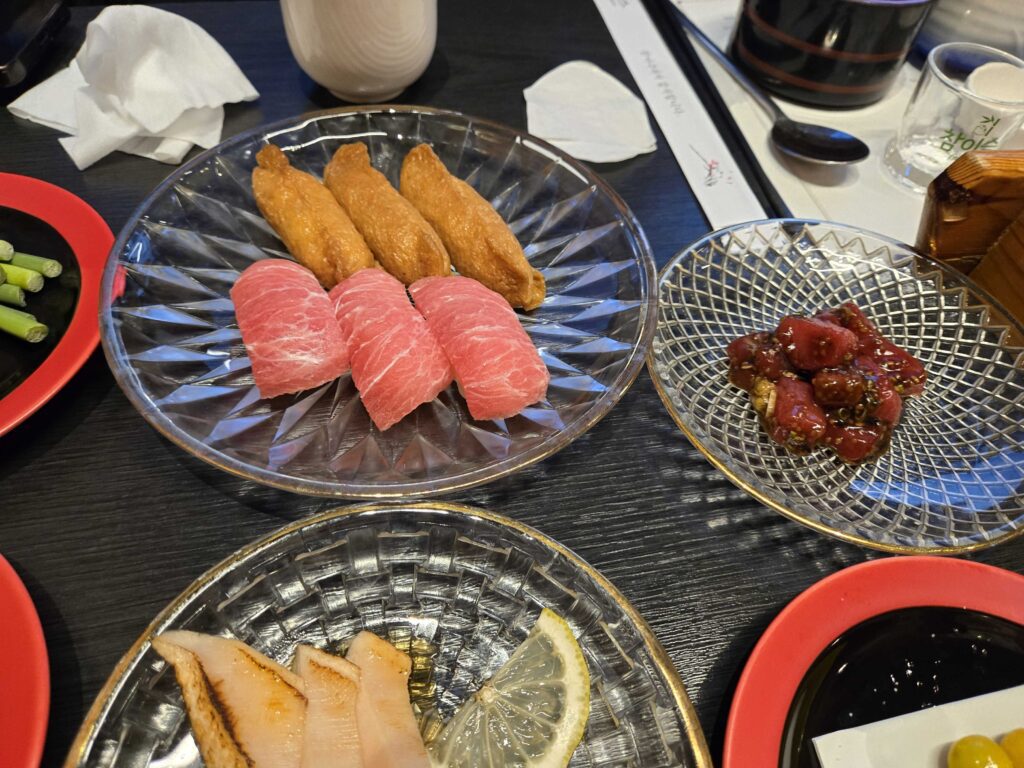
Seongsoo Jeong Chamchi’s Banchan and Table Setup
Overall, the full table setup at Jeong Chamchi is generous without being overwhelming. The banchan spread included pickled cucumber and seaweed, radish kimchi, gari (pickled ginger), edamame, sliced daikon, and a few other small dishes that rotated through the meal. The miso soup was clean and properly seasoned — not the watery afterthought you sometimes get as a side. A bottle of Chamisul soju was at the table, which is the correct accompaniment for this kind of meal and requires no further explanation.
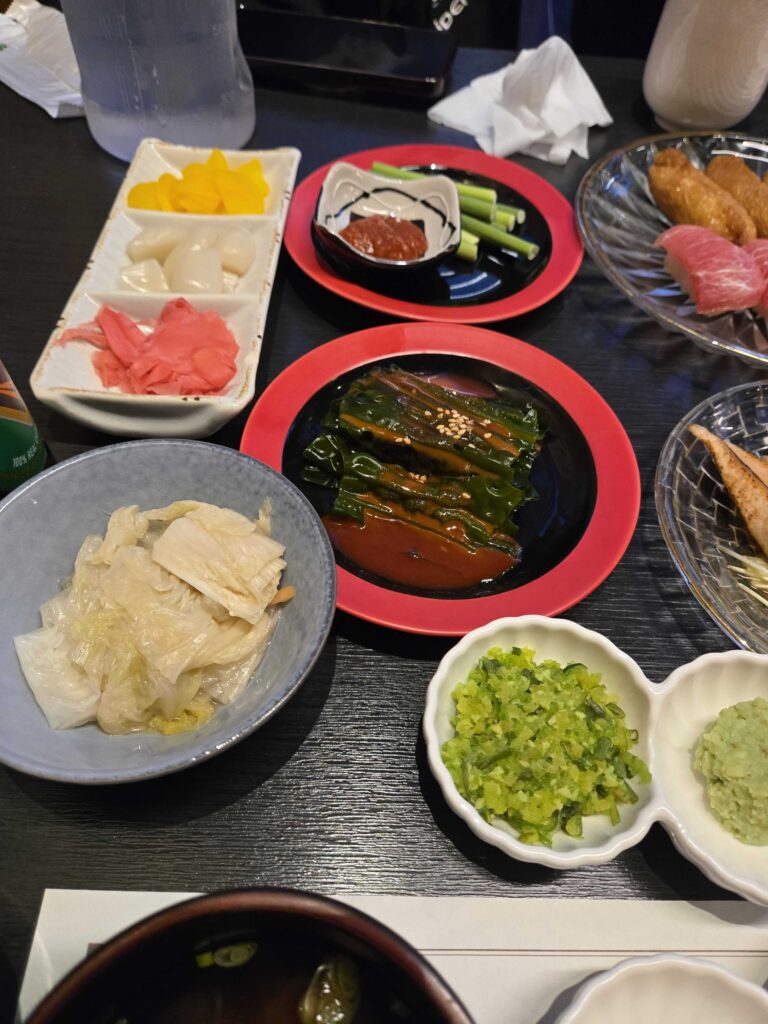
As a result, one small detail worth noting: the glassware and dishware at Jeong Chamchi is noticeably better than average. Cut crystal-style glass plates for the individual portions, proper wooden serving boards for the main platter, lacquered bowls for the miso. These details aren’t accidental — they signal that the kitchen is thinking about the full experience, not just the food in isolation.
The Atmosphere: Dinner Done Right in Seongsu
Admittedly, Seongsu has a reputation for being trendy, which can sometimes translate to places where the aesthetic outpaces the food. Jeong Chamchi is the opposite. The interior is clean and atmospheric — dark tones, low lighting, the kind of space that makes a group dinner feel like an event — but it never distracts from what’s on the table. The service is attentive without being overbearing. Dishes arrive at a reasonable pace. Nobody rushes you.
Moreover, we were at the table with a group of four, which turned out to be the right number for this kind of meal. The platter is designed for sharing, the conversation flows naturally when you’re all eating from the same board, and by the time the soju level in the bottle had dropped, nobody wanted to leave. That’s a good sign.
Getting to Seongsoo Jeong Chamchi
In terms of location, the restaurant is located in Seongsu-dong, Seoul — one of the city’s most interesting neighborhoods right now, sitting just across the Han River from Gangnam and accessible via the Seongsu station on Seoul Metro Line 2. If you’re planning a Seongsu evening, Jeong Chamchi makes a compelling anchor for the meal portion of the night before exploring the area’s coffee and bar scene.
📍 Jeong Chamchi (정참치) — Seongsu-dong, Seoul
성수동, 서울특별시
View on Google Maps →
Final Verdict: Why Seongsoo Jeong Chamchi Is Worth Planning Around
Certainly, there are better-known tuna restaurants in Seoul. There are certainly more expensive ones. But Jeong Chamchi earns its place at the table — literally — through cut quality, presentation, and a dining experience that feels genuinely considered without being stiff. The otoro is the standout, the full platter is the move, and the combination of sharp glassware, good banchan, and a proper bottle of soju makes the whole thing feel like more than just dinner.
If you’re in Seongsu-dong and you’re deciding where to eat — or if you’re building an itinerary around the neighborhood and need an anchor restaurant — Jeong Chamchi is a strong answer. The kind of place that keeps the standard high in a neighborhood that’s still figuring out what kind of food scene it wants to be, and gives you every reason to believe the answer is going to be a good one.
Also Worth Reading
- Best Yellowtail Sashimi in Seoul: Garak Market Raw Fish Center
- Sushi Ian Wirye: Affordable Conveyor Belt Sushi in Seoul
Seongsoo Jeong Chamchi
★★★★★ 4.6 / 5
📍 Seongsu, Seoul | 🍽️ Japanese | 💰 ₩₩₩
Premium tuna sashimi restaurant in Seongsu, Seoul with fresh cuts and a refined dining experience.