
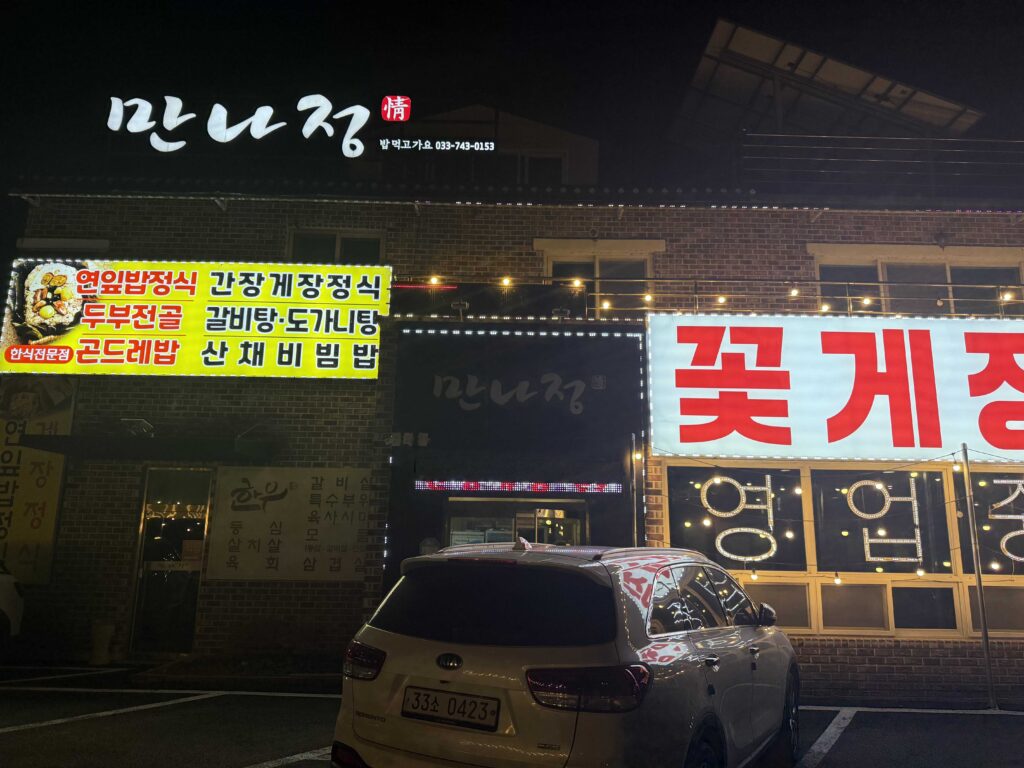
We’d just finished a full day of skiing at Oak Valley Resort and were properly wrecked. Legs heavy, lungs wide open from cold mountain air, cheeks still red from the wind. Absolutely starving in that specific post-exercise way where only a proper full meal will do. Someone in the group mentioned they’d spotted a place on the way in — a restaurant called 만나정 (Mannajeong). We didn’t debate long. Thirty seconds of deliberation. A quick drive through the dark Wonju countryside. And then we were standing outside a warmly lit building with a hand-painted sign. The menu board made the decision for us. Samgyeopsal. After skiing. Yes. Always yes.
What Is Mannajeong (만나정)?
Mannajeong Wonju is a Korean BBQ and traditional home-cooking restaurant in Jijung-myeon, Wonju — just a short drive from Oak Valley Resort. The name carries real meaning. “만나” means “to meet” in Korean, and “정” (情) is that untranslatable concept of deep emotional connection and warmth between people. Put them together and you have something like “the place where you meet with heart.” It’s a name that sets an expectation, and in our experience, the restaurant actually delivers on it.
What struck me immediately was how the place carried itself. No flashy branding, no QR code menus with stock photography. Just a proper restaurant that knows its regulars. One that doesn’t need to perform for newcomers. The exterior at night has real character. Warm indoor glow spills through the windows. A colorful banner advertises 꽃게장 (marinated crab). That particular energy of a local restaurant busy on a weeknight — it was all there. We walked in confident we’d made the right call.
The Menu — More Than Just BBQ
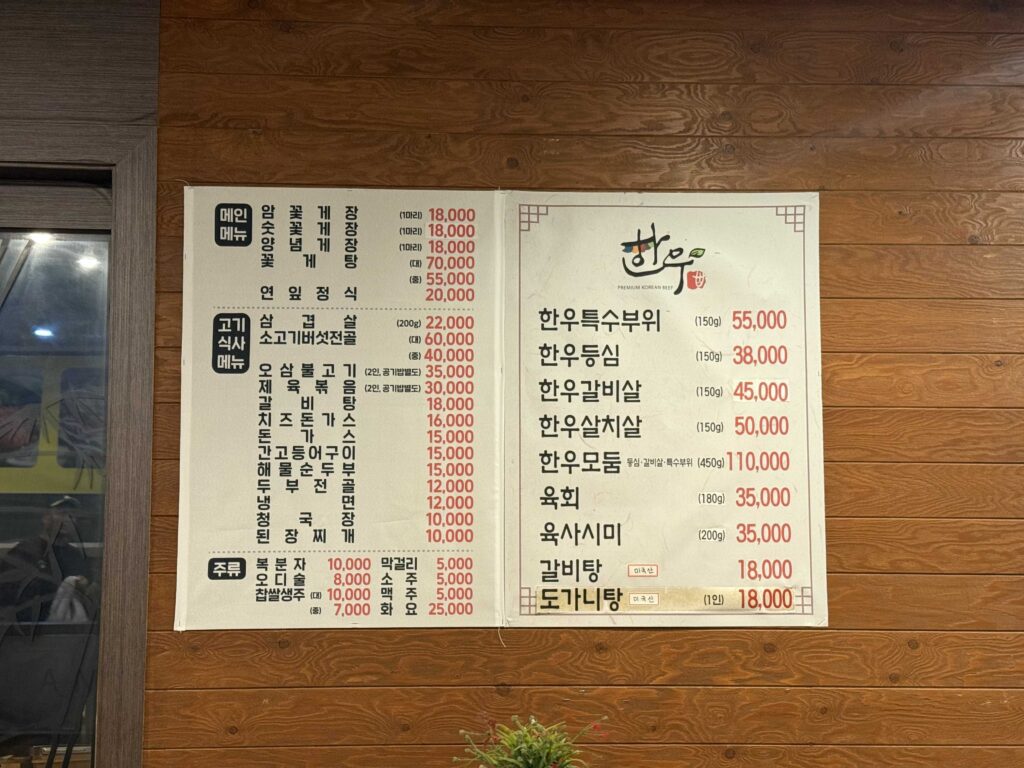
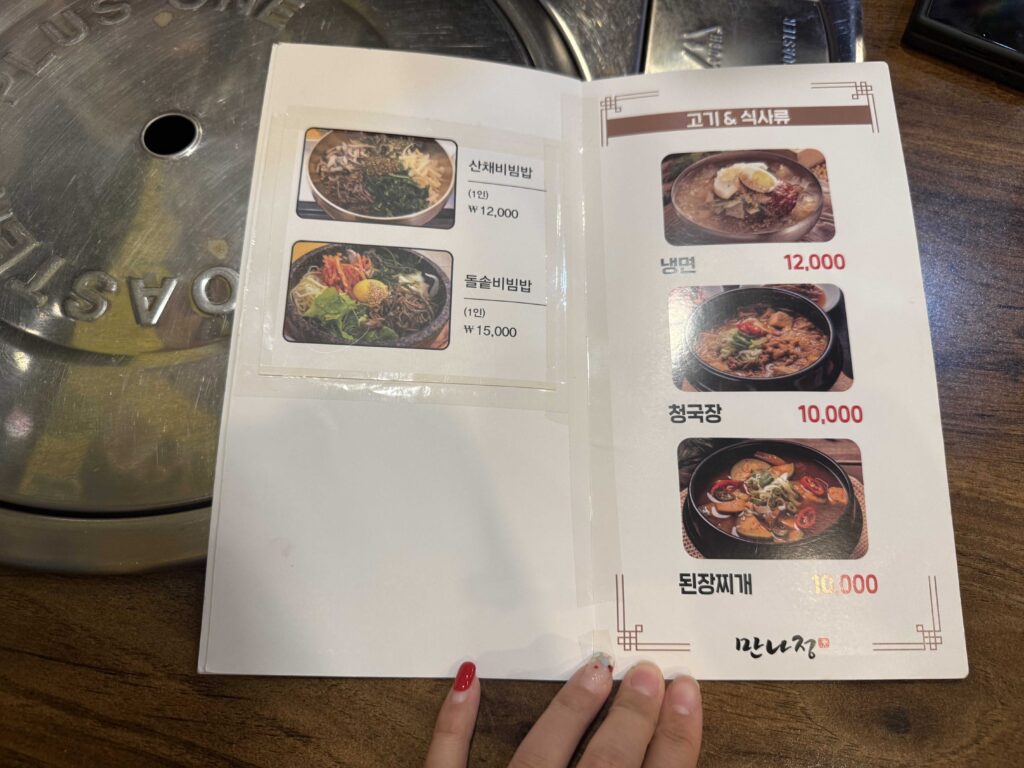
The menu at Mannajeong is genuinely extensive, and it takes a moment to work through properly. More than just a grill spot, this place covers a wide range of Korean dining options. Exactly what you want with a mixed group. Some people after a ski day want to sit by a grill; others want a bowl of something hot and restorative. Mannajeong has both covered.
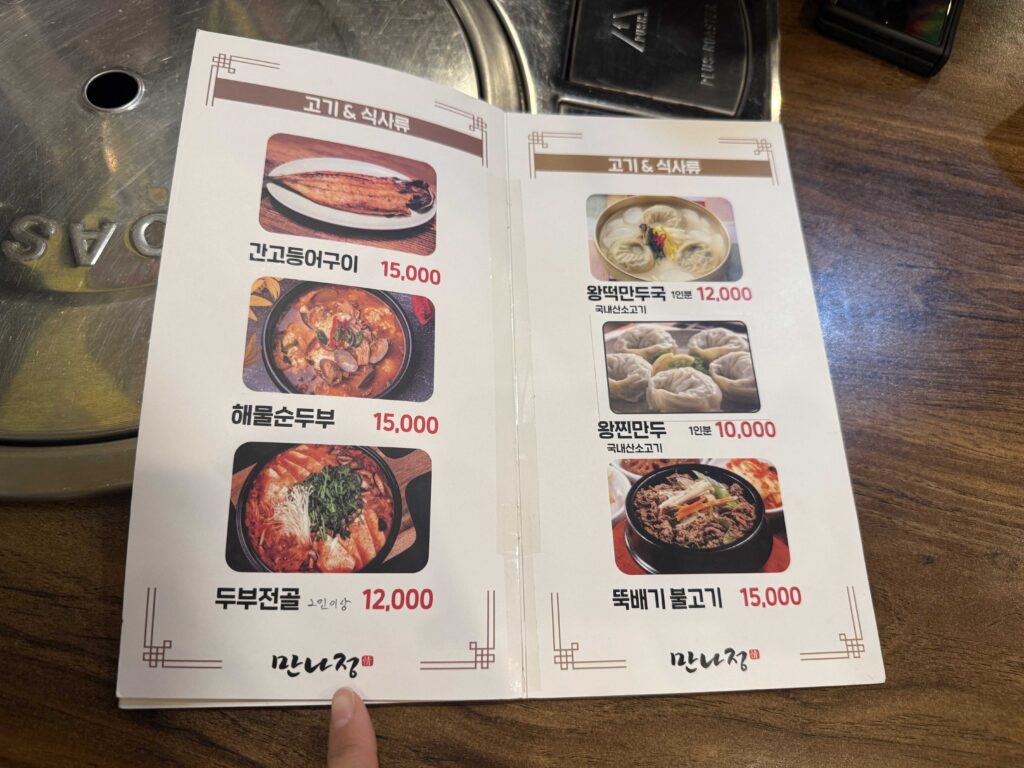
The first spread covers the non-BBQ options: 간고등어구이 at 15,000 won, 해물순두부, 팔빈만두, 두부전골, and other home-style dishes. Solid options for anyone not in the mood to grill. Prices hovered around 10,000–15,000 won for most items, which for this region and quality level is genuinely reasonable.
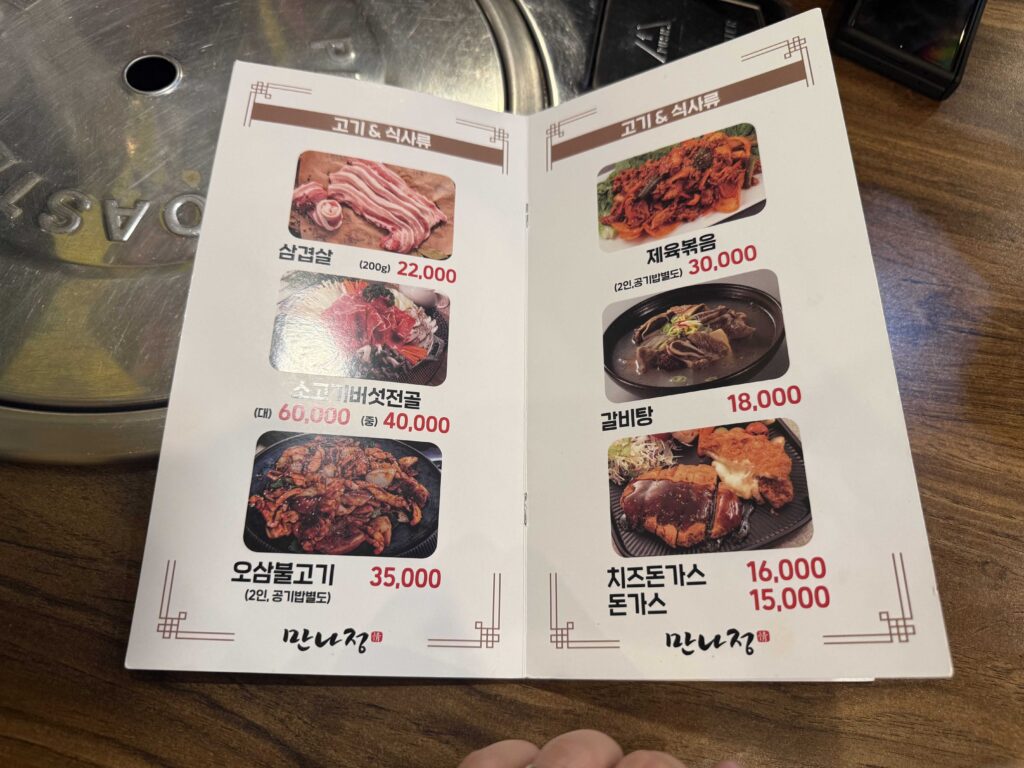
Turn the page and the BBQ section opens up: 삼겹살, 제육볶음, 곱창전골, 갈비탕 at 18,000 won, 도가니탕, 오삼불고기, 치즈돈가스. Then the premium 한우 (Hanwoo beef) section at the top. 한우특수부위 at 55,000 won, 한우등심 at 55,000, 한우모둠 at 110,000 per portion. The range is genuinely impressive. Casual pork belly grill food on one end, premium Hanwoo beef dining on the other. Whether you’re on a budget or want to push the boat out, Mannajeong has something for you.
The Space — Built for Groups and Long Meals
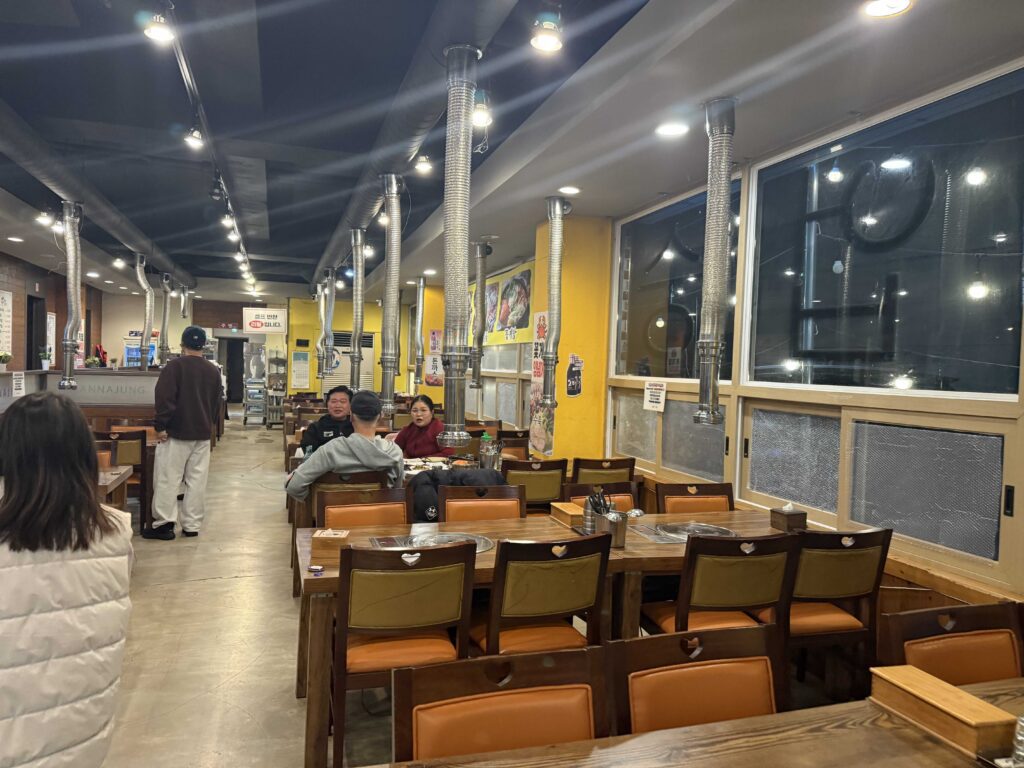
Walking inside, the space opens up more than you’d expect from the exterior. High ceilings, wide tables, good ventilation hoods above each grill table — this is a restaurant that was clearly designed with groups in mind. Post-ski crews, family dinners, company outings. The layout handles volume without feeling chaotic. No cramped corners, no awkward shared walls between tables. Just space to eat and talk and stay as long as you want.
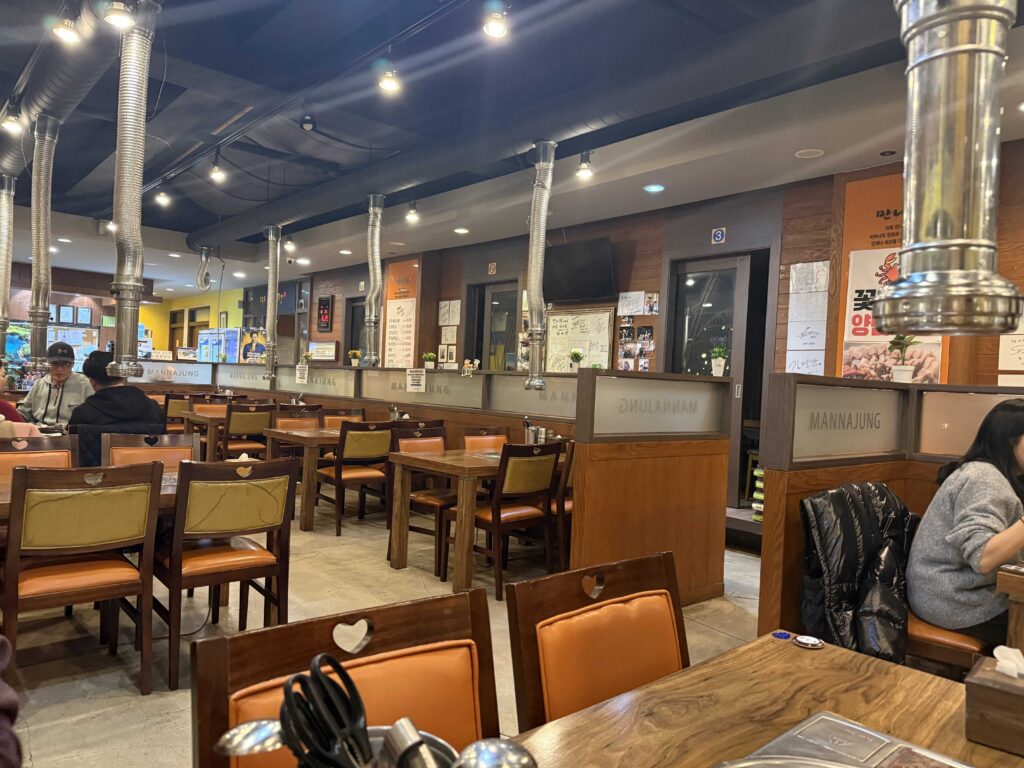
I always pay attention to ventilation in Korean BBQ restaurants because it genuinely makes or breaks the experience. Poor ventilation means you leave smelling like everything you ate — your hair, your jacket, everything. Good ventilation means you can actually relax into the meal without that concern sitting at the back of your mind. Mannajeong has proper overhead exhaust at every grill table. That’s a baseline requirement that some places still manage to get wrong. Here, it’s done right. We settled in, ordered, and started on the banchan.
The Banchan and Starters
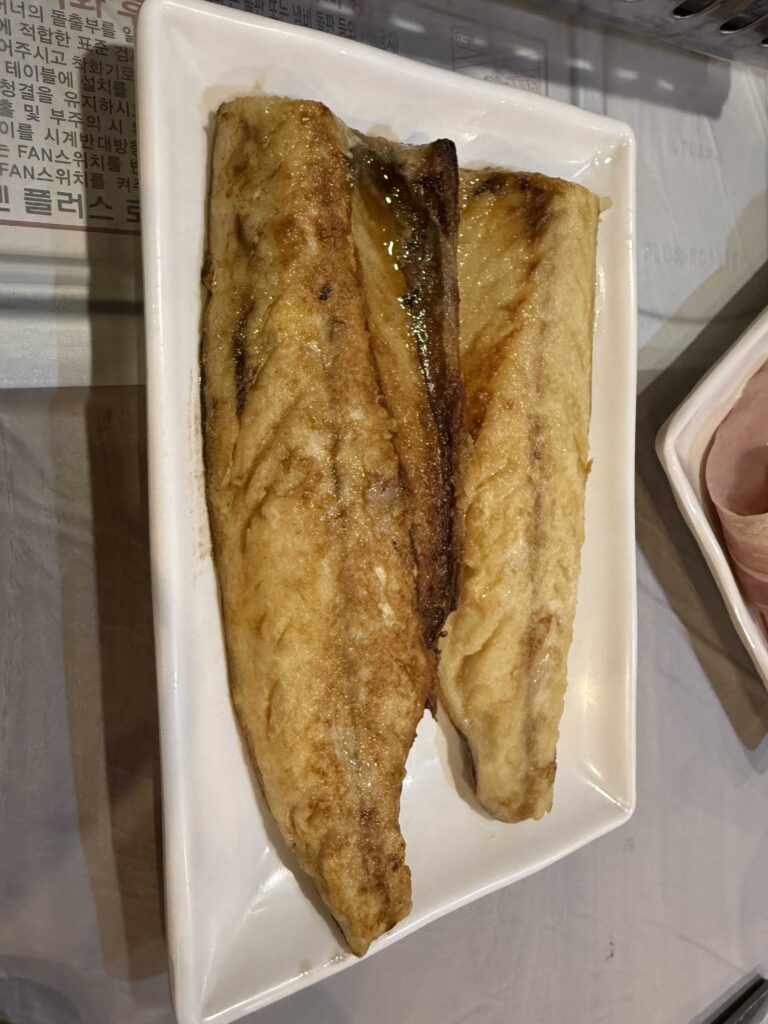
Before the pork belly hit the grill, the table was already filling up. A plate of 간고등어 — grilled salted mackerel — arrived first, dark and slightly charred on the outside, the flesh inside properly seasoned from the salt. This is humble food done correctly: you eat it slowly, pulling the fish apart with chopsticks, pairing each bite with a spoonful of plain rice. The ratio of salt to fish was exactly right — enough to season the flesh through, not enough to overpower it. It sounds simple because it is simple. But simple done well is the hardest thing to consistently execute, and this was executed well.
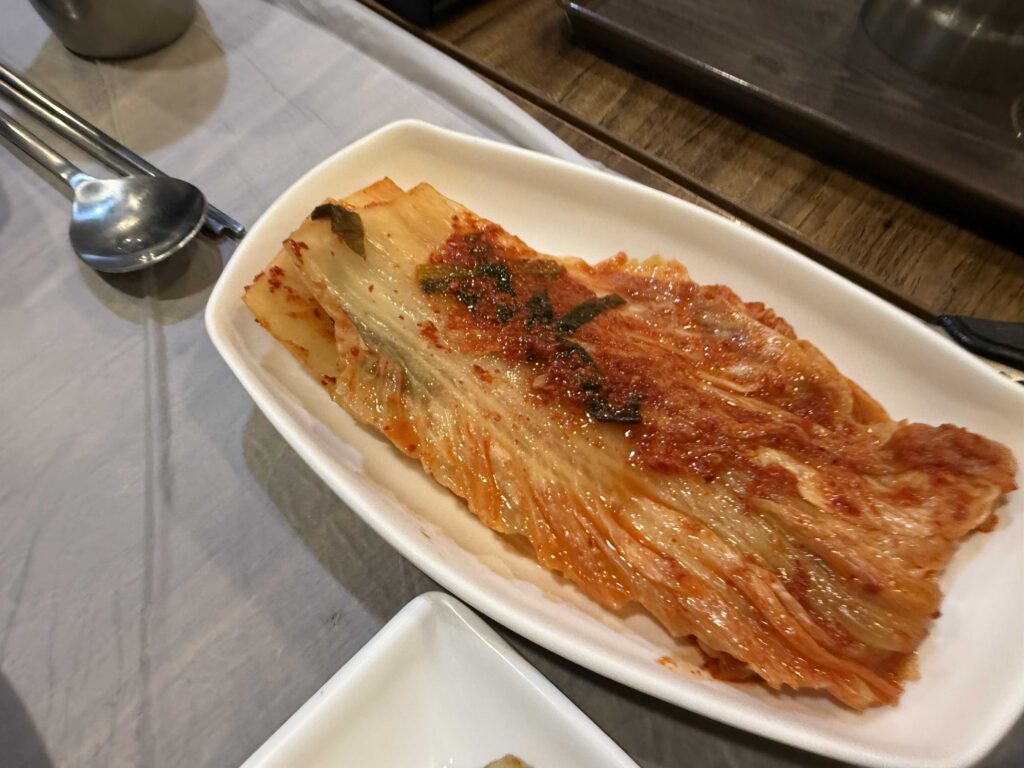
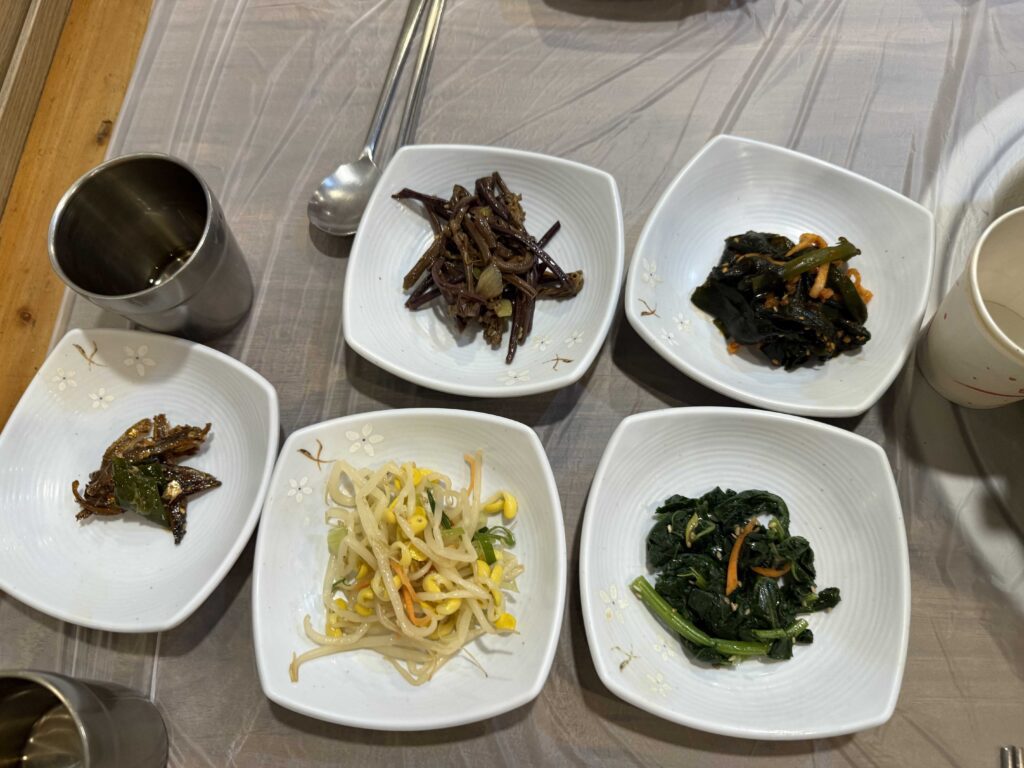
The banchan spread was solid throughout: fresh kimchi with a good depth of fermentation, seasoned bean sprouts with a clean sesame finish, seasoned spinach, braised dried anchovies with a gentle sweetness. Everything tasted house-made and prepared that day. One of the quieter ways to evaluate a Korean restaurant is to pay attention to whether the side dishes taste alive or flat. Here, they were alive — the kind of banchan that makes you keep reaching even when you’re trying to pace yourself for the main event.
The Samgyeopsal (삼겹살) — The Main Event
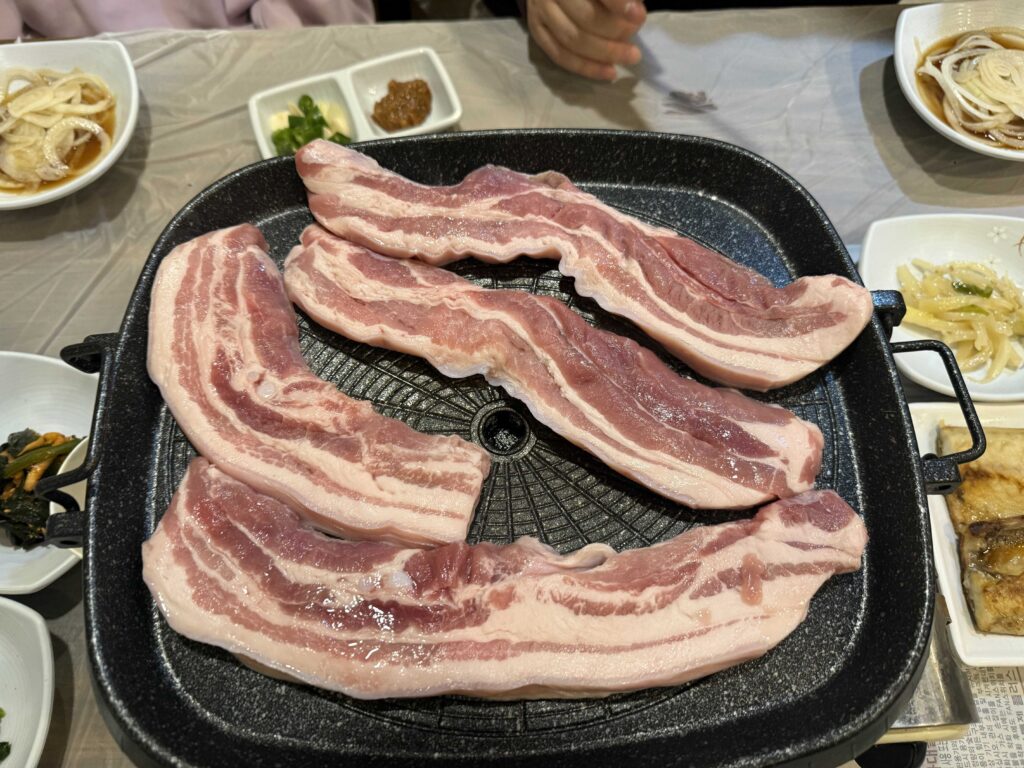
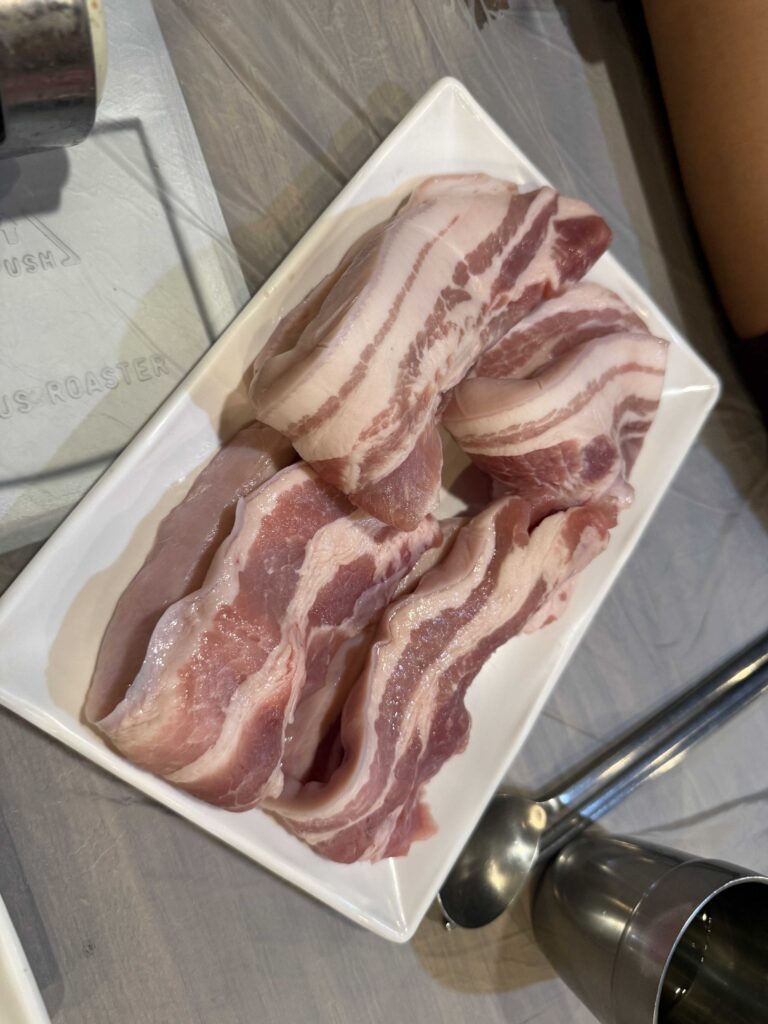
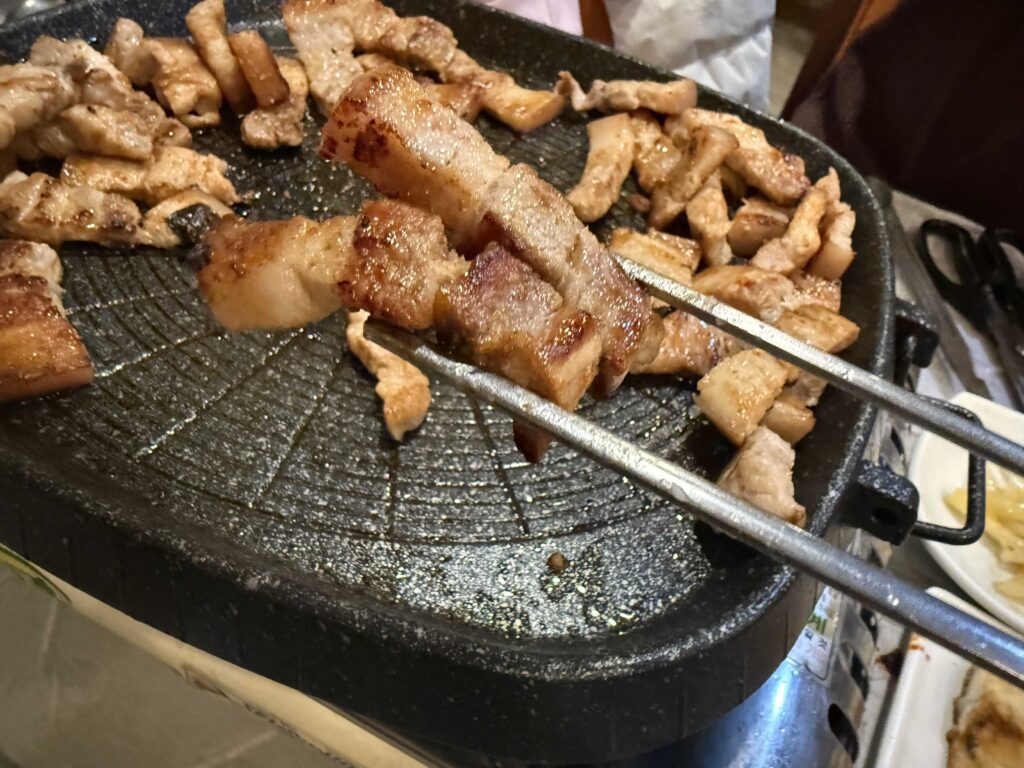
Then the pork belly arrived. Thick-cut raw slices of 삼겹살 — three-layer pork belly — laid out on a plate beside the already-heated grill. The marbling was visible and generous, the thickness consistent across every piece. This is what you want to see before you start cooking: raw pork belly that looks like it came from somewhere that cared about the sourcing, not the cheapest available option. We put the first few pieces on the grill and watched them go.
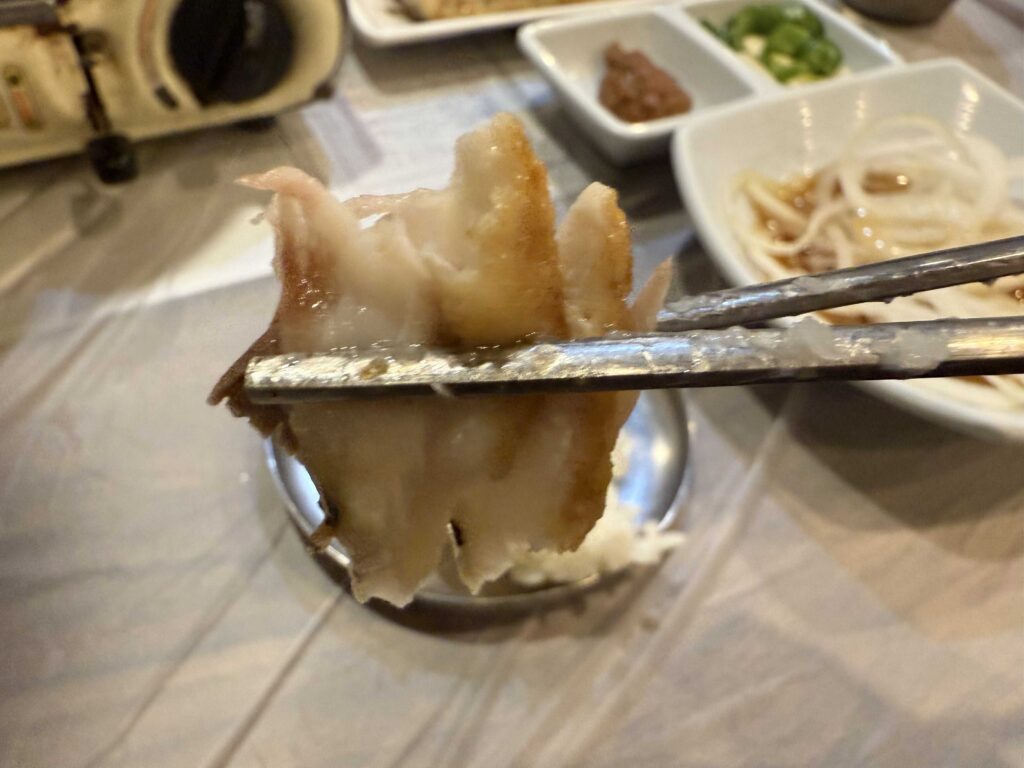
Samgyeopsal sounds simple — it’s just grilled pork belly — but there’s real variation in how well it’s executed. Cut quality matters first. Fat-to-lean ratio matters just as much. Grill temperature and timing both matter more than people give them credit for. At Mannajeong, the staff came over early to help manage the grill, adjusting the heat and turning pieces at the right moment. That kind of table-side attention means the meat gets cooked properly — evenly rendered fat, golden-brown exterior, interior that’s cooked through without being dry. It’s a detail that separates restaurants that take the grill seriously from those that just put raw meat on a table and walk away.
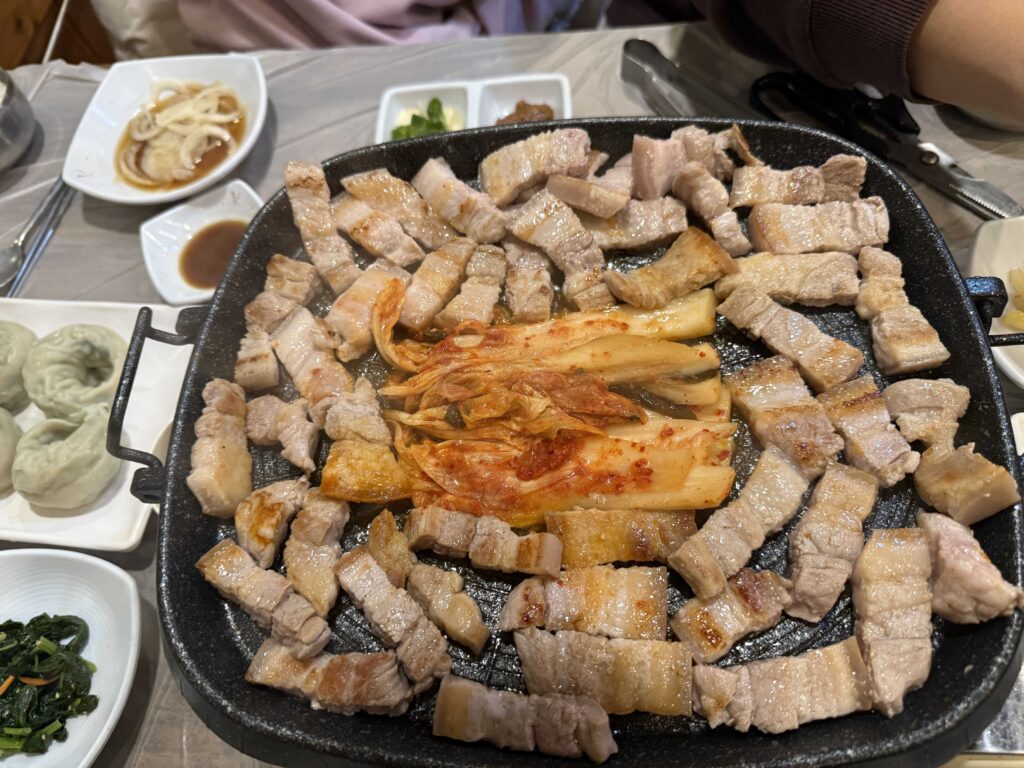
Watching It Cook — The Best Part of Korean BBQ
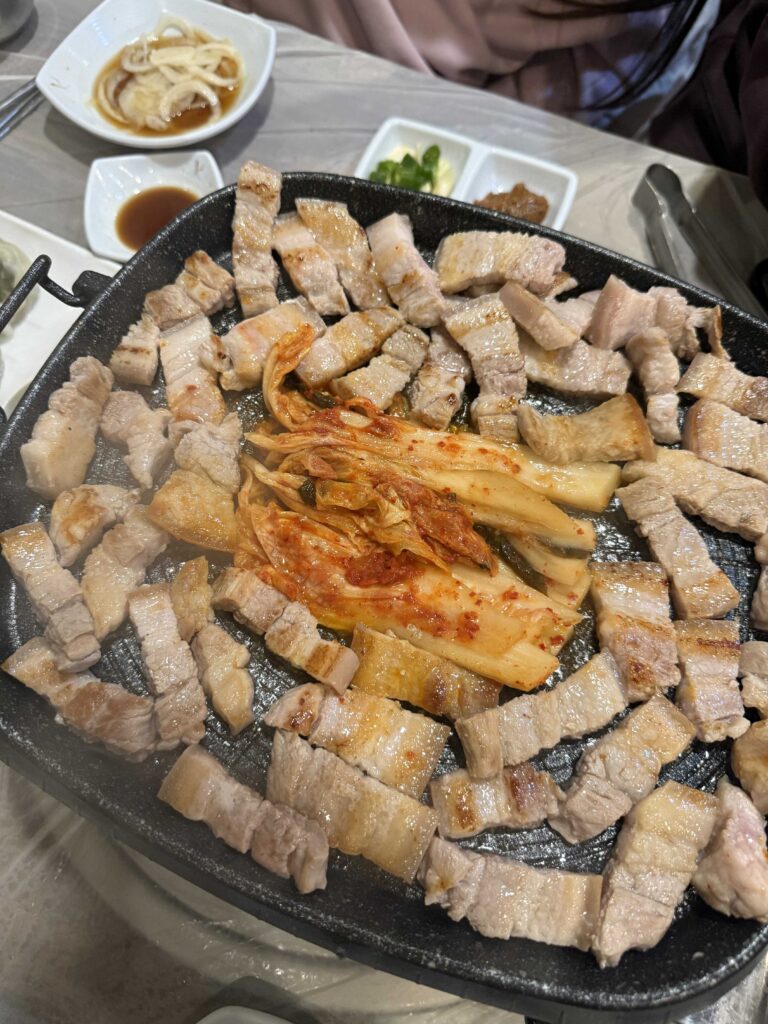
There’s a specific, meditative pleasure in watching samgyeopsal cook on a table grill. The fat rendering slowly, the edges beginning to crisp, the sizzle intensifying as each slice curls slightly from the heat. Someone always takes on the unofficial role of grill manager — turning pieces with tongs, trimming the cooked edges with scissors into bite-sized pieces, moving slices off the hottest part of the grill when they’re done. It’s collaborative eating in the most natural sense. Nobody assigns the role. It just happens. And somehow, every group finds its own rhythm around the grill.
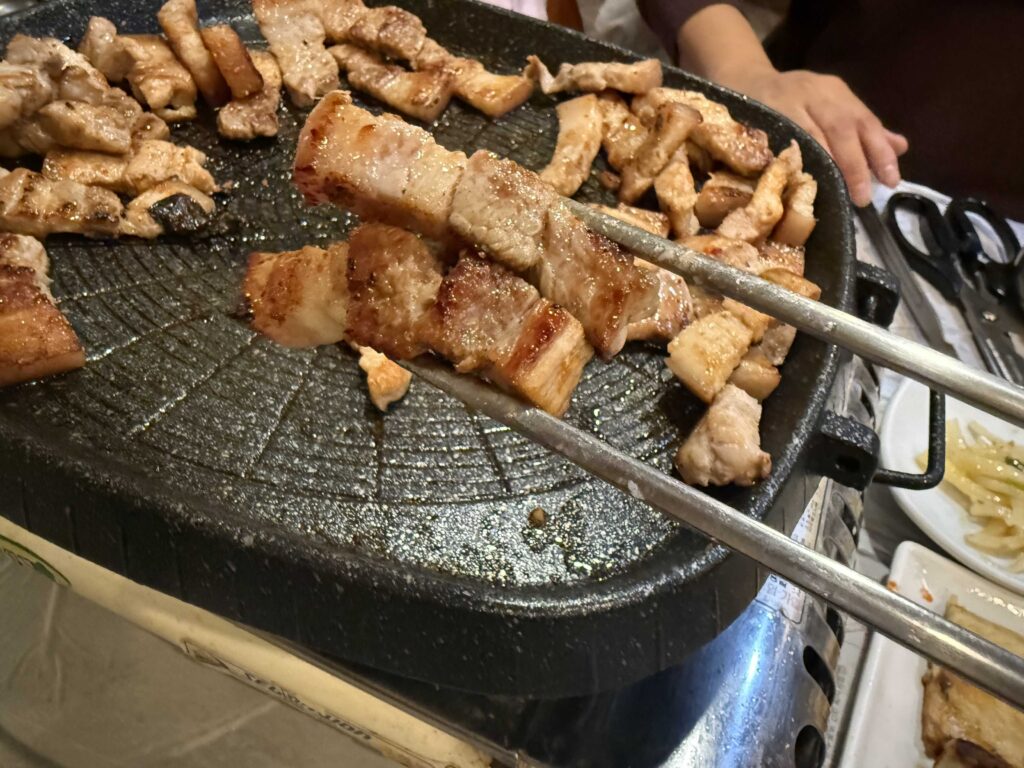
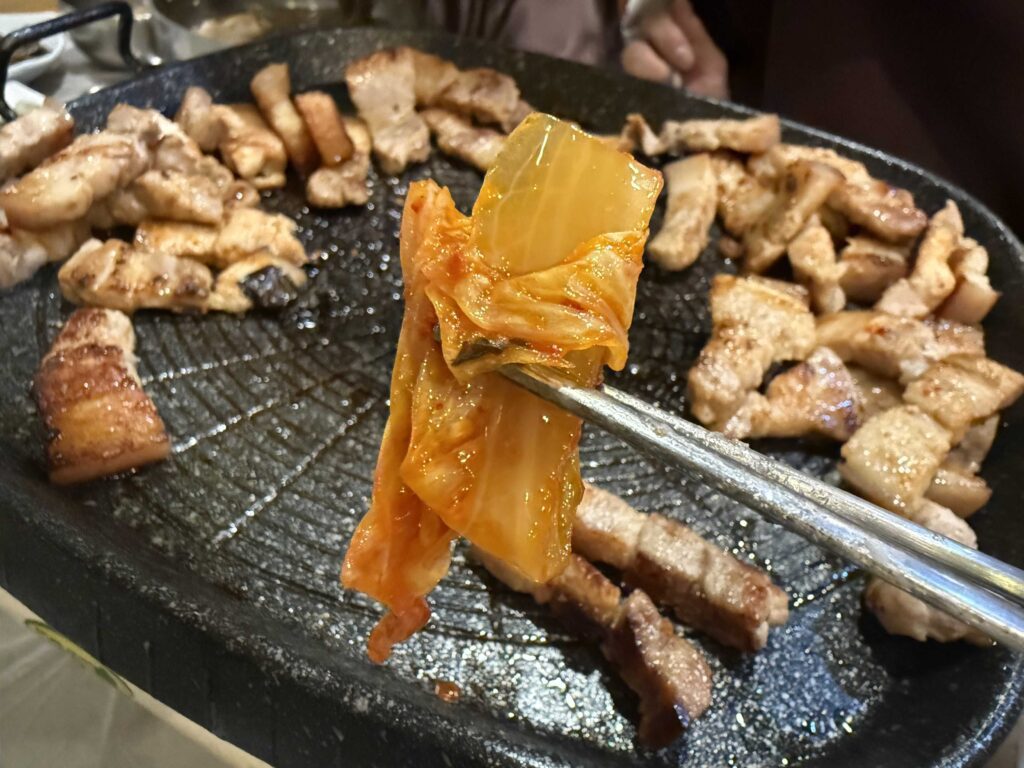
At Mannajeong, they brought kimchi to the grill alongside the pork belly — which is exactly how it should be done. Grilled kimchi and samgyeopsal is one of those combinations that sounds almost too obvious until you actually try it. The fermented sourness of the kimchi caramelizes slightly as it hits the hot grill surface, developing a deeper, more complex sweetness. Paired with the fat of the pork, it’s the kind of flavour pairing that feels inevitable once you’ve experienced it. We ordered a second round of pork. Then maybe considered a third. It was that kind of night.
Dumplings — A Side Order Worth Getting
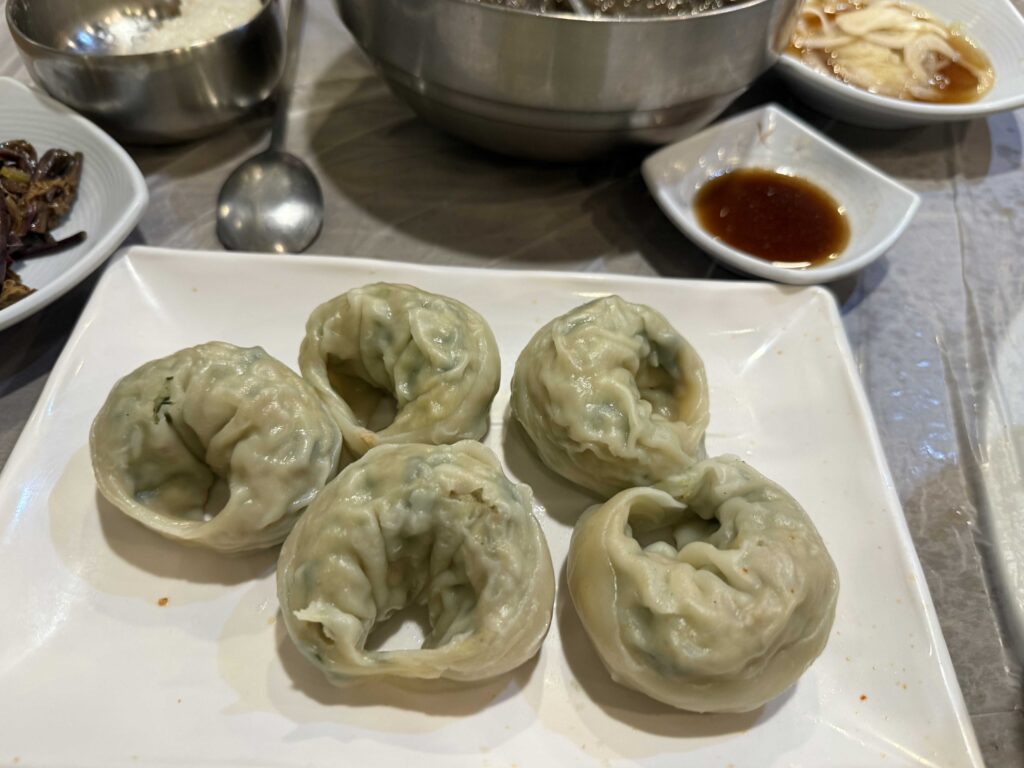
We also ordered a plate of 만두 (dumplings), which arrived steamed and slightly translucent, sitting in a shallow puddle of their own cooking liquid. Big, round, and substantial — not the delicate pleated type but the hearty Korean homestyle variety. The filling was generous, the wrapper had a good chew without being gummy, and dipped into a mix of soy sauce and vinegar, each dumpling was essentially a complete small meal. Honestly one of the better dumpling portions I’ve had at a Korean BBQ restaurant. They could easily have treated this as an afterthought — a menu filler — and no one would have pushed back. But they didn’t. Clearly, those dumplings were made with the same care as everything else on the table.
The Signature — 꽃게장 (Marinated Raw Crab)
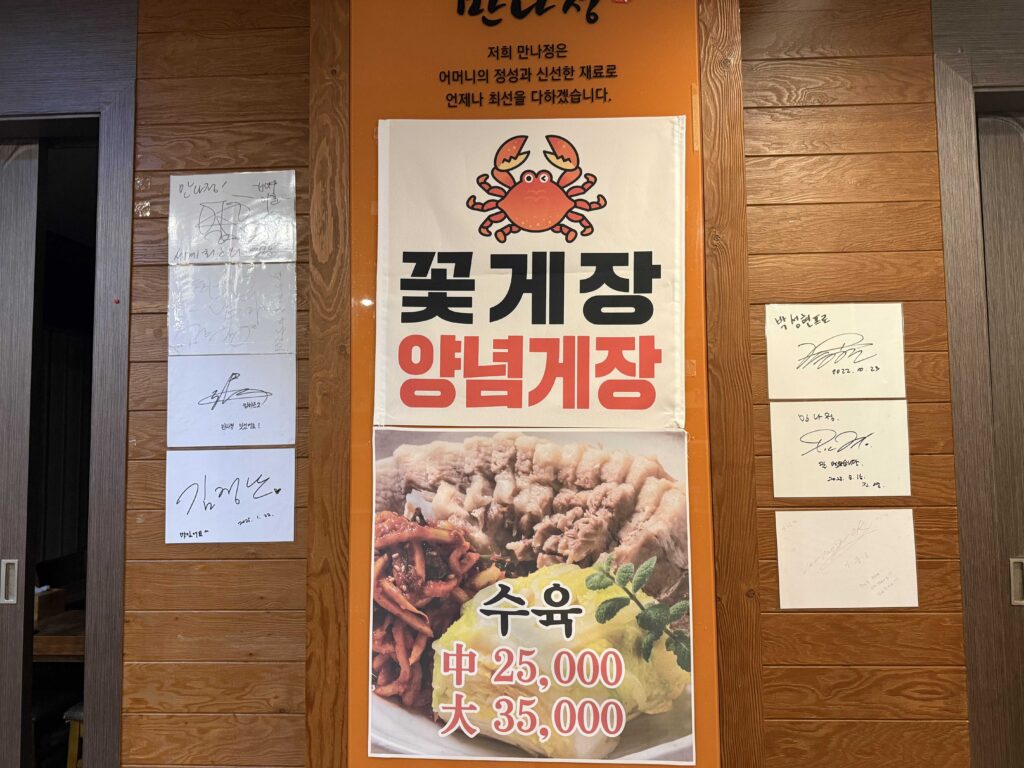
That banner outside wasn’t decoration — 꽃게장 (kkotgejang), raw marinated flower crab, is clearly one of Mannajeong’s signatures. The promotional display inside the entrance shows it front and center: fresh crabs marinated in either soy sauce (간장게장) or spicy chili sauce (양념게장), priced at 25,000–35,000 won. Gejang is a dish that divides people sharply — raw crab marinated in soy until it’s silky and intense — but for those who appreciate it, there’s genuinely nothing else like it in Korean cuisine. It’s the dish where you eat a bowl of rice just to have something to pour the sauce over. They call it “rice thief” (밥도둑) for a reason.
We didn’t order the crab on this visit — deep in samgyeopsal mode, no regrets — but it is absolutely top of the list for the next trip. If you’re specifically the kind of food traveller who seeks out fermented and raw seafood preparations, the gejang alone is worth building a visit around. That’s not an easy dish to do well, and the fact that Mannajeong has made it a centerpiece of their identity suggests they’re doing it right.
The Wall of Signatures — A Restaurant With Real History
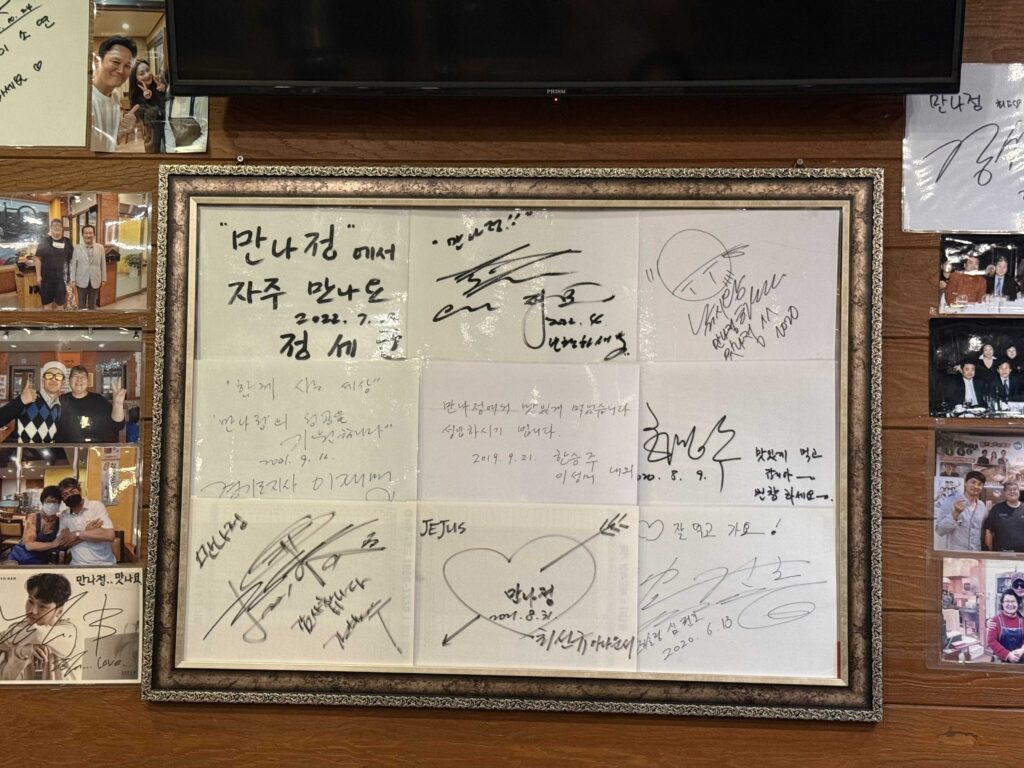
Near the entrance, there’s a framed wall covered in handwritten messages, photographs, and signatures — the kind of thing you only see at restaurants that have been around long enough to accumulate a genuine following. This isn’t a wall that was put up for atmosphere. It grew organically, one signature at a time, from people who came once and came back, or came back and brought others. That kind of thing can’t be manufactured or staged. It’s just what happens when a restaurant consistently does right by the people who walk through the door. This restaurant has clearly been doing that for a while.
Getting to Mannajeong Wonju — Location Near Oak Valley Resort
Mannajeong Wonju sits at 월송석화로 604, Jijung-myeon, Wonju — right at the second entrance to Oak Valley Resort. If you’re staying at the resort or visiting for skiing, hiking, or a day trip, this restaurant requires almost no detour. It’s positioned as naturally as possible for anyone already in that part of the world. No navigating into town, no guesswork about hours. Drive out, look for the sign, walk in.
From Seoul, Wonju is roughly 1.5 to 2 hours by car depending on traffic — a comfortable enough drive to make it a full day out. Oak Valley is a well-established destination for skiing in winter and outdoor activities through the warmer months. Combining the resort with a dinner at Mannajeong makes the trip feel genuinely complete in a way that hotel restaurant food never quite manages. There’s also something to be said for eating where locals eat, in a place that has actual history behind it. It changes the texture of the experience.
Find it on Google Maps here: 만나정 — Google Maps. Tel: 033-743-0153. Worth saving the number — the place does fill up, particularly on weekends and ski season evenings.
Final Thoughts — A Dinner Worth Planning Around
Mannajeong is exactly the kind of restaurant that makes a good trip into a memorable one. Not because it’s the most famous place or the trendiest concept — but because everything it does, it does with care, consistency, and what feels like genuine investment in the people sitting at its tables. Samgyeopsal was excellent. Banchan was house-made and thoughtful. The dumplings punched well above their weight. Mackerel was quietly perfect. And the whole experience of sitting around a grill with people you’ve just spent a day skiing with, eating until you can’t eat any more, is hard to put a value on.
The 꽃게장 and the Hanwoo beef sections are still waiting for the next visit — which, given how the first one went, isn’t going to be a long wait. Places like Mannajeong are the reason that food travel in Korea continues to reward people who look past the obvious. The best meals aren’t always in Seoul or in restaurants with reservation lists. Sometimes they’re in a warmly lit building on a dark Wonju road, after a day on the mountain, with a grill going and good company around the table. That’s travel worth repeating.
Also Worth Reading
- Deulkkot Garden (들꽃가든): Authentic Korean Home-Style Dinner Near Oak Valley Resort
- Ganghyeon Bakery (간현제빵소): The Hidden Gem Bakery Cafe Near Oak Valley Resort
- Oak Valley Resort Breakfast Buffet: Full Review
Mannajeong (만나정)
★★★★★ 4.6 / 5
📍 Wonju, Gangwon-do | 🍽️ Korean BBQ | 💰 ₩₩₩
Top Korean BBQ samgyeopsal and crab restaurant near Oak Valley Resort in Wonju — hearty and perfect after a day outdoors.