
If you’ve ever done the Sokcho trip — the kind where you wake up early, drive down the coast, and tell yourself you’re going to try everything — then you already know how overwhelming the seafood scene around Daepohang can get. Every other building is a hoetjip. Every sign promises the freshest catch. But after a few visits to this harbor, I’ve started going back to one place specifically, and I keep bringing people there without hesitation: Daepohang Meoguri Hoetjip (대포항 머구리 횟집).
It sits right in the thick of the Daepohang area in Sokcho, Gangwon-do. The neon-lit sign at night is honestly hard to miss — “머구리집” glowing green, with a massive decorative crab hanging above the entrance like a warning that things are about to get serious. They’re open 24 hours, which, if you’ve ever found yourself craving raw fish at 2am after a long drive from Seoul, is a game changer.
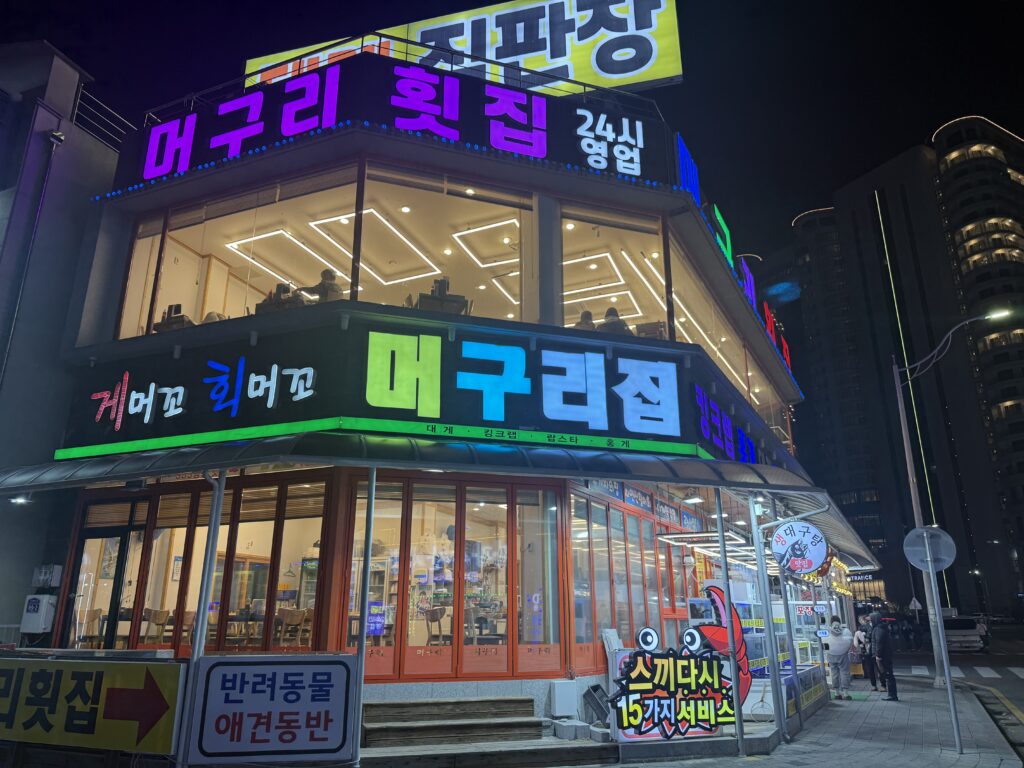
Finding the Place (And Why the Location Matters)
Daepohang is technically a working fishing port, which means the seafood here doesn’t travel far. Most of the flatfish, daege (대게), and wild-caught fish you see in the tanks outside these restaurants were pulled from the East Sea (동해) not long before they landed on your table. That’s not marketing copy — you can literally watch the fishing boats from the harbor area. Meoguri Hoetjip is tucked into the heart of this action, on Daepohang-hoe 1-gil 89-2 in Sokcho. Parking is reportedly available for up to 100 vehicles, which matters because this place does get busy, especially on weekends.
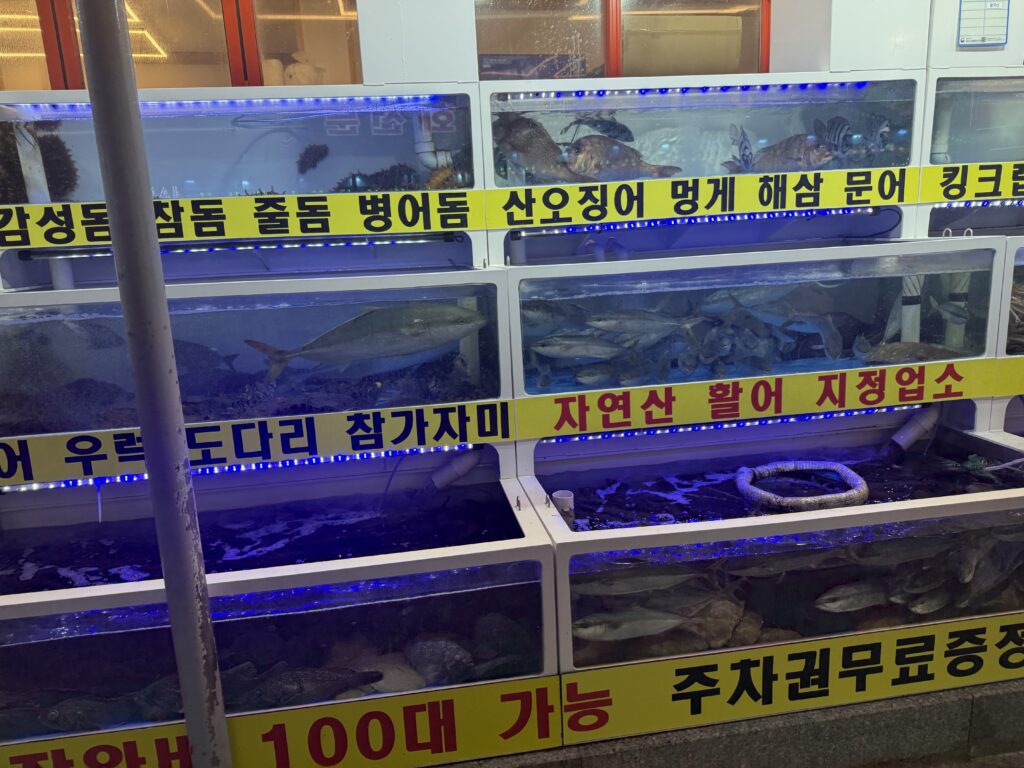
The seafood tanks out front tell you everything you need to know about the restaurant’s philosophy. Labels like “자연산 활어” (natural live fish), “참가자미” (stone flounder), “산오징어” (fresh squid), “줄돔” and “병어돔” line the stacked blue-lit tanks. It’s a live selection — not frozen, not imported. That transparency is something I genuinely appreciate, and it sets the tone for the whole meal.
The Menu: Set Courses That Actually Make Sense
One of the things that separates Meoguri from the typical hoetjip experience is the set course system. Instead of being handed a sprawling menu that requires a translator and a strategy meeting, you pick a course and let the kitchen handle the rest. The ordering is done via a tabletop kiosk — modern, surprisingly easy to use, and available in Korean (I’d recommend bringing a translation app just in case).
Here’s what the course menu looks like, roughly:
The A Course (300,000 KRW) is the flagship — it includes daege (대게), mixed raw fish platter, and a range of side dishes. This is what we ordered during our visit, and it’s genuinely built for a group. The B Course (250,000 KRW) focuses on daege plus hongge (red crab), while the C Course (200,000 KRW) is the entry point. There are also standalone mixed fish platters — 모둠회 — in large (180,000), medium (150,000), and small (120,000) sizes. For context, our total bill with soju, noodle add-ons, and rice came to around 322,000 KRW for a group, which felt more than fair given the volume and quality.
The Real Star: Daepohang Meoguri Hoetjip’s Daege (대게)
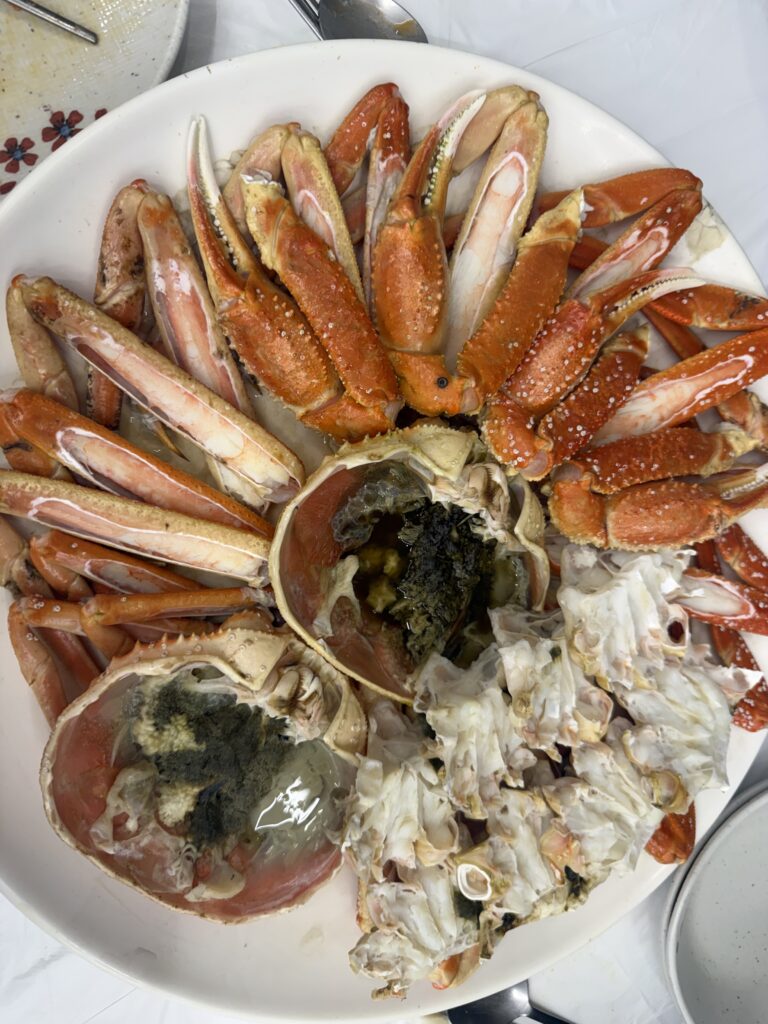
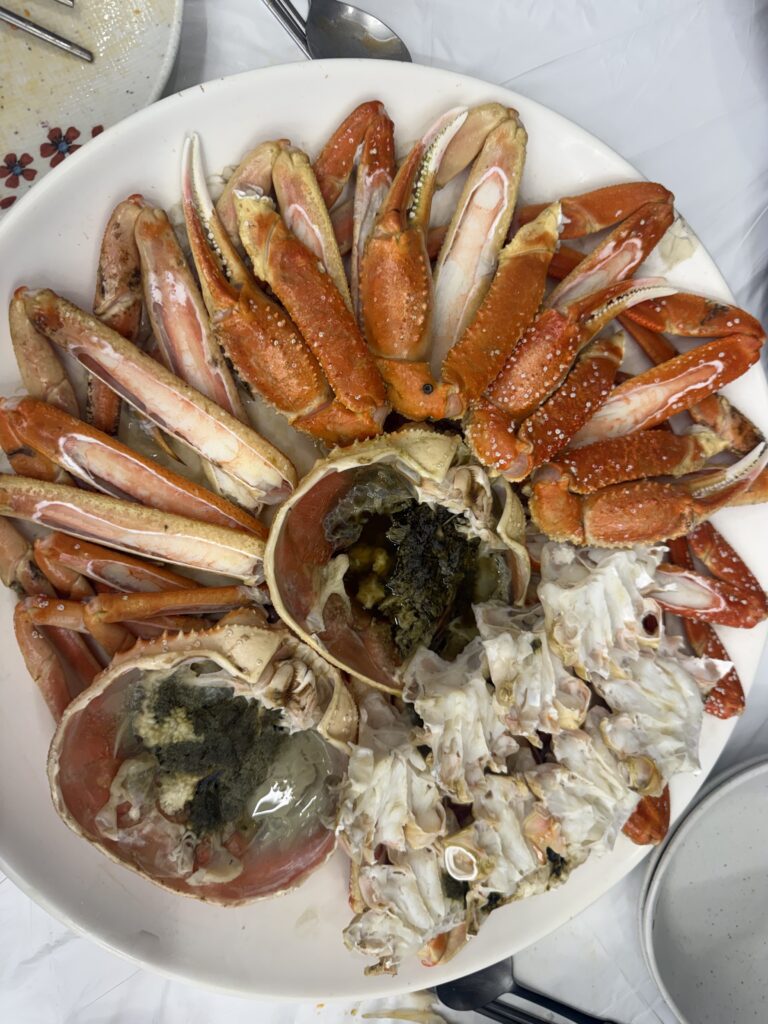
Let’s be honest — most people come to Daepohang for one thing. Daege. And Meoguri delivers it in that dramatic, full-platter presentation that makes you stop mid-conversation just to stare at it.
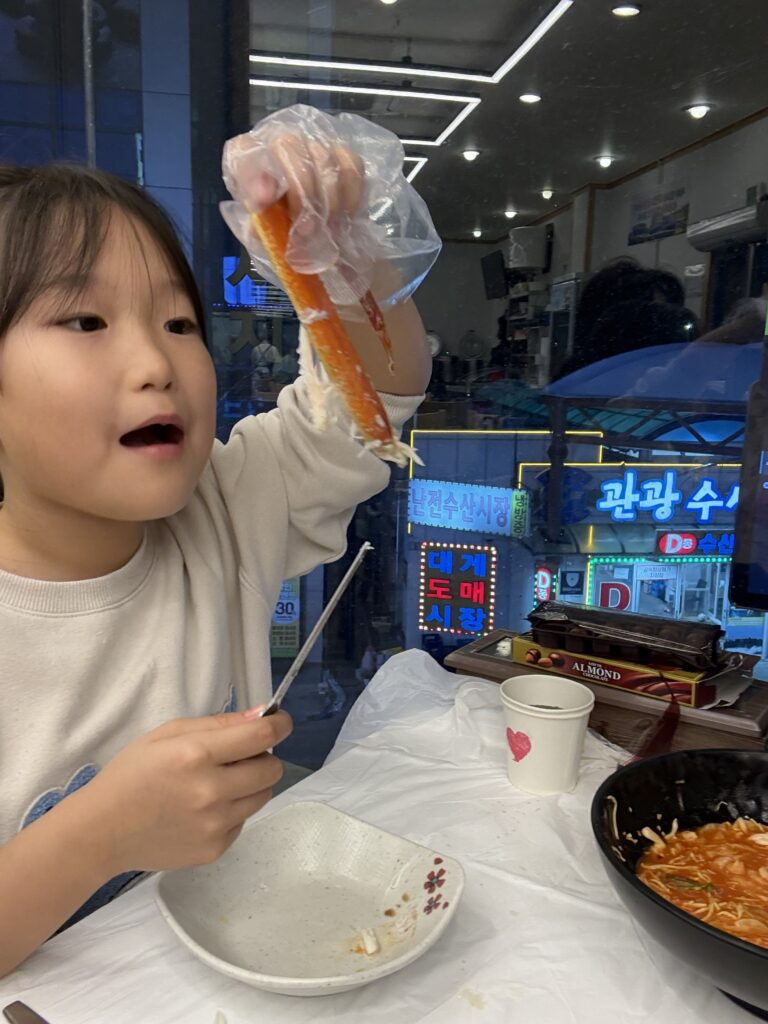
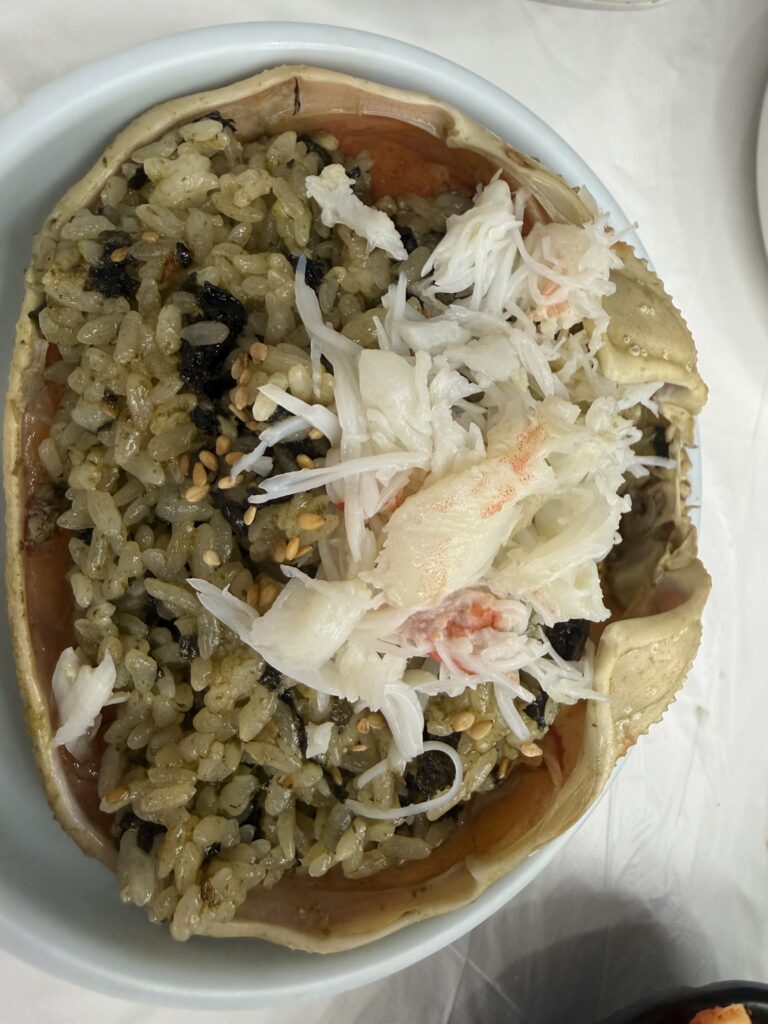
The legs arrive pre-cut and fanned out around a crab shell that’s been filled with what I can only describe as the reason you drove three hours from Seoul. The roe inside is sweet, briny, intensely oceanic — the kind of thing where you just eat it straight from the shell with a spoon and feel grateful to be alive. My honest opinion? The roe alone justifies the course price.
The crab legs themselves are meaty and sweet — not the stringy, dried-out kind you sometimes get at overpriced tourist spots. These are fresh, cold, and satisfying in that bone-deep way that only good seafood can be. You eat them with plastic gloves (the restaurant provides them), and yes, there’s something inherently funny about a table of adults wearing what amount to cling-wrap mittens, but you forget about that quickly.
The Sashimi Platter: Thick, Fresh, and Generous
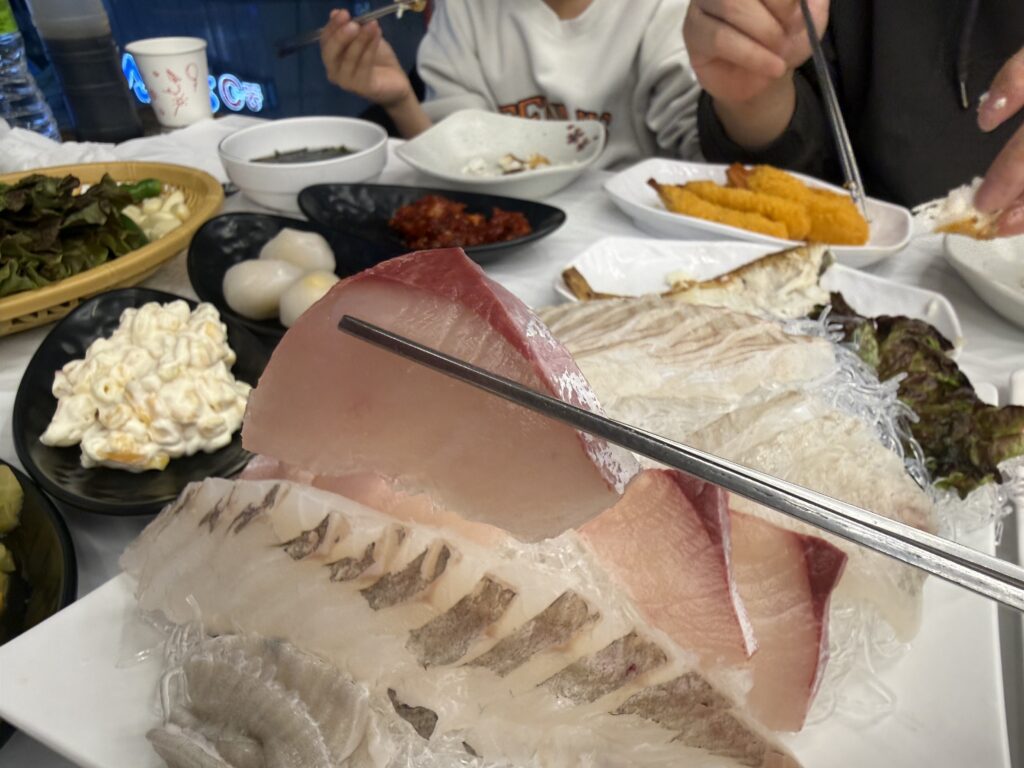
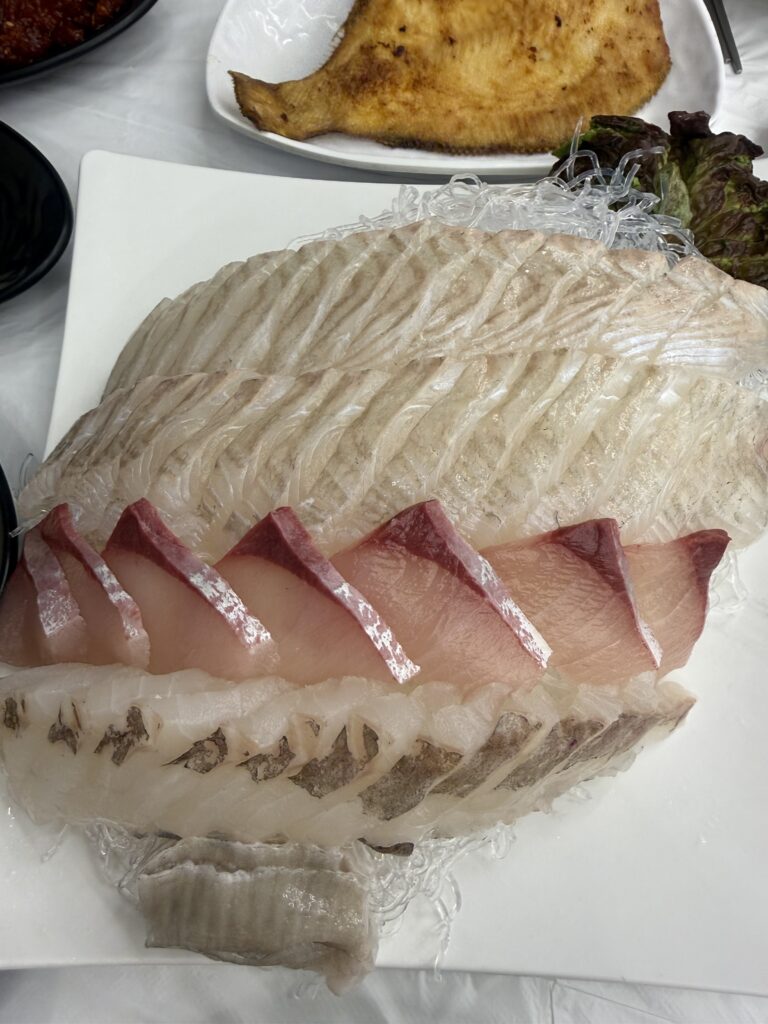
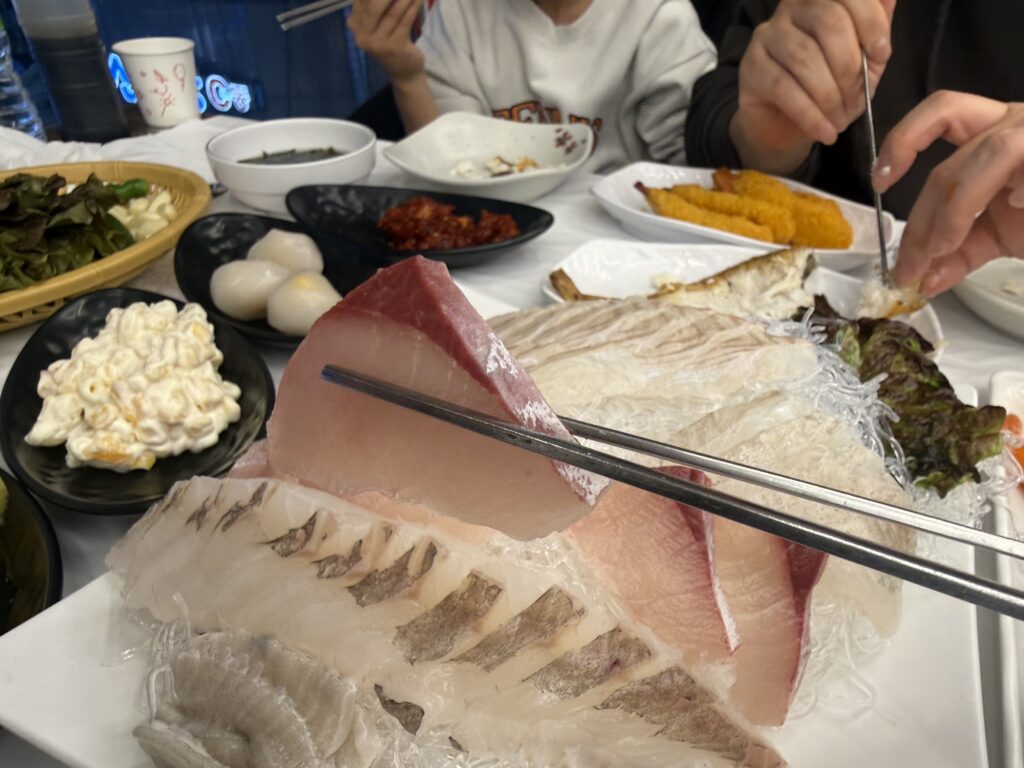
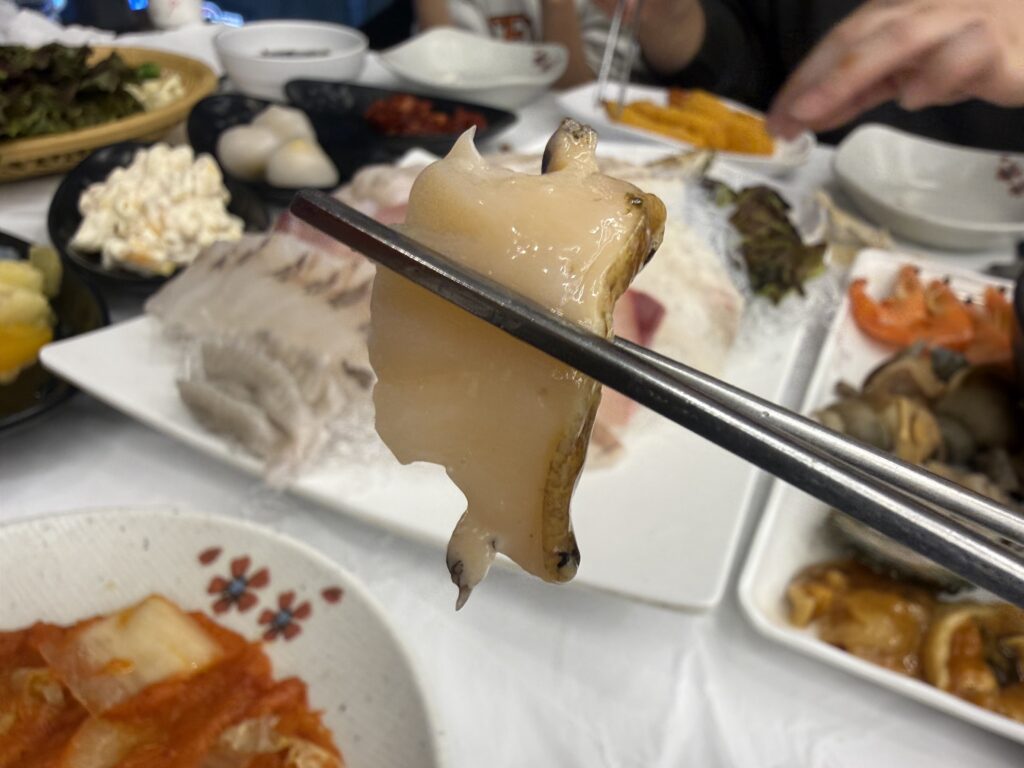
Alongside the crab, the raw fish platter (회) is serious business. The hoe at Meoguri comes thick — not those thin, translucent slices you might find at a more touristy spot. These are substantial cuts, served fanned on the fish skin, giving you the visual of the whole fish reconstructed on the plate.
What you’re getting here is primarily 참가자미 (stone flounder) and whatever else was swimming in those tanks out front that day. The texture is firm and clean, with that faint sweetness that fresh flatfish has when it hasn’t been sitting around. You eat it the traditional way — wrapped in perilla leaf with a small smear of gochujang or ssamjang, maybe a thin sliver of garlic. The eating rhythm at these meals is almost meditative when you get into it.
There’s also a spicy mixed raw fish dish (조물회 or 물회) that shows up as part of the A course — a tangy, cold broth poured over thin-cut sashimi with vegetables, glass noodles, and a hit of gochujang. It’s served chilled and is genuinely refreshing in a way that cuts through the richness of the crab. I tend to overlook this dish when I’m at a raw fish restaurant, but here I found myself going back to it multiple times.
Side Dishes, Add-ons, and the Noodle Situation
The side dish spread (밑반찬) is solid — nothing revolutionary, but everything you need to balance out a heavy seafood meal. Kimchi, seasoned vegetables, small clams, shrimp, the usual. The grilled yellow corvina (조기) that comes alongside the main dishes is a nice break from the raw and the rich.
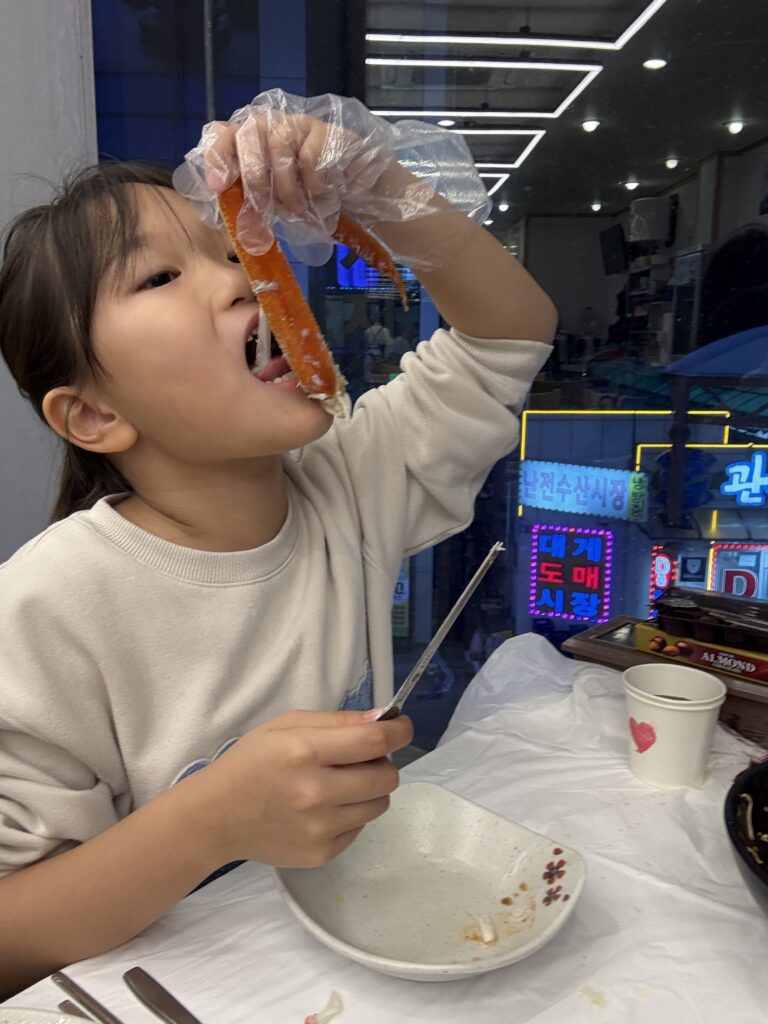
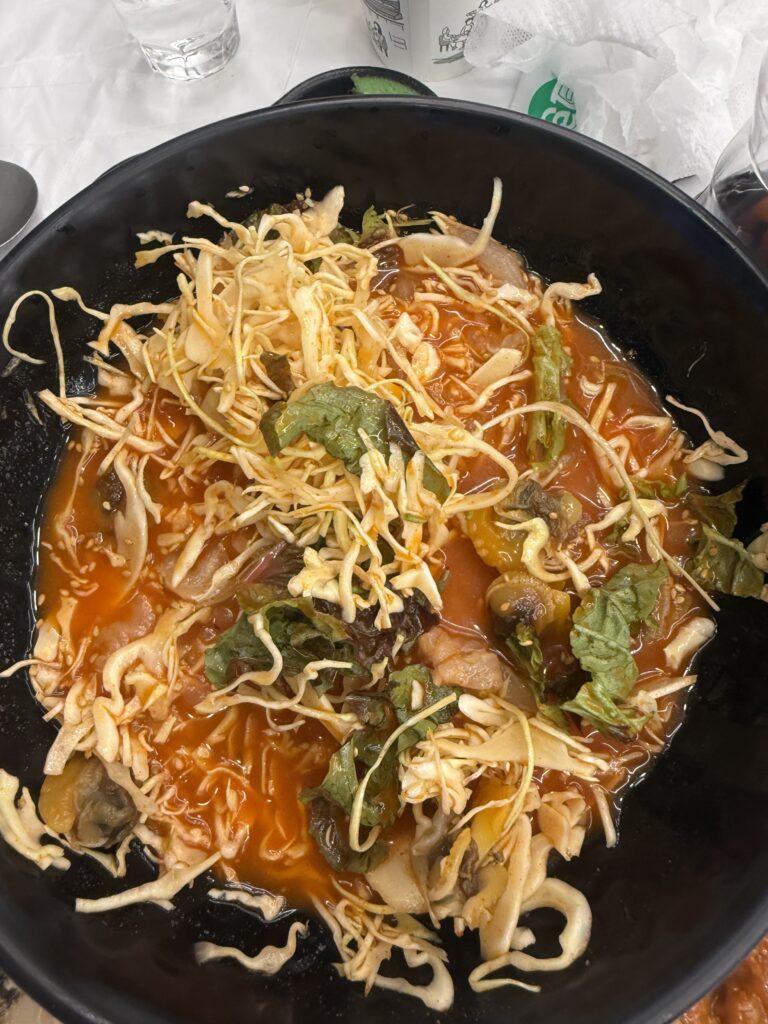
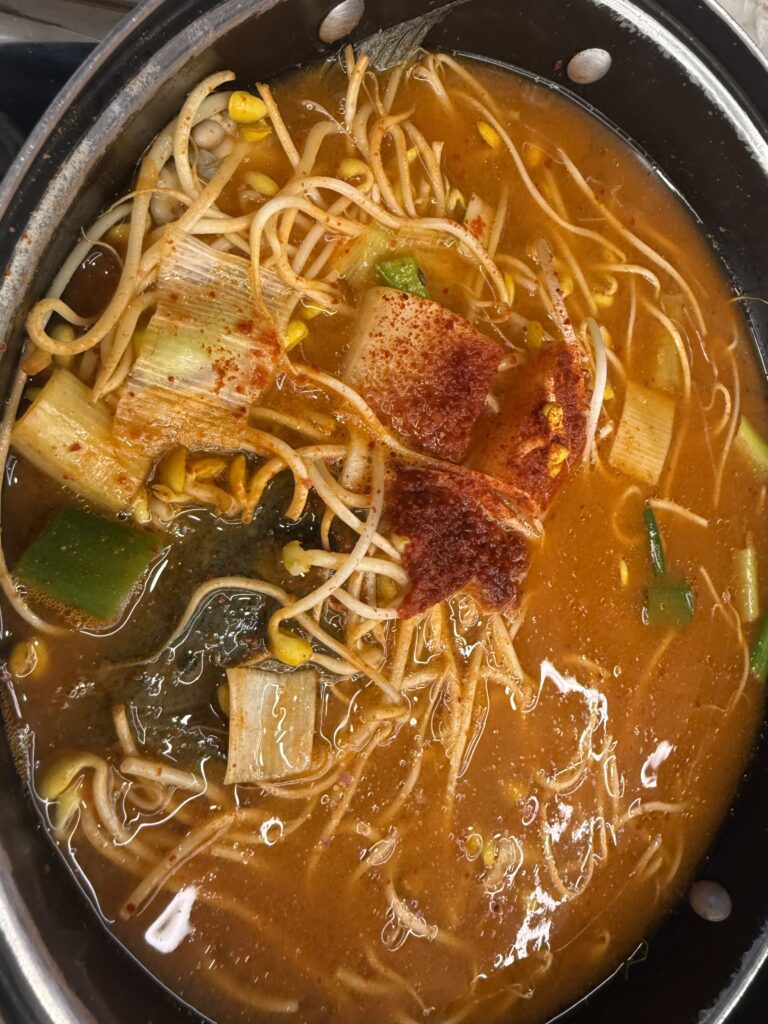
One thing I want to flag: order the 라면사리 (ramen noodle add-on). You use the crab broth and leftover soup from the table, drop the noodles in, and end up with one of the most satisfying bowls of spicy crab ramen you’ve ever had. It costs 2,000 KRW. Two thousand. Do not skip this.
The fried shrimp (새우튀김) that comes with the set is also worth noting — crispy, golden, substantial. My kid absolutely went after this like it was the main event.
The Atmosphere: Busy, Loud, and Exactly Right
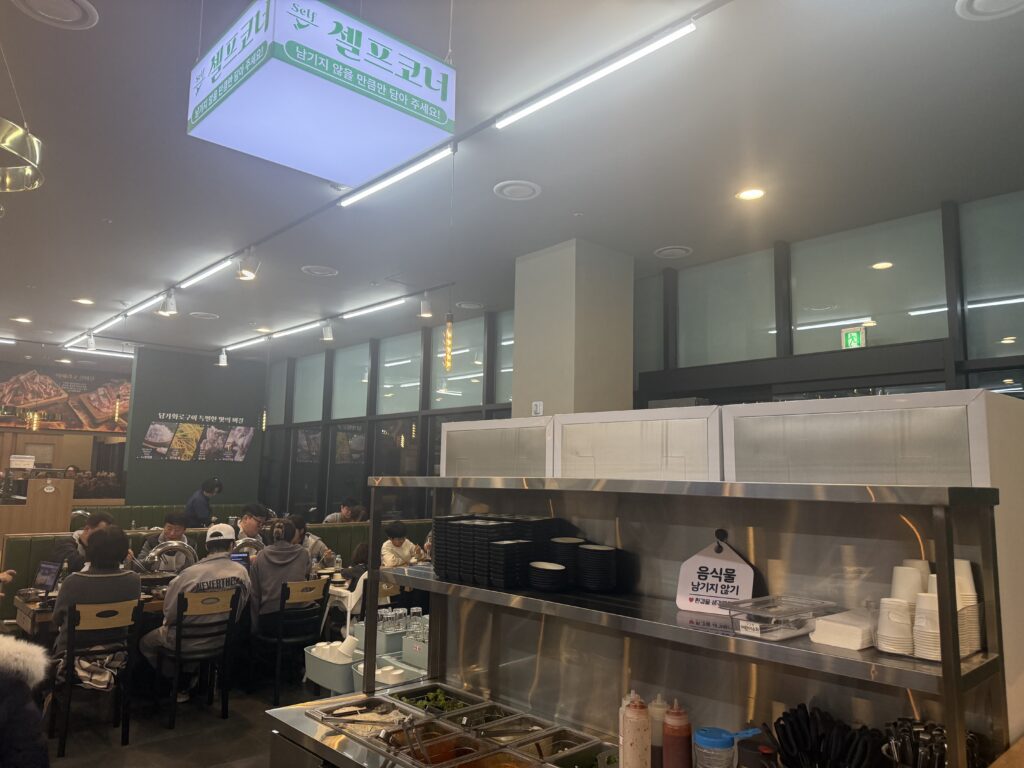
Let me set expectations here: Meoguri Hoetjip is not a quiet, intimate dinner spot. It’s a large, well-lit dining hall that gets full. There are multiple floors, the lighting is bright (in that practical, seafood-restaurant way), and the overall vibe is very much “we are here to eat seriously and have a good time.” Families, groups of friends, couples — it’s a mixed crowd, and it all works because the energy is genuinely warm.
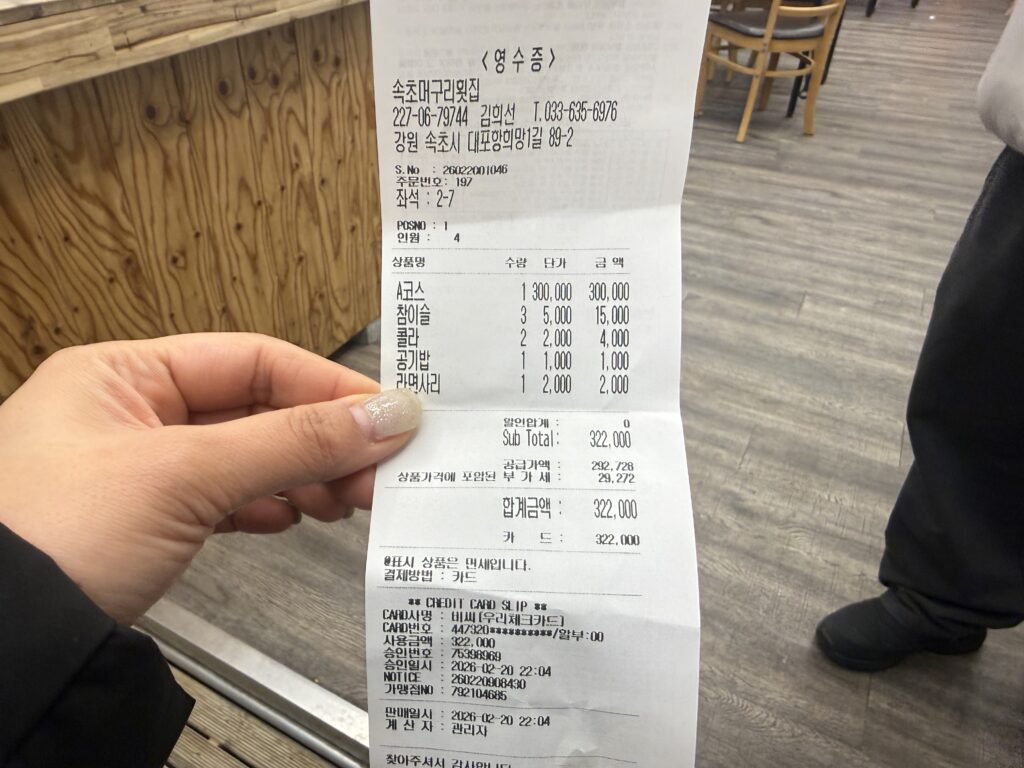
The service is efficient without being rushed. Orders go through the kiosk system, which removes a lot of the usual friction. Staff bring out dishes on a rotating basis — courses arrive progressively rather than all at once, which gives you time to actually eat and breathe and appreciate what’s in front of you. The kitchen is visible from parts of the dining area, which I always find reassuring at a place like this.
A Night View of Daepohang Worth the Trip Alone
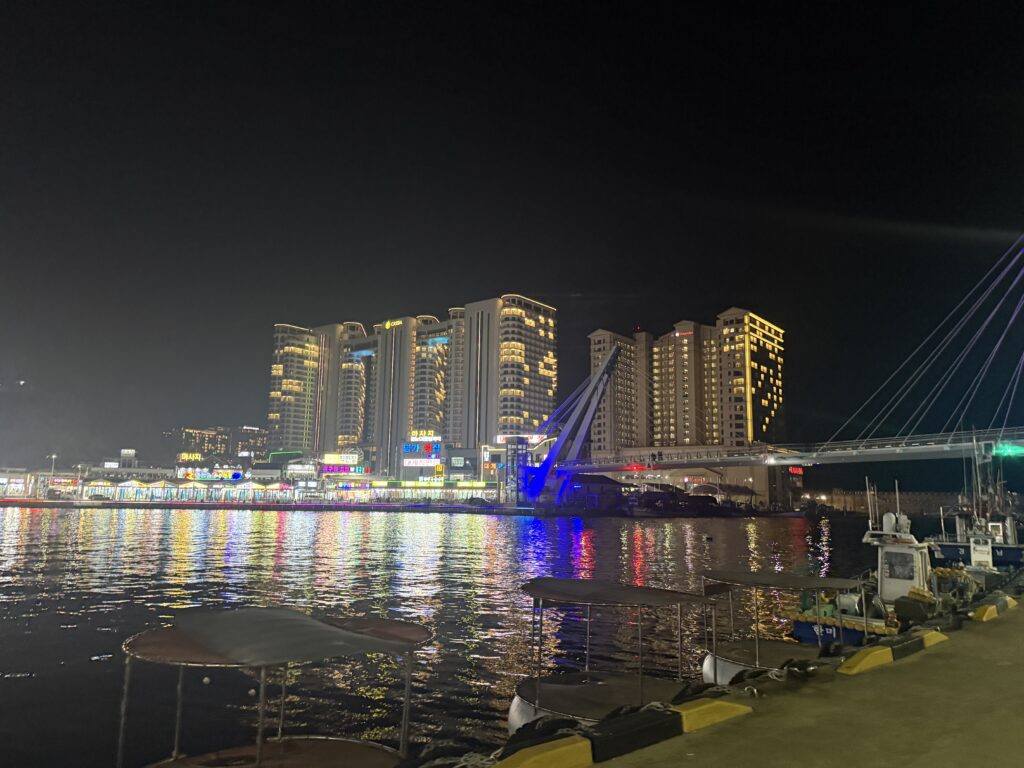
Daepohang at night has a particular kind of beauty that’s easy to underestimate if you’ve never seen it. The harbor lights reflect off the water, the bridges glow, and even in winter there’s a sense of life and activity around the port. After a meal at Meoguri, it’s worth stepping outside for a few minutes just to take it in. Sokcho isn’t Seoul. It doesn’t hustle the same way. But at night by the harbor, it has its own kind of energy — slower, more settled, still very much alive.
Practical Info: What You Need to Know Before You Go
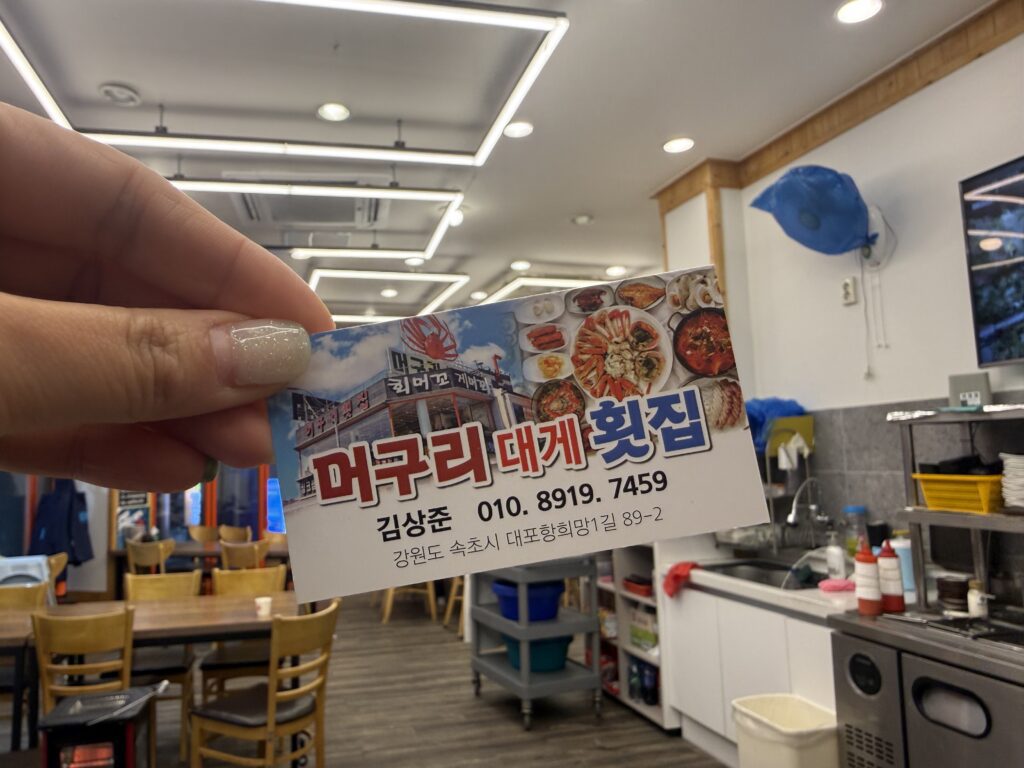
Here’s the stuff that actually helps when you’re planning the trip. Meoguri Hoetjip is open 24 hours, which is rare and genuinely useful. The address is 강원도 속초시 대포항회1길 89-2 (Gangwon-do, Sokcho-si, Daepohang-hoe 1-gil 89-2). Phone number on the business card reads 010-8919-7459. Parking for up to 100 cars is available. The restaurant name also appears in search as “속초 머구리 횟집” or “대포항 머구리 횟집.”
Budget-wise: the A Course at 300,000 KRW is built for a group of three to four people. With drinks and a few add-ons, our table of adults (and one very enthusiastic child) came to 322,000 KRW total. That’s roughly 80,000 KRW per person for a full multi-course seafood feast — honestly hard to complain about. If you want a lighter or cheaper option, the 모둠회 (mixed sashimi platter) starting at 120,000 KRW is a solid choice for two people.
One logistical note: they have a no-pet policy (반려동물 입장 불가), which is worth knowing if you’re traveling with a dog. And the “스끼다시 15가지 서비스” sign out front means complimentary side dishes — 15 varieties — come with your order automatically. That’s a lot of free food.
The Entrance With the Giant Crab: An Unmissable Landmark
I’d be doing you a disservice if I didn’t mention the entrance. There’s a giant red crab sculpture hanging above the doorway. It’s the kind of thing you either find delightfully kitschy or genuinely intimidating depending on your relationship with crustaceans. Either way, you can’t miss it. It has become, honestly, one of my favorite things about the place — it commits completely to what it is, and there’s something refreshing about a restaurant that doesn’t try to be subtle.
Final Thoughts: Is Daepohang Meoguri Hoetjip Worth the Drive?
Daepohang has dozens of seafood restaurants competing for the same customers, and most of them are fine. They’re all working with similar ingredients from similar waters. But what Meoguri does differently — at least in my experience — is execute consistently. The fish is genuinely fresh. The crab is handled with care. The set course system removes the anxiety of ordering at a massive seafood restaurant when you don’t know the local dialect or the current prices. And the 24-hour operation means it fits into your schedule, not the other way around.
If you’re planning a Sokcho trip — a winter weekend escape, a coastal drive, a deliberate food journey along the East Sea — put Meoguri Hoetjip on the list. Go with a group if you can, order the A Course, get the ramen add-on, and save room for the crab roe. The kind of meal you eat there isn’t just dinner. It’s the reason you made the trip in the first place.
📍 Daepohang Meoguri Hoetjip (대포항 머구리 횟집)
강원도 속초시 대포항회1길 89-2, Sokcho, Gangwon-do
Phone: 010-8919-7459 / 033-635-6976
Hours: 24 hours
View on Google Maps →
Also Worth Reading
Daepohang Meoguri Hoetjip
★★★★★ 4.6 / 5
📍 Sokcho, Gangwon-do | 🍽️ Korean Seafood | 💰 ₩₩₩
Fresh crab and sashimi restaurant at Sokcho Daepohang port — the go-to spot for premium seafood straight from the East Sea.