
Updated September 23, 2026: this review now covers two visits. I added our second visit in April 2026 and merged in my separate post about that after-work dinner.
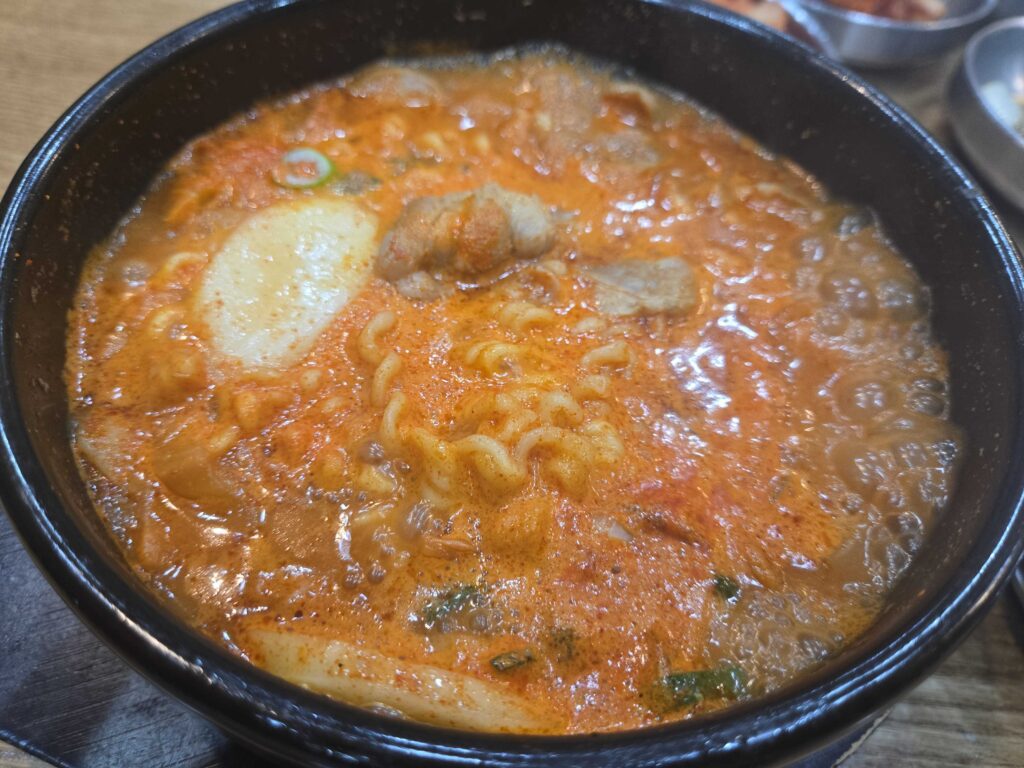
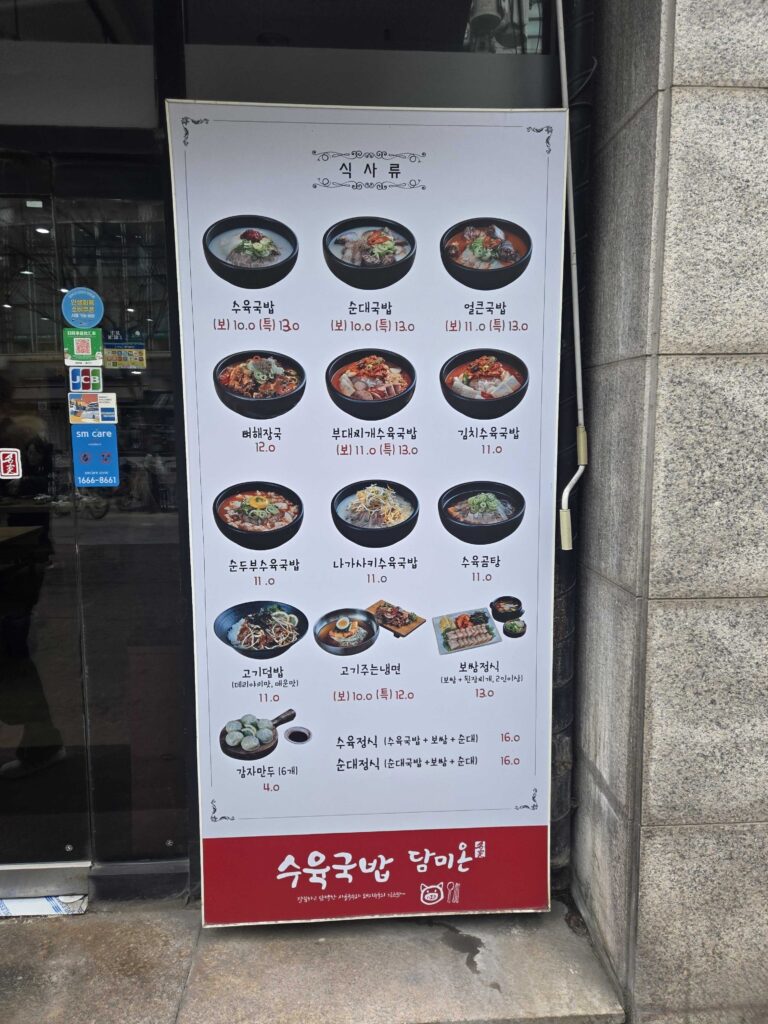
- Name: 담미온 (Dammion), Seongsu branch. The sign outside reads “담미온 국밥·보쌈 24hour”
- Address: Seongsu Academy Tower, 118 Seongsui-ro, Seongdong-gu, Seoul (서울 성동구 성수이로 118, 성수아카데미타워) · Google Maps
- Nearest station: Seongsu Station (Line 2); the restaurant is right in front of the station
- Hours: open 24 hours
- Visited: March 11, 2026 (lunch) and April 29, 2026 (around 8 p.m.), both times with the same coworker
- What we ordered: budae suyuk gukbap (first visit); eolkun gukbap 11,000 won, budae gukbap (large) 13,000 won and a large plate of pyeonyuk 14,000 won (second visit)
- My rating: 4.5 / 5
- Info checked: September 23, 2026
Dammion (담미온) is a gukbap restaurant in Seongsu, Seoul, right in front of Seongsu Station, and it is open 24 hours. I work in Seongsu, and I have been twice with the same coworker: once for lunch in March 2026, and once in April after the two of us stayed late at the office. If you are looking for Seongsu gukbap, this is the one I would send you to. The broth is rich, the bowls come with plenty of meat, and you can walk in at almost any hour.
What gukbap is
Gukbap (국밥) means soup with rice: a hot bowl of broth with meat, served with a bowl of rice that you eat on the side or tip into the soup. Dammion’s menu is built around it. There is suyuk gukbap (수육국밥) with slices of boiled pork, sundae gukbap with Korean blood sausage, a spicy version called eolkun gukbap, and a budae version with sausage and ramyeon. There are also set meals with bossam, and bigger dishes to share, such as gamjatang and sundae bokkeum.
First visit: budae suyuk gukbap at lunch
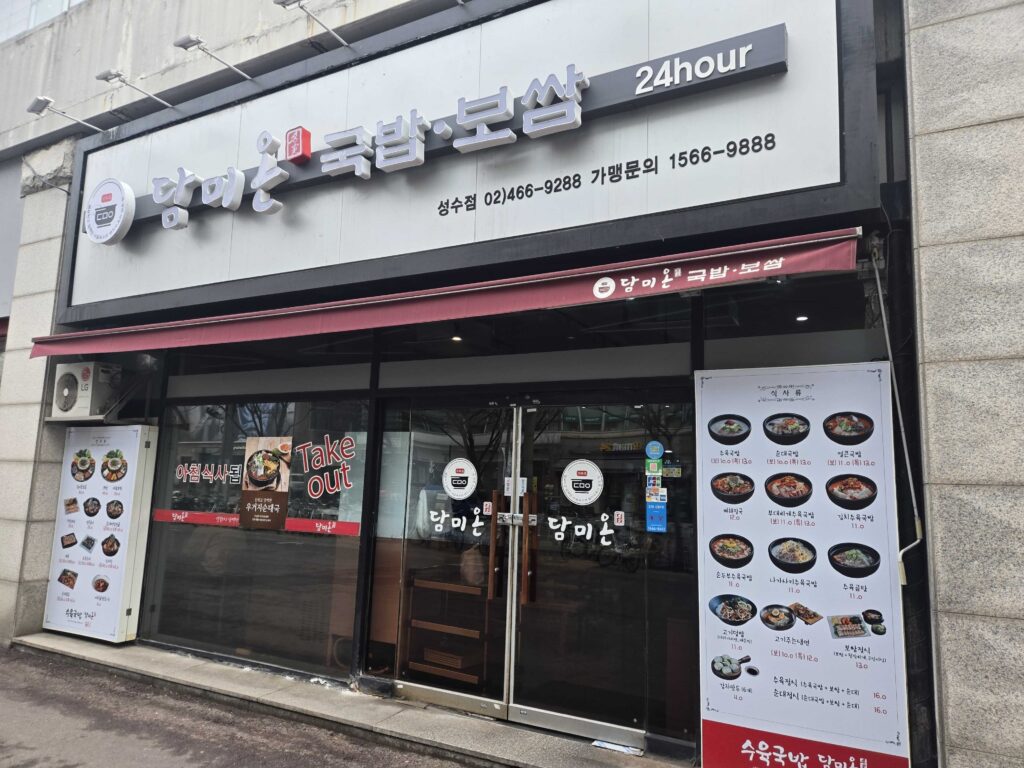
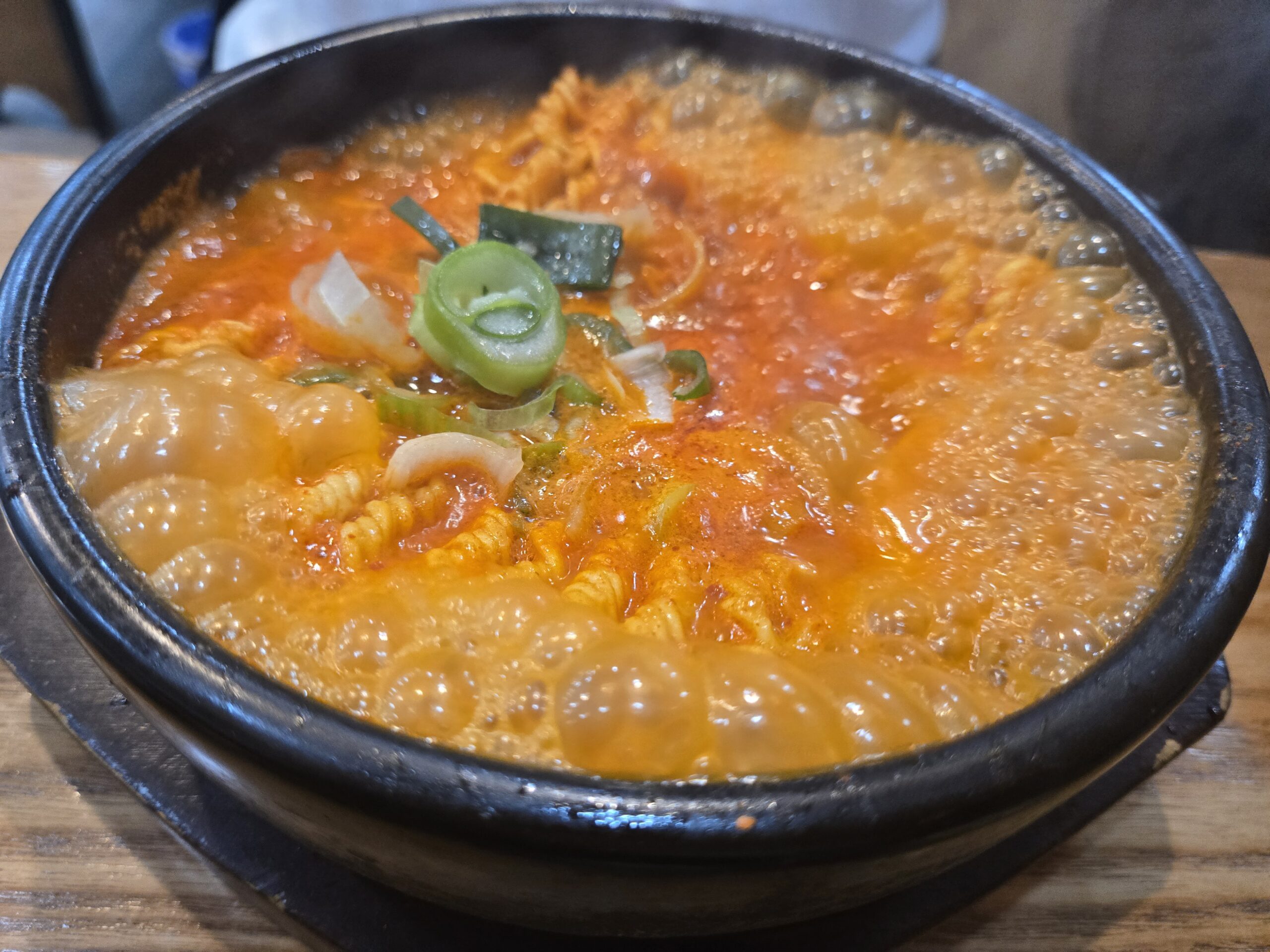
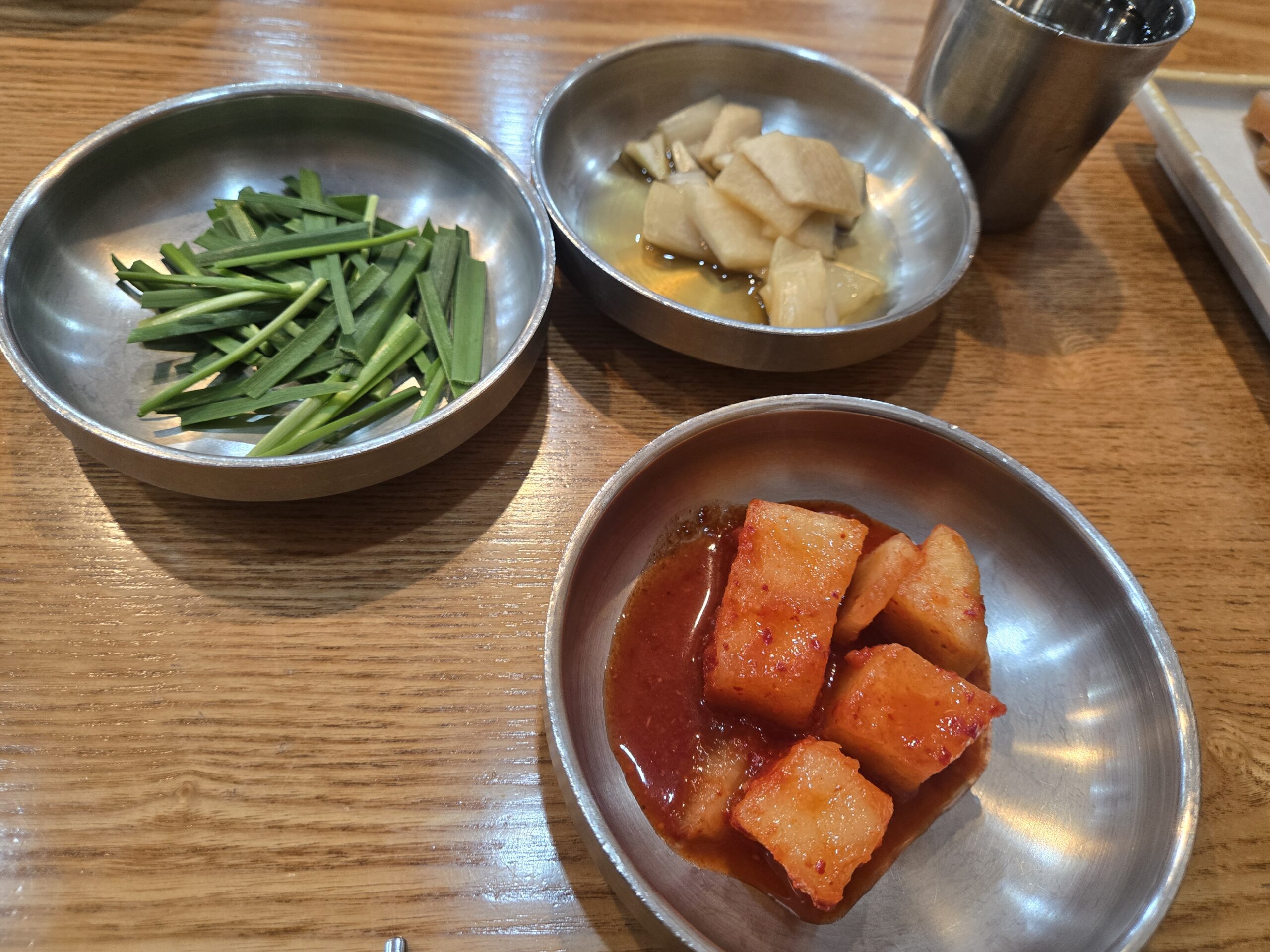
On the first visit, a weekday lunch in March, my coworker and I both went for the budae suyuk gukbap (부대수육국밥). It is a suyuk gukbap with the toppings of budae jjigae, the Korean “army stew”: sausage and ramyeon noodles. It came in a black pot, still bubbling, with a red broth, noodles on top and slices of pork underneath. A bowl of rice and three small side dishes came with it.
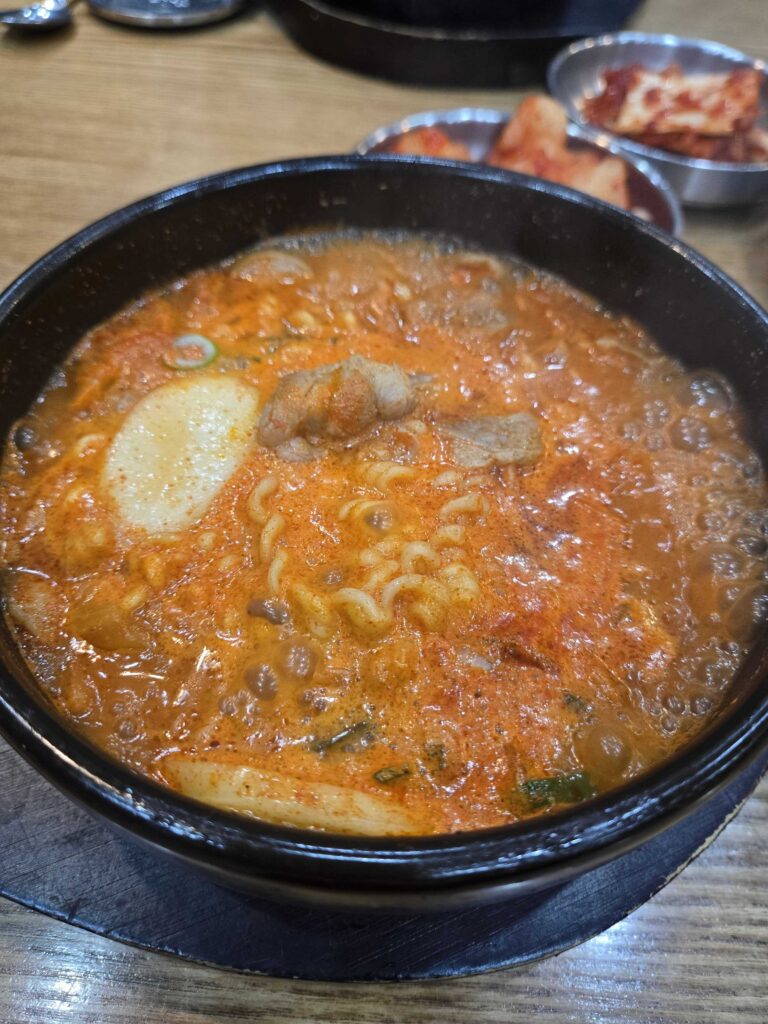
It was very good. There was about half a pack of ramyeon in the bowl, which made it feel like two dishes in one, and there was a lot of sausage. The pork and the broth kept it a proper gukbap rather than just a spicy noodle soup. With the rice on the side, it was more than enough for lunch.
Second visit: eolkun gukbap after working late
The second time was a Wednesday at the end of April. We had worked late and got to Dammion around 8 p.m. Because it is open 24 hours, we didn’t have to think about a closing time. This time we ordered three things: an eolkun gukbap (얼큰국밥, spicy gukbap) for me, a large budae gukbap for my coworker, and a plate of sliced pork to share.
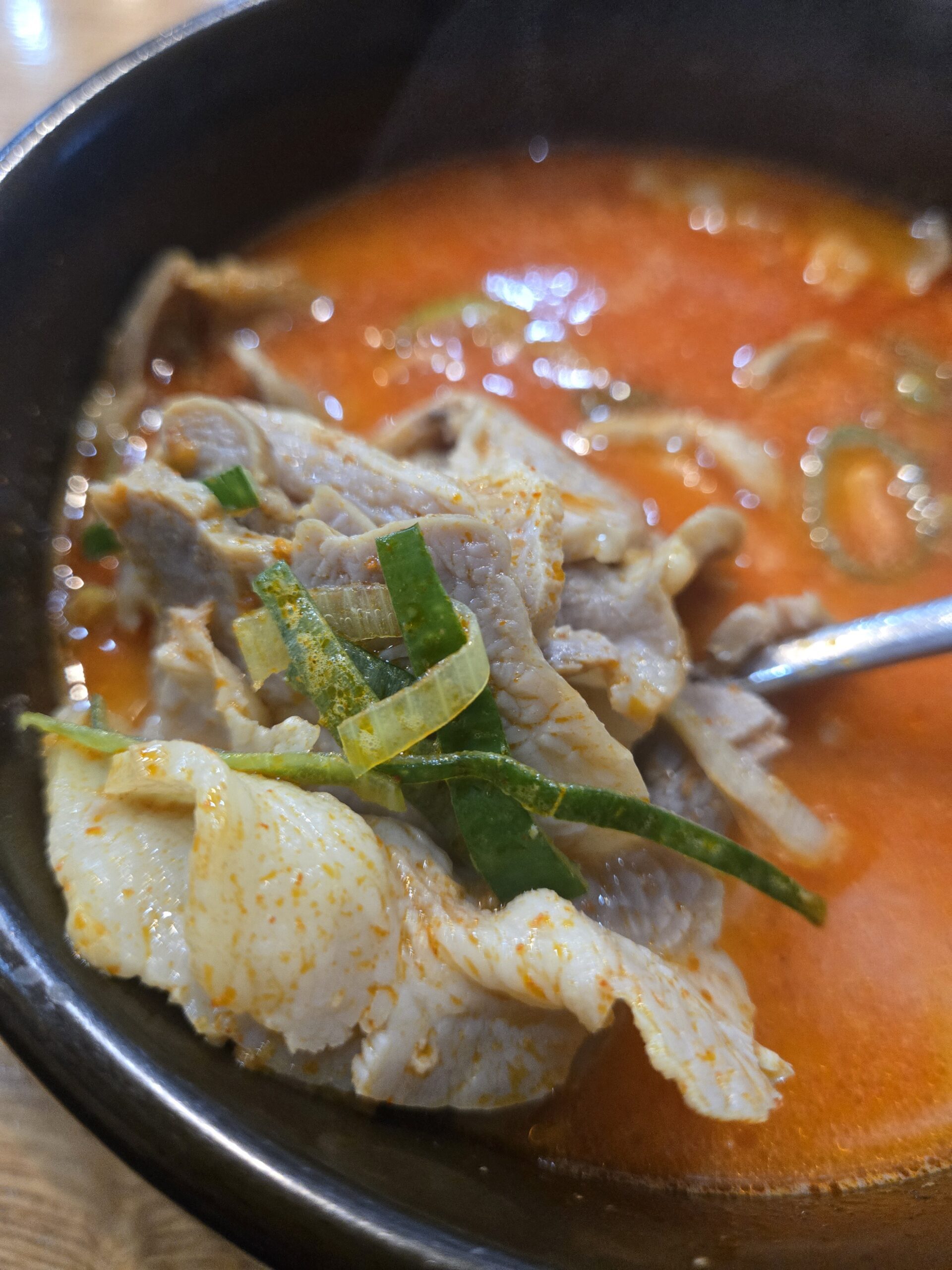
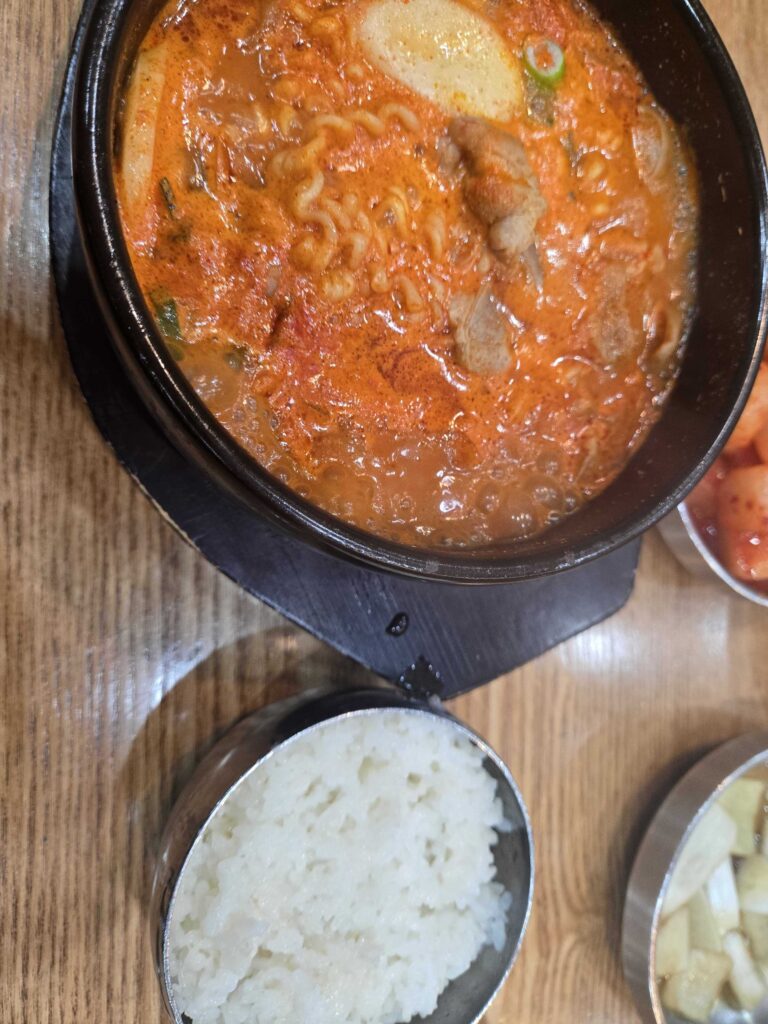
The eolkun gukbap was tasty as well. “Eolkeun” is the Korean word for a spicy, warming broth, and the soup was red with chopped green onion on top. What I liked most was how much meat was in it: every spoonful came up with slices of pork.
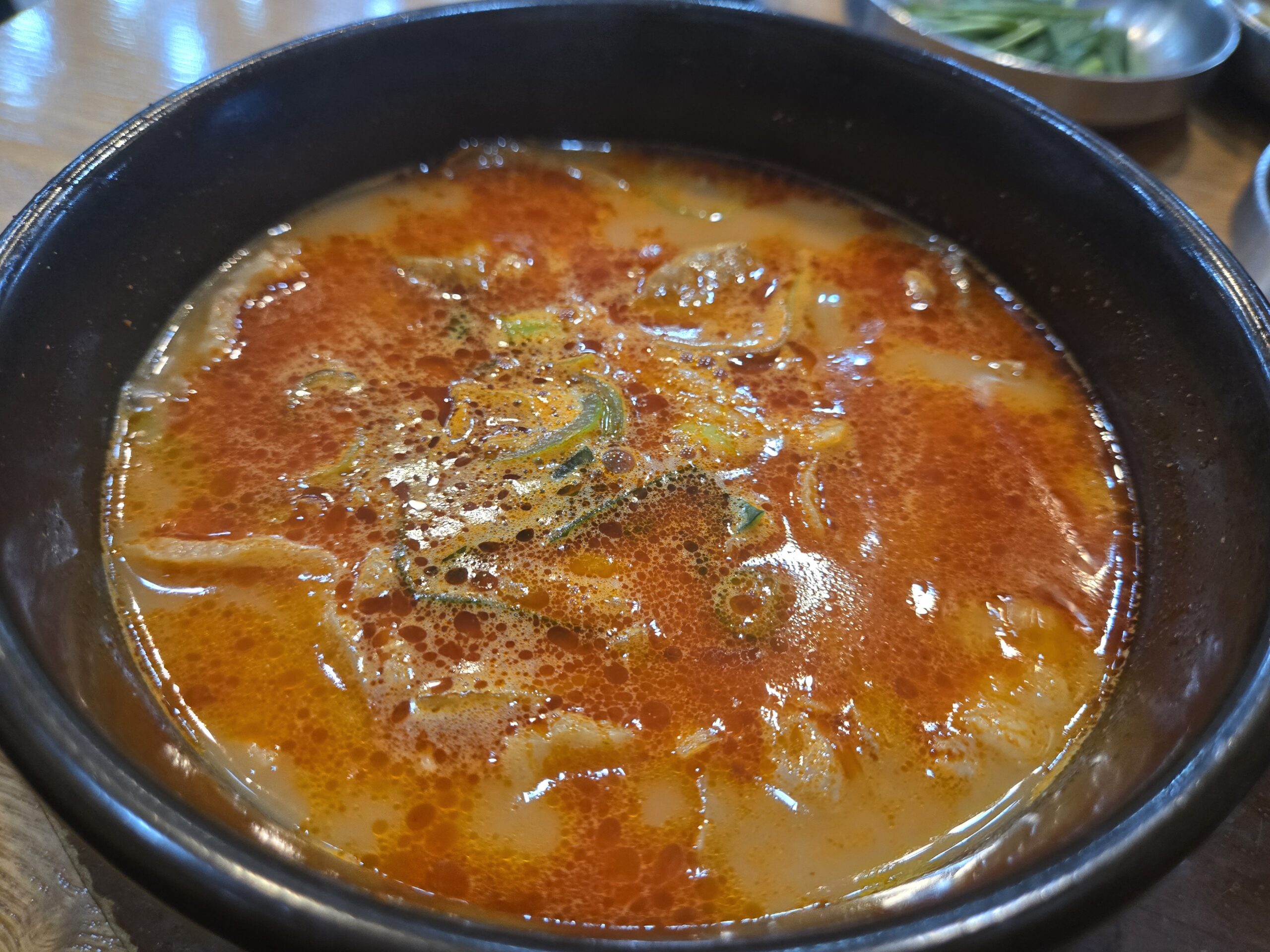
My coworker’s large budae gukbap came with a nest of ramyeon on top, the same idea as the budae suyuk gukbap from my first visit.
The pork plate
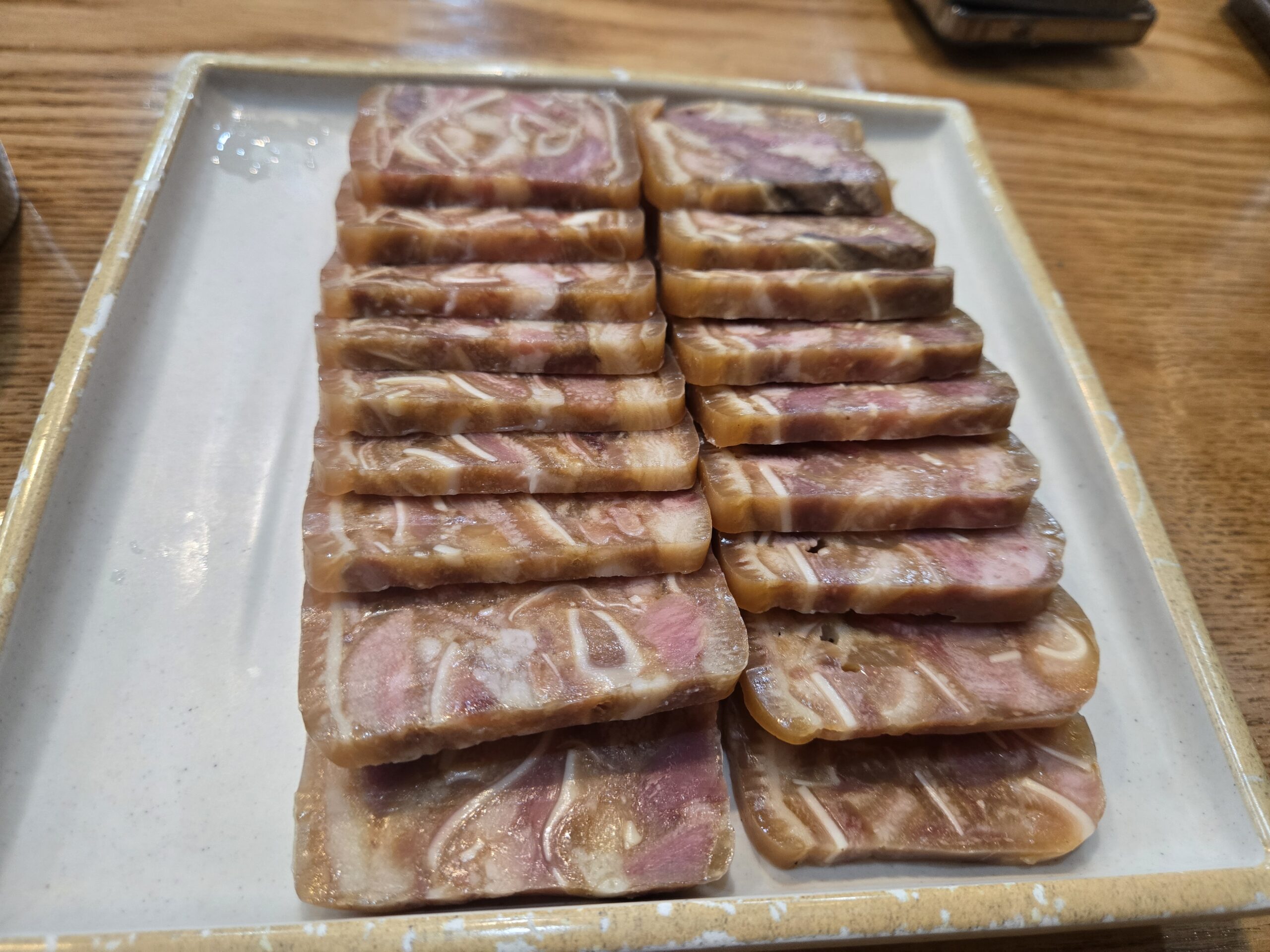
The plate we shared was pyeonyuk (편육), pork that is boiled, pressed and sliced thin. On the tablet it is listed in two sizes, and ours was the large one at 14,000 won. It came as two rows of thin slices on a white plate. We ate it between spoonfuls of soup.
How ordering works
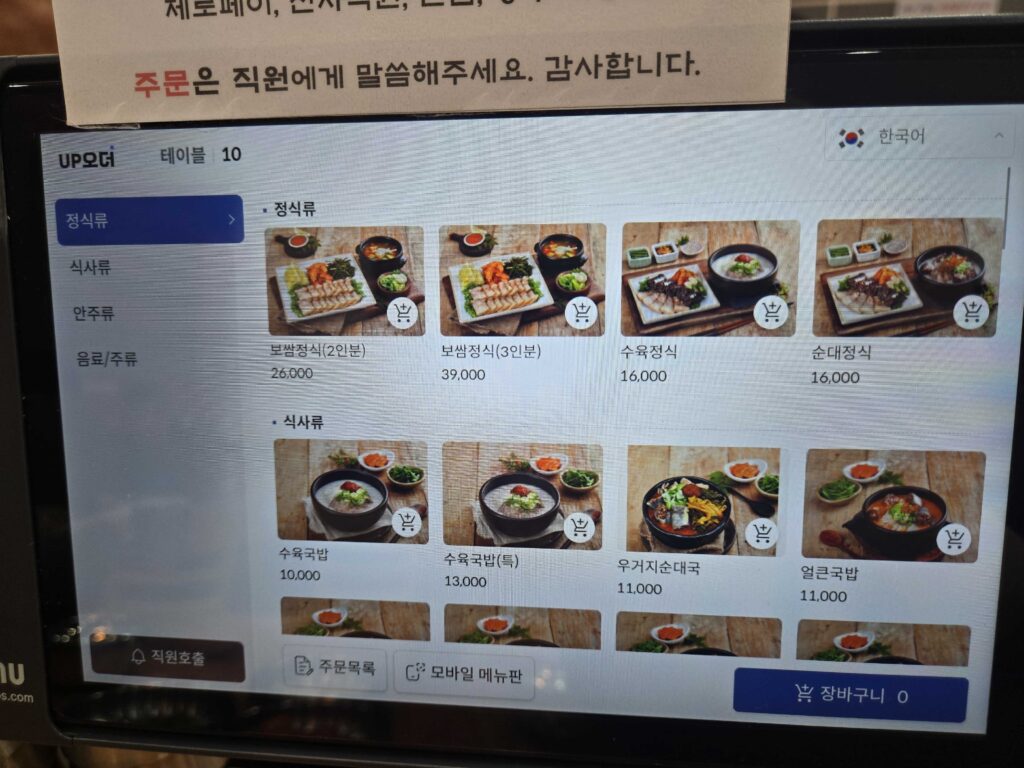
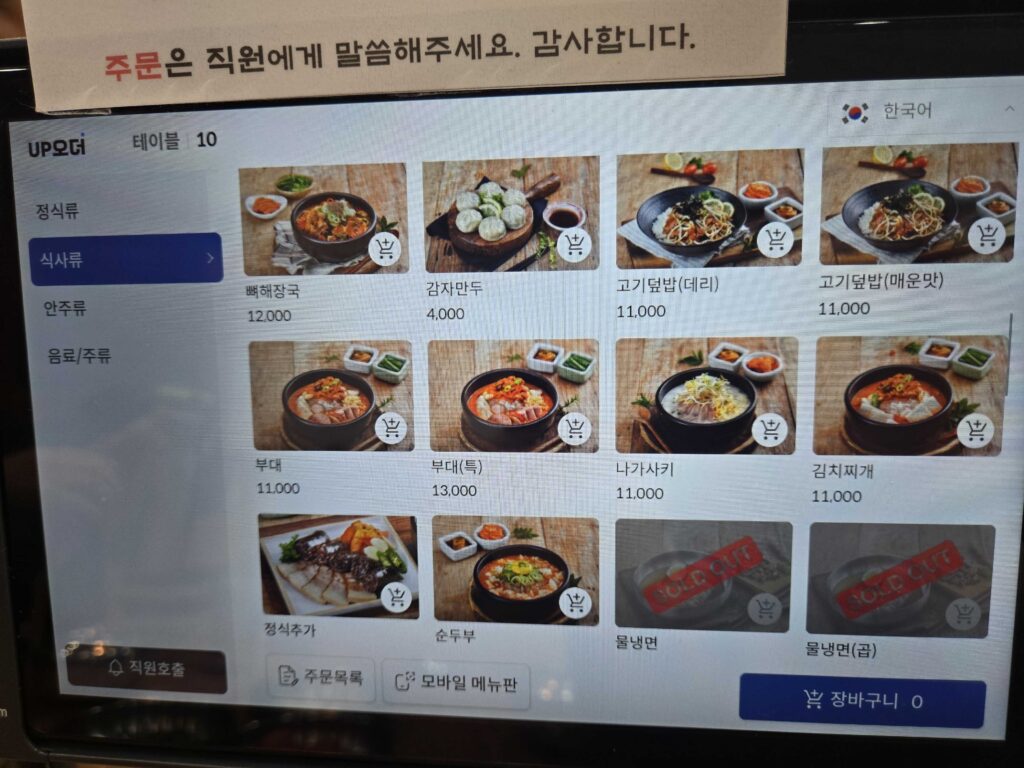
Each table has a tablet (the system is called UP Order) with the whole menu, photos and prices. The menu is split into four tabs: set meals (정식류), meals (식사류), dishes to share with drinks (안주류) and drinks (음료/주류). There are buttons for calling a staff member and for a mobile menu, and a language button in the top corner. On our visits, a printed sign was taped above the tablet asking customers to tell the staff their order, so if you are unsure, you can simply point at the screen and order through the staff.
Menu and prices from the tablet
These are the prices on the table tablet during our two visits (March and April 2026). The English names are my translations.
| Set meals (정식류) | Korean | Price (won) |
|---|---|---|
| Bossam set for 2 | 보쌈정식(2인분) | 26,000 |
| Bossam set for 3 | 보쌈정식(3인분) | 39,000 |
| Suyuk (boiled pork) set | 수육정식 | 16,000 |
| Sundae set | 순대정식 | 16,000 |
| Meals (식사류) | Korean | Price (won) |
|---|---|---|
| Suyuk gukbap | 수육국밥 | 10,000 |
| Suyuk gukbap, large | 수육국밥(특) | 13,000 |
| Sundae soup with cabbage leaves | 우거지순대국 | 11,000 |
| Spicy gukbap | 얼큰국밥 | 11,000 |
| Budae gukbap | 부대 | 11,000 |
| Budae gukbap, large | 부대(특) | 13,000 |
| Pork bone soup | 뼈해장국 | 12,000 |
| Nagasaki | 나가사키 | 11,000 |
| Kimchi jjigae | 김치찌개 | 11,000 |
| Rice bowl with meat, teriyaki / spicy | 고기덮밥(데리/매운맛) | 11,000 |
| Potato dumplings | 감자만두 | 4,000 |
| To share (안주류) | Korean | Price (won) |
|---|---|---|
| Gamjatang, medium / large | 감자탕(중/대) | 35,000 / 45,000 |
| Korean beef tripe hot pot | 한우곱창전골 | 45,000 |
| Stir-fried sundae, medium / large | 순대볶음(중/대) | 35,000 / 45,000 |
| Sundae, small / large | 토종순대(소/대) | 8,000 / 14,000 |
| Pyeonyuk, small / large | 편육(소/대) | 8,000 / 14,000 |
| Spicy stew for drinking | 얼큰술국 | 25,000 |
| Salted oysters | 어리굴젓 | 7,000 |
The DiningCode listing has a similar list with some different prices, so use the tables above as what we saw in spring 2026 and check the tablet when you go.
Getting there
Dammion is in Seongsu Academy Tower at 118 Seongsui-ro, right in front of Seongsu Station on Line 2. That, plus the 24-hour opening, is what makes it easy to use: we went once in the middle of a workday and once late in the evening, and both times we just walked over.
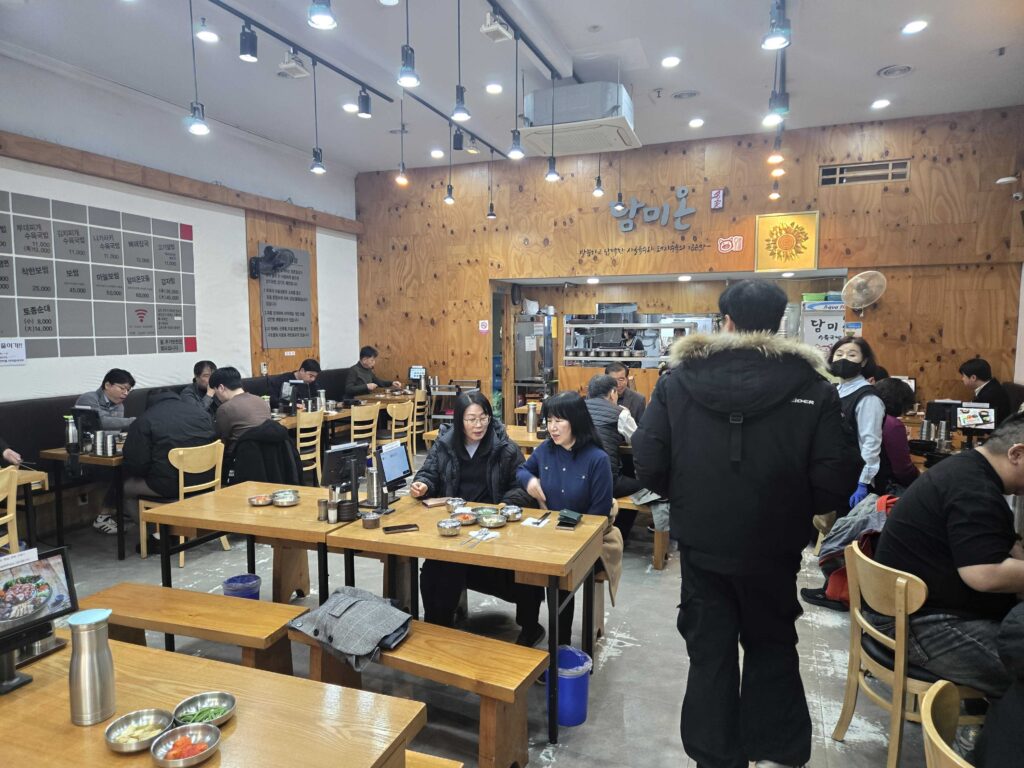
Both times the restaurant was busy, and there were a lot of foreign visitors along with Korean customers. It is a place a lot of people go to, and I can see why.
More food near Seongsu Station
- Seokam Seongsu, stone-grilled pork with chapagetti on the grill
- Mongttang Saenggogi, samgyeopsal and yukhoe near Seongsu Station
- Jeong Chamchi, a tuna dinner in Seongsu
If I had to pick one for next time, it would be the budae suyuk gukbap, with the ramyeon and sausage in it. The eolkun gukbap is the one to get if you want a spicy broth with a lot of meat and no noodles.
I’d go back, and I already have. For a filling bowl of gukbap near Seongsu Station at lunch or late at night, Dammion is where I’d go.
For more places to eat around Seongsu, see our Seongsu restaurant guide, which compares all the places I have reviewed there.