
- Name: 정참치 (Jeong Chamchi), Seongsu
- Address: 2F, 289-14 Seongsu-dong 2-ga, Seongdong-gu, Seoul (서울 성동구 성수동2가 289-14, 2층) · Google Maps
- Visited: March 2026, four of us from work
- What we ordered: the Gold course, priced per person, with refills
- Seating: private room
- My rating: 4.6 / 5
- Info checked: September 23, 2026
Jeong Chamchi (정참치) is a tuna restaurant on the second floor of a building in Seongsu-dong, Seoul. Chamchi (참치) means tuna. I went with three coworkers in March 2026, and we had the Gold course, which is priced per person and comes with refills. The course includes two refills, and they brought us a third. They kept filling our plates with different cuts of tuna, and it was the first time I have ever found it hard to finish a tuna dinner.
How a Korean tuna course works
At Jeong Chamchi, you don’t order tuna piece by piece. You choose a course, priced per person, and the course sets how many times the tuna plate is refilled. Ours was the Gold course, and it included two refills. The staff brought out the tuna cut by cut and filled the board again when it was empty, and after the second refill they gave us a third, one more than the course includes. I take that as something they did for our table that night, not something every table can expect.
Four of us had the Gold course. I didn’t note its price per person, and I couldn’t find a current menu for this branch online, so I am leaving the price out rather than guessing. If price matters to you, ask before you order.
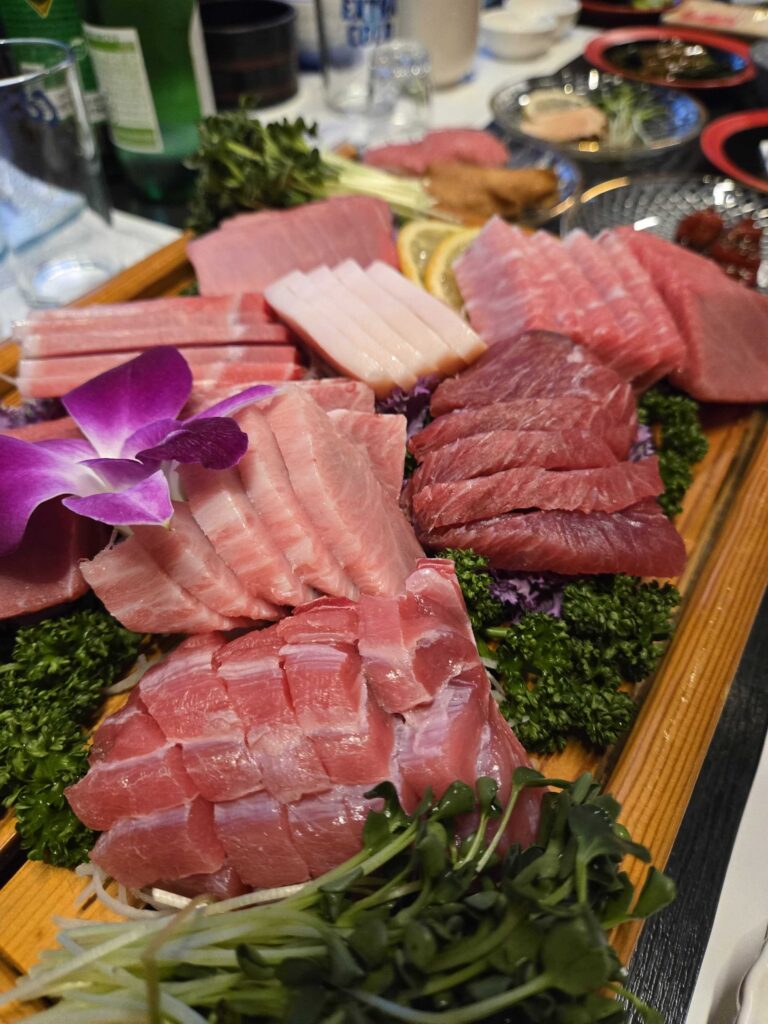
The first platter
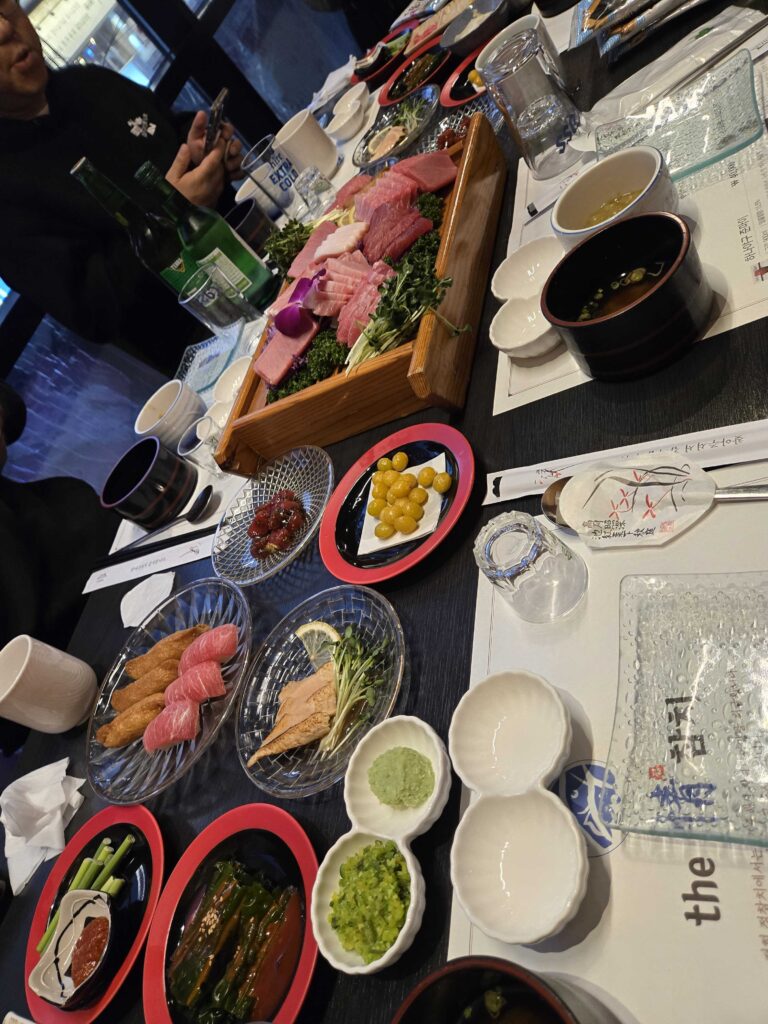
The first platter came on a long wooden board. There were pale pink slices from the fatty belly with white lines of fat, deeper red slices of lean tuna, a thick white slab, and a row of red cubes scored across the top. The board was dressed with curly greens, radish sprouts and a purple orchid, with lemon slices at one end. The belly was cut into long, thick slices, and the lean tuna was cut into cubes and lined up in rows, so each piece could be picked up in one go. Four of us shared every board.
Tuna cuts you will see
Korean tuna restaurants name the fish by cut, and the names are useful to know when the plates keep coming. This list follows Namuwiki (Korean):
| Korean | Japanese name | Where it comes from |
|---|---|---|
| 대뱃살 (daebaetsal) | otoro | the fattiest part of the belly, with red meat running between white fat |
| 중뱃살 (jungbaetsal) | chutoro | the belly meat left after the otoro, still rich |
| 가마살 (gamasal) | kama toro | the collar near the head, with heavy white marbling |
| 배꼽살 (baekkopsal) | sunazuri | the belly near the diaphragm |
| 속살 (soksal) | akami | the lean back meat, red and mild |
| 눈살 / 정수리살 | small cuts from the head, near the eye and the top of the head |
The same page notes that tuna in Korea is often eaten with seaweed, sesame oil, radish sprouts and white kimchi, rather than only with soy sauce and wasabi. Our table had both: soy sauce and wasabi, and also white kimchi and sprouts.
The small plates
For more places to eat around Seongsu, see our Seongsu restaurant guide, which compares all the places I have reviewed there.
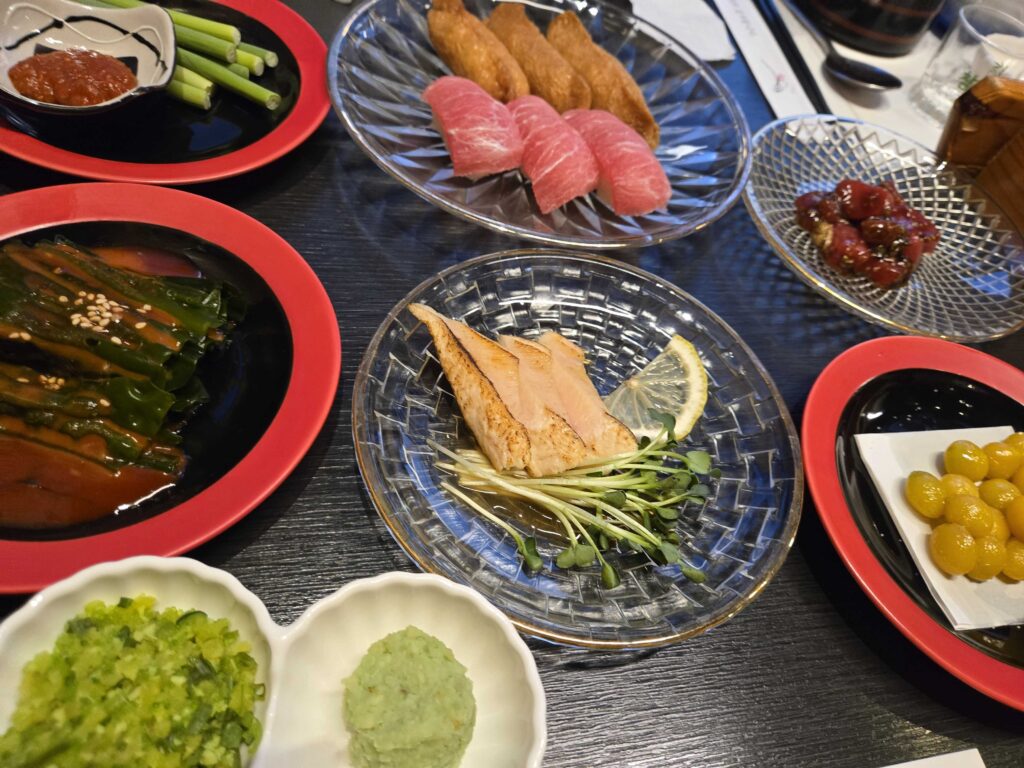
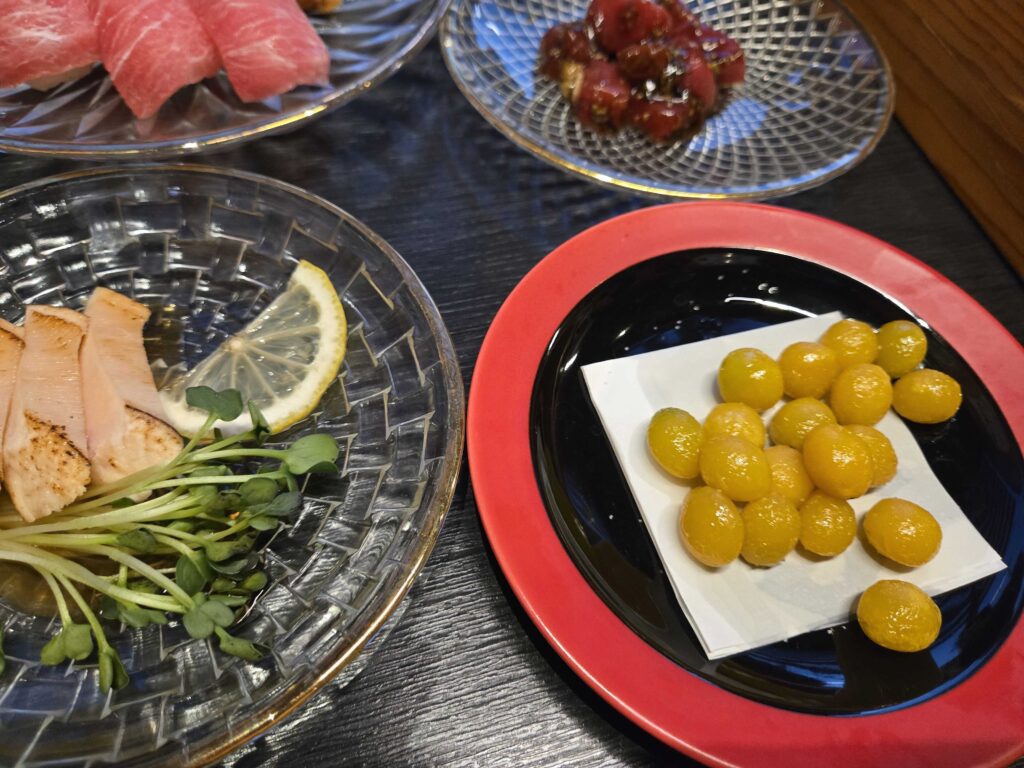
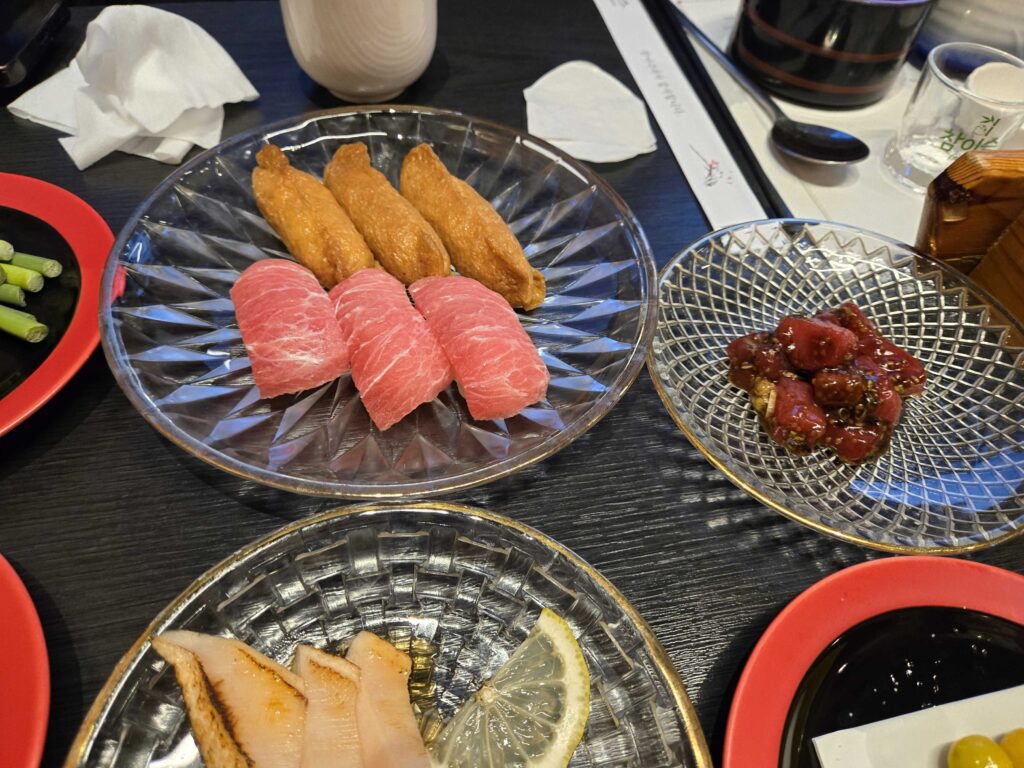
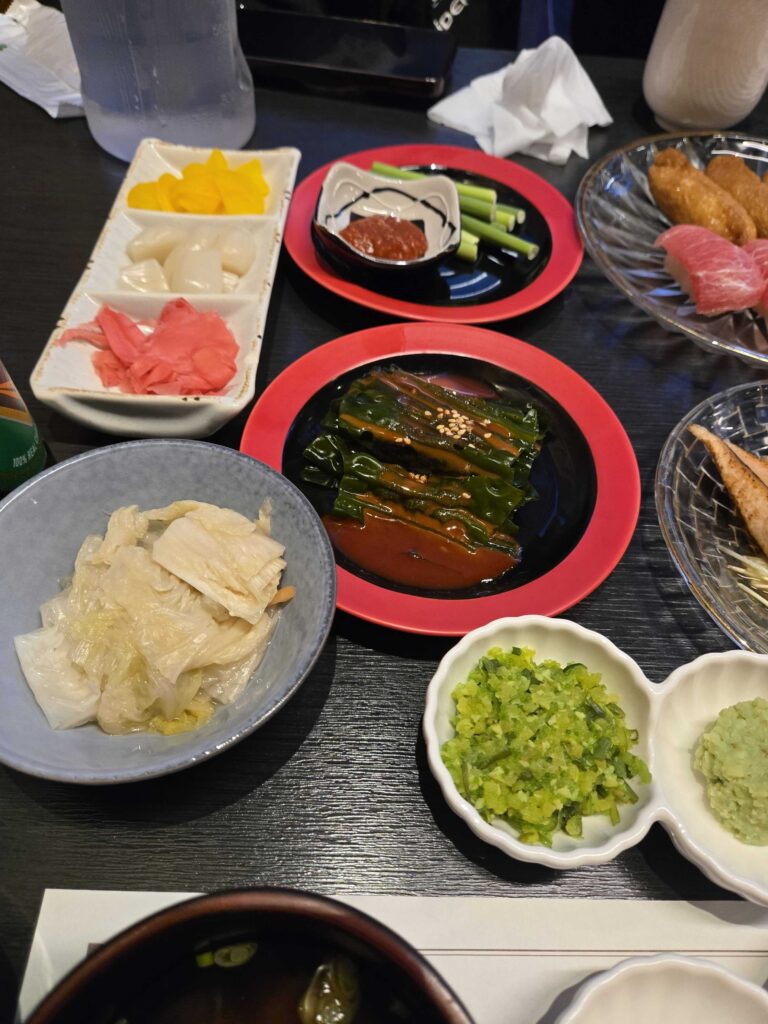
Around the tuna there were smaller plates that came with the course:
- inari sushi, sweet fried tofu pockets filled with rice, each topped with a slice of tuna
- a glass plate of lightly seared slices with lemon and radish sprouts
- chopped tuna in a dark sauce with sesame seeds
- roasted ginkgo nuts (은행, eunhaeng) on a square of paper
- green stems in a red sauce on a red plate
- white kimchi (baek-kimchi), pickled yellow radish and pickled ginger
- a chopped green relish and wasabi in a twin dish
- miso soup
How it was
The staff kept bringing tuna, a different cut each time, and we ate very well. With the extra refill on top of the two that come with the course, there was more than enough for four people.
The room
We ate in a private room, and each place was set with a bowl of miso soup and small dishes for soy sauce and wasabi. There is also a smoking room nearby. I don’t smoke, but for the others it was convenient.
Useful Korean at a tuna restaurant
If you don’t speak Korean, a few words go a long way at a course restaurant like this. These are general phrases, not anything specific to Jeong Chamchi:
| Korean | Say it | Meaning |
|---|---|---|
| 리필 해 주세요 | rifil hae juseyo | A refill, please |
| 뱃살 | baetsal | belly (the fatty cuts) |
| 김 더 주세요 | gim deo juseyo | More seaweed, please |
| 간장 / 와사비 | ganjang / wasabi | soy sauce / wasabi |
| 몇 번 리필돼요? | myeot beon rifil dwaeyo? | How many refills are included? |
| 1인분에 얼마예요? | il-inbun-e eolmayeyo? | How much per person? |
Who it suits
We went as four coworkers, and the format worked well for a group: everyone eats from the same boards, the refills keep coming, and the private room gave us the space to ourselves. That makes it a good fit for a work dinner or a group of friends who like raw fish.
Where it is
The restaurant is on the second floor at 289-14 Seongsu-dong 2-ga in Seongdong-gu, so look for the sign above the ground floor. We went as a group of four coworkers, and the private room made it an easy place for a team dinner.
More food in Seongsu
- Dammion Seongsu, 24-hour gukbap by Seongsu Station
- Seokam Seongsu, stone-grilled pork
- Mongttang Saenggogi, Korean BBQ near Seongsu Station
For a work dinner with a lot of tuna and a room to yourselves, Jeong Chamchi was a good choice. Go hungry.