
- Name: 제주 동문시장 (Jeju Dongmun Traditional Market), night market
- Address: 20 Gwandeok-ro 14-gil, Jeju City (제주시 관덕로14길 20) · Google Maps
- Visited: Sunday, July 5, 2026, evening. Our first night in Jeju, family of four
- What we ate there: egg-wrapped gimbap, a steak and stir-fried kimchi box, fresh tangerine juice
- Took away: Geobukibap rice balls, eaten the next morning
- Bought: Jeju snacks, such as Udo peanut sweets
- Seating: we couldn’t find anywhere to sit, so we ate standing up
- My rating: 4.5 / 5
- Info checked: September 23, 2026
Dongmun Market (동문시장) is the big traditional market in Jeju City, and in the evening part of it turns into a night market full of food stalls. We went on Sunday, July 5, 2026, our first night in Jeju, as a family of four. It was packed. We couldn’t find anywhere to sit, so we ate standing up. We had gimbap, a steak box and tangerine juice at the market, and left with a bag of Jeju snacks and a tray of rice balls for the next morning.
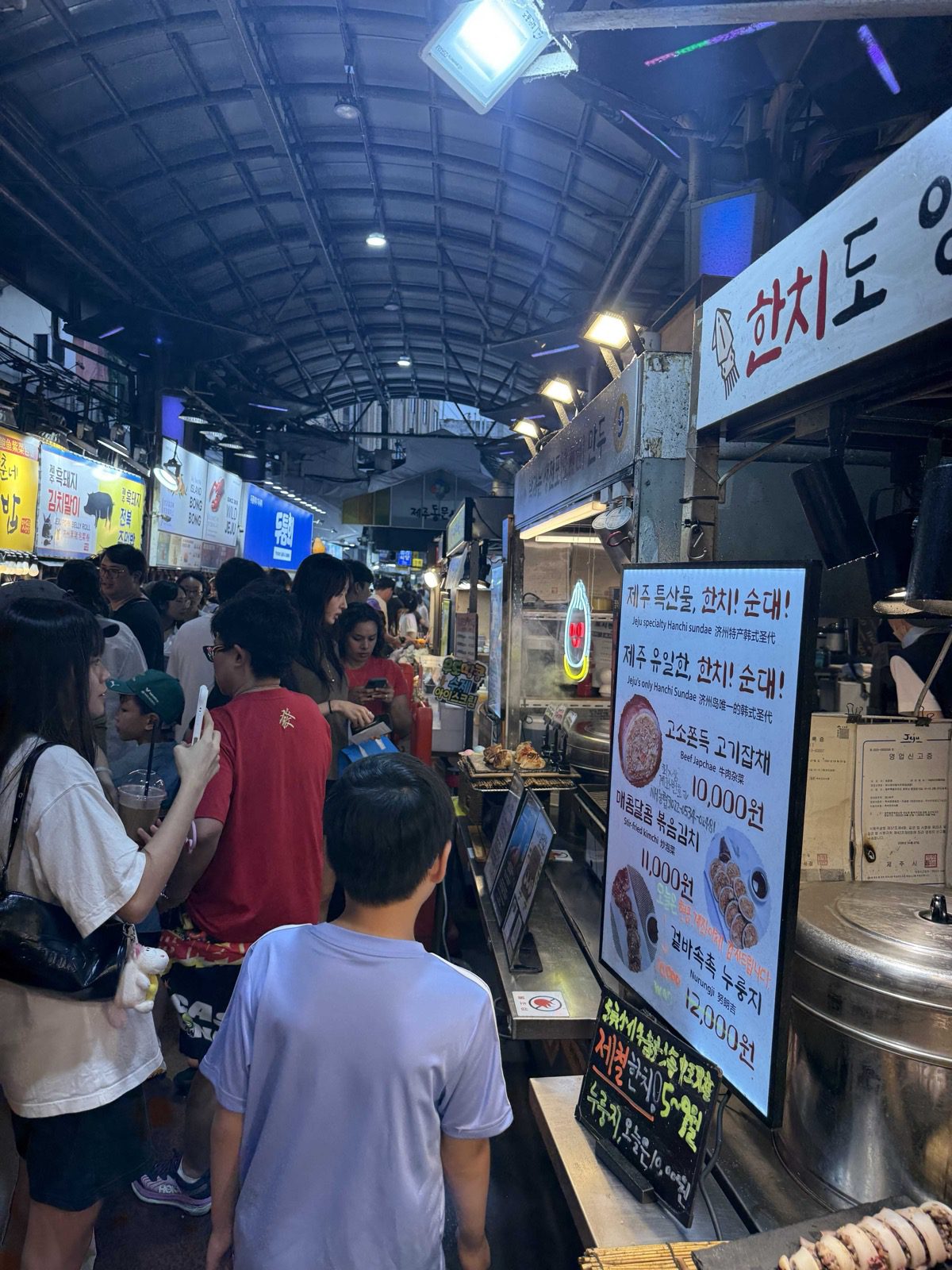
Where the night market is
The market’s address is 20 Gwandeok-ro 14-gil in Jeju City. According to Visit Jeju, Jeju’s official tourism site, the night market is held near Gate 8 every day, from 19:00 to midnight between May and October and from 18:00 to midnight between November and April, and stalls close early if they sell out. Our July visit fell in the summer hours. The daytime market is listed as open from about 07:00 to 21:00, depending on the shop, and the same page lists a public car park with 30 minutes free.
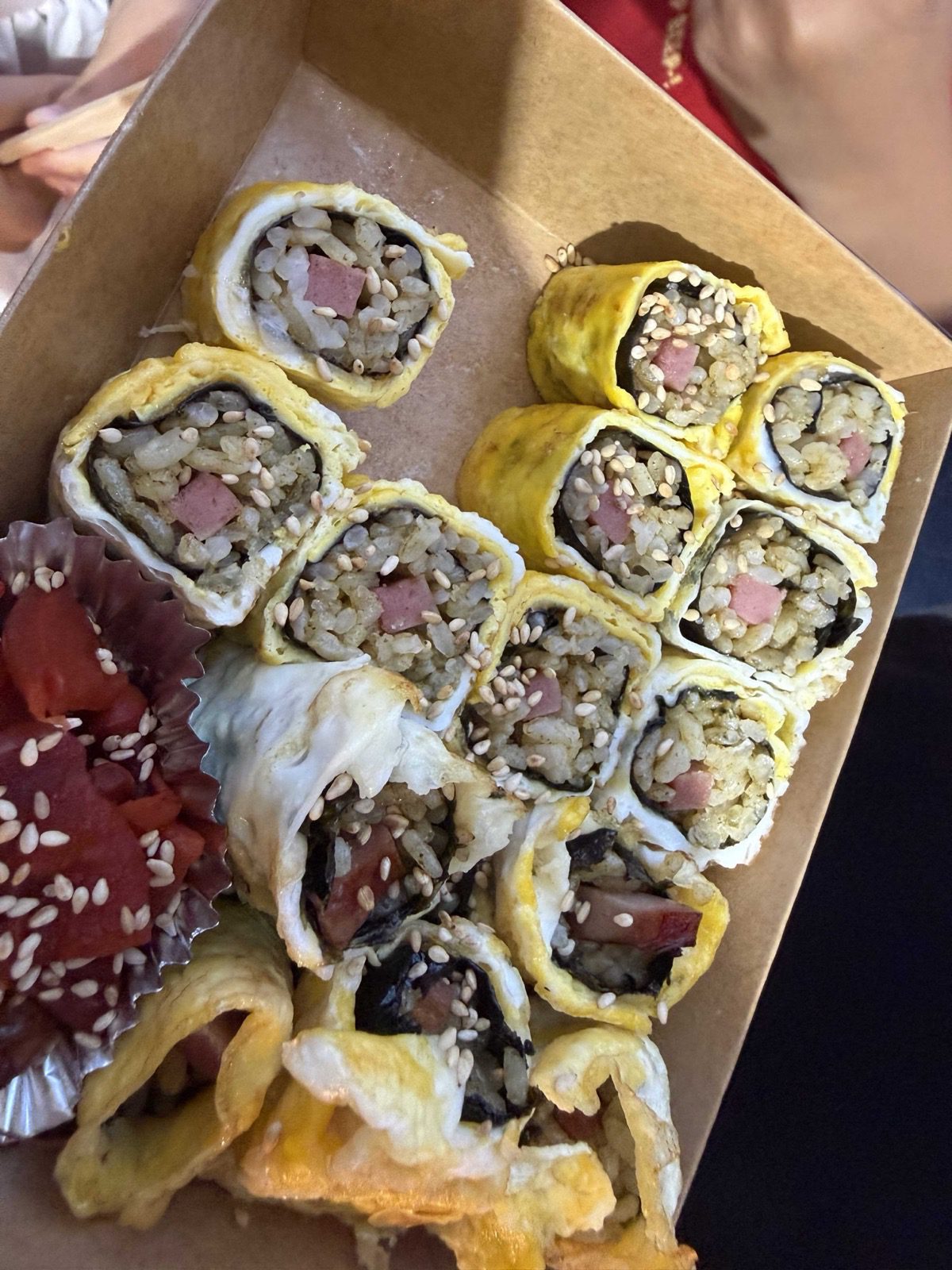
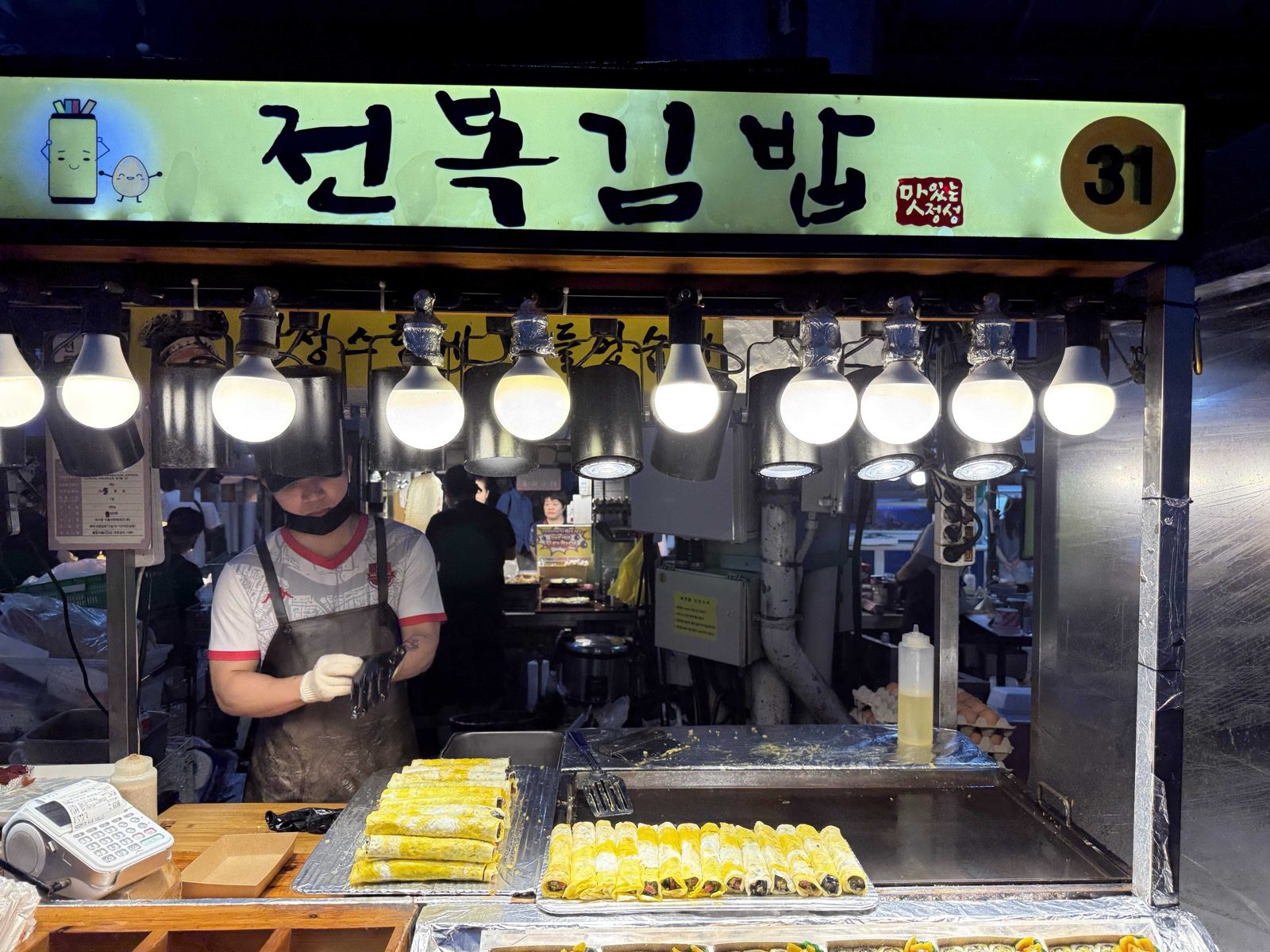
The night market is a long covered hall with stalls down both sides. Each stall has a number on its sign, which is useful if you want to find one again: the abalone gimbap stall we passed was number 31, for example.
Egg-wrapped gimbap
Gimbap (김밥) is a Korean rice roll. The one we bought was wrapped in a thin layer of egg and cut into thick slices, and it came in a paper box. It is easy to eat while standing, which mattered here.
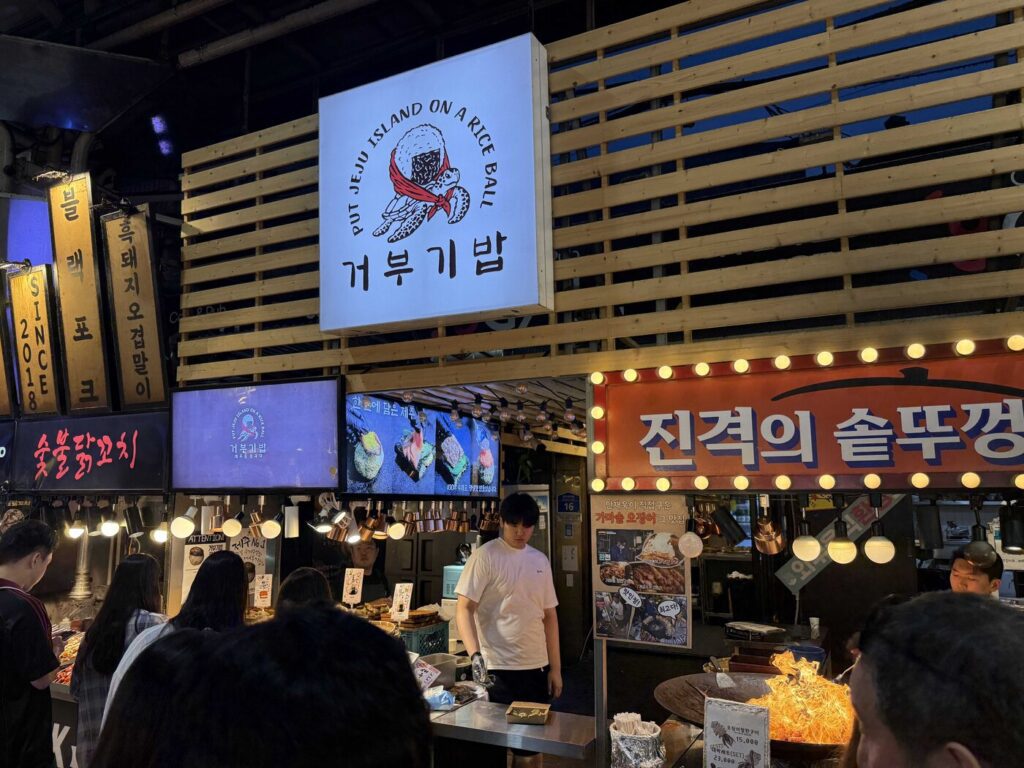
Some stalls sell gimbap with abalone, a Jeju specialty. Stall 31, under a row of light bulbs, was one of them.
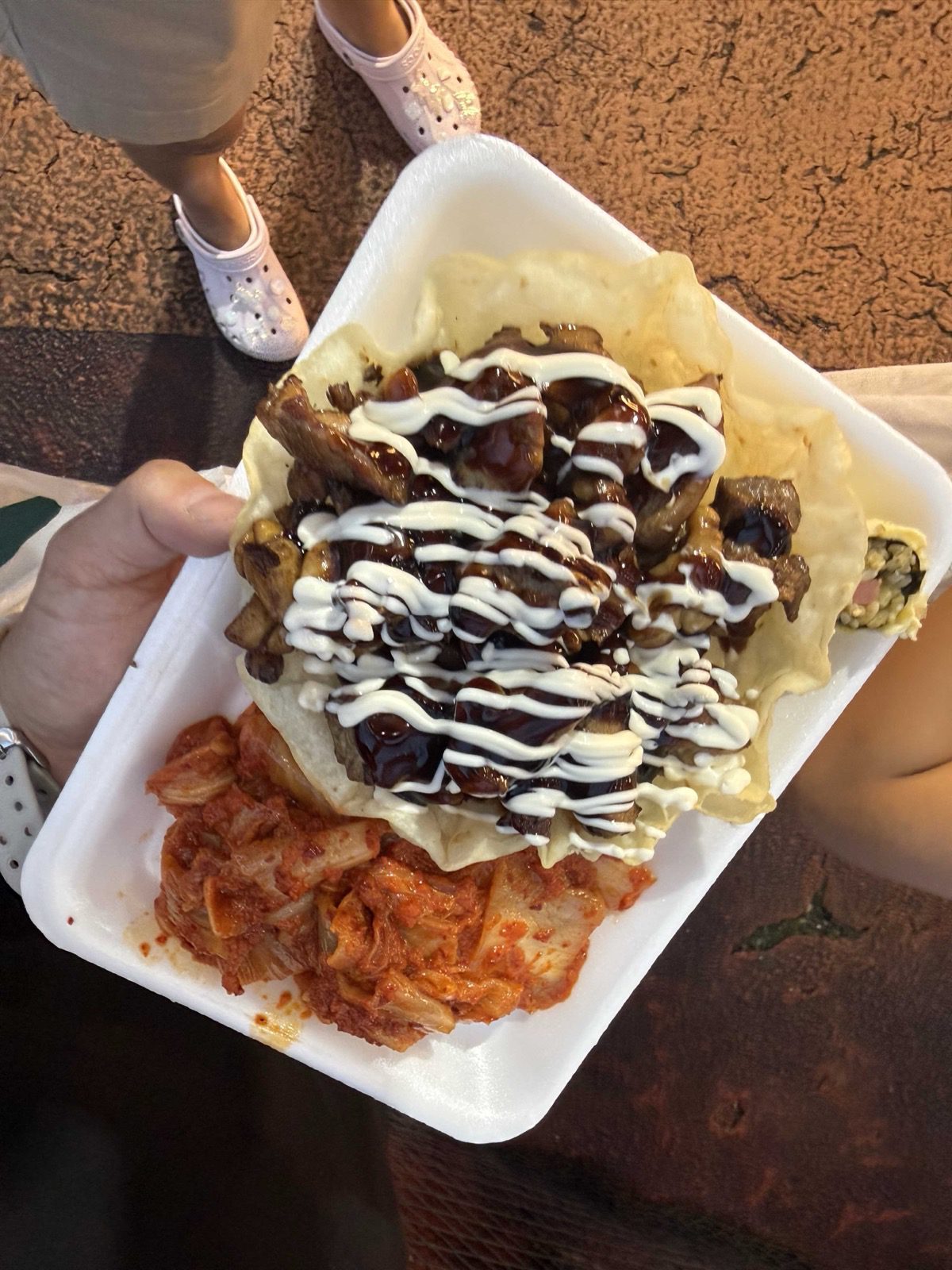
Steak and stir-fried kimchi
Our other main dish was a box of steak pieces topped with mayonnaise and a dark sauce, with stir-fried kimchi on the side. It is the kind of thing you hold in one hand and eat with the other.
Tangerine juice
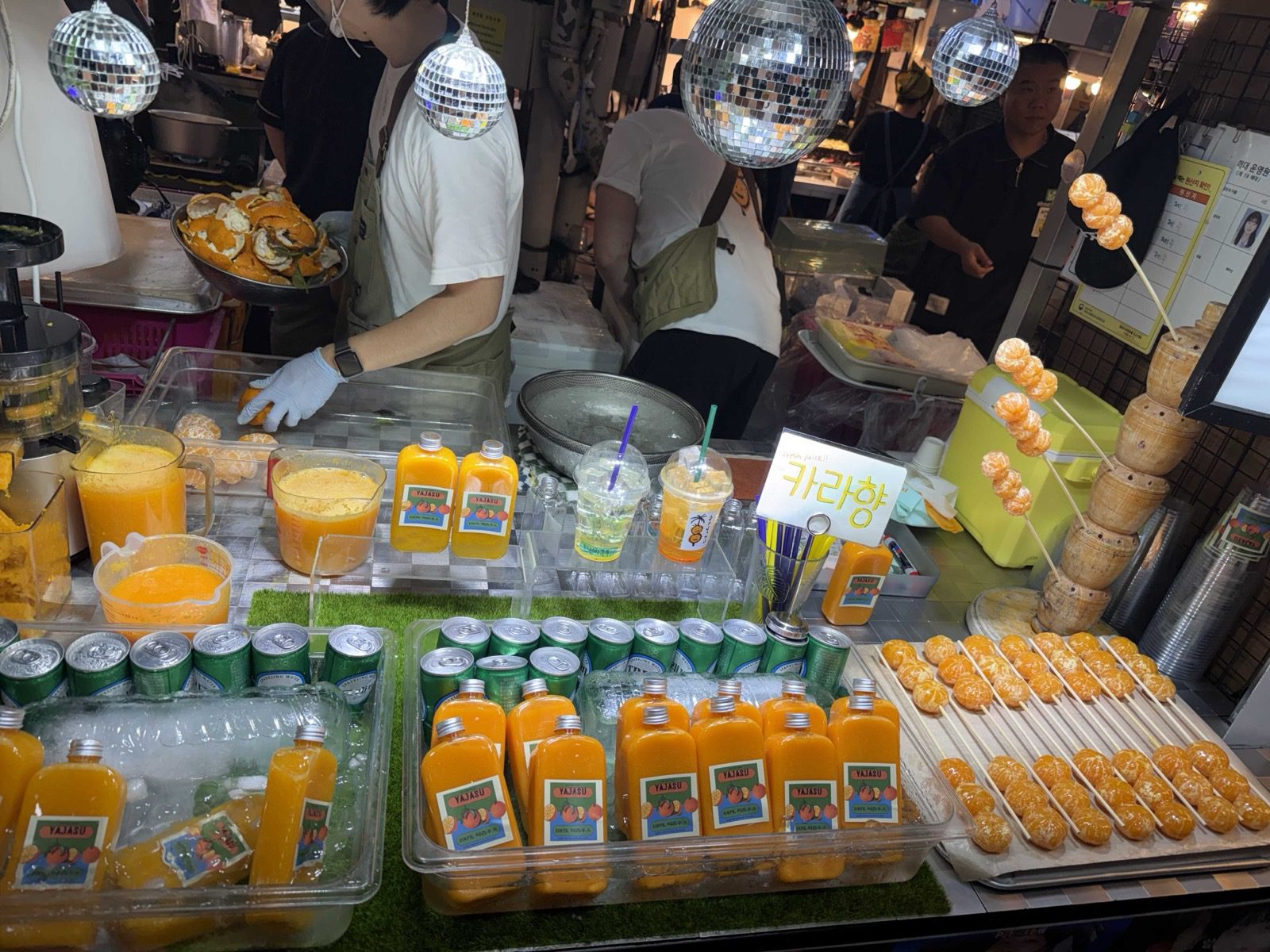
Jeju is known for its tangerines, and several stalls press the juice fresh. We finished with a round of tangerine juice.
Geobukibap, for the next morning
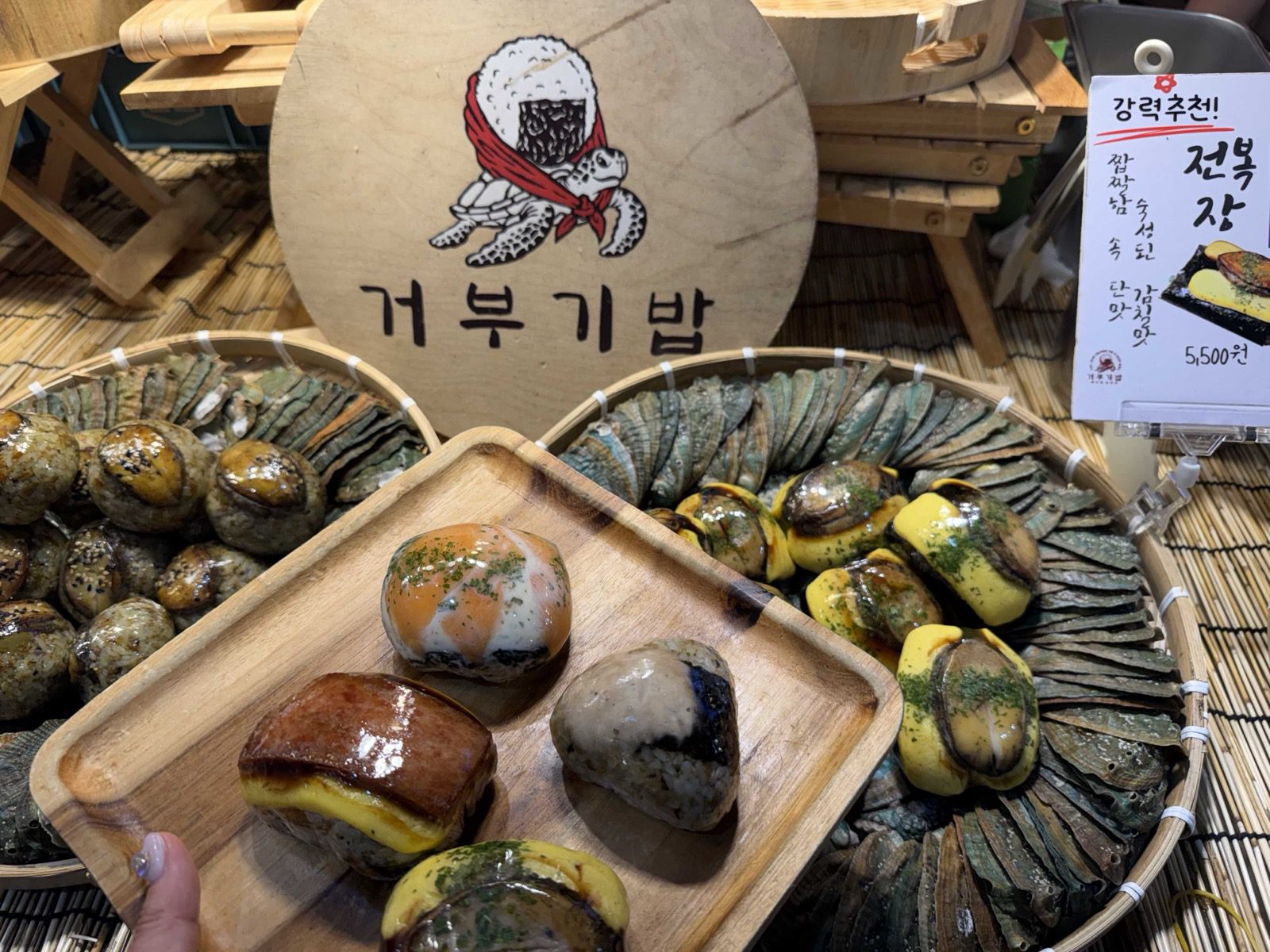
Geobukibap (거북기밥) is a rice ball stall. Its sign shows a turtle holding a rice ball, with the line “Put Jeju island on a rice ball”. The rice balls are topped with things like abalone. We didn’t eat them at the market: we bought a tray to take away and had them the next morning.
Other stalls we walked past
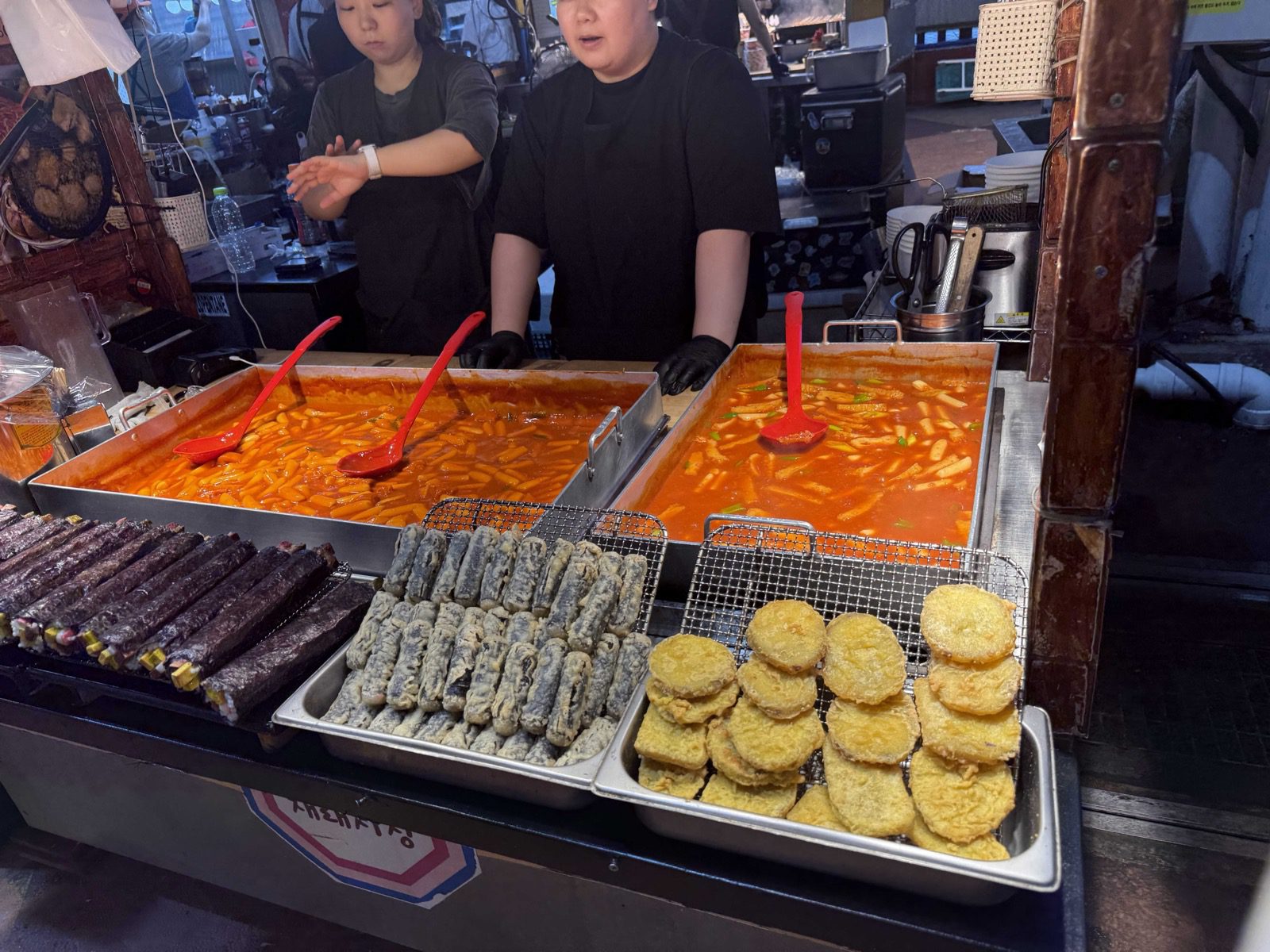
There was a lot more than we could eat in one night. Near Geobukibap there were stalls with signs for charcoal-grilled chicken skewers (숯불닭꼬치), black pork rolls (흑돼지오겹말이) and squid cooked on a huge iron lid (진격의 솔뚜껑). There were tteokbokki and fritter stalls, black pork on the grill, grilled squid, and a stall grilling makchang (pork intestines) with prices on a chalkboard: 15,000 won for salted makchang, and 16,000 won for the spicy or half-and-half versions.
Raw fish to go
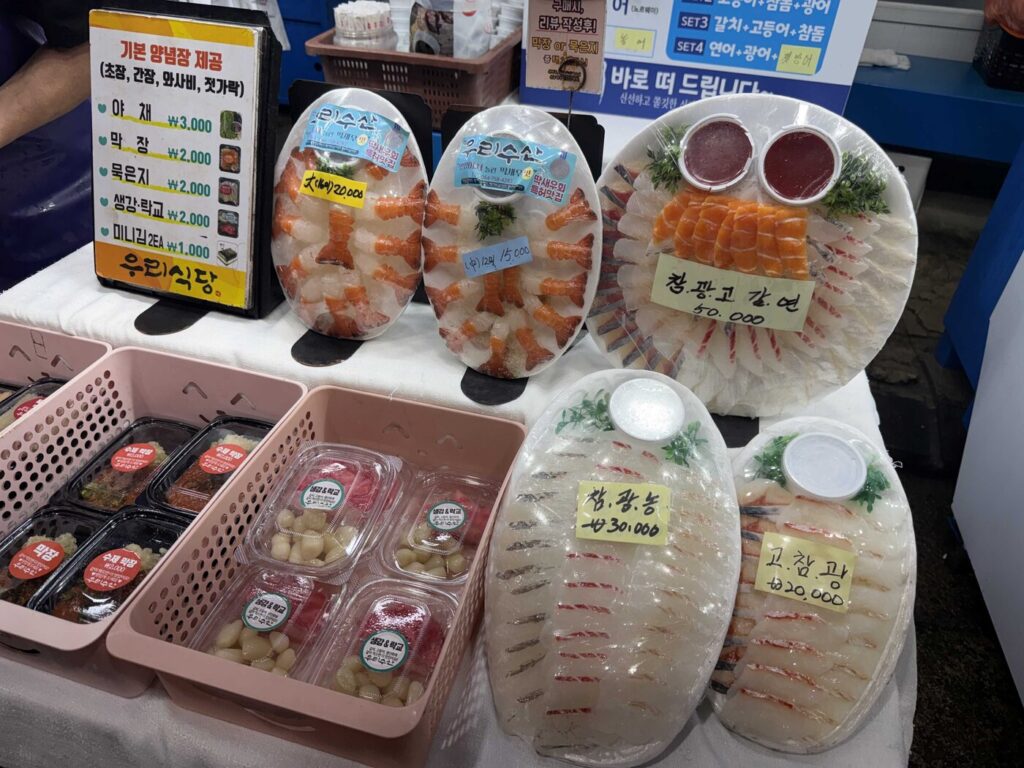
There are raw fish counters in the market too. At one of them, Urisusan (우리수산), the sashimi was packed on plates ready to take away. We didn’t buy any, but the prices were on the packs:
| Pack | What is in it | Price (won) |
|---|---|---|
| 참광고갈연 | red sea bream (참돔), flatfish (광어), mackerel (고등어), hairtail (갈치), salmon (연어) | 50,000 |
| 참광농 | red sea bream, flatfish, sea bass (농어) | 30,000 |
| 고참광 | mackerel, red sea bream, flatfish | 20,000 |
| 딱새우회 (large, 16 pieces) | raw Jeju shrimp | 20,000 |
| 딱새우회 (medium, 12 pieces) | raw Jeju shrimp | 15,000 |
A sign next to it listed extras from the stall’s restaurant: vegetables for wrapping 3,000 won, dipping sauces and pickles 2,000 won each, and two small packs of seaweed for 1,000 won. The pack names are made of the first syllables of each fish name, which is why they look like codes.
Eating on our feet
The market was packed that night. We couldn’t find a seating area, so we bought one thing at a time and ate it standing, near the stall or off to the side.
Souvenirs and snacks
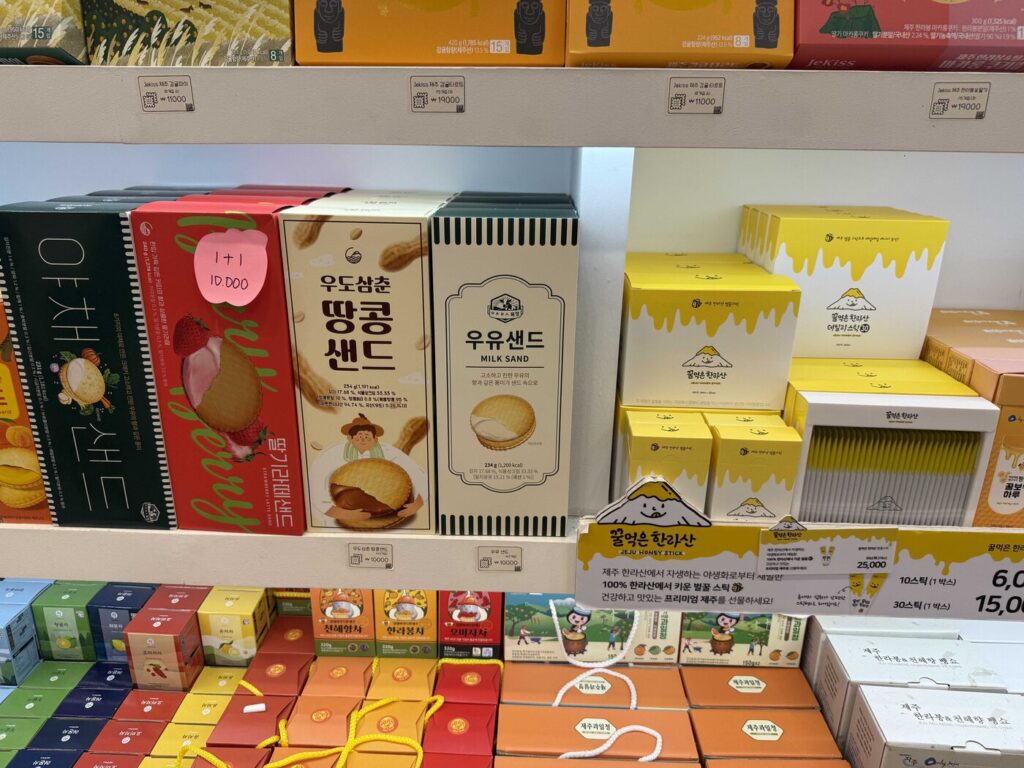
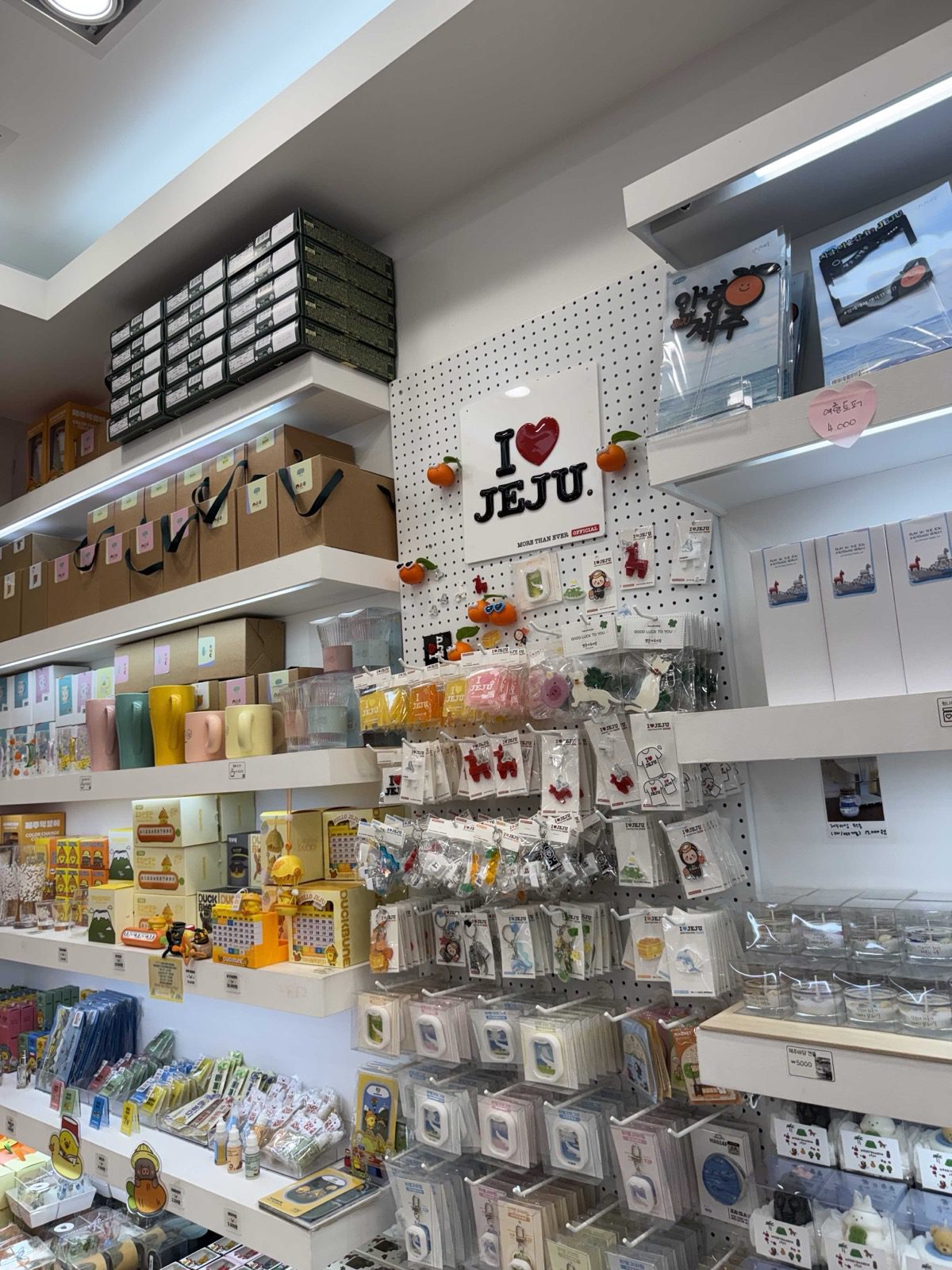
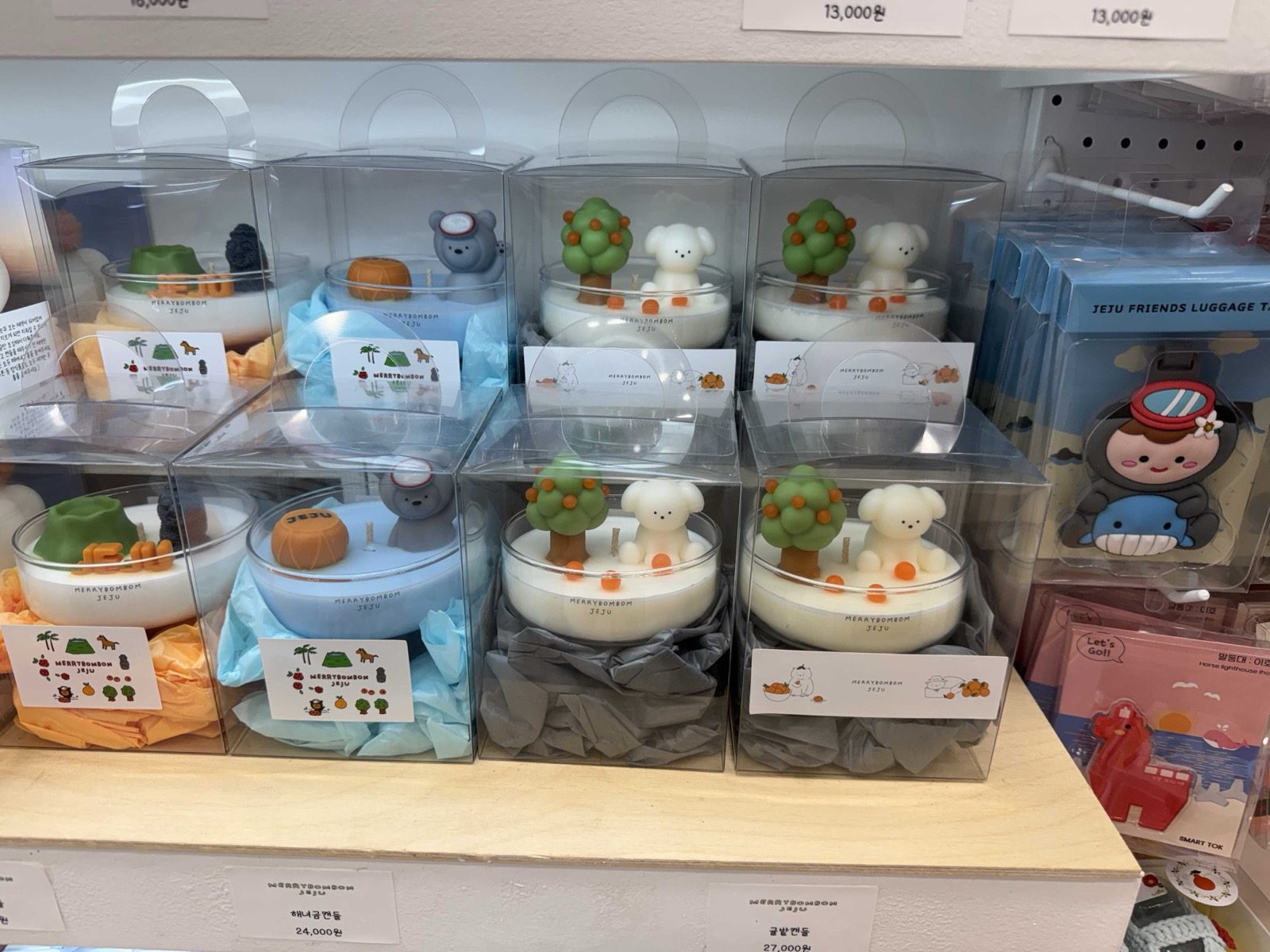
Part of the market is shops selling Jeju souvenirs and snacks: tangerine-themed goods, candles and boxed sweets. We mostly bought snacks, such as the peanut sweets from Udo, the small island off Jeju’s east coast. The shelves were stacked with boxed sweets, and below them were gift boxes of fruit teas such as hallabong, cheonhyehyang, yuja and omija tea. Prices were on the shelves. Some examples from the shop we went into:
| Item | Korean | Price (won) |
|---|---|---|
| Udo peanut sandwich cookies | 우도삼춘 땅콩샌드 | 10,000 |
| Milk sandwich cookies | 우유샌드 | 10,000 |
| Strawberry latte sandwich cookies | 딸기라떼샌드 | 10,000 for two boxes |
| Jeju tangerine pie | 제주 감귤파이 | 11,000 |
| Jeju tangerine tart | 제주 감귤타르트 | 11,000 / 19,000 |
| Hallasan honey sticks, 10 / 30 | 꿀먹은 한라산 | 6,000 / 15,000 |
What helped us
Looking back, three things made the evening easier. Most stalls show their prices on signs or chalkboards, so you know what you will pay before you order. Some food is packed to take away, like the Geobukibap trays and the sashimi plates, which is handy when you can’t find a seat. And the stall numbers on the signs make it easy to find a stall again later in the evening.
More from our Jeju trip
- Jeju Gwanghae in Aewol, our galchi lunch the next day
For a first night in Jeju, the night market was a good choice, with a lot to look at and a lot to try. Just go ready to stand.
For every place we ate at on the same trip, see our Jeju food guide for families.
That night we stayed near the airport at Hotel Air City Jeju, reviewed on our family travel site, Kid-friendly Korea.