
Ski days have their own rhythm. You wake up, you assess how sore your legs are from the day before, and then you make a decision that will define the next eight hours: do you grab something quick and get on the slopes early, or do you do the breakfast properly and fuel up before the mountain beats you down again? At Oak Valley Resort in Wonju, the answer was easy. The resort’s breakfast buffet was right there, the dining room was open, and the spread on display through the window made a compelling argument for taking your time.
This was the morning of our ski day. We’d eaten well the night before — proper Korean dinners at local restaurants nearby — but a buffet breakfast before a full day of skiing felt both earned and strategically necessary. What followed was one of those unexpectedly pleasant hotel breakfast experiences that you find yourself thinking about later.
Oak Valley Resort Breakfast — Where and What
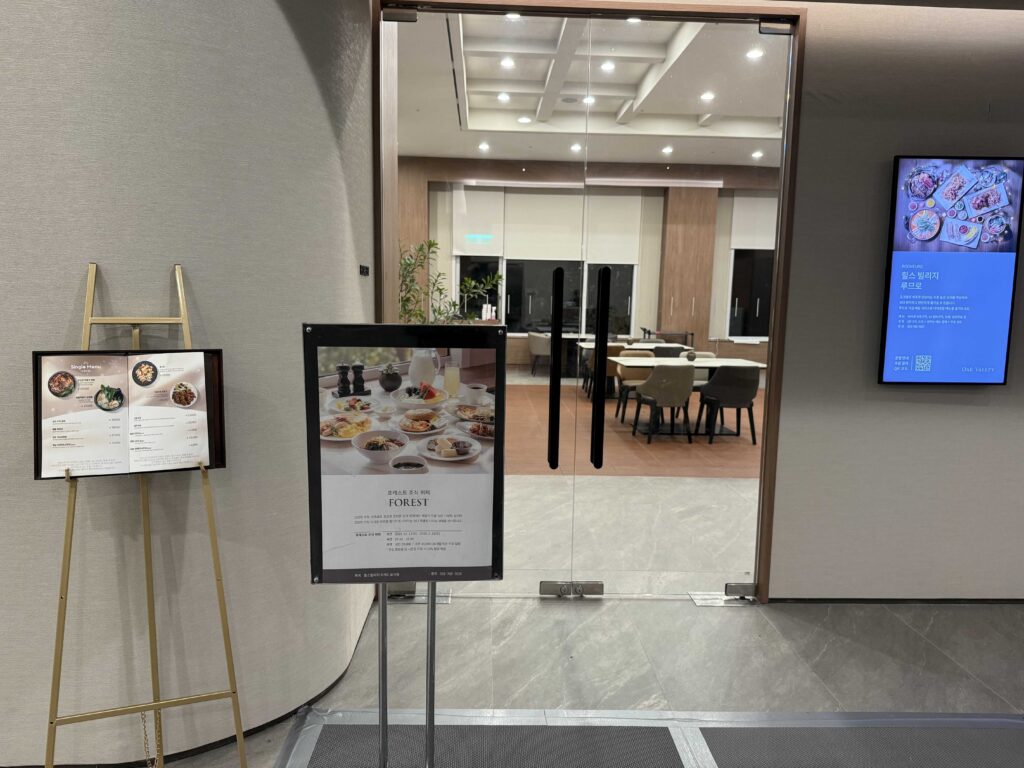
The breakfast is served at the restaurant in Oak Valley Resort Hills Village Tower C, one of the accommodation towers within the resort complex. The entrance is clean and well-signed — a framed menu board outside shows the buffet spread with photographs, giving you a preview of what’s waiting inside. The digital display inside the lobby area adds to the polished first impression. This isn’t the kind of breakfast they throw together as an afterthought. It’s properly presented and clearly part of what the resort considers a complete guest experience.
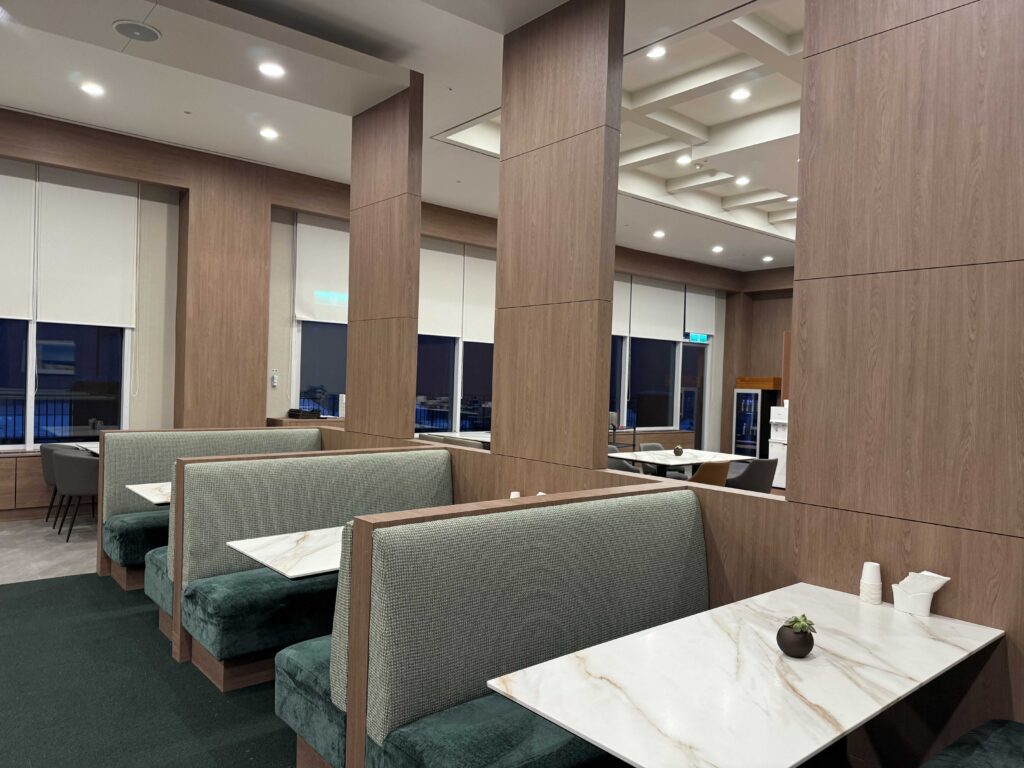
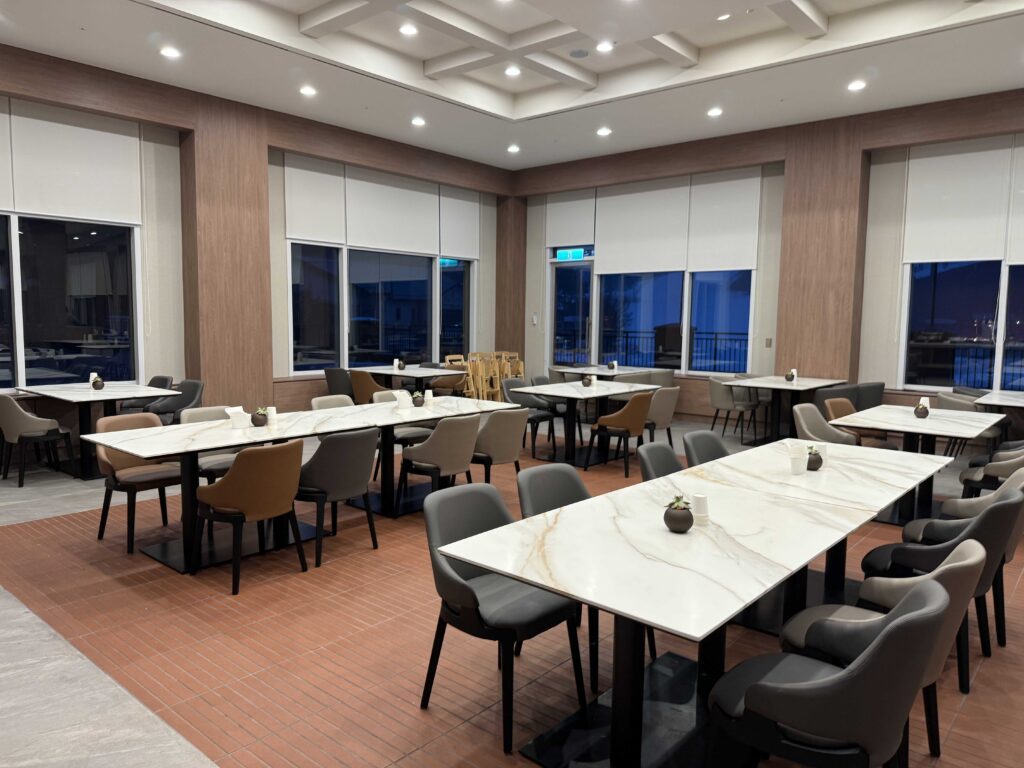
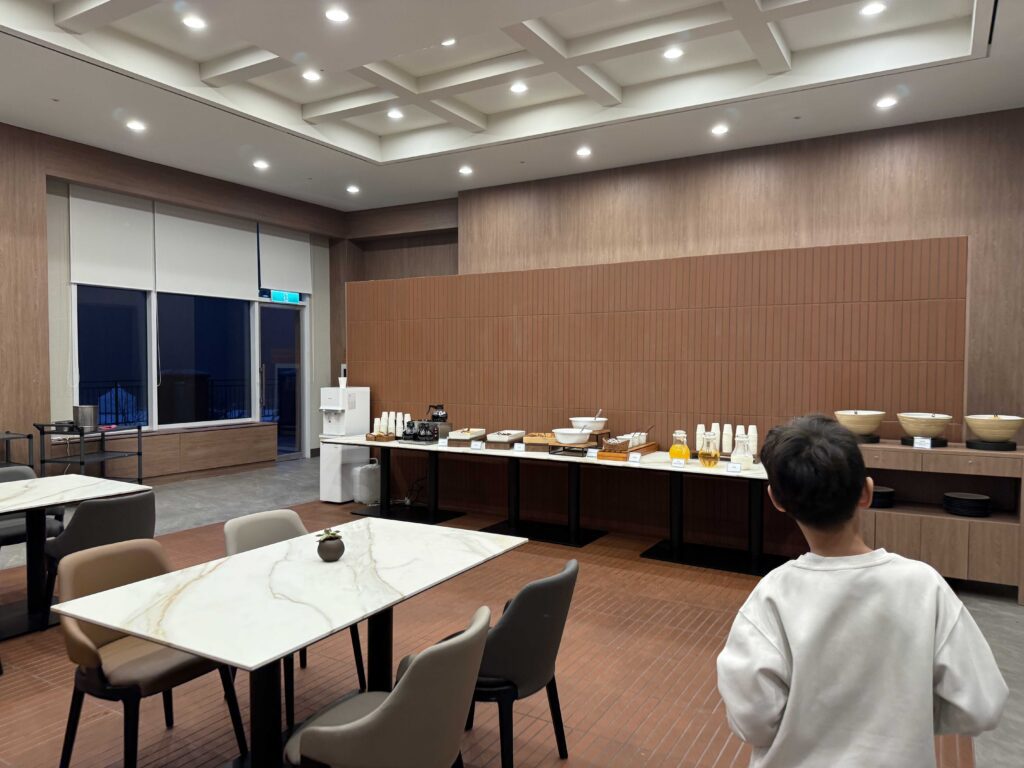
The dining room itself is spacious and well-designed. Clean lines, marble-topped tables, booth seating along the sides and open table arrangements in the centre. Large windows let in the morning light, which at a mountain resort in winter has that particular quality — clear and cold-looking, the kind that reminds you there’s a ski slope waiting. The room was calm when we came in. Quiet enough to eat properly, not so empty it felt abandoned. Good ambience for a breakfast that was about to impress.
The Buffet Spread — First Impressions
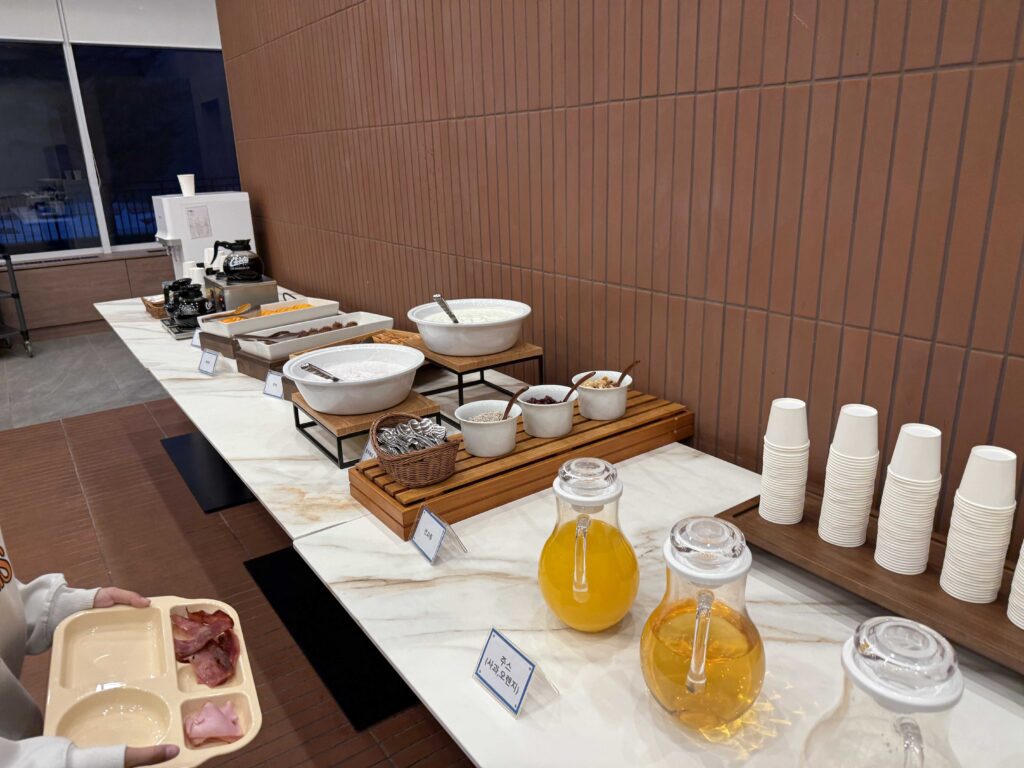
The buffet layout at the Oak Valley Resort breakfast follows a well-organised station format. Bread and Western items on one shelf, Korean banchan and hot foods on the main line, salads and cold items in the middle, soups and warm dishes on a separate heated section. It covers enough ground that someone who wants a full Korean breakfast and someone who prefers something lighter and more Western can both find what they’re looking for without compromise.
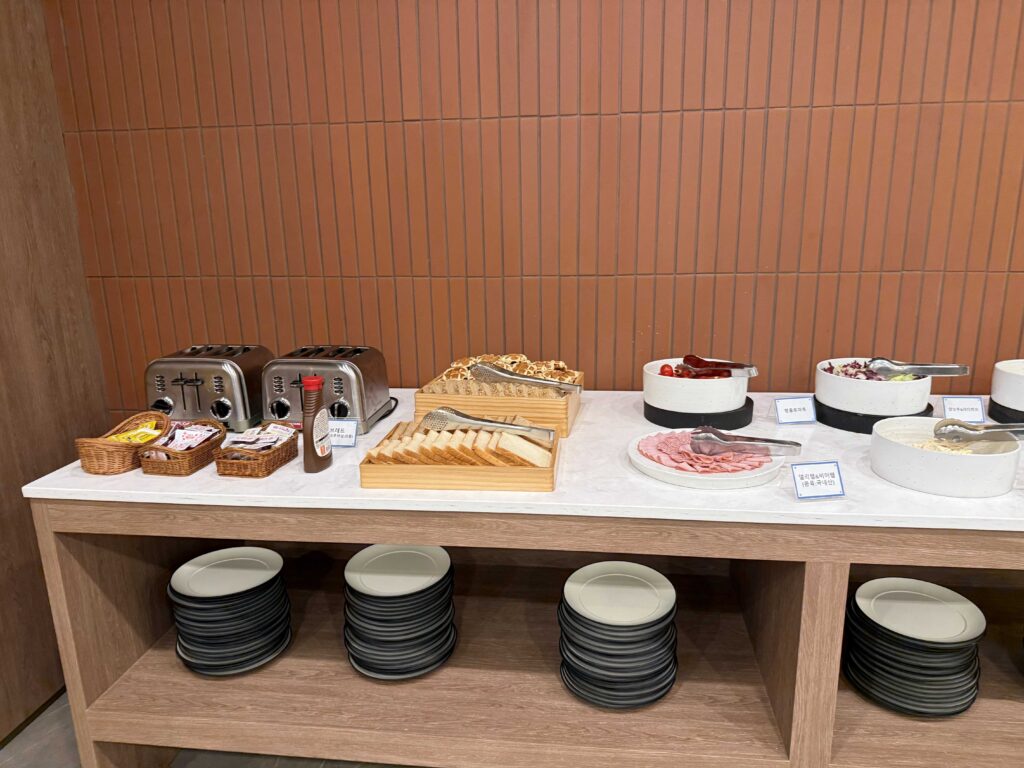
The bread station caught my attention first — sliced breads, toast options, and what looked like pastries and cold cuts arranged neatly. It had that European hotel breakfast feel: simple but properly assembled, with enough variety to build a plate without thinking too hard about it. Toasted bread, a couple of slices of deli meat, butter on the side. It’s not complex, but the quality of execution matters, and here it was done cleanly.
The Korean Banchan Station — Where It Gets Interesting
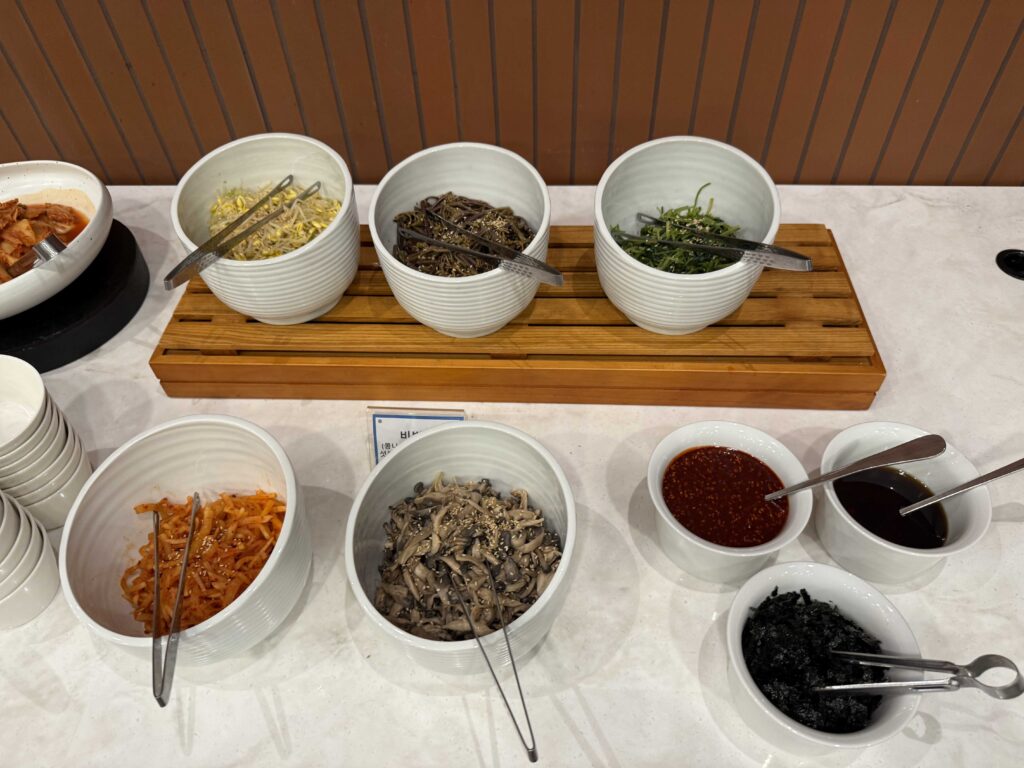
For me, the Korean section is always where a resort breakfast in Korea gets genuinely interesting — and at Oak Valley, it delivered. A long wooden board displayed an array of banchan: seasoned burdock root, braised mushrooms, seasoned spinach, some kind of spiced anchovy or dried seafood preparation, and what looked like a sweetened black bean side. All of it house-made, clearly fresh, properly seasoned. The kind of banchan that reminds you why Korean cuisine handles vegetables better than almost any other food tradition.
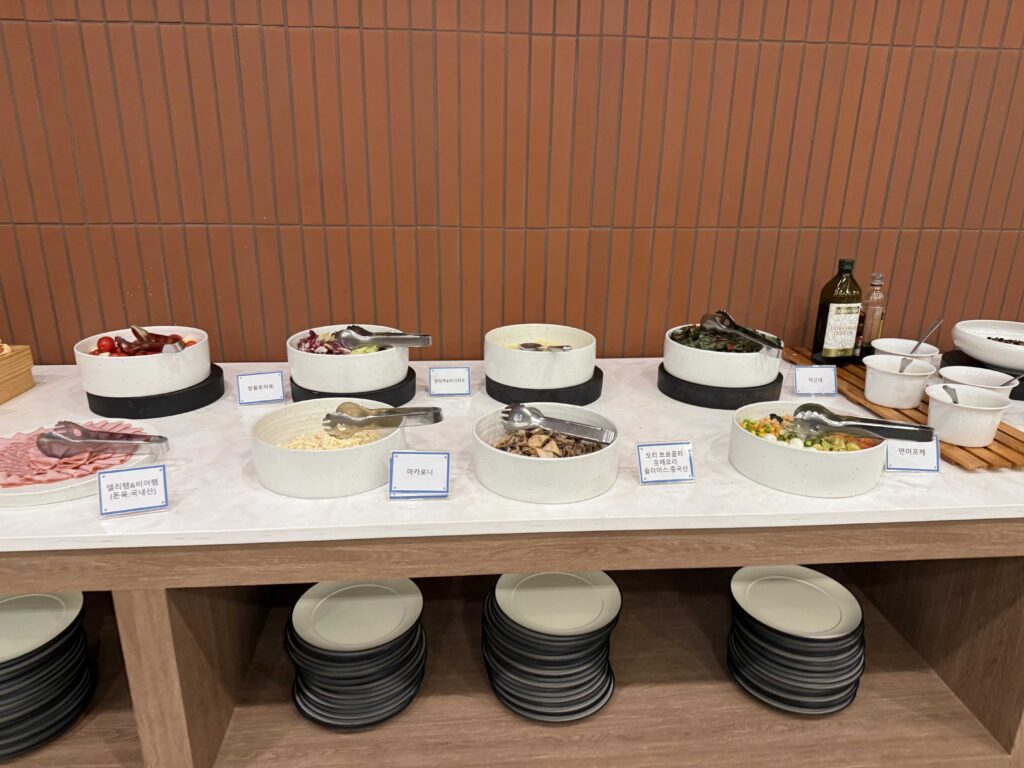
The banchan line continued across a second station — more seasoned vegetable preparations, some fermented items, and a couple of items I didn’t immediately recognise but tried anyway. One of the underrated pleasures of Korean hotel breakfasts is encountering dishes you might not have ordered from a menu but end up enjoying more than expected. This happened here at least twice.
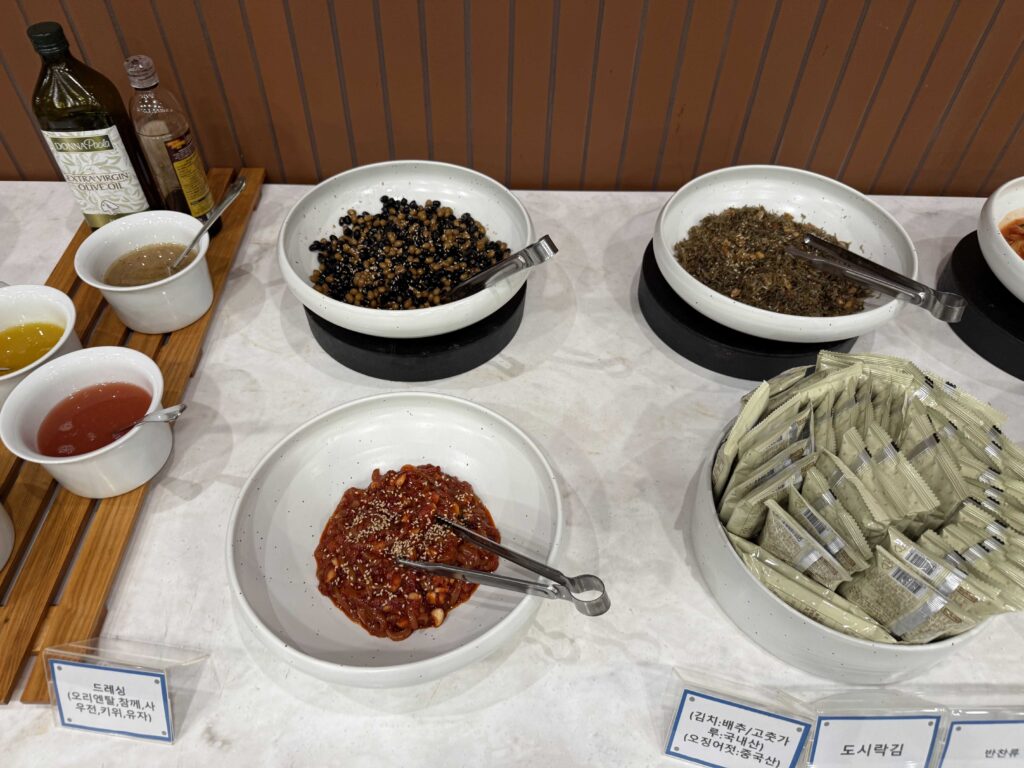
Kimchi, Salads, and the Cold Spread
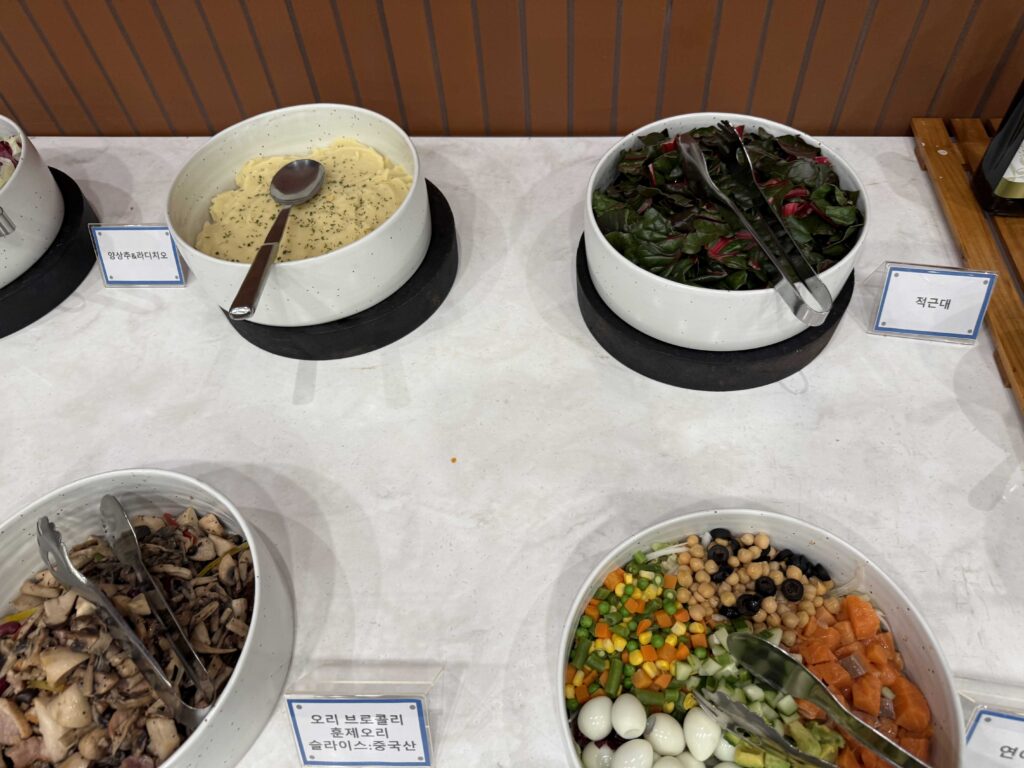
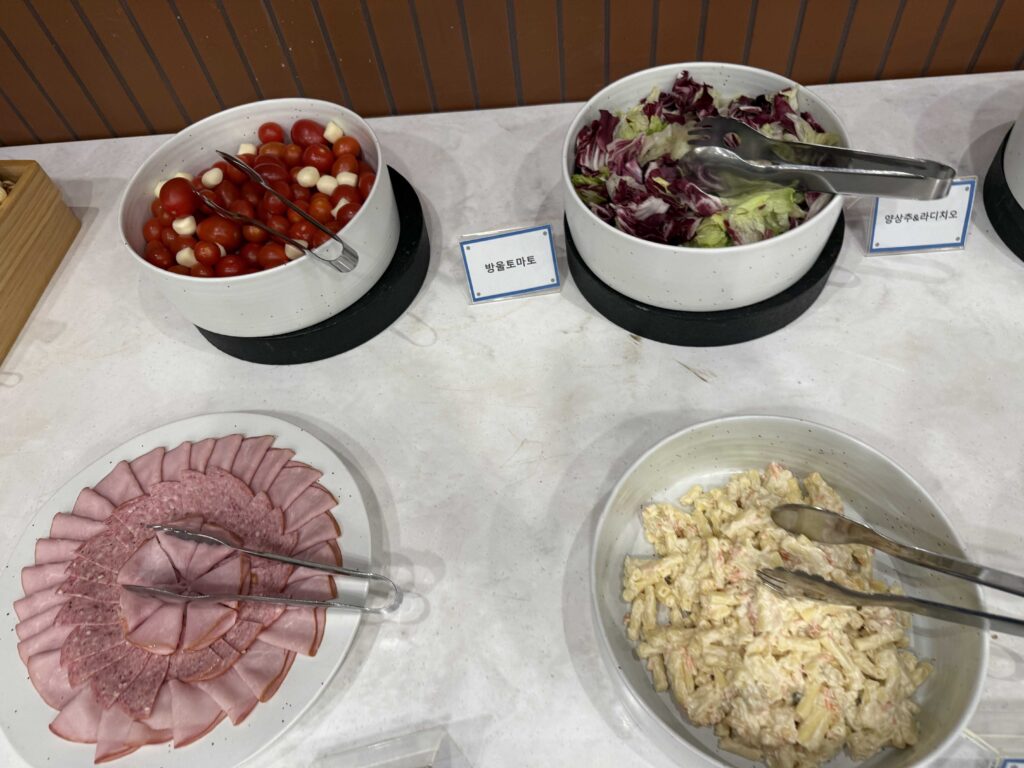
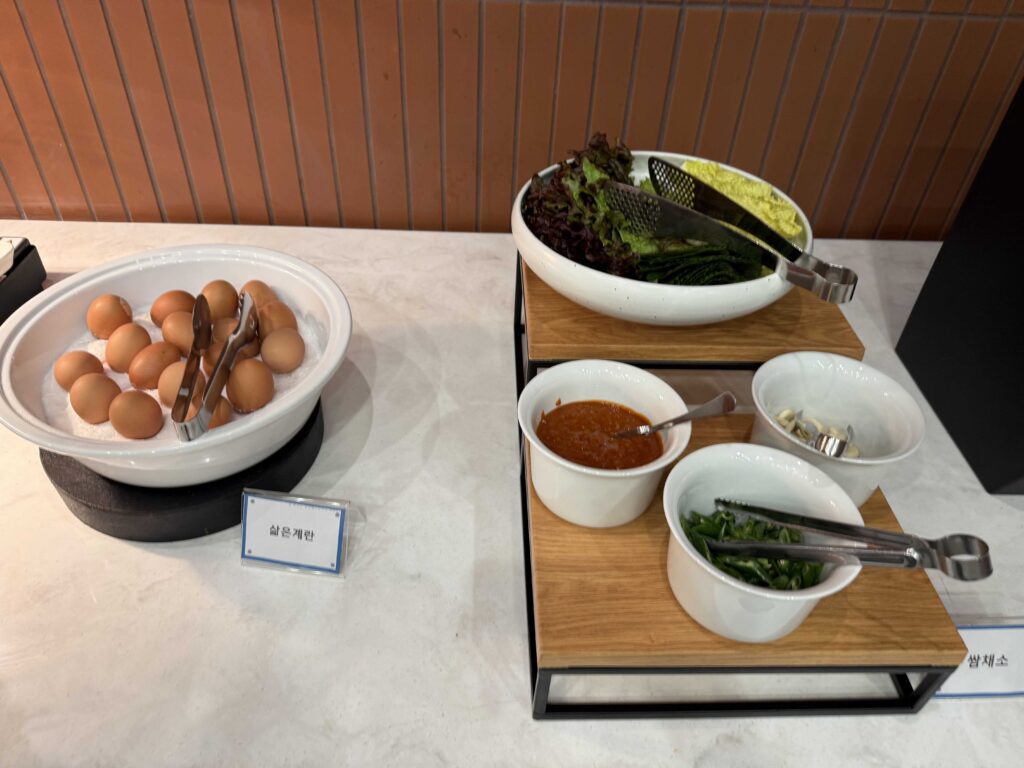
The salad section was substantial and fresh-looking. Cherry tomatoes, avocado-based preparations, shredded vegetables, mixed greens — the kind of spread that makes you feel slightly better about the waffle you’re about to add to your plate. There was also a cold cut section with sliced deli meats, which is standard for hotel buffets but appreciated nonetheless for variety. The presentation was clean, everything labelled, nothing looking like it had been sitting out since dawn.
The soups and hot Korean items occupied a separate heated station — large pots or individual heated vessels keeping things at serving temperature. One appeared to be a mild doenjang-based soup, another something richer and darker. A proper Korean breakfast includes at least one warm soup, and the resort understood that. Pre-ski, a bowl of warm soup to start the day is one of the more underrated moves you can make.
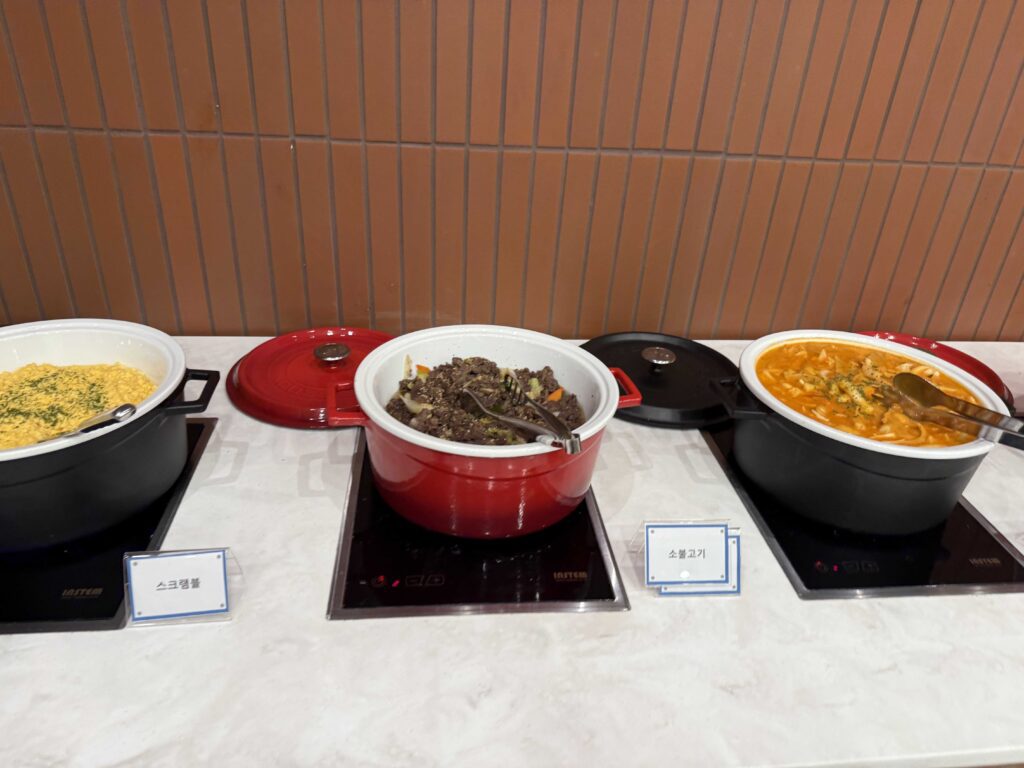
Hot Foods — Eggs, Sausages, and the Waffle Station
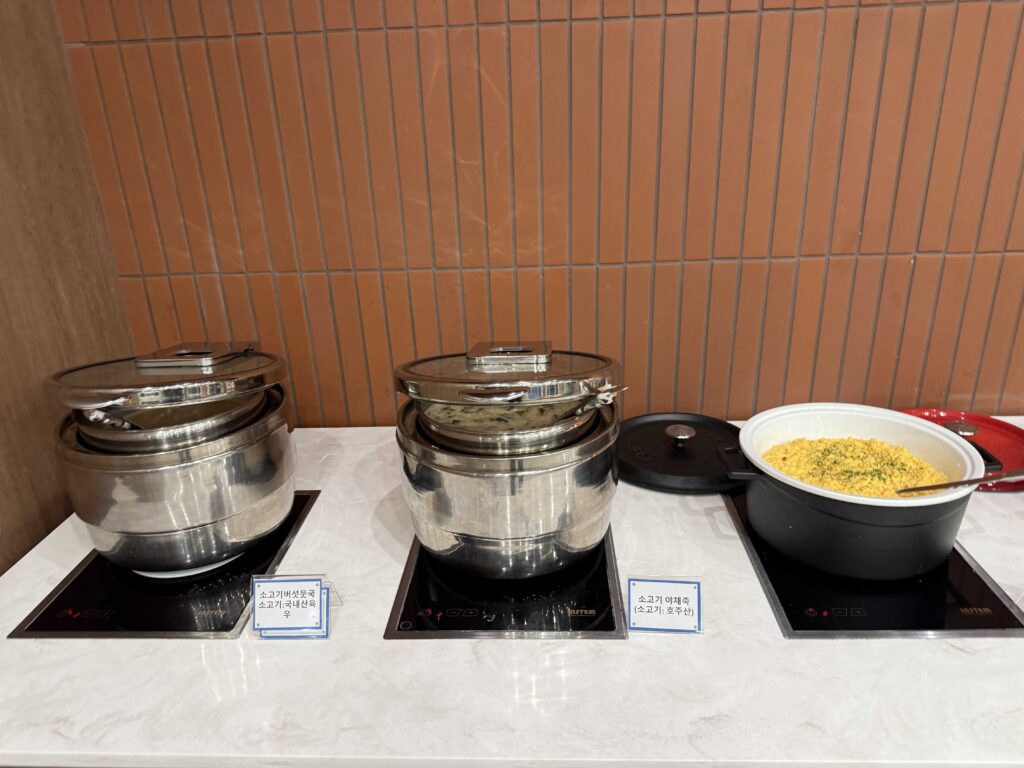
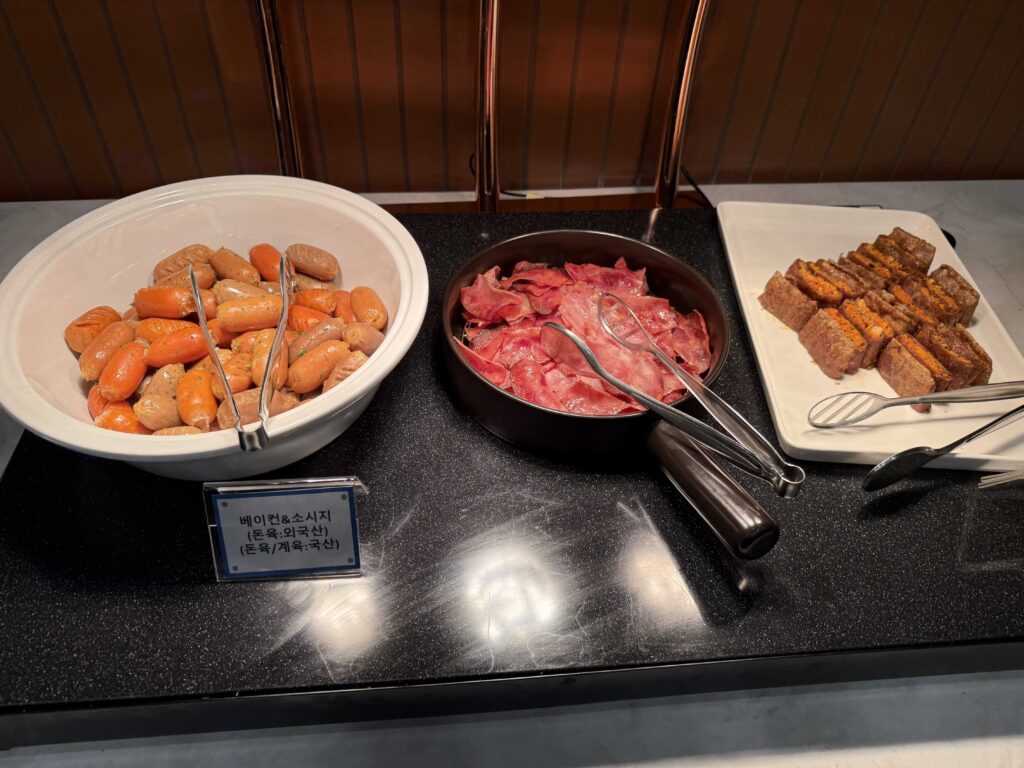
The hot food section covered all the expected bases: scrambled eggs, sausages (the thick Korean breakfast variety that have a satisfying snap), what looked like glazed carrots or braised vegetables in a warming tray, and a few other hot options rotating in and out. Nothing revolutionary, but reliably executed. The sausages were particularly good — proper texture, not rubbery, the kind that actually taste like something rather than just filling space on a plate.
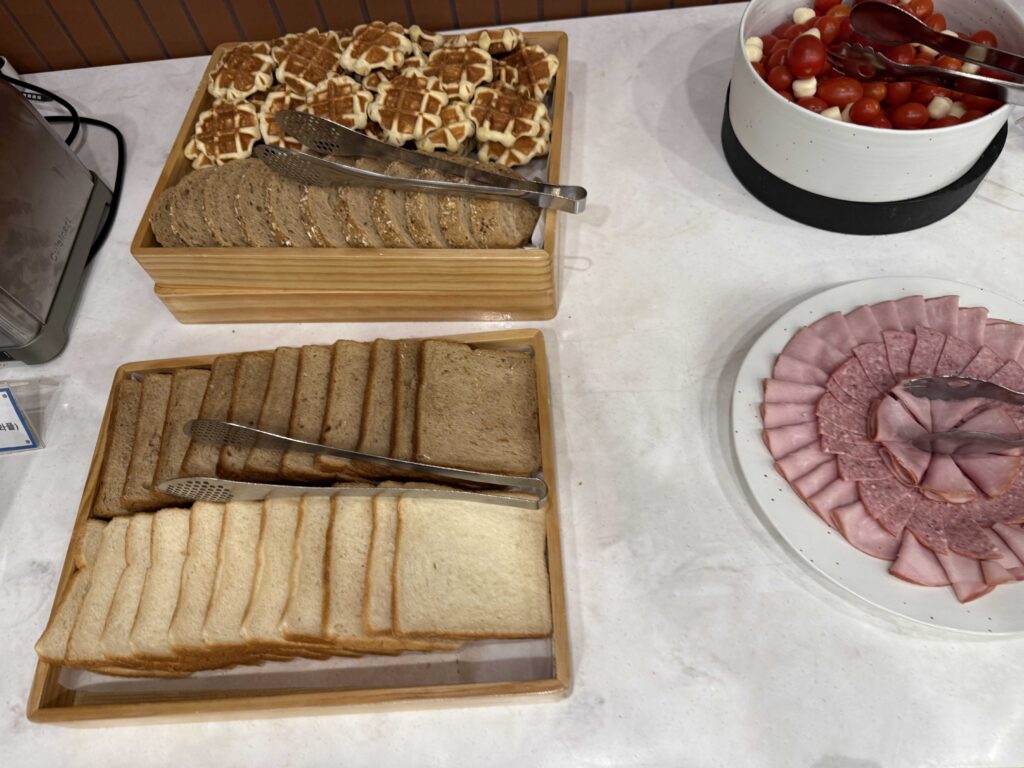
Then there were the waffles. Made fresh at a station, golden and slightly crisp on the outside, soft inside. This is the kind of item that elevates a hotel breakfast from adequate to genuinely enjoyable. A freshly made waffle, assembled with a few items from the salad station, becomes the centrepiece of a plate that’s both visually satisfying and actually good to eat. I built my plate around the waffle without apologising for it.
Cereals, Yoghurt, and the Juice Bar
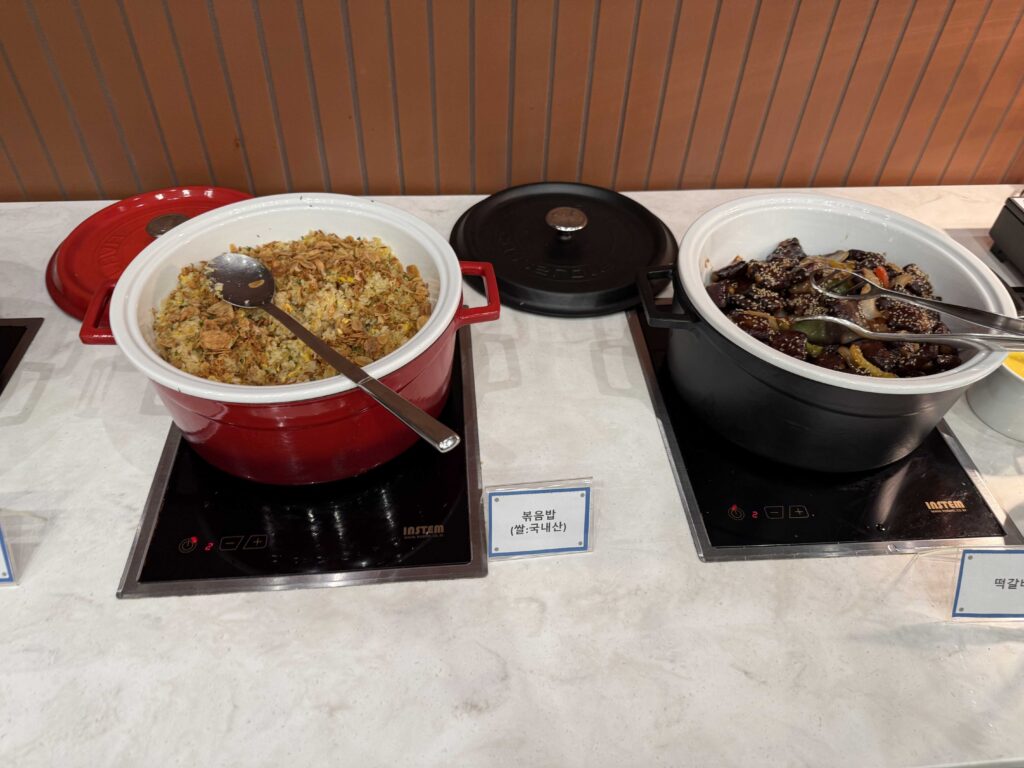
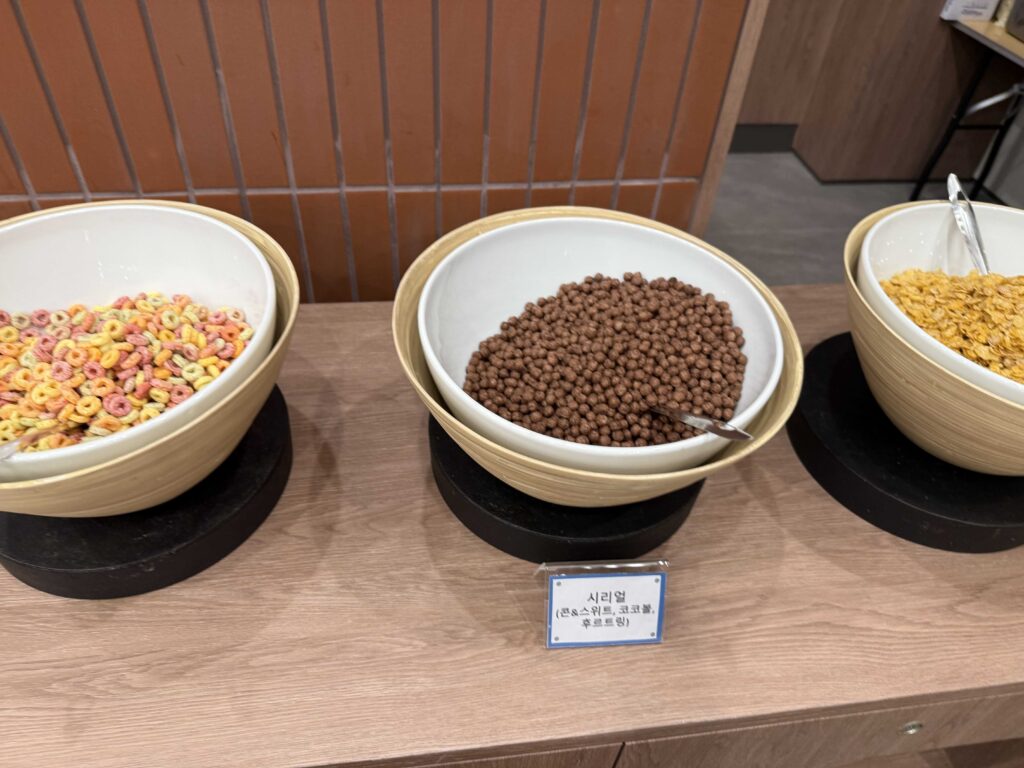
A separate counter held cereals and grain options — granola-style mixes, what appeared to be multi-grain or puffed rice varieties, and the accompanying yogurt and milk. Simple, but the kind of thing that some guests specifically want and appreciate having available. For a ski resort catering to a range of guests, covering lighter breakfast preferences alongside the full Korean and Western spread shows good thinking.
The juice station had bottled juices in what appeared to be a dispensing or display setup — orange, a darker fruit option, and possibly a citrus blend. Fresh squeezed would have been the ideal, but the selection was reasonable and well-presented. Coffee and tea were available separately, which rounded out the beverage situation adequately.
The Dining Room — A Second Look
Coming back with a full plate and sitting down, the dining room held up well on second inspection. The staff managed the buffet stations attentively — refilling things before they ran low, keeping the presentation tidy. This matters more than people give it credit for. A buffet that’s half-empty by the time you get to it, with spilled sauce around the serving bowls and tongs dropped carelessly — that’s a different experience entirely. Oak Valley kept things looking put-together throughout the service window.
Building the Perfect Plate
My personal plate strategy at a buffet like this: one round of Korean items first — soup, a selection of banchan, rice if available — followed by a second plate that leans Western. The waffle, some salad, a couple of sausages, bread, and whatever looks interesting from the hot section. Between those two passes, you’ve covered a genuinely broad range of flavour and texture. It’s indulgent but it’s calculated indulgence, which is the correct approach before a ski day.
The Final Plate — What We Actually Ate
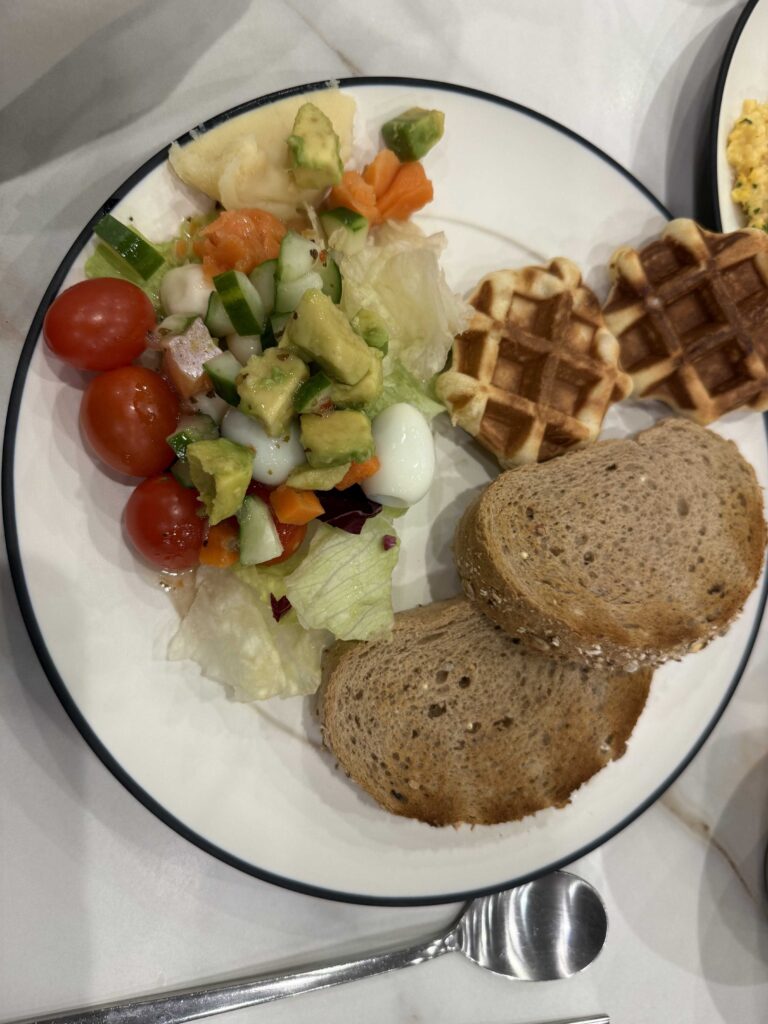
The finished plate: a freshly made waffle as the anchor, a generous pile of mixed salad with cherry tomatoes and avocado, two slices of seeded bread (dense, slightly nutty — a good bread), sausage from the hot section, and a few items from the banchan line. The orange juice alongside it. It looked like a complete breakfast. It tasted like one too. The waffle held its structure well, slightly crispy at the edges, the interior soft and properly cooked. Paired with the salad’s acidity and the saltiness of the sausage, it was one of those plates that just worked.
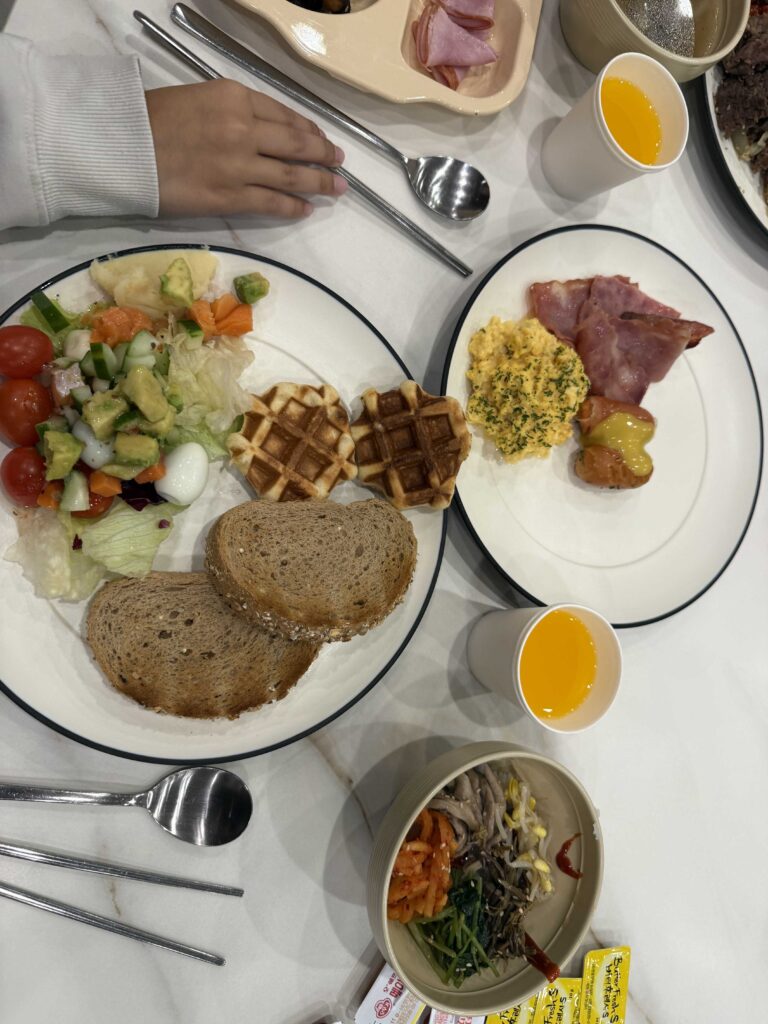
The second plate in our group had a different approach — deli ham, avocado salad, waffle, and more of the Korean banchan items in a smaller side bowl, alongside a second juice. Both plates looked genuinely good. That’s a sign of a well-stocked buffet: multiple different approaches to building a meal all result in something satisfying. It’s harder to achieve than it looks.
The Atmosphere in the Morning
One of the things that doesn’t always come across in photos is the actual feeling of the space in the morning. A ski resort breakfast has a specific energy — people coming in from cold rooms, gearing up mentally for the slopes, some still slightly bleary-eyed, all moving through the buffet with varying levels of purpose. The dining room at Oak Valley held that energy well. Not rushed, not chaotic. A calm, well-lit space where you could eat properly and prepare for the day.
The light in the room shifted slightly as we sat there — the sun coming up higher over the mountain, the windows catching it differently. Small thing, but it added to the overall sense that this was a good place to be on a ski morning. Unhurried. Comfortable. Fuelled up.
How Much Does the Oak Valley Resort Breakfast Cost?
Resort breakfast buffets in Korea typically run anywhere from 20,000 to 45,000 won per person depending on the property and the scope of the spread. Oak Valley’s pricing sits in line with what you’d expect from a well-established mountain resort. Whether it’s included with your accommodation package or an add-on, it’s worth factoring into the stay — particularly if you’re spending a full day skiing and need a proper caloric foundation before you hit the slopes. Packing in a full plate of Korean and Western food before a day of physical activity is genuinely practical, not just indulgent.
Getting to Oak Valley Resort — Location Information
Oak Valley Resort is located in Wonju, Gangwon Province — roughly 1.5 to 2 hours from Seoul by car. The Hills Village Tower C is one of the accommodation buildings within the resort complex. The breakfast restaurant is on the ground level and accessible to resort guests during the morning service window. Find the resort on Google Maps here: Oak Valley Resort Hills Village Tower C — Google Maps.
Oak Valley operates year-round but is particularly popular in ski season — typically December through February. Outside of winter, the resort functions as a nature and leisure destination with golf, hiking trails, and outdoor activities. The breakfast buffet is available regardless of season for resort guests, making it a consistent anchor for mornings spent at the property.
Final Thoughts — Is the Oak Valley Resort Breakfast Worth It?
Yes. Genuinely. As resort breakfasts go, Oak Valley’s offering is solid: well-stocked, attentively managed, with enough variety to satisfy Korean and Western palates equally. The Korean banchan spread was the highlight for me — thoughtful, fresh, clearly made with care rather than treated as a token gesture toward the local cuisine. The waffle station and hot food section covered the Western side reliably. The dining room was comfortable and the service was unobtrusive in all the right ways.
A good resort breakfast doesn’t just feed you. It sets the tone for the day. It gives you a chance to sit down with whoever you’re travelling with before the slopes pull everyone in different directions. It’s a ritual as much as a meal. Oak Valley does that well — and for anyone planning a ski trip to Wonju, starting the day here before heading to the mountain is a morning well spent. What you eat before the first run matters more than you think.
Also Worth Reading
- Mannajeong (만나정): Best Dinner Near Oak Valley Resort
- Deulkkot Garden: Korean Home-Style Dinner in Wonju
- Ganghyeon Bakery: Morning Coffee & Bread Near Oak Valley
Oak Valley Resort Breakfast Buffet
★★★★★ 4.4 / 5
📍 Oak Valley Resort, Wonju | 🍽️ Buffet | 💰 ₩₩₩
Morning breakfast buffet at Oak Valley Resort Hills Village Tower C — a satisfying spread to start a day of outdoor activities in Wonju.